Hawk’s Landing Country Club is a public par-71 course measuring approximately 5,944 yards from the tips. The course was originally designed in 1967 by Geoffrey Cornish and Bill Robinson and is located in Southington, Connecticut.
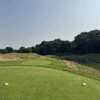
The facility traces its origins to the mid-1960s when prolific New England architect Geoffrey Cornish partnered with associate Bill Robinson to create an 18-hole layout on property nestled within the lush central Connecticut River valley. Cornish, who would eventually design over 200 courses throughout his career, brought his characteristic lay-of-the-land philosophy to this Southington tract. The course sits on an estimated 100 to 120 acres of rolling terrain at the base of the surrounding hills, featuring a routing that incorporates both woodland corridors and more open sections with panoramic valley views. The front nine presents a parkland character with substantial elevation changes and several water hazards, most notably at the demanding par-3 ninth, while the back nine unfolds with a slightly different personality featuring tree-lined fairways and strategic bunkering. The layout appeals to thinking players who value course management over pure length, as the relatively compact yardage belies a genuine strategic challenge. Players who enjoy classic New England architecture with moderate elevation shifts and hazards that reward precision over power will find this Cornish design particularly engaging.
Strategic Test
| Handicap | Course Strategy |
|---|---|
| High Handicap (18+) | Players from the Gold tees at 4,570 yards face a course rating of 63.3 with a slope of 109, making this an approachable test that still demands accurate iron play. The slope rating indicates that while the course won’t punish bogey golfers as severely as championship layouts, water hazards and elevated greens still add strokes to the uninitiated. The ninth hole serves as the ideal representative challenge at 235 yards from the Blue tees but playing significantly shorter from forward markers. This forced carry over water to a plateau green exemplifies the course’s preference for accuracy over distance. High handicappers will appreciate the generous landing areas on many holes but must learn to lay back from hazards and respect the green complexes. |
| Mid Handicap (8-18) | From the White tees measuring 5,375 yards with a 66.3 rating and 114 slope, mid-handicappers encounter a balanced examination of all facets. The slope differential from the Blues indicates that the course difficulty scales appropriately with tee selection. At this level, the ninth hole from approximately 200-210 yards becomes a defining moment, requiring either a confident long iron or hybrid to clear the fronting water and reach the elevated putting surface. Club selection proves critical as anything short finds the hazard while long shots face a difficult up-and-down from over the green. The hole rewards committed swings and punishes tentative play, serving as a microcosm of the strategic demands throughout the round. |
| Low Handicap (0-8) | Championship golf from the Blue tees at 5,944 yards presents a 68.6 rating with 120 slope, creating a subtle strategic test where angles and position matter more than raw power. Accomplished players must resist the temptation to overpower the layout and instead embrace the precision requirements. The ninth hole at 235 yards exemplifies the cerebral challenge, demanding either a confident long iron or fairway wood to a target 30 to 40 feet above the tee box. The plateau green accepts well-struck shots but offers minimal bailout area, with steep falloffs and a pond fronting the surface. Better players will recognize opportunities to attack when conditions favor but must show restraint when wind or pin positions defend par. |
Nearby Course Alternatives
Timberlin Golf Club in Berlin offers a contrasting experience approximately 10 minutes northeast of Hawk’s Landing. This Al Zikorus design opened in 1970 on roughly 140 acres along the base of Ragged Mountain and measures 6,733 yards from the tips with a 72.2 rating and 129 slope. The municipal facility presents more yardage and elevation change than Hawk’s Landing, with rolling terrain that takes full advantage of the natural topography. Timberlin’s strategic value emerges through adequate fairway bunkering and precisely guarded greens that demand accurate approach play, characteristics that many public courses in the region sacrifice. The course received updates from Stephen Kay and Doug Smith in 2006 and Ray Hearn in 2014, maintaining its reputation as one of central Connecticut’s finest municipal offerings. Players who prefer a longer, more physically demanding test with greater elevation changes and risk-reward opportunities will gravitate toward Timberlin over the more compact Hawk’s Landing. The additional 800 yards and higher slope rating attract single-digit handicappers seeking a stern examination, while the expansive layout provides strategic options that reward course management skills.
Stanley Golf Course in New Britain provides a unique 27-hole municipal experience approximately 15 minutes north of Southington. The facility features three nine-hole courses named Blue, White, and Red, with the original White and Red nines designed by Robert J. Ross opening in 1930 and 1931, with Geoffrey Cornish later involved in renovations. The Blue nine, designed by Orrin E. Smith in 1955, added a third routing option. Playing Blue/White yields 6,393 yards with a 71.2 rating and 123 slope, while White/Red measures 6,378 yards at 70.8/124. The property spans approximately 150 acres of varied terrain, with each nine presenting distinct character due to different topography and surrounding environments. Stanley’s greatest appeal lies in its variety and accessibility, offering multiple 18-hole combinations that prevent repetition while accommodating high volume play. The facility recently invested in a state-of-the-art Toptracer-equipped driving range with 19 heated and covered bays, demonstrating commitment to player development. Golfers who value the option to experience different layouts on return visits and appreciate well-maintained municipal golf at reasonable accessibility will prefer Stanley’s three-course variety over Hawk’s Landing’s single 18-hole routing. The extra yardage and slightly elevated slope ratings also appeal to better players seeking championship-caliber tests from public facilities.
Final Word
Hawk’s Landing Country Club supports the complete golf experience with a grass tee driving range featuring mat stations, providing space for full warm-up sessions before rounds. Practice facilities include both putting and chipping areas where players can dial in short game touch before heading to the first tee. The property features the BellaVista banquet facility, a glass-fronted room with cathedral wooden ceiling that accommodates up to 250 guests and hosts more than 50 weddings annually overlooking the golf course. For smaller gatherings, the Fairway Room seats 50 people with access to a private paver patio. The Bunkers restaurant and bar operates as a full-service establishment offering brick-fired pizza, burgers, appetizers, and daily specials, with an outdoor deck featuring twinkle lights, a waterfall, and views across the grounds. Entertainment includes trivia on Tuesday evenings, drink specials midweek, and live music on Friday and Saturday nights, creating a social atmosphere that extends beyond golf. The combination of Cornish’s strategic design with modern amenities demonstrates how classic architecture can coexist with contemporary expectations. What distinguishes Hawk’s Landing among central Connecticut public courses is its commitment to the Geoffrey Cornish design principles that prioritize strategic interest over manufactured difficulty, allowing the natural terrain to shape play while maintaining accessibility for various skill levels. The layout proves that courses need not stretch beyond 6,000 yards to challenge accomplished players when hazards are positioned thoughtfully and greens demand precision.

David is an avid golfer who loves walking Connecticut’s courses and playing alongside his family. He’s passionate about golf course architecture and one day hopes to play at Pebble Beach.