


Alling Memorial Golf Course is a public par-72 course measuring approximately 6,248 yards from the tips. The course was originally designed in 1930 by Robert D. Pryde and is located in New Haven, Connecticut.
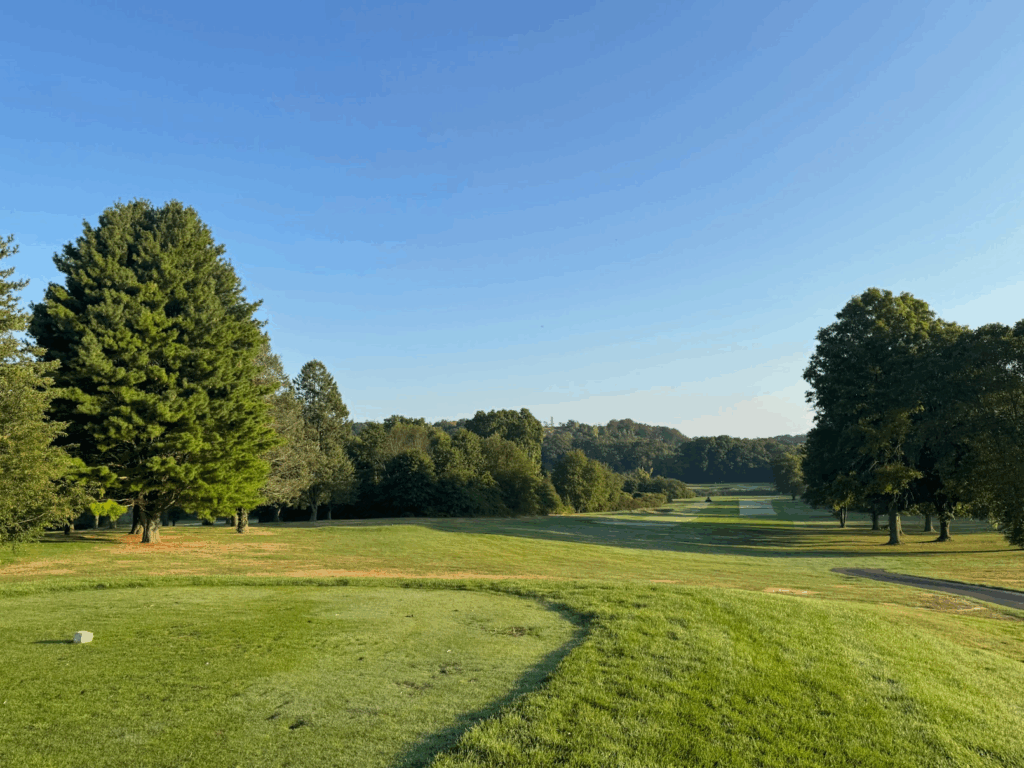
I first encountered Alling Memorial on a crisp autumn morning, drawn by its reputation as one of Connecticut’s most strategically compelling municipal tracks. The course occupies roughly 160 acres of rolling terrain that creates constant elevation changes throughout the routing. What struck me immediately was the variety—no two holes feel remotely similar, from the demanding 480-yard opener with water in play to the tempting 256-yard drivable fifth. This is golden-age architecture at municipal prices, a Robert D. Pryde design that rewards thoughtful shot-making over raw power. The thinking golfer who appreciates risk-reward decisions, proper angles into greens, and strategic variety will find this course endlessly engaging.
Walkability
Alling Memorial presents a moderate to difficult walking challenge across its approximately 160-acre property. The routing features significant elevation changes that test both your game and your cardiovascular fitness. Multiple holes require walks up substantial hills to reach elevated tees or greens, particularly noticeable on the back nine where holes 10 and 14 feature dramatic elevation shifts. One player reported completing a walking round in three hours, calling the walk “a beast” but managing the twilight rate of just thirteen dollars made it worthwhile.
The green-to-tee transitions occasionally create confusion, with several intersections where three or four tee boxes meet and cart paths diverge in multiple directions. The walk from the fourteenth green to the fifteenth tee proves particularly awkward—it’s easy to wander toward the wrong fairway before catching yourself and correcting course. Without proper signage or local knowledge, players can easily head to the wrong hole. The routing doesn’t always flow naturally from one hole to the next, suggesting some longer walks between holes that add to the physical demands. The uneven topography means you’re rarely standing on level ground—fairways slope significantly, adding fatigue even when you’re not climbing hills.
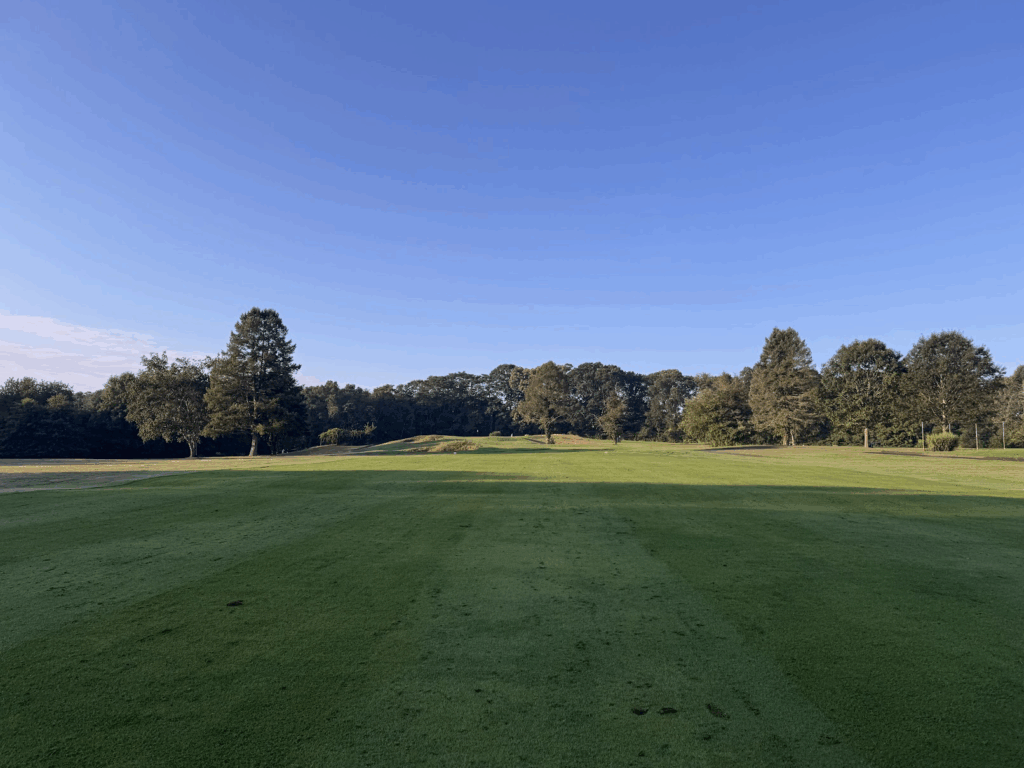
For fit golfers who regularly walk courses, Alling Memorial remains manageable and the elevation changes create memorable moments worth the physical effort. The dramatic tee shot from the elevated 10th tee and the blind drive on 14 provide visual rewards for those willing to hoof it. However, this is decidedly not a flat, easy municipal walk. Carts are advisable in hot weather, for afternoon rounds when fatigue accumulates, or for anyone with mobility concerns. The three-hour pace for walkers is reasonable, but expect to feel it in your legs by the time you reach the clubhouse.
Strategic Test
The genius of Pryde’s routing lies in forcing genuine decision-making on virtually every hole. Each of the eighteen holes presents what reviewers describe as distinct puzzles to solve, with none feeling routine or formulaic. The course demands you shape shots both ways—draws and fades—to navigate trouble and score well. From the back tees at 6,248 yards, the course plays to a 132 slope, but length isn’t the primary defense. Instead, strategic variety creates the challenge through elevation changes, false-front greens, blind approaches, and constantly shifting risk-reward equations. The tempting 256-yard fifth hole epitomizes risk-reward architecture—driver might reach the green for an eagle opportunity, but disaster lurks for the mishit.
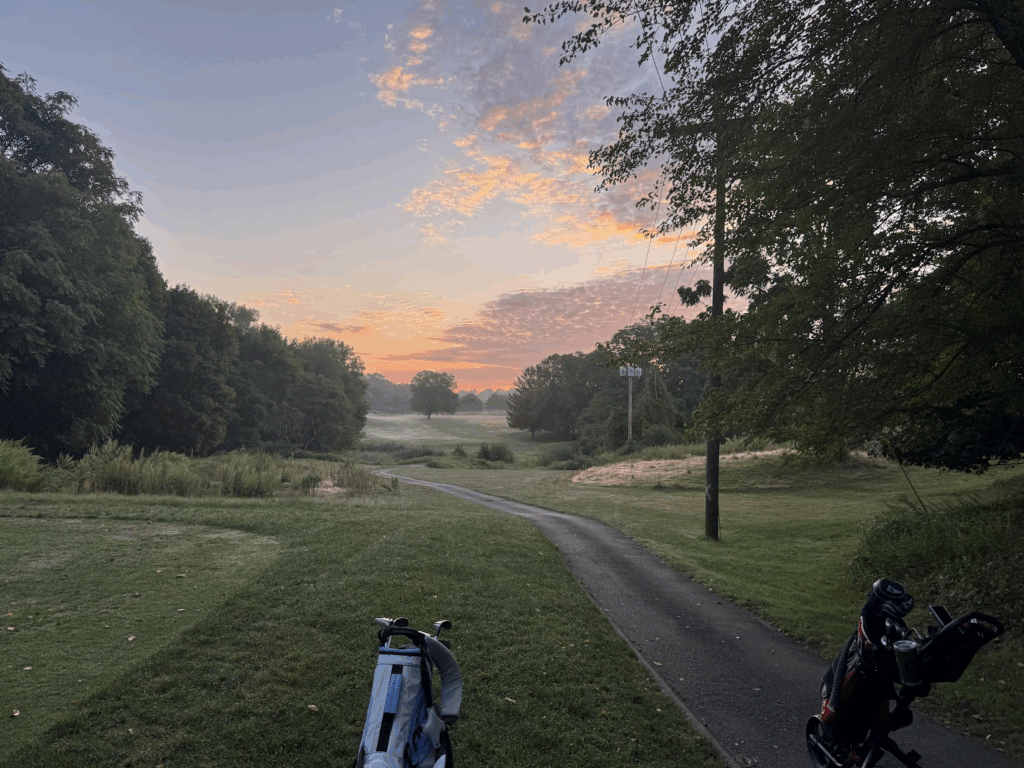
Consider the strategic variety across the back nine’s most memorable holes. The eleventh hole, a 490-yard par 5, exemplifies the course’s use of blind shots—you can’t see the flag from the fairway, but local knowledge teaches you to aim at the middle tree as your target. The gentle elevation change masks the difficulty of judging your approach distance. The thirteenth hole presents a genuine beast for beginners: a dogleg left where the flag remains invisible from the tee, followed by an uphill slog that punishes any tee shot that doesn’t clear the corner. Even successful drives leave a demanding uphill approach to an unseen target.
The fourteenth hole delivers the round’s most exhilarating moment. This 430-yard par 4 demands commitment from the elevated tee—you need at least a 200-yard forced carry to reach the fairway beyond the downhill slope. Success rewards you with a spectacular feeling as your ball soars over the abyss, but anything short tumbles down the face. It’s the kind of shot that stays with you, win or lose. The fifteenth continues the blind shot theme dramatically: at 510 yards total, your tee shot travels 408 yards before encountering a blind hazard, leaving just over 100 yards to a flag you can’t see from anywhere on the hole. This creates a unique experience where trust and course knowledge matter more than raw distance—you’re essentially playing two separate shots with no visual connection between them.
Playability
Despite its strategic demands, Alling Memorial achieves that rare balance of challenging accomplished players while remaining accessible to higher handicappers. The slope ratings tell the story: 132 from the back tees, dropping to 127 from the middle tees (5,877 yards), and just 115-118 from the forward tees (5,191 yards). This seventeen-point slope differential between championship and forward tees illustrates how proper tee selection can transform the playing experience. The fairways prove notably generous—wide enough to accommodate the occasional wayward drive while still rewarding accuracy with better angles into greens.
The third hole exemplifies this dual nature perfectly. From the back tees, it’s a demanding par 4 requiring a precise drive to avoid water and set up the approach. High-handicappers playing appropriate tees find the same hole much more forgiving, with the water hazard out of range and a shorter approach that doesn’t require a perfect strike. The rough throughout the course stays playable—you can find your ball and advance it toward the target, though recovery requires some skill. Multiple players report dramatic score improvements on their second round as they learn the sight lines for blind shots and proper angles into greens.
The par 3s present the stiffest challenge for higher handicappers, averaging 194 yards with two holes exceeding 200 yards—the 204-yard twelfth and the 211-yard seventeenth. That seventeenth hole features the most penal rough on the entire course—miss the green here and you’re facing a genuine challenge just to find your ball, let alone advance it effectively. From forward tees, these distances become more manageable, but they still demand solid ball-striking. The key for higher handicappers is accepting that bogey represents a good score on these longer one-shotters. Meanwhile, the two sub-500-yard par 5s (the 490-yard eleventh and 486-yard eighteenth) offer legitimate birdie opportunities for anyone who can drive the ball 240-250 yards, providing crucial scoring chances to offset the demanding par 4s.
Atmosphere
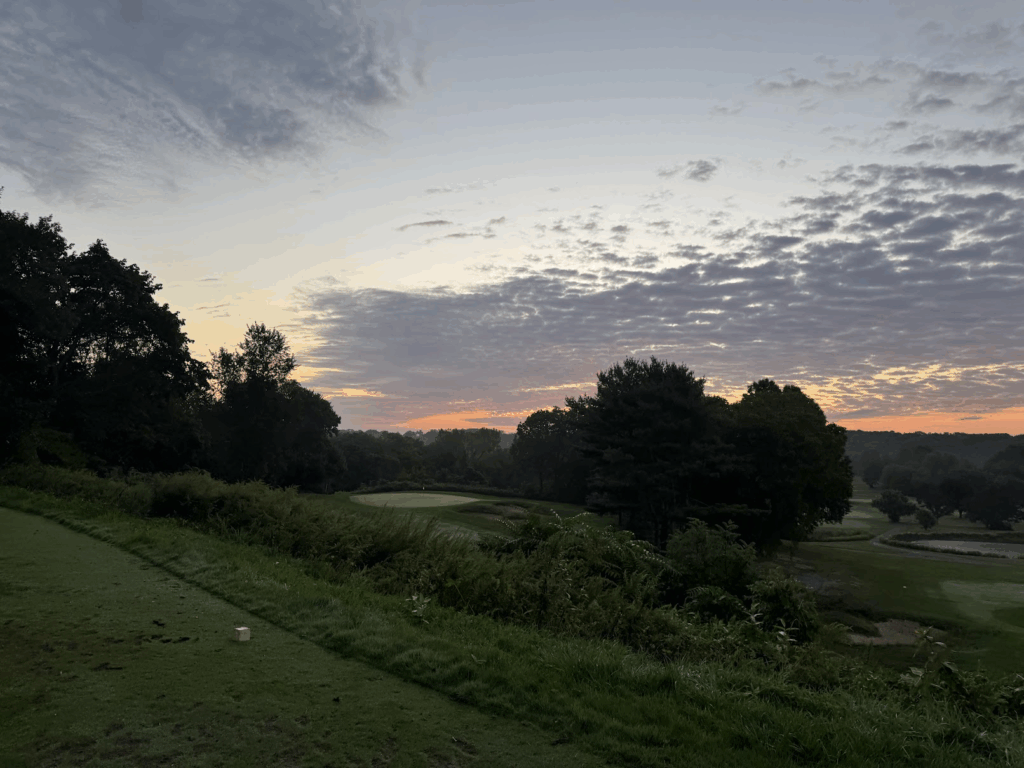
The playing surfaces at Alling Memorial create a genuinely attractive golf experience, particularly on the back nine which multiple reviewers praise as surprisingly picturesque. The natural terrain provides constant visual interest through elevation changes, sloping fairways that add character, and varied topography that makes each hole feel distinct. Water features, patches of heather, and mature trees frame the fairways, creating a relaxing backdrop for the round. The grounds crew maintains the actual golf course in solid condition—lush fairways, well-watered despite August heat, and quick, true greens that hold approach shots while rewarding good strikes with appropriate spin

The facility recently underwent a major transformation with a brand new clubhouse that opened its restaurant in late September 2025. The modern structure features an impressive open-air design with exposed wooden beams creating a pergola effect, flanked by contemporary buildings with corrugated metal siding and warm lighting. This dramatic architectural upgrade signals a new era for Alling Memorial, though some remnants of the old facility remain—the perimeter fencing still appears sketchy in places, suggesting the renovation is ongoing. The contrast between the striking new clubhouse and the older elements creates an interesting transitional moment for the course.
The eighteenth hole encapsulates both the course’s scenic qualities and its exciting transformation. This 486-yard par 5 plays slightly downhill, offering a panoramic view across the property from the elevated tee. The fairway sweeps left around a grove of mature oaks, with the green complex visible in the distance—a genuinely attractive finishing hole that tempts aggressive players to go for the green in two. Walking off the final green toward the impressive new clubhouse provides a fitting conclusion. The modern structure’s open-air design frames views back across the course, creating a welcoming atmosphere that finally matches the quality of the golf. With the restaurant now open and the facility clearly investing in its future, Alling Memorial feels like a course on the rise rather than one in decline.
Final Word
I’ll be honest—when I first pulled into Alling Memorial’s parking lot and saw the sketchy perimeter fencing, I had mixed expectations. But then I walked through the stunning new clubhouse with its soaring pergola design and modern aesthetic, and realized this course is in the midst of an exciting transformation. The September 2025 restaurant opening signals serious investment in the facility’s future, not to mention the brand new Trackman simulator. Also, with exception of the VUE in Hamden, this place offers some of the earliest tee times in Connecticut, which is perfect for those with busy weekends. This is authentic golden-age architecture at its finest, a thinking golfer’s course where every shot matters and no two holes play the same. The strategic variety rivals courses charging three times the price—from blind shots on holes 11 and 15 where you’re aiming at trees and hoping, to the exhilarating forced carry on 14 that demands a 200-yard commitment shot over a dramatic slope.
Compared to other Connecticut publics, Alling Memorial offers more strategic interest than the conditioning-focused Tradition at Oak Lane down in Woodbridge, and significantly more character than the straightforward Orange Hills Country Club just fifteen minutes away. What sets Alling apart is its refusal to apologize for what it is—a municipal course with championship pedigree that hosted numerous USGA and Connecticut Golf Association events. Robert D. Pryde, who learned his craft at Scotscraig near St. Andrews before designing courses throughout New England, created something special here in 1930. The bones remain exceptional, and now with the new clubhouse, the facility is finally getting the investment it deserves.
The combination of legitimate architecture, brand new amenities, and municipal pricing makes this an exceptional value. I found myself completely lost walking from 14 to 15, struggled through the thick rough on 17, and cursed the blind shots on 11, 13, and 15—yet I can’t wait to return. That’s the mark of a course worth playing repeatedly—it reveals itself slowly, rewarding local knowledge and thoughtful play over bomb-and-gouge golf. With the new clubhouse adding a touch of class to go with the classic architecture, Alling Memorial is transforming from hidden gem to legitimate destination. Just remember to aim for that tree on 11, commit fully to the carry on 14, and bring an extra ball for the jungle rough on 17.

David is an avid golfer who loves walking Connecticut’s courses and playing alongside his family. He’s passionate about golf course architecture and one day hopes to play at Pebble Beach.






Great read should have played 10years ago. Greens where fast fairways tight ruff 3 inches no bull heather 4 hr rounds all ways found you ball the par 3 most demanding I’m 75 played from the blues all the time things have changed this past year with new management and 160 members moved on to other course. Good luck
Thanks for the comment! The par 3s are definitely the most demanding.
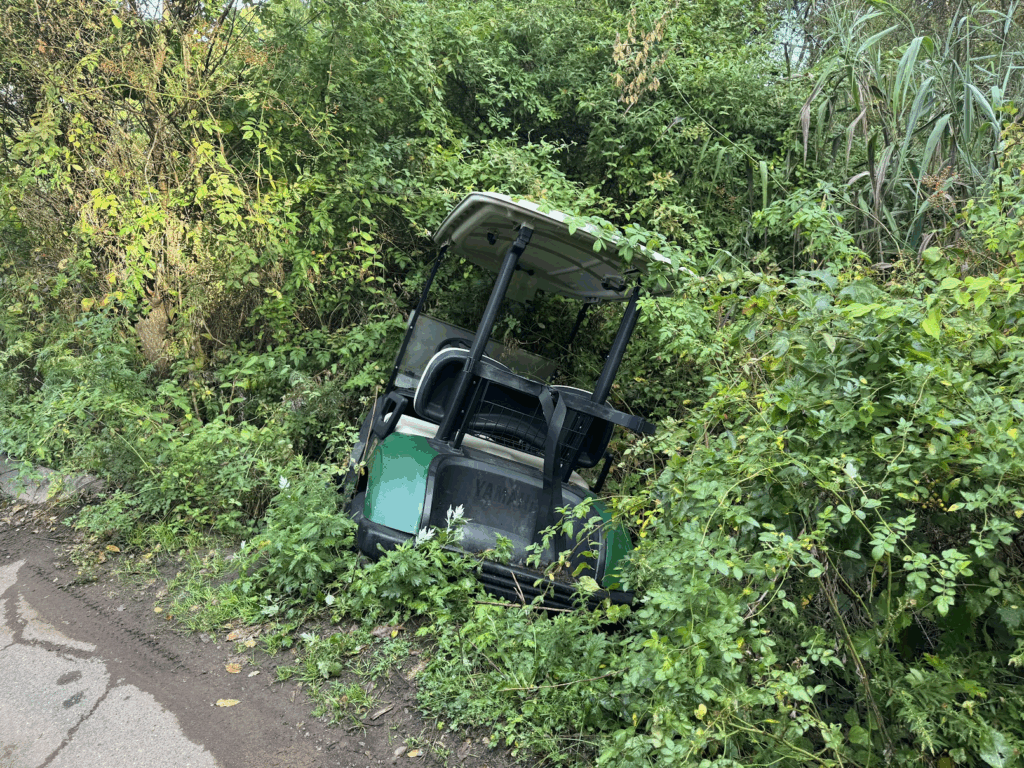
That golf cart stuck in the rough is wild