Tunxis Country Club – Red Nine is a public par-35 course measuring approximately 3,219 yards from the tips. The course was originally designed in 1962 by Al Zikorus and is located in Farmington, Connecticut.
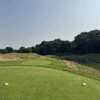
The Red Nine holds the distinction of being the original course at Tunxis Country Club, first opened to the public in 1962 as part of what was then the Green Course. In 1994, Mike Zikorus added nine new holes to expand the Green Course, and the original nine holes were reconfigured to become the standalone Red Course. This 45-acre routing traces its path along the picturesque Farmington River, offering a tranquil parkland setting that contrasts with the more expansive layouts of its sister courses. The terrain features relatively flat to gently rolling fairways framed by mature hardwoods, with strategic corridor framing that demands accuracy over length. The design philosophy leans traditional, emphasizing shot placement and course management rather than raw power. Players who appreciate classic parkland architecture and prefer a thinking person’s test will find the Red Nine particularly satisfying. The course suits golfers seeking an efficient round without sacrificing strategic interest, making it popular among time-pressed players, seniors valuing walkability, and those warming up before tackling the White or Green courses. The modest yardage belies legitimate challenge, as the routing includes several demanding par fours and uphill par threes that require proper club selection.
Strategic Test
| Handicap | Course Strategy |
|---|---|
| High Handicap (18+) | Players from the forward tees face approximately 2,725 yards, though slope and rating data varies by tee selection. The course presents manageable distances but demands accuracy given the tree-lined corridors and river proximity. Hole 7, a mid-length par 4 at 362 yards from the tips, emerges as particularly engaging for this skill level. This hole features a large pond protecting the left side of the fairway off the tee, creating a clear strategic choice between aggressive lines and safer bail-out options to the right. The hole rewards thoughtful positioning, as the approach must navigate to an elevated green complex. From forward tees, this becomes a driver or fairway wood followed by a mid to short iron, making it accessible yet interesting. The pond creates a visual and strategic focal point that higher handicappers can navigate by playing away from trouble. |
| Mid Handicap (8-18) | Mid-handicap players from the white tees encounter roughly 3,000 yards with moderate slope ratings in the low 120s. This presents an ideal balance of challenge and playability, as the course demands consistent ball-striking without overwhelming length requirements. The strategic emphasis shifts to precision approach play and green reading on the moderately contoured putting surfaces. Hole 7 at 362 yards becomes a genuine strategic puzzle for this group, as longer hitters can consider cutting the corner over the water hazard with an aggressive tee ball, while more conservative players work the ball right to maximize their angle into the green. The mid-iron approach requires careful attention to pin placement, as the elevated green features subtle undulations. This hole exemplifies the course’s architectural merit for mid-handicappers, offering multiple routes to success based on individual capabilities and risk tolerance. |
| Low Handicap (0-8) | From the championship tees at 3,219 yards, accomplished players face a 70.8 rating with 123 slope, creating a surprisingly robust test despite modest yardage. The premium lies on wedge control, creative shotmaking around the greens, and aggressive scoring on the par fives and reachable par fours. Low handicappers must resist complacency, as several holes present tight driving corridors where accuracy supersedes distance. Hole 7 at 362 yards transforms into a strategic exercise in risk-reward calculation, as the carry over the pond from an aggressive angle measures perhaps 200-220 yards, leaving only a short iron or wedge into the green for those who execute. However, the elevated green complex demands precise distance control, and any miscalculation with the approach can leave difficult up-and-downs. Accomplished players can realistically target birdie here with proper execution, though the hole punishes wayward tee balls severely. The strategic interest comes from weighing the aggressive water carry against the safer route and subsequent longer approach. |
Nearby Course Alternatives
Rockledge Golf Club in West Hartford offers an 18-hole municipal alternative approximately 15 minutes southeast of Tunxis. This Al Zikorus design from 1940 presents 6,436 yards from the tips with a 71.1 rating and 129 slope, making it a step up in difficulty compared to the Red Nine. The parkland layout occupies similar acreage to a full 18-hole facility and features rolling terrain with mature tree definition. Rockledge has earned recognition as one of Connecticut’s finest public courses, noted for its immaculate conditioning and championship pedigree. The architect’s routing creates thoughtful shot values with well-protected greens that slope predominantly back to front, generating considerable challenge on approach play. The course features a nice variety of hole lengths, though some consider it to lack the extreme distance required to truly test low handicappers from the tips. The par threes showcase particular architectural merit, with multiple teeing grounds that can alter playing distance by 40 yards depending on setup. Mid-handicap players who enjoy strategic positioning and green-reading challenges will find Rockledge particularly rewarding, as the large putting surfaces demand precision on approach shots to avoid lengthy two-putts. The facility includes proper practice areas with driving range, putting greens, and a full-service restaurant.
Wintonbury Hills Golf Course in Bloomfield presents Pete Dye’s first New England championship design, located approximately 20 minutes northeast of Tunxis. This municipal facility stretches 6,711 yards from the back tees with a formidable 72.3 rating and 130 slope, establishing it as one of Connecticut’s most demanding public tests. The par-70 routing occupies considerably more acreage than compact Tunxis, utilizing dramatic elevation changes and a distinctive split personality between nines. The front nine displays classic Dye links-style characteristics with wide fairways, bold mounding, and significant topographical movement, while the back nine transitions to traditional tree-lined corridors with water hazards framing multiple holes. Wintonbury has garnered national recognition, appearing in various best-of rankings for public courses and consistently drawing praise for outstanding conditioning. The design features characteristic Dye elements including strategic bunkering, complex green contours, and holes like the 255-yard seventh par three that challenges low handicappers to hit long irons. Accomplished players seeking a true championship examination will prefer Wintonbury’s additional length and architectural sophistication, though the course remains playable from forward tees for higher handicappers. The practice facility includes a five-station driving range, and the clubhouse provides full dining options in a comfortable setting.
Final Word
The Tunxis facility provides comprehensive practice amenities befitting New England’s largest public golf complex, including a multi-tee driving range with target greens that allow players to work on full swings with proper feedback. Dedicated short-game areas give golfers the opportunity to hone their wedge play and greenside technique, while spacious putting greens offer quality preparation surfaces before rounds. The newly renovated Tunxis Tavern serves as the clubhouse restaurant, offering full breakfast, lunch, and dinner menus in a comfortable atmosphere suitable for post-round gatherings or casual dining. The facility also maintains two distinct event venues for weddings and special occasions, with the outdoor Pavilion accommodating up to 300 guests beneath towering pine trees, and an indoor ballroom featuring Old World charm. These amenities create a complete golf destination rather than simply a place to play nine holes, establishing Tunxis as a community gathering place beyond the typical daily-fee operation. What distinguishes the Red Nine is its role as both an accessible entry point for the 45-hole complex and a legitimate strategic test in its own right, avoiding the common pitfall of executive-length courses that sacrifice architectural merit for brevity. The Al Zikorus routing respects classic design principles while maintaining playability across skill levels, and the Farmington River setting provides natural beauty without overwhelming the golf experience. The course proves its enduring appeal through consistent popularity and excellent maintenance standards that match those of the championship White and Green courses, demonstrating that compact layouts can deliver satisfying golf when properly conceived and maintained.

David is an avid golfer who loves walking Connecticut’s courses and playing alongside his family. He’s passionate about golf course architecture and one day hopes to play at Pebble Beach.