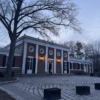
Round Hill Club is a private par-71 course measuring approximately 6,525 yards from the tips. The course was originally designed in 1922 by Walter Travis and is located in Greenwich, Connecticut.
The club was founded in 1922 on 223 acres of rolling Greenwich terrain, representing one of the few remaining Walter Travis designs in the United States. Travis, an Australian-born golfer who won three U.S. Amateur Championships and became the first foreigner to claim the British Amateur Championship in 1904, brought his strategic principles to this layout. Robert Trent Jones made significant modifications in the mid-1960s, most notably transforming the par-3 11th hole by introducing a water hazard that creates the signature carry over a pond. Additional renovation work by Kenneth Dye in 1997 and Brian Schneider in 2016 has helped maintain the course’s playing characteristics while addressing modern agronomic standards. The routing occupies approximately 223 acres with varied topography that creates natural elevation changes throughout the round. The design philosophy emphasizes shot values over length, with sweeping green complexes and strategic bunkering demanding precise iron play. The back nine contains three par-4 holes measuring under 350 yards within its first four holes, rewarding aggressive lines but punishing errant tee shots with thick rough. Players who appreciate Golden Age architecture, strategic positioning over power, and green complexes that require careful study will find the course particularly engaging. The modest yardage belies the difficulty, as evidenced by the 127 slope rating, with the primary defense stemming from green contours and approach shot demands rather than length.
Strategic Test
| Handicap | Course Strategy |
|---|---|
| High Handicap (18+) | Players from the forward tees at approximately 5,500-5,800 yards will face a slope rating in the 112-118 range with course ratings near 67-68, making par a realistic target for bogey golfers. The strategic emphasis shifts toward course management and avoiding the thick rough that borders fairways, as recovery shots become significantly more challenging from these lies. The par-3 11th hole at 178 yards from the championship tees requires a mid-to-long iron carry over a pond to a receptive putting surface, though forward tees reduce this to a more manageable distance that allows higher handicappers to use their comfortable clubs while still experiencing the hole’s visual drama and strategic implications. |
| Mid Handicap (8-18) | From the middle tees measuring approximately 6,200-6,400 yards with a slope around 127-132, mid-handicappers face a course rating near 70-72 that demands strategic thinking on every hole. The abbreviated par-4 holes on the back nine become genuine birdie opportunities for players who can position drives in the correct sectors of the fairway, but the same holes can yield doubles when approach angles are compromised by wayward tee shots. The par-3 11th hole at 178 yards represents the quintessential scoring opportunity and card-wrecker, requiring a confident 6-iron or 5-iron to carry water and hold a green that offers limited bailout areas, with conservative plays to the front portion often leaving tricky two-putt situations on undulating surfaces. |
| Low Handicap (0-8) | Championship tees at 6,525 yards with a 127 slope and 71.3 rating provide a thorough examination of shotmaking precision, as the Travis-Jones green complexes demand trajectory control and spin management. The strategic puzzle intensifies on short par-4 holes where aggressive driving lines can yield wedge approaches but also bring fairway bunkers and rough into play, requiring risk-reward calculations based on pin positions and personal confidence. The par-3 11th hole at 178 yards epitomizes the course’s defensive philosophy, demanding a well-struck mid-iron that carries the pond and controls spin to hold a green complex shaped by Trent Jones, where aggressive pin hunting can lead to water or difficult recovery chips, while conservative plays to safe zones create challenging putts on a surface with subtle breaks that reward local knowledge. |
Nearby Course Alternatives
Burning Tree Country Club in Greenwich sits approximately 5 minutes northeast of Round Hill Club and provides a contrasting architectural experience on its 6,654-yard layout designed by Hal Purdy in 1962. The course carries a 135 slope and 72.9 rating, playing slightly longer and more difficult than Round Hill from the championship tees. Spread across terrain that transitions from open parkland on the front nine to a more confined routing along Rockwood Lake Brook on the back, Burning Tree occupies roughly 150 acres with moderate elevation changes. The front nine traverses the north section of the property with ponds near the clubhouse creating water hazards on several holes, while the back nine stretches south for more than a mile along the creek before turning homeward. As a Purdy design from the early 1960s, the course reflects the shotmaker’s philosophy of that era, emphasizing accuracy over distance with fairways that require positional play. The tighter property creates more tree-lined corridors compared to Round Hill’s more open expanses, and the interaction with water features throughout the round provides a different strategic test. Mid-to-high handicap players who prefer a more modern parkland aesthetic with water hazards in play and appreciate the challenge of shaping shots around trees would find Burning Tree’s layout more engaging, particularly those who struggle with the strategic nuances of Travis-style green complexes and prefer clearer visual cues for approach shots.
Tamarack Country Club in Greenwich lies approximately 8 minutes northwest of Round Hill Club and represents one of Connecticut’s finest examples of Charles Banks architecture, measuring 6,841 yards with a 126 slope and 72.9 rating from the championship tees. Completed in 1929, the course sprawls across approximately 200 acres of rolling backcountry terrain with significant elevation changes that create dramatic tee shots and approach angles. Banks, a protégé of Seth Raynor and C.B. Macdonald, incorporated numerous template holes including a Redan on the 8th, a Punchbowl on the 11th, and a Biarritz on the 12th, giving the layout a distinctive strategic character rooted in classic British design principles. Brian Schneider’s 2023 restoration focused on tree removal, fairway expansion, and bunker restoration, returning the course to Banks’s original vision of massive scale with expansive fairways and bold green complexes. The hilltop clubhouse overlooks much of the property, allowing players to see multiple holes from elevated vantage points that showcase the architecture’s grand scale. Where Round Hill emphasizes precision and strategic positioning on a more modest scale, Tamarack offers sprawling playing corridors with recovery options from wayward shots, though the enormous bunkers and push-up green complexes create their own challenge. Low-to-mid handicap players who appreciate architectural history and template holes, enjoy walking courses with significant elevation changes, and prefer the visual drama of large-scale features would find Tamarack more rewarding than Round Hill, particularly those who value shot variety and the intellectual exercise of playing historic design concepts adapted from Scottish links courses.
Final Word
Round Hill Club provides members with comprehensive practice facilities including a driving range with five practice tees, a dedicated putting green, and a short game area for chipping and pitching work. During winter months, the driving range transforms into a shooting sports facility for sporting clays, offering a unique amenity unavailable at other Greenwich clubs. The clubhouse serves as a social hub with dining facilities featuring both formal and casual options, complemented by bar areas and spaces for private functions. Beyond golf, the club maintains eight outdoor clay tennis courts, two indoor tennis courts, four paddle tennis courts, and a squash court, ensuring year-round racquet sports availability. A swimming pool serves as a summer gathering point for families, while fitness facilities provide modern exercise equipment for members seeking wellness activities. The property sits on 223 acres in one of Connecticut’s most prestigious communities, attracting a membership of residents who value tradition, exclusivity, and comprehensive recreational programming. What distinguishes Round Hill Club from its Greenwich peers is the combination of Walter Travis’s strategic Golden Age design that remains largely intact despite being just over a century old, with Robert Trent Jones’s mid-century refinements adding drama without overwhelming the original architecture. The course proves its merit through its consistent ranking in Connecticut’s top ten layouts, with Golf Digest placing it sixth in the state for 2025-26, a testament to the enduring quality of the routing and green complexes that challenge players of all abilities. The limited rounds played annually, estimated around 12,000, ensures pristine conditions and an uncrowded experience that allows members to appreciate the strategic subtleties Travis intended. The sweeping green complexes demand careful study and reward local knowledge, creating a course that reveals new dimensions with each round. Round Hill Club succeeds not through tournament length or modern trappings but through timeless strategic design that emphasizes shotmaking, course management, and the thinking player’s game.

David is an avid golfer who loves walking Connecticut’s courses and playing alongside his family. He’s passionate about golf course architecture and one day hopes to play at Pebble Beach.