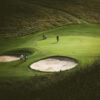
Rolling Meadows Country Club is a public par-72 course measuring approximately 6,818 yards from the tips. The course was originally designed in 1997 by Al Zikorus and is located in Ellington, Connecticut.
Rolling Meadows Country Club opened for play in 1997 as a family-owned facility and has remained under the same ownership structure since its inception. The course was designed by noted Connecticut architect Al Zikorus, an ASGCA Fellow who established his practice after working under Orrin Smith in the 1950s. Zikorus became known throughout New England for crafting courses that integrated native materials into signature green complexes featuring subtle reverse slopes and strategic bunkering. Since opening, the course has maintained its original routing and design integrity without major renovations, though ongoing maintenance practices have kept the facility in tournament-caliber condition. The layout occupies an estimated 130 to 140 acres of rolling terrain in northeastern Connecticut, positioned along the Ellington countryside with minimal residential encroachment. The routing follows a distinctive two-personality structure where the outward nine presents gently rolling parkland characteristics with open sight lines and generous landing areas, while the inward nine ascends an imposing hillside with tighter corridor framing and elevation-based strategic complexity. The design philosophy reflects Zikorus’s mature period work, emphasizing flowing terrain integration and thoughtful green site selection over manufactured features. Players who appreciate strategic variety, meaningful elevation changes, and green complexes that demand precise approach work will find considerable merit in this layout, particularly those who value both scoring opportunities on the front nine and genuine examination of shotmaking discipline on the closing stretch.
Strategic Test
| Handicap | Course Strategy |
|---|---|
| High Handicap (18+) | From the gold tees at 5,767 yards with a course rating of 67.3 and slope of 120, high handicappers face a manageable examination that rewards steady play without overwhelming length demands. The slope differential of approximately 15 strokes allows room for inconsistency while still providing realistic par opportunities. The signature third hole, a 165-yard par 3 from these tees, exemplifies the strategic considerations throughout the round. The hole demands a forced carry over water that extends nearly the entire distance from tee to green, with a lateral hazard continuing right and woodland flanking deep. A greenside bunker protects the right approach, while the putting surface slopes gently upward from front to back. For players in this range, a mid to long iron or hybrid represents the appropriate club selection, with emphasis on clearing the fronting hazard rather than attacking pin positions. The elevated back nine presents greater difficulty for this group, as narrow corridors and uphill approaches compound any directional inconsistencies. |
| Mid Handicap (8-18) | Playing from the white tees at 6,269 yards with a rating of 69.6 and slope of 124, mid handicappers encounter a balanced test where course management becomes increasingly relevant. The moderate slope rating indicates that scoring separation occurs through strategic decision-making rather than pure length advantage. The third hole measures 166 yards from these markers and serves as an early examination of iron precision. With the water hazard demanding full carry and the green sitting at a shallow angle with limited bailout options, the hole forces commitment to the shot. Most players in this bracket face a mid iron, likely 5-iron through 7-iron depending on wind conditions, with particular attention to the greenside bunker that captures anything pushed right. The upward slope of the putting surface means front pin positions play shorter while back locations demand an extra club. Throughout the back nine, these players benefit from understanding how the uphill routing affects club selection, as several approach shots play 10 to 15 yards longer than the flat distance suggests. |
| Low Handicap (0-8) | From the championship tees at 6,818 yards with a rating of 72.3 and slope of 125, accomplished players face legitimate length combined with precision demands that test all aspects of shotmaking. The relatively modest slope rating compared to yardage indicates that skilled players can score when executing properly, but the course provides little margin for error. The third hole stretches to 195 yards from the blue markers, transforming from an iron selection for higher handicaps into a genuine long iron or hybrid examination. The forced carry demands roughly 190 yards to safely clear the water and find the front portion of the green, while anything short or right finds penalty areas. The greenside bunker positioned right creates a narrow entry corridor, rewarding draws that work away from the hazard. For players comfortable with 4-iron or 5-iron control, the hole offers birdie opportunity when the pin sits front, but back positions on the upsloping surface can push the effective playing distance beyond 200 yards. Throughout the round, these players find scoring opportunities concentrated on the parkland-style front nine, where driver accuracy is rewarded with short iron approaches, while the back nine demands precise distance control on elevated greens and strategic positioning off the tee where fairway width constricts. |
Nearby Course Alternatives
Topstone Golf Course in South Windsor offers a compelling alternative approximately 15 minutes southwest of Rolling Meadows. Also designed by Al Zikorus and opened the same year as Rolling Meadows in 1997, Topstone presents 6,549 yards from the championship tees with a rating of 71.2 and slope of 122 across par-72 routing. The course occupies similar acreage on rolling terrain but follows a more straightforward design philosophy, with holes that generally advance directly toward their targets rather than incorporating significant doglegs or forced strategic angles. The layout resists easy categorization as it blends open, converted farmland characteristics on the outward half with carved woodland corridors on portions of the inward nine, creating visual and strategic variety throughout the round. Topstone’s green complexes demonstrate Zikorus’s signature attention to subtle contouring and strategic bunkering placement, though the overall difficulty level skews slightly more accessible than Rolling Meadows. The course maintains consistently high conditioning standards with well-manicured fairways and true-rolling putting surfaces. Strategic value centers on thoughtful tee shot placement that establishes favorable approach angles rather than manufactured hazards or artificial difficulty, rewarding players who can shape shots and understand how the terrain influences ball flight. Players seeking a more balanced and straightforward examination compared to Rolling Meadows’ split personality will appreciate Topstone’s unity of design, particularly mid handicappers who may find the reduced length and wider fairway corridors more conducive to scoring while still encountering meaningful strategic decisions.
Twin Hills Country Club in Coventry provides another nearby option approximately 20 minutes southeast of Rolling Meadows. Designed by George McDermott and opened in 1972, Twin Hills measures 6,315 yards from the tips with a rating of 69.8 and slope of 123 across par-71 routing. The course occupies 130 acres of rolling hills in a rural setting, featuring traditional New England design elements including stone walls, a covered bridge, and the signature stone bridge located on the third hole. The terrain generates more dramatic elevation changes than Rolling Meadows, particularly on the back nine where several holes track up and down pronounced slopes. The routing incorporates multiple long par 5s, including a 585-yard examination that serves as a genuine three-shot hole for most players. The design follows a traditional parkland structure with tree-lined fairways that narrow approach angles and demand accuracy over pure distance. Green complexes feature more pronounced slopes than the other Zikorus designs, with several push-up surfaces that create challenging short game situations for anything missing the putting surface. The course appeals particularly to players who favor strategic positioning and accurate iron play over raw power, as the par-71 structure and shorter overall yardage place premium on avoiding mistakes rather than overpowering the layout. High handicappers who struggle with Rolling Meadows’ forced carries and tight back nine corridors may find Twin Hills more forgiving off the tee, while still encountering sufficient challenge through green complex defense and meaningful elevation-influenced club selection.
Final Word
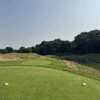
Rolling Meadows Country Club provides comprehensive practice facilities that support serious game development. Multiple practice greens allow players to experience the undulating characteristics that define the course’s putting surfaces before heading to the first tee. The driving range offers adequate distance for full club testing, though space constraints compared to larger facilities mean some longer hitters may find range length limiting. A dedicated short game area supports chipping and bunker practice, addressing the precise wedge work demanded by the course’s elevated and protected green complexes. Beyond golf, the clubhouse features a full-service restaurant and bar that accommodates both casual dining and more formal occasions, with menu offerings ranging from traditional pub fare to more refined entrees. The dining room provides views of the course while the bar area features high-definition screens for those seeking to combine golf with sports viewing. The pro shop maintains a well-curated selection of equipment and apparel appropriate for the facility’s daily-fee structure. The clubhouse aesthetic reflects the course’s 1990s construction era with clean lines and functional spaces rather than traditional country club architectural flourishes. What distinguishes Rolling Meadows from similar northeastern Connecticut public courses is the genuine two-act structure that Zikorus built into the routing, where the front nine allows players to establish rhythm and confidence before the back nine extracts proof of shotmaking discipline. The combination of parkland accessibility and hillside examination, paired with consistently excellent conditioning and green complexes that reward precision without demanding tour-level execution, creates a facility that serves both as a regular venue for area players and a worthwhile destination for those seeking thoughtful design. The course proves its value through strategic substance rather than manufactured difficulty, rewarding players who can think their way around the layout while still providing enjoyment for those who simply appreciate well-maintained golf in a rural setting with genuine elevation and views extending to the Berkshire mountains in the distance.

David is an avid golfer who loves walking Connecticut’s courses and playing alongside his family. He’s passionate about golf course architecture and one day hopes to play at Pebble Beach.