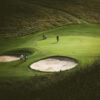
Rockledge Golf Club is a public par-72 course measuring approximately 6,440 yards from the tips. The course was originally designed in 1940 by Al Zikorus and is located in West Hartford, Connecticut.
The history of Rockledge traces back to 1924 when Yale alumnus Wilton Sherman established a 14-hole layout on his 120-acre estate, which expanded to 18 holes by 1927 and hosted tournaments for decades. Following Sherman’s death in 1959, the Town of West Hartford acquired the property and transformed it into the municipal facility it remains today, with Al Zikorus redesigning the routing in 1940 to create the current championship test. While the course has maintained its bones, infrastructure improvements continue, most notably the recent enhancement of practice facilities and ongoing maintenance programs that keep Rockledge competitive with top-tier Connecticut tracks. The property sits on roughly 120 acres of gently rolling terrain, with the routing flowing across modest elevation changes that provide strategic interest without exhausting walkers. The design philosophy leans traditional parkland with tree-lined corridors framing most holes, though fairways remain generous enough to accommodate higher handicappers while demanding precision from accomplished ball-strikers. Players who appreciate thinking their way around a course rather than overpowering it will find satisfaction here, as Zikorus incorporated subtle contours and back-to-front sloping greens that reward calculated approaches and penalize mindless aggression. The course appeals most to mid-handicappers seeking a fair but thorough examination of their complete skillset, though championship yardage and green complexes provide enough teeth to challenge single-digit players.
Strategic Test
| Handicap | Course Strategy |
|---|---|
| High Handicap (18+) | From the White tees at 5,722 yards with a slope of 126 and rating of 72.3, high handicappers face a manageable test that rewards course management over heroics. The slope impact means that an 18-handicap player will need approximately 18 strokes above par to shoot their expected score, making bogey golf the target for steady play. The third hole exemplifies the strategic demands these players will encounter: a 435-yard par-4 from the championship tees that plays closer to 385 yards from the Whites, rated as the number one handicap hole on the course. The length alone requires two quality strikes to reach the green, with out-of-bounds right and fairway positioning critical to setting up a manageable approach angle. For high handicappers, hitting driver then hybrid or fairway wood will be the likely play, with acceptance of laying up short if the tee shot strays to avoid compounding errors with forced carries into large, sloping greens. |
| Mid Handicap (8-18) | The Gold tees at 6,049 yards provide mid-handicappers an ideal balance of challenge and playability, with a slope of 130 and rating of 74.1 creating scoring opportunities while demanding solid execution. A player at 13 handicap should expect to shoot around 87, requiring strategic navigation of Rockledge’s varied hole lengths and green complexes. The third hole from these tees stretches to approximately 410 yards, presenting a legitimate three-shot hole for many in this group while tempting longer hitters to reach in regulation. Driver is the appropriate club off the tee to maximize distance down the generous fairway, leaving anywhere from a long iron to hybrid for the approach depending on the quality of the drive. The key strategic element lies in avoiding the tendency to force approaches into a green that slopes severely front-to-back, as missing long leaves nearly impossible two-putt situations. Mid-handicappers who play conservatively to front hole locations and accept par as a victory on this demanding test will score better than those chasing birdies. |
| Low Handicap (0-8) | From the Blue tees at 6,440 yards with a slope of 125 and rating of 70.4, low handicappers will find Rockledge plays shorter than modern championship standards yet demands precision throughout. A scratch player expects to shoot even par here, though the large, undulating greens with consistent back-to-front tilt create scoring variance even for accomplished ball-strikers. The third hole at 435 yards represents the course’s stiffest challenge, a straightaway par-4 where length combines with accuracy demands to produce the highest stroke index. Low handicappers will attack this hole with driver, looking to carry 260-280 yards to the optimal landing area that leaves a mid-iron approach of 155-175 yards. The approach strategy revolves entirely around green reading and distance control, as the putting surface accepts well-struck shots but punishes anything landing beyond the hole with treacherous downhill comebackers. Smart low handicappers will favor front pin positions and aim for the heart of the green on back placements, knowing that Rockledge’s architectural strength lies not in brute length but in the subtlety of green contours that can humble even single-digit players. |
Nearby Course Alternatives
Keney Park Golf Course in Hartford sits approximately 10 minutes north of Rockledge and represents one of Connecticut’s most significant restoration success stories. Measuring 6,449 yards from the tips with a slope of 118 and rating of 68.2, Keney plays as a par-70 layout across roughly 140 acres of rolling parkland terrain. The front nine was designed by Devereux Emmet in 1927, with Robert Ross completing the back nine in 1931, and Matthew Dusenberry led a comprehensive 2016 restoration that returned template holes including a Redan and Road hole while reintroducing strategic bunkering that had been lost to decades of neglect. The course features significant elevation changes throughout, with greens displaying tumbling ridges and internal contours that demand creativity in the short game. Keney’s architectural pedigree exceeds Rockledge’s straightforward design, offering golden-age enthusiasts the opportunity to experience genuine template holes and church pew bunkers within a municipal setting. Players who prioritize architectural interest and don’t mind firm, fast conditions that reward ground game approaches will find Keney more intellectually stimulating than Rockledge. The course appeals most to low and mid handicappers who appreciate classical design principles and can navigate heavily contoured greens, though higher handicappers may struggle with the green complexes that represent both Keney’s greatest strength and most significant scoring challenge.
Wintonbury Hills Golf Course in Bloomfield offers a dramatically different experience approximately 15 minutes northwest of Rockledge. The Pete Dye design opened in 2005 and stretches to 6,711 yards from the championship tees with a slope of 141 and rating of 78.4, making it one of Connecticut’s most demanding public tests. The par-70 layout unfolds across roughly 200 acres, with the front nine presenting links-style open expanses and the back nine transitioning to tree-lined traditional holes through elevation changes of up to 80 feet. Dye’s trademark railroad ties, dramatic bunkering, and strategic mounding create a visual intimidation factor that matches the difficulty, though multiple tee boxes allow customization for different skill levels. The course earned consistent recognition as Connecticut’s top municipal facility and ranks among Golfweek’s best courses you can play in the state. Players seeking a true championship examination with modern design aesthetics and significant elevation drama will prefer Wintonbury over Rockledge’s more understated parkland presentation. Low handicappers and adventurous mid handicappers who embrace risk-reward decisions and don’t mind losing golf balls to Dye’s penal hazard placement will find Wintonbury worth the slightly higher engagement, while the dramatic terrain and memorable holes create a bucket-list quality experience absent from Rockledge’s workmanlike routing.
Final Word
Rockledge’s practice facilities have evolved considerably in recent years, with the most significant enhancement being the new driving range featuring 17 covered bays including two state-of-the-art teaching simulation bays equipped with radar-based swing analysis technology. The modernized range facility includes restrooms, a snack service area, and ball washing station, transforming what was previously a utilitarian practice area accessed by cart into a destination facility rivaling private club amenities. Two practice putting greens of different sizes allow players to work on different length putts and read various breaks, while a practice sand bunker provides greenside simulation for short game work. The clubhouse underwent renovations in 1995 and again in 2017, now housing a well-stocked pro shop staffed by PGA professionals and the Rockledge Grille restaurant. The Grille operates year-round with small plates and full meals in the tavern atmosphere, while spring through fall months feature an expansive outdoor deck overlooking the 18th fairway that locals consider among West Hartford’s finest views. Beyond golf-specific amenities, Rockledge serves the community during winter months when three marked walking trails of varying length transform the course into a recreation area for hiking, cross-country skiing, and snowshoeing. What distinguishes Rockledge in Connecticut’s competitive municipal landscape is the combination of meticulous conditioning that rivals private clubs, an approachable yet strategic design that rewards thoughtful play, and 12 consecutive years earning Hartford Magazine’s Best Public Golf Course designation. The course proves its value not through architectural pyrotechnics or championship length but through consistent delivery of a first-rate golf experience that welcomes players of all abilities while maintaining standards that satisfy accomplished ball-strikers, all within a setting that feels far removed from the municipal course stereotype.

David is an avid golfer who loves walking Connecticut’s courses and playing alongside his family. He’s passionate about golf course architecture and one day hopes to play at Pebble Beach.