Ridgewood Country Club is a private par-71 course measuring approximately 6,860 yards from the tips. The course was originally designed in 1920 by Devereux Emmet and is located in Danbury, Connecticut.
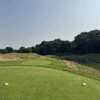
Ridgewood Country Club traces its origins to the Golden Age of golf course architecture, with construction beginning shortly after the club’s founding in 1920. The original nine holes opened for play in 1921, with the second nine completed in 1922. The property’s development required extensive stone wall removal, a painstaking process that took several years using only crowbars, horses, and stone boats. The course has undergone several significant renovation phases to preserve its playability and strategic integrity. Geoffrey Cornish conducted renovations in 1966, followed by work from Robert Trent Jones Sr. in 1959, and most recently Roger Rulewich in 2002. These successive architects have maintained the naturalistic routing principles established by Emmet while updating infrastructure and agronomic standards for contemporary play. The property encompasses approximately 170 acres of rolling Connecticut terrain, featuring natural elevation changes, meadows, and mature tree corridors that define playing corridors. The routing follows Emmet’s naturalist philosophy, integrating bold landforms rather than flattening them, resulting in sight lines that are often diminished by natural contours and greens that flow from their natural grade. The course appeals to players who appreciate Golden Age architecture and strategic shot-making, particularly those who value authentic terrain integration over manufactured features. Players seeking a classic private club experience with championship-level conditions and a traditional test of golf will find Ridgewood particularly rewarding.
Strategic Test
| Handicap | Course Strategy |
|---|---|
| High Handicap (18+) | From the Gold tees at 5,593 yards with a slope of 126 and rating of 68.0, the course presents a manageable challenge that emphasizes course management over pure power. The shorter yardages allow players to compete with fairway woods and hybrids off many tees, though accuracy remains paramount given the tree-lined corridors. The slope rating suggests bogey golfers will shoot approximately 13-14 strokes over par. The par-3 10th hole at 181 yards from these tees offers an accessible test with a mid-iron, typically requiring a 7-iron or 6-iron depending on wind conditions. This hole provides a genuine scoring opportunity when the player finds the putting surface, as the green’s contours reward accurate approach play without overwhelming higher handicappers with severe undulation. |
| Mid Handicap (8-18) | From the White tees at 6,094 yards with a slope of 133 and rating of 70.0, the course demands improved ball-striking and strategic thinking. The increased yardage brings fairway bunkers and hazards into play on tee shots, while approach shots require precise distance control to navigate push-up greens with back-to-front tilt. The slope rating indicates these players will score approximately 10-11 strokes over par. The par-3 10th hole at 181 yards requires a confident mid-iron, typically a 5-iron or 6-iron for most players in this range. The hole’s strategic value lies in green reading and club selection based on pin position, as the front-to-back slope can make distance control more critical than direction, particularly when the pin sits in back positions. |
| Low Handicap (0-8) | From the Black tees at 6,860 yards with a slope of 138 and rating of 73.5, the course reveals its championship character through length, strategic complexity, and premium demands on execution. The elevated slope rating reflects the compound difficulty of narrow tree-lined fairways, precise approach angles, and undulating greens that penalize marginal misses. These players should expect to shoot approximately 3-5 over par. The par-3 10th hole at 181 yards from these tees appears modest in yardage but demands exceptional accuracy with a 7-iron or 8-iron, as the green’s subtle contours and surrounding hazards punish anything but centered strikes. The hole exemplifies Emmet’s design philosophy of extracting maximum strategic value from modest yardages through green contouring and hazard placement, forcing low handicappers to commit to a precise line and distance rather than rely on length alone. |
Nearby Course Alternatives
Brooklawn Country Club in Fairfield presents another distinguished private option located approximately 25 minutes south of Ridgewood Country Club. The 18-hole championship course measures 6,711 yards from the tips with a slope of 138 and rating of 73.3, playing to a par of 71 over approximately 120 acres of classic Connecticut parkland terrain. Originally founded in 1895, Brooklawn became one of the earliest members of the United States Golf Association when admitted in 1896, establishing immediate championship pedigree. The course underwent complete redesign in 1930 by the legendary A.W. Tillinghast, with more recent restoration work by Ron Forse and Jim Nagle preserving the architect’s original strategic intentions while updating agronomic standards. Tillinghast’s design exhibits the geometric bunkering, dramatic green contours, and tier transitions characteristic of his uncompromising design philosophy, creating a more visually dramatic and strategically complex presentation than Ridgewood’s naturalistic approach. The course has hosted five USGA championships, including the U.S. Women’s Open and U.S. Senior Women’s Open, cementing its status among Connecticut’s elite championship venues. Low handicap players seeking the ultimate architectural and competitive test in Fairfield County will find Brooklawn’s difficulty and championship history particularly appealing, as the narrow fairways, strategic hazards, and predominantly back-to-front sloping greens demand exceptional ball-striking and course management. Mid-to-high handicappers may find Brooklawn’s severe demands less forgiving than Ridgewood’s more balanced presentation, though players who value architectural significance and the opportunity to experience a Tillinghast masterwork will prioritize Brooklawn over courses with more manufactured features.
The Patterson Club in Fairfield offers another exceptional private alternative approximately 30 minutes south of Ridgewood Country Club. The par-71 championship course measures 6,824 yards from the tips with a slope of 132 and rating of 73.0, routed over 170 acres of rolling terrain featuring five man-made lakes and dramatic elevation changes. The club traces its origins to 1929 when General Electric Company employees established a dining and social club, with the Robert Trent Jones Sr. designed golf course opening in 1947 after extensive clearing of woodlands and farm property. Jones’s design showcases bold, geometric bunkering that presents clear visual information while demanding precise execution, with green complexes exhibiting the dramatic contours and strategic complexity characteristic of his championship philosophy. The course has hosted the Connecticut State Open, Connecticut State Amateur, and numerous Metropolitan Golf Association events, establishing strong competitive credentials. More recent renovation work by Greg Muirhead, Rees Jones, Stephen Kay, and Roger Rulewich has opened up vistas by removing trees while preserving the original strategic framework, creating a more visually dynamic presentation than in previous decades. The routing makes captivating use of elevation changes throughout the property, most notably at the finishing hole where a speed slot can add 40 yards to a well-placed drive over a ridge. Players who enjoy dramatic elevation changes, water features in play, and Jones’s more geometric presentation will prefer Patterson over Ridgewood’s flatter, more naturalistic routing, while those seeking the ultimate challenge in tree-lined corridor definition might find Ridgewood’s tighter playing corridors more demanding. The course plays slightly more accessible for mid-handicappers due to more forgiving landing areas despite similar championship yardage, making it an excellent choice for players who appreciate Robert Trent Jones Sr. architecture and championship-level conditioning without the severe demands of Tillinghast’s Brooklawn.
Final Word
Ridgewood Country Club provides members with comprehensive practice facilities including a driving range with multiple practice tees, allowing players to work on all aspects of their game before the round. The putting green offers ample space for short game preparation, essential for navigating the subtle breaks and slopes characteristic of push-up greens throughout the layout. Beyond golf, the club maintains exceptional amenities that support the full country club lifestyle envisioned at its founding over a century ago. The tennis facility features multiple courts for members seeking competitive or recreational play during the summer season. The swimming pool and recreational complex create a family-oriented atmosphere where multiple generations can enjoy the property simultaneously. The clubhouse itself exemplifies traditional country club architecture and hospitality, providing elegant dining facilities, locker rooms, and social spaces where members can relax and entertain. These amenities combine to create the comprehensive private club experience that has defined Ridgewood since 1920, supporting the camaraderie and fellowship that remain central to the club’s identity. What distinguishes Ridgewood Country Club is its authentic preservation of Golden Age design principles through Devereux Emmet’s naturalistic routing, maintained and enhanced through successive generations of thoughtful renovation work. The course proves its enduring value through championship conditioning, strategic complexity that rewards thinking players, and a routing that integrates rather than dominates the natural Connecticut landscape, creating an experience that honors both architectural history and contemporary playability standards.

David is an avid golfer who loves walking Connecticut’s courses and playing alongside his family. He’s passionate about golf course architecture and one day hopes to play at Pebble Beach.