Orange Hills Country Club is a public par-71 course measuring approximately 6,511 yards from the tips. The course was originally designed in 1927 by Geoffrey Cornish and is located in Orange, Connecticut.
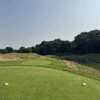
The property traces its roots to 1924 when a group of New Haven residents acquired a former Victorian estate and formed Rolling Ridge Country Club, which opened for play on Memorial Day 1927 as a nine-hole layout with sand greens. The facility changed ownership in 1930 and was renamed Orange Hills Country Club, with the Smith family taking sole ownership in 1955. The course underwent its most significant expansion between 1956 and 1961 when the Smith family constructed the back nine to complete the eighteen-hole configuration, a project overseen by Geoffrey Cornish who brought his functional design philosophy to the additional holes. The layout received a modern clubhouse in 1966 positioned atop one of the property’s hills, offering views toward Long Island Sound. The course spans approximately 120-140 acres of rolling Connecticut terrain characterized by mature hardwood corridors and modest elevation changes throughout the routing. The design philosophy emphasizes playability for a wide range of abilities while maintaining strategic interest through corridor definition and green complexes rather than excessive length. Players seeking honest, straightforward golf with classic New England character will appreciate the traditional parkland routing and tree-lined fairways that reward accuracy over distance.
Strategic Test
| Handicap | Course Strategy |
|---|---|
| High Handicap (18+) | From the Red tees at 5,616 yards with a 119 slope and 67.8 rating, higher handicap players face approximately 15-20 strokes above their index on a typical round. The front nine offers more forgiving terrain and wider landing areas to build confidence before the tighter, tree-lined back nine. The 7th hole presents an ideal strategic opportunity at 381 yards from these tees as the number one handicap hole. This demanding par-4 features white stakes defining the left boundary and requires a well-positioned drive to set up an approach to the green. Most players in this range will use driver off the tee followed by a mid-iron or hybrid approach, with the key being to avoid the boundary hazards that can quickly inflate scores. The hole rewards conservative play and positions this group to make bogey or better with sound course management. |
| Mid Handicap (8-18) | From the White tees measuring 6,115 yards with a 124 slope and 70.2 rating, mid-handicap players typically score 8-15 strokes over par. The course demands accurate driving as mature trees line virtually every fairway, particularly on the back nine where overhanging branches penalize wayward tee shots. The 12th hole offers excellent strategic challenge at 383 yards (rated as the second hardest hole) with white stakes right and fencing near the green creating a precise corridor. Players in this bracket typically hit driver followed by short iron from 140-160 yards depending on drive quality. The narrow approach window and green-side hazards reward those who can shape shots and understand angle of entry. This hole exemplifies the course’s ability to test shot-making without relying on excessive length. |
| Low Handicap (0-8) | From the Blue tees at 6,511 yards with a 130 slope and 72.1 rating, accomplished players face a test that yields scores of 1-8 over par. The routing challenges single-digit players through green complexity and strategic positioning rather than sheer distance. The 7th hole at 417 yards (number one handicap) demonstrates the course’s strategic depth for skilled players. From the championship tees, the hole requires precise drive placement while avoiding left-side white stakes, typically leaving 160-180 yards into the green depending on tee shot execution. Low handicappers must decide between aggressive driver to shorten the approach or controlled fairway wood to ensure optimal angle. The green’s contours and surrounding features reward precise distance control and proper club selection. This hole epitomizes how the Geoffrey Cornish design creates challenge through routing and green complexes rather than artificial length. |
Nearby Course Alternatives
Grassy Hill Country Club in Orange sits just five minutes northwest from Orange Hills and provides an alternative public experience on similar rolling terrain with distinctly different character. The par-70 layout stretches 6,208 yards from the championship tees with a 70.5 rating and 122 slope, offering a slightly shorter but nonetheless challenging test on approximately 120-140 acres of classic Connecticut landscape. Designed in 1927 without a credited architect, the course features bent grass greens and fairways that have developed character through nearly a century of play and refinement. The routing emphasizes shot values through smaller, faster green complexes that demand precision on approaches, creating scoring opportunities for players who can control trajectory and spin. Notable architectural features include the long par-5 fifth hole measuring 612 yards that tests driver strategy across multiple shots, along with a distinctive par-3 tenth hole playing 218 yards downhill that creates club selection uncertainty. The facility maintains a reputation for excellent drainage allowing play even after significant rainfall, a valuable attribute for the committed golfer seeking year-round access. Players who prioritize putting surface speed and enjoy reading challenging green contours will find Grassy Hill particularly appealing, as the smaller targets and undulation create a premium on short game execution that differs from Orange Hills’ slightly more generous green complexes. The course suits mid-to-low handicap players seeking to sharpen their approach game and putting skills on fast, true surfaces.
The Tradition Golf Club at Oak Lane in Woodbridge provides a compelling public alternative approximately ten minutes south of Orange Hills with increased strategic complexity and refined conditioning. The par-72 championship layout measures 6,680 yards from the Black tees with a 72.9 rating and 125 slope, creating similar overall difficulty while utilizing different architectural strategies across 140-160 acres. Originally designed by Geoffrey Cornish in 1961 as Oak Lane Country Club, the facility operated as a private club for over five decades before transitioning to daily-fee access in 2013 under new management committed to capital improvements. The routing incorporates water hazards on several holes and numerous strategically placed bunkers that demand precise positioning, with the most significant recent renovation completing new Capillary Concrete bunker installations throughout all 31-40 sand features in Spring 2022 to improve drainage and playability. The opening hole presents immediate strategic interest as a 570-yard par-5 with a river bisecting the slight dogleg-left fairway, forcing decisions about layup positioning versus aggressive play toward the green. Green sites throughout feature Cornish’s characteristic pitch and undulation creating multiple pin positions that significantly alter hole difficulty, with larger putting surfaces than typically found on his designs offering both aggressive and conservative approach options. The facility earned recognition as the Connecticut PGA’s Walter Lowell Distinguished Public Golf Course in 2020, reflecting the ownership’s reinvestment in conditioning and customer service. Players seeking elevated conditioning standards with private club presentation and more pronounced strategic elements from hazard placement will gravitate toward Oak Lane, particularly low-to-mid handicappers who can work the ball and understand positional advantages from different approach angles.
Final Word
Orange Hills Country Club maintains practice facilities that support player development, including a grass hitting area where golfers can work on full swing mechanics before their rounds. The property features a practice putting green adjacent to the clubhouse allowing players to develop feel for green speeds, along with limited short-game practice space for chipping and pitching work around the practice green complex. The clubhouse built in 1966 occupies an elevated position providing panoramic views of the surrounding towns and Long Island Sound, creating a distinctive sense of place that enhances the overall experience. The facility operates a pro shop stocked with essential golf equipment and accessories under the guidance of PGA professionals who offer instruction and equipment services to members of the Men’s and Women’s Golf Associations. The property includes a bar and grill providing food and beverage service, with hot dogs earning particular mention in player reviews as a simple but satisfying post-round option. Orange Hills has maintained recognition from Golf Digest with consistent four-star ratings on their Best Places To Play list, validating the facility’s commitment to conditioning and playability. The course holds memberships in both the Connecticut State Golf Association and United States Golf Association, along with Audubon Society recognition for environmental stewardship practices. What distinguishes Orange Hills in Connecticut’s competitive public golf market is the Smith family’s six-decade stewardship creating institutional knowledge and consistency that many daily-fee facilities cannot match. The Geoffrey Cornish design demonstrates enduring strategic principles that remain relevant more than 60 years after completion, with mature tree corridors and thoughtful green complexes providing challenge without artificial difficulty. The facility successfully balances accessibility for developing players through multiple tee options while maintaining enough strategic depth to engage accomplished golfers, fulfilling Cornish’s vision of functional architecture that serves the masses without sacrificing interest. Orange Hills proves its value through honest, well-maintained golf on classic New England terrain where course management and accuracy trump pure distance, delivering an authentic public golf experience that honors the game’s traditions.

David is an avid golfer who loves walking Connecticut’s courses and playing alongside his family. He’s passionate about golf course architecture and one day hopes to play at Pebble Beach.