Highland Greens Golf Course is a public par-27 course measuring approximately 1,398 yards from the tips. The course was originally designed in 1967 by Al Zikorus and is located in Prospect, Connecticut.
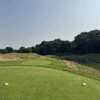
Highland Greens sits on historically significant property once owned by Revolutionary War Captain Ambrose Hine Jr., who served with General Washington’s Continental Army in the Battle of Long Island and later defended the Hudson River. His stonewalls remain visible throughout the property, and his home still stands as the red house across from the 3rd tee. The course occupies approximately 40 acres of rolling terrain and was conceived from its inception as Connecticut’s only full-length par-3 facility with lighting for night play. Zikorus, a locally renowned architect, set out to design a layout that would test every iron in a golfer’s bag and potentially a fairway wood or two. His signature green complexes feature subtle reverse slopes and yawing bunkers crafted from native materials. The routing takes advantage of natural elevation changes, creating a mix of hilly and flat fairways that add dimension to what might otherwise be a straightforward short-game venue. This is an ideal facility for players seeking to sharpen their iron play in a relaxed but purposeful environment. The golfer who enjoys focused practice on approach shots, appreciates thoughtful green complexes, and values the ability to complete a round in under two hours will find Highland Greens particularly satisfying. The lighted evening rounds add a distinctive element not available elsewhere in Connecticut.
Strategic Test
| Handicap | Course Strategy |
|---|---|
| High Handicap (18+) | These players will find Highland Greens an excellent venue for building confidence with mid and short irons without the intimidation factor of long par-4s or par-5s. From the white tees at 1,398 yards with a slope of 90 and rating of 36.0, the relatively gentle slope rating means bogeys are achievable on most holes without excessive penalty. The 3rd hole stands out as particularly instructive for this group. At 115 yards, it is the shortest on the course but demands precision over two deep greenside bunkers. The hole teaches trajectory control and the importance of accepting the center of the green rather than chasing pins. Club selection here typically ranges from a pitching wedge to an 8-iron depending on conditions and individual carry distances. The modest slope rating ensures that even with a few double bogeys mixed in, scores remain manageable and rounds feel productive rather than punishing. |
| Mid Handicap (8-18) | Mid-handicappers will appreciate the nuanced challenges Highland Greens presents despite its modest yardage. The slope of 90 and rating of 36.0 mean that solid ball striking will produce scores near par, but wayward shots into Zikorus’s carefully positioned hazards will accumulate strokes quickly. The 7th hole, measuring 157 yards from the tips, exemplifies the strategic depth available here. This signature hole plays over water to a green fronted by the course’s distinctive black-water pond, dredged nearly 30 feet deep along the left side. The hole demands a confident mid-iron strike with sufficient carry to clear the hazard while avoiding the tendency to bail out right. In firm conditions, a 7-iron or 6-iron is typical from the back tee, while downwind a soft 8-iron might suffice. The green’s subtle slopes mean distance control is paramount. This player profile will find the course rewards consistent iron play and exposes any tendency to miss directionally. |
| Low Handicap (0-8) | Accomplished players will discover that Highland Greens offers more resistance than its yardage suggests, primarily through green complexes and strategic hazard placement. The rating of 36.0 and slope of 90 indicate that while distance is not the challenge, precision and creativity around the greens become the differentiators. Several holes stretch beyond 185 yards, requiring long irons or hybrids and presenting legitimate par opportunities rather than easy birdie chances. The reverse slopes in many greens create situations where the wrong quadrant leaves difficult two-putts. The 7th hole at 157 yards becomes a scoring opportunity for this group, but only with proper execution. A well-struck 8-iron or soft 7-iron that carries the water hazard approximately 145 yards and lands on the front portion of the green is ideal. Missing long can be as costly as coming up short in the water. Low handicappers seeking birdie on every hole must manage their aggression, as the course rewards the player who understands when to attack pins versus when to accept center-green locations. |
Nearby Course Alternatives
Gainfield Farms Golf Course in Southbury offers another Al Zikorus design just 20 minutes west of Highland Greens via I-84. This par-28 layout stretches 1,384 yards from the tips across approximately 30 acres of former farmland. Zikorus applied similar design wisdom here, creating genuine challenges within the executive format rather than oversimplified holes. The course features eight par-3s and one par-4, providing slightly more variety in hole types than Highland Greens’ all-par-3 routing. Gainfield Farms occupies rolling terrain with several elevated greens that add complexity to club selection, particularly on the 3rd hole, a steeply uphill par-3 of 188 yards from the back tees with an impressively defended green. The conditioning at Gainfield Farms is notably strong, with greens approaching country club standards and featuring devilish slopes that test putting finesse. The facility caters particularly well to junior golfers and developing players due to its abbreviated length, though the design contains enough rigor to engage accomplished ball strikers. A high-handicap player seeking additional variety in hole types and perhaps slightly less emphasis on carry over hazards would find Gainfield Farms an appealing alternative, while players specifically wanting to work exclusively on par-3 execution might prefer Highland Greens’ singular focus.
Guilford Lakes Golf Course in Guilford presents a comparable par-3 experience approximately 40 minutes southeast of Highland Greens. This par-27 facility measures 1,319 yards from the championship tees with a slope rating of 113 and course rating of 35.5. Also designed by Al Zikorus and opened in 1999, Guilford Lakes features bent grass greens and rye grass fairways spread across scenic property with varied topography. The course incorporates uphill and downhill holes as well as several water features, with the longest hole stretching to 180 yards, allowing younger players to occasionally employ drivers. The elevated slope rating of 113 compared to Highland Greens’ 90 indicates that Guilford Lakes presents more scoring difficulty relative to par, likely due to tighter corridors and more severe penalty areas. The routing includes memorable elevation changes that create visual interest and add a dimension of club selection beyond simple yardage calculation. Located just minutes off I-95 near Connecticut’s shoreline, Guilford Lakes offers excellent accessibility for coastal travelers. A mid-handicap player who values dramatic terrain changes and prefers a course with slightly more bite in its slope rating would gravitate toward Guilford Lakes, while those seeking gentler topography and evening lighting opportunities would find Highland Greens more suitable to their preferences.
Final Word
Highland Greens Golf Course provides practice facilities appropriate to its mission as a short-game venue, including areas for warming up before rounds and working on specific skills. The facility maintains a welcoming clubhouse atmosphere where players can relax after completing their rounds, with staff offering a friendly environment that encourages repeat visits. The course’s distinction as Connecticut’s only lighted par-3 facility extends playing hours into the evening during summer months, a unique amenity that allows golfers with daytime commitments to enjoy a full round after work. This evening play option, combined with the quick pace of play possible on the 1,398-yard routing, makes Highland Greens particularly valuable for time-constrained golfers who still want meaningful practice or recreational rounds. What makes this course special is its thoughtful design within the par-3 format, avoiding the common pitfall of creating monotonous short holes by instead crafting strategic variety through Zikorus’s green complexes and hazard placement. The historical property adds character beyond what the golf alone provides, connecting players to the Revolutionary War heritage embedded in the stonewalls and structures surrounding the course. Highland Greens proves its value by serving multiple constituencies simultaneously: beginners building skills without intimidation, accomplished players maintaining sharp iron play, and anyone seeking an efficient yet engaging golf experience. The facility delivers on its stated philosophy of being the best par-3 course in Connecticut by respecting both the game and the golfer’s time, creating an environment where improvement and enjoyment coexist naturally.

David is an avid golfer who loves walking Connecticut’s courses and playing alongside his family. He’s passionate about golf course architecture and one day hopes to play at Pebble Beach.