Greenwich Country Club is a private par-71 course measuring approximately 6,706 yards from the tips. The course was originally designed in 1916 by Seth Raynor and is located in Greenwich, Connecticut.
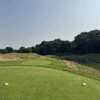
Founded in 1892 as the Fairfield County Golf Club, making it one of the oldest clubs in America, the Greenwich facility has witnessed more than a century of architectural evolution across its 165 acres. Seth Raynor arrived in 1916 to redesign an existing Lawrence Van Etten layout, establishing the fundamental routing corridors that persist today despite the property’s dramatic topography and natural constraints. Donald Ross provided renovation plans in 1946, with work focused on bunker revisions and green contouring for the post-war game, followed by Robert Trent Jones Sr. executing further modernization in the 1960s. The most recent comprehensive renovation arrived through Beau Welling Design between 2018 and 2020, rebuilding all eighteen greens with new bentgrass surfaces, refreshing bunker complexes with improved drainage and strategic clarity, and establishing a modern golf learning center with expanded practice areas completed by 2022. The routing climbs and descends across ridgelines and valleys on compact, wooded terrain, creating frequent elevation changes and numerous cross-slopes that influence both stance and approach angles. Several holes remain constrained by stone walls and mature hardwoods, producing intimate playing corridors that reward course knowledge and precise execution. The design speaks to players who appreciate strategic variety over raw length, with placement off the tee dictating approach angles into push-up greens and elevated platforms that punish misses with severe recovery demands. The course hosted the 1958 U.S. Girls’ Junior Championship, cementing its place in American competitive golf history during the mid-century period.
Strategic Test
| Handicap | Course Strategy |
|---|---|
| High Handicap (18+) | From the Green tees at 5,871 yards with a slope of 131 and rating of 74.4 for women, this layout presents manageable distance but demands accuracy on approach shots to greens with significant contour and runoff areas. The par-4 7th hole at 365 yards from this tee showcases a punchbowl green complex where approach shots carom off surrounding slopes, creating uncertainty in final ball position but offering generous collection areas for offline strikes. Club selection centers on keeping the ball below the hole, as many greens feature false fronts and fallaway back sections that compound three-putt scenarios. The elevation changes throughout can add or subtract a full club to standard yardages, requiring careful attention to topographic cues and distance markers. |
| Mid Handicap (8-18) | Playing from the White tees at 6,385 yards with a slope of 130 and rating of 70.6, mid-handicappers encounter strategic decisions on nearly every hole, particularly regarding whether to challenge diagonal hazard lines or lay back to preferred angles. The par-4 16th hole at 380 yards from these markers features diagonal bunkers fronting the green that create an angled carry demand, where approaches from the left side of the fairway find more receptive angles than those played from the right. Driver placement becomes critical as multiple holes feature fairway bunkers or terrain features that dictate ideal approach windows. The significant green contours reward players who can flight wedges and mid-irons with trajectory control, while punishing those who rely solely on distance. |
| Low Handicap (0-8) | From the Black tees at 6,706 yards with a slope of 133 and rating of 72.1, accomplished players face a stern examination of shot-making across varied terrain that maximizes every available yard on the compact property. The par-5 14th hole at 516 yards demands precise positioning through a creek-affected corridor, where a well-placed drive opens the option to attack a green complex surrounded by sharp falloffs and collection areas that reject marginal strikes. The course defends par through green complexes rather than overwhelming length, with multiple putting surfaces featuring subtle breaks and shelf sections that punish approach shots landing in incorrect quadrants. Several short par-4s on the back nine tempt aggressive play but feature narrow target windows and severe consequences for missing primary landing zones. |
Nearby Course Alternatives
Round Hill Club in Greenwich sits approximately 3 miles west and 7 minutes from Greenwich Country Club, offering a contrasting architectural experience on similarly prestigious private grounds. Measuring 6,525 yards from the tips with a par of 71, slope of 127, and rating of 71.3, the Walter Travis original routing from 1922 underwent significant modifications by Robert Trent Jones Sr. in the 1950s and 1960s, with subsequent work by Kenneth Dye in 1997 refining green complexes and approach corridors. The course occupies approximately 130 acres with more moderate elevation changes than Greenwich, creating a rhythm of short and long par-4s that rewards precise iron play over raw power. The signature par-3 11th stretches 178 yards with a forced carry over a pond to a sweeping green complex that showcases Trent Jones’s mid-century aesthetic sensibility. The design incorporates thick rough as a primary defense combined with strategically positioned bunkers that frame ideal landing zones, producing a more traditional country club test. Players who prefer wider fairway corridors and less severe topographic challenges will find Round Hill more forgiving off the tee while maintaining robust scoring demands around the greens. The club’s practice facilities include a driving range with multiple target options and extensive short game areas. Mid-handicap players seeking a walkable layout with strategic variety but gentler terrain than Greenwich’s ridge-and-valley routing will particularly appreciate Round Hill’s balance of challenge and playability.
Tamarack Country Club in Greenwich lies approximately 6 miles northwest and 12 minutes from Greenwich Country Club, presenting a bold expression of Charles Banks’s template-driven Golden Age design philosophy on dramatically scaled terrain. The course measures 6,841 yards from the championship tees with a par of 71, slope of 126, and rating of 72.9 across approximately 150 acres of rolling farmland acquired in 1928 when the club relocated from Port Chester, New York. Banks employed steam shovel earthmoving techniques to create massive bunker complexes and pronounced green surrounds, with Brian Schneider’s 2022-2024 restoration work recapturing the original scale and strategic intent through tree removal, fairway expansion, and bunker reconstruction. The routing incorporates multiple Macdonald-Raynor templates including a distinctive Redan 7th, Biarritz 12th, and Punchbowl 11th that demonstrate Banks’s interpretation of classic hole concepts with exaggerated vertical movement. The front nine traverses flatter middle portions of the property before ascending into superior terrain, while the back nine occupies ridgeline positions with sweeping corridor views and dramatic green sites. Players drawn to architectural boldness and visual drama will find Tamarack’s oversized features and aggressive green complexes more memorable than Greenwich’s intimate, constrained corridors. The recent restoration garnered recognition as Golf Digest’s Best Renovation award nominee, elevating the course to fourth-ranked in Connecticut. Low-handicap players who appreciate template holes and enjoy dissecting strategic puzzles across large-scale features will find particular satisfaction in Tamarack’s demanding examination of approach shot precision and green-reading skill.
Final Word
Greenwich Country Club’s practice facilities underwent substantial enhancement through the 2018-2022 renovation cycle, with the driving range receiving doubled square footage on the tee deck and strategic target placement to prevent encroachment onto adjacent playing holes. The newly constructed golf learning center provides dedicated instruction space with modern video analysis capabilities and covered hitting bays for year-round practice regardless of weather conditions. Short game areas include a practice putting green positioned near the clubhouse and dedicated chipping zones that allow members to rehearse the elevated and contoured recovery shots frequently encountered during competitive rounds. Beyond golf operations, the club maintains an extensive athletic complex featuring eight tennis courts, four pickleball courts, four paddleball courts, and three squash courts distributed between indoor and outdoor facilities that accommodate year-round play. The aquatics program centers on a 25-meter lap pool with dedicated family and social areas, while specialized amenities include a bowling alley, skeet and trap shooting facilities with five-stand configurations, and a fitness center with cardiovascular and strength equipment. The Georgian-Colonial clubhouse anchors the property with multiple dining venues ranging from formal service to casual family-friendly spaces, supported by a grand ballroom for member events and sixteen guest rooms providing overnight accommodations. What distinguishes Greenwich from regional competitors lies in its successful balance of architectural pedigree and practical playability across demanding topography that could easily overwhelm lesser designs. The Welling renovation respected Raynor’s fundamental routing intelligence while addressing contemporary maintenance and drainage demands that plagued previous iterations, producing bentgrass surfaces that roll consistently through humid summer conditions that historically challenged poa annua greens. The course rewards strategic thinking and precise execution without requiring overwhelming length, creating an examination of shot-making skill that engages accomplished players while remaining accessible to improving members who understand angle creation and avoid compounding errors. The 2020 completion timing positioned the renovated course to immediately demonstrate its enhanced conditioning and playability, validating the membership’s investment in modernizing infrastructure while preserving the character that has defined Greenwich golf for more than a century.

David is an avid golfer who loves walking Connecticut’s courses and playing alongside his family. He’s passionate about golf course architecture and one day hopes to play at Pebble Beach.