

Blackhawk Country Club is a private par-72 course measuring approximately 6,573 yards from the tips. The course was originally designed in 1973 by Desmond Muirhead and is located in Stratford, Connecticut.
Blackhawk Country Club carries a fascinating transformation story that reflects both resilience and architectural evolution in Connecticut golf. Previously known as Oronoque Country Club until its 2022 acquisition by Alliance Point, the facility was originally founded in 1972 by prominent local businessmen who envisioned a world-class golf course and social gathering place for their community. They enlisted renowned golf course architect Desmond Muirhead, whose minimalist design philosophy prioritized strategic play over brute force, to bring their ambitious vision to life. Muirhead, known for his unconventional approach to golf architecture and later famous for symbolic hole designs, was still in his more traditional phase when he crafted this Connecticut layout. The course opened in 1973 during a period of unprecedented golf course construction across America, representing one of Muirhead’s early works before his collaboration with Jack Nicklaus at Muirfield Village. The facility weathered various ownership changes and economic challenges over five decades, maintaining its reputation as a challenging test of golf while serving the Oronoque Village residential community. Recent renovations under new ownership have modernized certain features while preserving Muirhead’s original strategic framework. The club’s rebranding as Blackhawk Country Club symbolizes a commitment to revitalizing the atmosphere and welcoming players of all skill levels. Historical tournament play and member championships have established the course’s competitive credentials within Connecticut golf circles. The facility’s survival and recent renaissance demonstrate the enduring appeal of thoughtful golf architecture in an increasingly crowded marketplace. Today’s Blackhawk represents both respect for Muirhead’s original vision and adaptation to contemporary golf expectations.
The course encompasses approximately 150 acres of gently rolling Connecticut terrain that showcases classic parkland routing principles through residential corridor development. Muirhead utilized the natural topography skillfully, creating moderate elevation changes that enhance strategic interest without overwhelming recreational players. The routing follows traditional returning nines configuration, with the front nine playing through more open terrain while the back nine navigates tighter, tree-lined corridors that demand greater precision. Natural drainage patterns and existing wooded areas influenced the hole corridors, resulting in varied playing angles and diverse shot requirements throughout the round. The design aesthetic reflects Muirhead’s preference for subtle ground movement and strategic hazard placement rather than dramatic visual features or artificial earth moving. Fairway corridors range from generous landing areas that reward aggressive play to narrower passages that emphasize accuracy and course management. The putting surfaces feature significant internal contouring with multiple pin positions, creating three-dimensional challenges that extend beyond simple distance control. Water hazards appear strategically rather than decoratively, primarily affecting specific holes where risk-reward decisions become paramount. Mature tree coverage provides natural corridor definition while allowing sufficient sunlight penetration for healthy turf conditions. The overall terrain character suits players who appreciate strategic architecture and positional golf over purely physical challenges. Course conditioning varies seasonally but generally maintains standards appropriate for serious recreational and competitive play. The routing accommodates various skill levels through thoughtful tee placement and multiple route options on key holes. This design philosophy attracts thinking players who value strategic decision-making and course management skills. The terrain’s moderate difficulty makes it accessible to mid-handicap players while providing sufficient challenge for accomplished golfers.
Strategic Test
The strategic architecture at Blackhawk operates through Muirhead’s systematic placement of centerline hazards and corridor-defining features that create genuine decision points throughout the round. Players encounter multiple route options from tee to green, though several holes feature blind or semi-blind approach shots that require local knowledge for optimal execution. The course rewards different playing styles through varied hole lengths and strategic frameworks, from short par-4s that tempt aggressive drives to longer holes demanding careful position play. Green complexes feature significant slope and contour that reward precise approach angles, with false fronts, collection areas, and internal ridges creating multiple pin positions of varying difficulty.
Course rating and slope ratings provide quantitative measures of strategic difficulty that directly impact scoring expectations across different skill levels. The course rating of 73.7 represents the expected score for a scratch golfer under normal playing conditions, indicating the course plays nearly two strokes above its par-72 designation for accomplished players. The slope rating of 131-133 measures how much more difficult the course becomes for bogey golfers compared to scratch players, with 113 representing a course of standard relative difficulty. Blackhawk’s slope rating significantly exceeds this standard, meaning higher handicap players face disproportionately greater challenges than single-digit golfers when navigating the strategic demands and hazard placements throughout the layout.
Accessibility varies considerably based on tee selection and individual skill development, with forward tee positions reducing both distance and strategic complexity for developing players. The course provides sufficient challenge for accomplished golfers while remaining playable for higher handicaps who exercise appropriate course management and realistic expectations. Strategic decision-making opportunities occur frequently enough to maintain engagement, though some tactical options require local knowledge to execute effectively.
| Handicap | Course Strategy |
|---|---|
| High Handicap (18+) | Play forward tees (5,800-6,000 yards) where slope effect adds 8-12 strokes to expected score. Prioritize avoiding penalty areas and playing to largest landing areas rather than challenging strategic angles. |
| Mid Handicap (8-18) | Middle tees (6,200-6,400 yards) provide balanced challenge where slope adds 4-8 strokes. Strategic tee shot placement becomes critical for manageable approach angles into contoured greens. |
| Low Handicap (0-8) | Championship tees (6,573 yards) demand precise execution where slope adds minimal penalty. Must utilize optimal angles and distance control to score effectively against demanding pin positions. |
The signature 18th hole exemplifies Muirhead’s strategic design philosophy through a challenging par-4 measuring 391 yards from the black tees with a slight right dogleg that presents multiple playing strategies. The hole features a centerline bunker complex positioned at the 255-yard mark that creates a genuine strategic decision point for all skill levels. High handicappers should play conservatively with fairway wood or hybrid to a 150-yard position, avoiding the bunker system entirely and setting up a comfortable mid-iron approach to the elevated, push-up green complex. Mid handicappers can challenge the corner with driver placement to the 240-yard area, though this aggressive line requires precise execution to maintain the preferred angle for attacking the pin position. Low handicappers must thread driver past fairway bunkers to reach the optimal 80-yard position, where controlled wedge play can access difficult pin placements on the severely contoured putting surface that features false front collection and back-to-front slope of approximately three feet. The green’s internal ridges create four distinct quadrants, making approach angle selection critical for realistic birdie opportunities.
Nearby Course Alternatives
Blackhawk Country Club offers members comprehensive practice facilities including a brand new driving range and expanded short game practice area. The club features three PGA and LPGA professionals on staff who provide personalized instruction and custom club fitting. The recently modernized clubhouse includes renovated locker rooms and casual dining options. Strategic course redesigns have been completed to enhance playability for members of all skill levels across the 6,573-yard Desmond Muirhead layout. The facility’s convenient location less than ten minutes from I-95, Route 15, and Route 8 makes it easily accessible throughout Fairfield County. For golfers seeking different playing experiences, two distinguished private clubs within a short drive offer compelling alternatives to Blackhawk’s championship design.
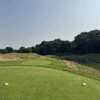
Brooklawn Country Club in Fairfield delivers one of Connecticut’s premier golden-age architectural experiences just 11 minutes west of Blackhawk. This championship 18-hole layout stretches to 6,711 yards from the tips with a par of 71, slope rating of 138, and course rating of 73.3. Founded in 1895, Brooklawn became one of the earliest members of the United States Golf Association in 1896 and maintains its position among the state’s most prestigious clubs. The course underwent a complete redesign in 1930 by legendary architect A.W. Tillinghast, with ongoing refinements by respected restoration architect Ron Forse preserving Tillinghast’s strategic brilliance while modernizing playing surfaces. Brooklawn’s pedigree is unmatched in the region, having hosted the U.S. Women’s Open, U.S. Senior Open, and three U.S. Senior Women’s Open championships, most recently in 2021. The layout exemplifies Tillinghast’s signature design elements including dramatically undulating greens that slope back to front, strategic bunkering that frames playing corridors, and clever use of elevation changes that challenge without exhausting. Gene Sarazen, inventor of the sand wedge, served as assistant professional at Brooklawn before his rise to prominence and still holds the course record of 63. Beyond the championship course, Brooklawn offers extensive family amenities including a seven-court tennis center, three paddle tennis courts, swimming complex, and eight-lane bowling alley housed in a magnificent 57,667-square-foot clubhouse opened in 1916. Players who appreciate architectural heritage, classic golden-age design principles, and courses with genuine championship pedigree will find Brooklawn’s Tillinghast masterpiece offers substantially more historical significance and strategic sophistication than Blackhawk’s more modern layout, making it ideal for accomplished golfers who value traditional shot values, demanding green complexes, and membership at a club deeply woven into American golf history.
Mill River Country Club in Stratford provides a scenic alternative within the same town as Blackhawk, located just minutes away along the picturesque Housatonic River overlooking Long Island Sound. This 18-hole layout plays to 6,266 yards from the championship tees with a par of 70, slope rating of 129, and course rating of 70.3. Established in 1923 and designed by Tom Winton, Mill River expanded from nine to 18 holes in 1926 and has served as a beacon of golf and social camaraderie for over a century. The course occupies waterfront property that provides stunning views and a links-like coastal atmosphere rare in inland Connecticut, with holes routed through rolling terrain that takes advantage of natural elevation changes and water features. Mill River’s layout emphasizes strategic positioning over pure length, rewarding thoughtful course management and precise iron play rather than demanding maximum distance off the tee. The club maintains strong family-oriented programming with active social events, multiple recreational amenities beyond golf, and a vibrant membership culture focused on building lasting friendships and community connections. The clubhouse offers upscale dining options with panoramic views of the course and Long Island Sound, creating an ideal setting for both casual meals and special occasions. Golfers who prefer a shorter, more strategic test that emphasizes accuracy and course management over length will appreciate Mill River’s player-friendly design, particularly those who value spectacular water views, a strong sense of tradition and community, and membership at a club where social connections and family activities receive equal emphasis with competitive golf.
Final Word
Blackhawk Country Club succeeds as an accessible entry point into Connecticut private club golf that delivers authentic strategic architecture without the prohibitive costs associated with the state’s most exclusive facilities. Muirhead’s thoughtful design philosophy shines through intelligent routing and challenging green complexes that reward strategic thinking and precise execution over pure physical ability. The recent ownership transition and facility improvements demonstrate genuine commitment to competitive playing conditions while preserving the architectural integrity that makes this course intellectually engaging for serious golfers. For players seeking private club membership with legitimate design pedigree, Blackhawk proves its value through strategic substance and welcoming atmosphere rather than ostentatious amenities or social exclusivity.

David is an avid golfer who loves walking Connecticut’s courses and playing alongside his family. He’s passionate about golf course architecture and one day hopes to play at Pebble Beach.





Anyone know the initiation fee here?
I looked into a few years ago and was like 5k for a single full membership with a 2k initiation fee. Thought mill river was a little better deal but honestly would rather do Smith Richardson or Tashua or Traditions Woodbridge if looking closely since just distracting with shit ton of houses near the course
I’ve been a member here for more than 20 years. Great course nicest people been to mill river but can’t compare apples to oranges this is where REAL GOLFERS go