Goodwin Park Golf Course is a public par-35 course measuring approximately 2,544 yards from the tips. The course was originally designed in 1910 and is located in Hartford, Connecticut.
The North Course at Goodwin Park represents a significant chapter in Hartford’s golf history, as it complements the original nine holes that were first established at the facility in 1906. Following the successful introduction of golf to what was then known as Great Meadow, demand necessitated expansion, and a second nine holes opened in 1910. This additional nine became known as the North Course, though many locals affectionately refer to it as the Flat Nine. The property itself has an even richer pedigree, as Goodwin Park was originally designed by the legendary Frederick Law Olmsted firm at the turn of the 20th century, creating a 200-acre pastoral landscape that would become Hartford’s second-largest park. The golf courses wound through a grand meadow framed by mature tree plantations, establishing a picturesque setting that persists today. After years of challenging maintenance conditions, the City of Hartford invested over $1 million in improvements beginning in 2013, bringing the Connecticut PGA Section on board as consultants to restore the facility to respectable playing conditions. The course has experienced a renaissance since these interventions, with upgraded maintenance practices under Guilmette Golf helping to reclaim the reputation that municipal golf in Hartford had lost during previous decades of management struggles.
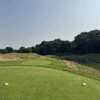
Occupying a relatively compact footprint within the broader park complex, the North Course sprawls across gently rolling terrain that lives up to its Flat Nine nickname. The routing follows a straightforward out-and-back configuration that maximizes efficiency while providing golfers with views of the Hartford skyline from certain vantage points. The design philosophy emphasizes accessibility and playability, with a composition of eight par fours and one short par three creating a layout that rewards consistent ball-striking rather than raw power. The complete absence of bunkers and water hazards makes this an ideal environment for players working to develop their game without the psychological pressure of penalty areas. The course appeals most strongly to beginners seeking to build confidence, mid-handicappers looking for a quick nine holes to work on specific aspects of their game, and lower-handicappers interested in honing their short iron and wedge precision. Mature trees line most fairways, creating natural corridors that demand accuracy off the tee, while the greens offer subtle undulations that require thoughtful approach play. The North Course serves as an excellent complement to the more demanding championship South Course at the same facility, providing options for golfers of varying skill levels within a single complex.
Strategic Test
The strategic architecture of the North Course operates on a fundamentally different wavelength compared to championship-length facilities, as its compact yardage and hazard-free environment shift the emphasis from course management decisions to pure execution challenges. With eight par fours averaging approximately 280 to 320 yards and a single par three measuring around 100 yards, nearly every hole becomes a potential birdie opportunity for skilled players, yet the narrow tree-lined fairways present a consistent test of accuracy that can quickly derail scorecards for those who stray offline. The absence of fairway bunkers or water hazards means that strategic decision-making revolves primarily around club selection off the tee, where players must balance the desire to shorten approach distances against the risk of missing fairways and finding themselves behind trees or in thick rough. The course rewards a conservative, position-oriented approach, particularly for higher-handicappers who benefit from keeping the ball in play rather than attempting aggressive lines. Mid-to-low handicappers face a different strategic puzzle, as the short yardages demand exceptional wedge control and the ability to manufacture precise distances, turning what might seem like a straightforward executive course into a legitimate test of scoring ability. The greens, while not heavily contoured, feature enough slope to punish poorly struck approach shots, adding a layer of complexity that prevents the course from becoming a mere target practice facility.
Understanding the course rating and slope system provides crucial context for how the North Course challenges different skill levels. Course rating represents the score a scratch golfer would be expected to shoot under normal conditions, while slope rating measures the relative difficulty for bogey golfers compared to scratch golfers, with 113 representing standard difficulty and higher numbers indicating greater challenge for higher handicappers. The North Course carries a slope rating of 116, slightly above standard, which indicates that while the course plays relatively straightforward for skilled players, it presents legitimate scoring challenges for those in the mid-to-high handicap ranges. The elevated slope relative to the modest yardage stems from the narrow fairways and tree-lined corridors that disproportionately penalize errant tee shots common among recreational golfers. For scratch players, the primary strategic consideration involves maintaining focus across nine holes where birdie opportunities abound but complacency can lead to dropped shots from missed fairways. Higher handicappers must resist the temptation to overswing on short holes, instead prioritizing accuracy and accepting that pars represent excellent scores on a course where strategic recovery options remain limited once the ball leaves the fairway. The absence of multiple tee boxes on most holes means that the course plays to its full length for all skill levels, making proper club selection and course strategy equally important regardless of handicap.
| Handicap | Course Strategy |
|---|---|
| High Handicap (18+) | Playing from the single set of tees at approximately 2,544 yards, high handicappers face a course that demands consistency rather than distance. The narrow fairways become the primary challenge, as wayward drives into trees or rough eliminate opportunities for par and can quickly lead to double bogeys or worse. Strategy centers on club selection off the tee, where fairway woods or hybrids may prove more accurate than driver, keeping the ball in play and leaving manageable approach distances with mid to short irons. With a slope of 116, the course rating adjusts upward for bogey golfers, meaning that shooting in the mid-to-high 40s represents solid execution. The single par three provides a scoring opportunity if played conservatively, while the eight par fours require two solid strikes per hole to reach greens in regulation. |
| Mid Handicap (8-18) | Mid-handicappers playing the 2,544-yard layout encounter a course that tests precision more than power, as most holes present scoring opportunities if fairways are found consistently. The strategic emphasis shifts toward aggressive wedge play and confident putting, as greens become reachable with short to mid irons on virtually every hole. The slope rating of 116 suggests moderate difficulty in translating these birdie opportunities into red numbers, as the narrow corridors punish even slightly offline shots. Optimal strategy involves driving with controlled accuracy, perhaps favoring fairway woods on tighter holes, then attacking pins with short irons while maintaining awareness of green complexes. Shooting in the high 30s to low 40s represents expected performance, with low 40s indicating solid play and mid-to-high 30s reflecting exceptional ball-striking and putting. |
| Low Handicap (0-8) | Low handicappers face a fascinating strategic puzzle on the North Course, as the short yardages transform the layout into a pure wedge-and-putter examination. With total yardage at 2,544 yards, skilled players can reach most greens with 9-iron or shorter, making the round a test of precision approach play and conversion of birdie opportunities. The slope of 116 indicates minimal difficulty for scratch golfers, yet the narrow fairways prevent the course from becoming trivial, as missed fairways still result in awkward recovery positions. Strategy revolves around aggressive flag-hunting while maintaining the discipline to keep drivers in the bag on tighter holes, accepting that position trumps distance when dealing with sub-300-yard par fours. Shooting even par or better should represent the baseline expectation, with rounds in the low 30s indicating strong execution across all aspects of the short game. |
The closing hole serves as an appropriate culmination of the North Course experience, embodying the layout’s emphasis on positional accuracy and precise approach play. As the final test in the Flat Nine’s sequence, hole nine plays as a par four of approximately 280 to 300 yards, presenting one last opportunity for aggressive scoring while maintaining the course’s characteristic demand for accuracy. Strategic considerations begin on the tee, where players must evaluate whether to attack with driver and risk the narrow fairway, or lay back with a fairway wood or long iron to ensure position for a short wedge approach. High handicappers benefit most from conservative play, perhaps hitting a hybrid off the tee to leave a comfortable mid-iron distance while maximizing fairway-finding probability. The elevated slope rating of 116 particularly impacts higher handicappers on this closing hole, as the temptation to press for a strong finish can lead to wayward drives and elevated scores. Mid-handicappers face a classic risk-reward scenario, where driver might leave only a sand wedge or gap wedge into the green, but the narrow corridor makes club-down strategy equally viable, accepting a longer approach shot in exchange for assured position. Low handicappers typically view this hole as a birdie opportunity, aggressively pursuing green-in-regulation with short approach wedges that allow for precise distance control and spin. The green complex, consistent with the remainder of the course, features moderate undulation that rewards well-struck approach shots with makeable birdie putts while punishing poor strikes with challenging two-putts. The absence of greenside hazards means that recovery options exist for slightly offline approaches, though the surrounding trees can block direct angles for significantly wayward shots. The hole exemplifies the North Course’s architectural philosophy: providing scoring opportunities through short yardage while maintaining challenge through precision requirements, creating a democratizing test where execution matters more than raw power.
Nearby Course Alternatives
Rockledge Golf Club in West Hartford presents an excellent alternative for golfers seeking a more traditional championship-length test approximately 10 minutes west of Goodwin Park. Measuring 6,436 yards from the back tees with a par of 72, Rockledge offers significantly more length and strategic complexity compared to the compact North Course at Goodwin. The course was designed by Al Zikorus and opened in 1940, establishing itself as one of Connecticut’s premier municipal facilities with a slope rating of 129 and course rating of 71.1 from the tips. The property occupies approximately 150 acres of gently rolling terrain featuring mature tree-lined fairways, several ponds and brooks that come into play strategically, and notably large greens that slope predominantly back-to-front while incorporating subtle breaks that challenge even accomplished putters. The architectural pedigree emphasizes strategic variety, with a reasonable mix of short and long par fours complemented by par threes that can play up to 40 yards different depending on tee and pin positions. Rockledge has earned recognition as Hartford Magazine’s Best Public Golf Course and appears regularly in Golf Digest’s Best Places to Play rankings, reflecting the quality of its design, conditioning, and overall golfing experience. The facility includes a large driving range accessed by cart, two practice putting greens, a well-appointed pro shop, and the Rockledge Grille restaurant with both indoor seating and an expansive outdoor deck offering views across the property. Mid-handicappers who appreciate strategic decision-making and enjoy managing their game around water features would find Rockledge particularly appealing, as the course rewards thoughtful play while punishing wayward shots more severely than the hazard-free North Course. The increased length and slope rating demand better ball-striking consistency and course management skills compared to Goodwin’s straightforward test.
Keney Park Golf Course in Hartford provides another compelling alternative approximately 15 minutes north of Goodwin Park, offering a completely different architectural experience rooted in golden age design principles. The course measures 6,449 yards from the championship tees with a par of 70, featuring a slope of 118 and rating of 68.2 that indicates moderate difficulty for accomplished players while remaining accessible to mid-handicappers. Originally designed by renowned architect Devereux Emmet in 1927, with the back nine added by city engineer Robert Ross in 1931, Keney Park underwent a comprehensive restoration by Matthew Dusenberry Design in 2016 that honored the original design intent while introducing modern agronomic practices and strategic elements. The restoration included the addition of template holes inspired by classic Charles Blair Macdonald and Seth Raynor designs, creating a unique public facility where golfers can experience replica holes like the Punchbowl and Principal’s Nose that typically exist only at elite private clubs. The course occupies approximately 200 acres of wooded parkland within Keney Park, featuring rolling terrain with countless small mounds and undulations that virtually eliminate level lies and require creative shotmaking throughout the round. Since reopening, Keney Park has garnered significant acclaim, tying for first place in Golf Inc.’s 2016 Public Course Renovation list and earning rankings as Connecticut’s top public course by Golfweek in 2025. The facility offers practice areas, a modern clubhouse with full-service restaurant, and maintenance standards that rival many private clubs in the region. Golfers who appreciate architectural sophistication, enjoy strategic challenges beyond mere yardage, and value walkability would find Keney Park especially rewarding compared to the straightforward test at Goodwin’s North Course. The wild green complexes and strategic bunkering at Keney demand a more varied short game repertoire, while the template holes provide intellectual interest that extends beyond simple execution challenges.
Final Word
The North Course at Goodwin Park supports a comprehensive practice environment that enhances its value as a development-focused facility. The complex includes a driving range with quality mats and practice balls, featuring targets placed at 75, 100, 175, 215, and 250 yards that allow golfers to work on distance control with multiple clubs. The practice putting green simulates on-course conditions with appropriate slope and speed, surrounded by fringe and rough areas that enable short game practice beyond simple putting. Notably, the course itself serves a dual purpose as both a competitive nine-hole layout and an extended practice facility, where golfers can work on specific aspects of their game in an actual playing environment without the time commitment of a full 18-hole round. The clubhouse houses a well-stocked golf shop staffed by PGA professionals who offer instruction services ranging from group clinics for all ages and abilities to individual coaching sessions. The facility participates in several community outreach initiatives including First Tee Connecticut programming, Junior League Golf, PGA HOPE for military veterans, and the CT Latinas Golf Team, demonstrating a commitment to growing the game beyond traditional demographics. The restaurant provides dining options for post-round meals, though specific details about swimming pools, tennis courts, or other recreational amenities fall outside the immediate golf operation. These amenities collectively position Goodwin Park as more than merely a place to play golf, instead creating a comprehensive environment for skill development and community engagement.
The North Course at Goodwin Park occupies a specific niche in Hartford’s surprisingly robust municipal golf ecosystem, and understanding its value requires appreciating what it aims to accomplish rather than comparing it against championship-length standards it never intended to meet. This layout succeeds brilliantly as an accessible entry point for beginning golfers, a low-pressure environment for mid-handicappers working to groove their swings, and a precision testing ground for accomplished players seeking to sharpen their short game without committing hours to a full round. The hazard-free design removes psychological barriers that often plague recreational golfers, allowing them to focus on fundamental ball-striking without the added stress of penalty strokes, while the narrow fairways prevent the course from becoming trivial even for single-digit handicappers. The facility’s renaissance following the 2013 investment and Connecticut PGA consulting arrangement demonstrates that thoughtful management and proper resource allocation can revitalize municipal golf operations, creating community assets that serve broader populations than typical daily-fee courses. Within the context of the Olmsted Brothers’ original 1900 park design, the North Course represents a harmonious integration of recreational golf into a historic landscape, maintaining the pastoral character that defines Goodwin Park while providing a functional sporting venue. The course proves its value not through architectural innovation or championship credentials, but through consistent execution of its modest mission: offering an affordable, walkable, well-maintained nine holes where golfers of all abilities can enjoy the game in a welcoming environment that emphasizes improvement over intimidation.

David is an avid golfer who loves walking Connecticut’s courses and playing alongside his family. He’s passionate about golf course architecture and one day hopes to play at Pebble Beach.