Fairview Farm Golf Course is a public par-72 course measuring approximately 6,636 yards from the tips. The course was originally designed in 2000 by Bob Ferrarotti and Dick Christian and is located in Harwinton, Connecticut.
Fairview Farm represents an owner-designer success story that challenges conventional wisdom about architectural pedigree. Bob Ferrarotti, a passionate golfer with a vision for his family’s farmland, collaborated with friend Dick Christian to transform 180 acres of rolling Litchfield Hills terrain into one of Connecticut’s hidden gems. Opening in 2000, the course immediately garnered attention for its conditioning, with the greens earning recognition as the second-best in Connecticut in a 2002 CT Golfers poll. The layout has matured gracefully over two decades, with the bent grass greens and bluegrass fairways developing character and definition. Unlike many modern courses that undergo significant renovations, Fairview Farm has maintained its original routing and design philosophy, allowing the natural landscape to dictate play rather than imposing artificial difficulty. The course has steadily built a reputation among knowledgeable players who appreciate strategic design over manufactured challenge, becoming a favorite stop for those who value thoughtful architecture and meticulous conditioning.
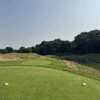
Fairview Farm’s 180-acre footprint provides an ideal canvas for the routing, offering enough space for generous landing areas while maintaining strategic interest through natural landforms. The terrain embodies classic New England topography with dramatic elevation shifts, rolling hills, and wooded corridors that frame nearly every hole. The routing demonstrates sophisticated understanding of flow and momentum, with holes tumbling down into valleys before laboring back up steep hillsides in a rhythm that keeps players engaged without exhausting them. The design philosophy emphasizes positional play and rewards course knowledge, creating a layout that reveals more strategic nuance with each round. Players who enjoy thinking their way around a course will find Fairview Farm endlessly engaging, as the doglegs demand thoughtful placement off the tee and the contoured greens require careful approach club selection. Mid-handicappers will appreciate the forgiving rough and multiple strategic options, while low-handicappers must navigate the challenge of aggressive pins on multi-tiered greens. High-handicappers benefit from forward tees that shorten the course significantly while preserving strategic interest, making this a rare design that accommodates all skill levels without compromising architectural integrity.
Strategic Test
The strategic architecture at Fairview Farm operates on multiple levels, presenting decisions that extend well beyond simple target golf. The routing’s extensive use of doglegs creates genuine options from the tee, where players must weigh the risk-reward calculus of aggressive lines versus conservative positioning. Many holes feature what architects call corridor framing, where trees and natural features define the playing line without creating penal consequences for slight misses. The greens emerge as the layout’s defining strategic element, with substantial size and sophisticated internal contouring that demands precise distance control and thoughtful angle of approach. The slopes and falloffs around these putting surfaces punish weak approaches more severely than the fairway rough penalizes wayward tee shots, rewarding players who understand the importance of position over power. Course knowledge yields significant advantages, particularly in reading the green complexes and understanding how elevation affects club selection.
The slope and rating system provides essential context for understanding how Fairview Farm tests different skill levels. Course rating estimates the score a scratch golfer should achieve under normal conditions, while slope rating measures relative difficulty for bogey golfers, with 113 representing average and higher numbers indicating more challenging conditions for higher handicappers. From the championship tees, Fairview Farm’s 72.6 rating against par 72 suggests a minimal penalty for scratch players, while the 134 slope reveals substantial challenges for recreational golfers navigating the elevation changes and green complexes. These metrics illuminate how the course plays differently across the handicap spectrum, rewarding precision without demanding excessive length. The multiple tee options demonstrate thoughtful design, offering appropriate challenges while maintaining strategic coherence regardless of yardage.
| Handicap | Course Strategy |
|---|---|
| High Handicap (18+) | The red tees at 4,830 yards with a 68.2 rating and 114 slope offer the most accessible entry point, though the slope still indicates meaningful challenge from elevation and green contours. The reduced distance eliminates forced carries and brings doglegs into play at comfortable angles, allowing players to navigate the layout without exceptional power. Par remains achievable on most holes, with the emphasis shifting from avoiding big numbers to managing the undulating terrain and reading the substantial green complexes. The forward tees also minimize the impact of lost distance on mishits, creating scoring opportunities on the shorter par fours and making the par fives reachable in regulation. Strategic focus should center on positioning drives in the fairway regardless of distance, then playing conservative approaches to the fat parts of greens rather than attacking tight pins on slopes. |
| Mid Handicap (8-18) | The white tees at 6,174 yards offer an ideal test with a 70.2 rating and 129 slope, creating legitimate birdie opportunities while preventing complacency. This yardage brings most greens within reach of mid-irons and short irons after solid drives, allowing skilled ball-strikers to attack pins while leaving margin for error. The doglegs present genuine strategic decisions about cutting corners versus playing safe angles, with the risk-reward balance shifting based on confidence and conditions. Managing expectations on the challenging par threes becomes critical, as several play significantly longer than their measured yardage due to elevation. The slope rating indicates that course management and avoiding mistakes matters more than pressing for birdies, particularly around the green complexes where recovery shots demand precision. Players should focus on leaving uphill putts and avoiding the severe downhill slopes that can lead to three-putts. |
| Low Handicap (0-8) | The blue tees at 6,636 yards with a 72.6 rating and 134 slope present a sophisticated examination of all aspects of the game without demanding overwhelming length. The rating suggests minimal difficulty for scratch players in ideal conditions, but the elevated slope reveals how quickly scores can balloon when missing greens or finding wrong sides of pins. The architectural challenge emerges in the approach game, where the large, contoured greens demand precise distance control and understanding of internal slopes. Several holes offer legitimate birdie opportunities for players comfortable working the ball both ways around the doglegs, while others demand conservative strategy to avoid the bogeys that can accumulate from aggressive play. The green speed and contour create a premium on lag putting and course knowledge, as downhill putts can easily slide six feet past if struck with too much pace. Strategic value lies in plotting a path around the course that minimizes three-putts and poor wedge angles rather than simply overpowering the layout. |
The finishing hole, the par-5 18th, exemplifies Fairview Farm’s strategic philosophy while providing a memorable conclusion to the round. From the championship tees, the hole plays 530 yards with a relatively modest handicap rating of 6, suggesting birdie opportunities for skilled players while remaining defensible against reckless aggression. The tee shot plays from an elevated position with fairway bunkers and natural contours directing play toward the optimal line. Players must decide whether to challenge the fairway bunkers for a shorter approach or lay back to a more generous landing area that leaves a longer second shot. The second shot presents the critical strategic decision, as the green sits in a natural amphitheater shared with the 9th hole, creating one of the course’s most distinctive features. This enormous, three-tiered putting surface measures among the largest in the region, with severe internal slopes that can funnel balls away from certain pins. Low-handicappers with 250-plus yard carries can reach in two under favorable conditions, though the green’s undulations make two-putting from long range a significant challenge. Mid-handicappers laying up must choose their distance carefully, as certain wedge yardages play to better pin positions than others given the green’s tiers. High-handicappers benefit from treating this as a three-shot hole regardless of distance, focusing on leaving an uphill pitch to the correct tier rather than risking the bunkers that guard the front. The hole’s strategic depth rewards players who understand the green’s contours and can work backward from ideal approach angles, exemplifying how Fairview Farm creates multiple paths to success based on skill level and strategic awareness.
Nearby Course Alternatives
Stonybrook Golf Course in Litchfield presents a compelling alternative approximately 10 minutes west of Fairview Farm for players seeking a more intimate nine-hole experience with similar attention to conditioning and strategic design. This 2,986-yard layout from the championship tees plays to a par 35 with a 35.1 rating and 125 slope, offering a surprising level of challenge compressed into half the real estate. Designed by Al Zikorus and originally constructed in 1955, Stonybrook occupies approximately 60 acres of rolling Litchfield Hills terrain characterized by dramatic elevation changes and narrow, tree-lined fairways that demand accuracy over power. The course features bent grass greens and fairways that typically present in excellent condition, with the putting surfaces earning particular praise for their speed and trueness. The routing makes exceptional use of the available topography, with holes climbing and falling through natural corridors that create a sense of seclusion rarely found on modern nine-hole courses. Strategic interest emerges from forced carries, severely undulating fairways, and approach shots to greens perched on hillsides or nestled in natural bowls. Players who prefer walking will find Stonybrook more accommodating than Fairview Farm, though the terrain’s dramatic slopes create a genuine workout over 18 holes. The course particularly appeals to skilled ball-strikers who value precision and course management over length, as well as players seeking a quicker round without sacrificing architectural interest or conditioning standards.
Crestbrook Park Golf Course in Watertown offers a distinctly different test approximately 20 minutes southeast of Fairview Farm, providing players with a longer, more traditional parkland examination designed by renowned architect Geoffrey Cornish. Measuring 6,930 yards from the championship tees with a par of 71, the course plays to a 73.6 rating and 128 slope, indicating a sterner test than Fairview Farm particularly for low-handicappers seeking greater length and challenge. Built in 1962, Crestbrook Park occupies approximately 200 acres of varied terrain featuring a fascinating split personality between its two nines. The front nine winds through more open terrain with generous fairways and strategic bunkering, while the back nine climbs through heavily wooded hills with tighter corridors and more dramatic elevation changes. The bent grass greens and bluegrass fairways typically present in solid condition, though reviews suggest more variability than at Fairview Farm depending on the season. Cornish’s design philosophy emphasizes strategic options and risk-reward decisions, with several par fours offering alternate routes and the par fives creating genuine three-shot tests for most players. The course’s greater length from the tips makes it particularly appealing to low-handicap players who feel constrained by Fairview Farm’s more moderate yardage, while the multiple tee options provide appropriate challenges for all skill levels. High-handicappers who struggle with accuracy may find Crestbrook’s narrow fairways on the back nine more penal than Fairview Farm’s more forgiving corridors, though the forward tees at 5,696 yards create manageable tests for players of all abilities.
Final Word
The practice facilities at Fairview Farm reflect the same attention to quality and player experience evident throughout the property, providing functional spaces for pre-round preparation without overwhelming the core golf experience. The driving range features mat stations positioned on a hillside, offering a unique practice environment where players can visualize shot shapes and trajectory against the natural backdrop of the Litchfield Hills. While the hillside orientation means the range doesn’t accommodate full driver swings for extended sessions, it serves its primary purpose of loosening up and dialing in yardages before heading to the first tee. The two-tiered putting green adjacent to the clubhouse provides ample space for reading breaks and developing feel for the day’s green speed, with enough undulation to simulate the challenges players will encounter on the course. The practice area’s modest scale keeps the focus appropriately on the main attraction while ensuring players can arrive properly prepared.
The 7,000-square-foot clubhouse anchors the facility with tasteful elegance that complements rather than overwhelms the natural setting. The building’s design maximizes the property’s most dramatic feature—the shared green complex serving the 9th and 18th holes—with floor-to-ceiling windows and a spacious patio that transform the finishing stretch into dinner theater for diners. The restaurant has developed a strong reputation independent of its golf course location, drawing locals for lunch and dinner throughout the season with a menu that emphasizes quality ingredients and generous portions. The bar area provides a comfortable gathering space for post-round discussion and the inevitable analysis of what might have been, while maintaining an atmosphere that welcomes serious golfers without alienating casual visitors. The banquet facilities have become a significant component of the operation, hosting weddings, corporate outings, and special events that take advantage of the spectacular views and professional service. This diversification strengthens the overall business while ensuring the golf course receives the resources necessary for consistent conditioning and maintenance.
What elevates Fairview Farm above mere competence into the realm of genuine architectural interest is the rare combination of owner passion, natural terrain, and disciplined design philosophy that resists the temptation to manufacture difficulty through artificial hazards or excessive length. The course succeeds because it trusts its land to provide interest and challenge, using elevation changes, natural corridors, and sophisticated green complexes to create strategic depth without resorting to gimmicks or tricks. The routing demonstrates that compelling golf architecture doesn’t require championship length or tournament pedigree, but rather demands thoughtful use of available terrain and respect for the strategic principles that have guided great courses for generations. Players who value course knowledge, position, and precision will find endless satisfaction in unraveling Fairview Farm’s strategic puzzles, while those seeking a more casual experience can enjoy the scenery and conditions without feeling overwhelmed. The course occupies a sweet spot in Connecticut’s public golf landscape—substantial enough to challenge accomplished players yet accessible enough to welcome recreational golfers, maintained to high standards yet priced reasonably, ambitious in its strategic aims yet unpretentious in its presentation. For players seeking an antidote to the standardized resort courses that dominate modern golf, Fairview Farm offers a refreshing reminder that compelling architecture can emerge from passion, vision, and respect for the land.

David is an avid golfer who loves walking Connecticut’s courses and playing alongside his family. He’s passionate about golf course architecture and one day hopes to play at Pebble Beach.