Elmridge Golf Course – North is a public par-36 course measuring approximately 3,271 yards from the tips. The course was originally designed in 1967 by Joseph Rustici and Charles Rustici and is located in Pawcatuck, Connecticut.
The North course at Elmridge represents one-third of a thoughtful expansion that transformed a family dairy farm into a respected 27-hole public facility. Joseph and Charles Rustici, brothers who inherited their family’s 250-acre property in southeastern Connecticut, began converting the land from agricultural use to golf in the mid-1960s. The facility opened initially with nine holes in 1967, expanded to 18 holes, and eventually grew to its current 27-hole configuration when the North course was added in 1998. The Rustici family had owned and operated the land as a working dairy farm since the 1920s, and remnants of that agricultural heritage remain visible throughout the property, including a 40-foot grain silo near one of the first tees. The brothers’ design philosophy emphasized working with the natural topography rather than imposing artificial features, allowing the rolling Connecticut hillside to dictate routing and shot values. Over the decades, the facility has maintained its semi-private status while remaining accessible to daily-fee players, and course conditioning has improved significantly in recent years with investments in drainage systems and turf management programs that have yielded consistently firm fairways and true putting surfaces.
The North nine occupies approximately 90 acres of the facility’s hilltop setting, sharing the elevated terrain that provides cooling breezes during summer rounds and panoramic views of the surrounding woodland. The routing follows a moderately hilly out-and-back pattern that uses elevation changes to create variety in shot selection and visual interest. Joseph Rustici’s design approach on the North demonstrates a clear preference for using natural landforms to shape hole corridors, with fairways that roll and tumble across the property’s slopes rather than following flat, manufactured planes. The course appeals most strongly to players who appreciate strategic positioning over pure length, as the relatively compact yardage from the back tees rewards accuracy and course management rather than raw distance. Mid-handicappers find the layout particularly engaging because the moderate length creates legitimate birdie opportunities while the undulating terrain and well-placed hazards punish wayward shots appropriately. The North integrates seamlessly with either the South or West nines to create varied 18-hole experiences, with most players rotating through different combinations over multiple visits. Tree-lined corridors frame nearly every hole, creating defined playing areas that feel secluded despite the property’s proximity to Interstate 95, and the predominantly bentgrass playing surfaces provide consistent turf conditions from tee to green throughout the season.
Strategic Test
The North course presents a compelling examination of precision-based golf where strategic positioning frequently trumps aggressive play. The design philosophy emphasizes accuracy and intelligent course management, with the architects using the natural topography to create holes where optimal angles of approach become critical for accessing pin positions. The moderately hilly terrain introduces both uphill and downhill lies that complicate club selection, particularly on approach shots where the visual deception created by elevation changes can lead to costly misjudgments. Most holes reward players who can work the ball both directions, as the rolling fairways and elevated green complexes often favor shaped shots over straight trajectories. The green sites showcase thoughtful design, with many surfaces built into hillsides or perched on plateaus that demand aerial approaches and punish ground-game strategies. Several holes feature strategic width off the tee, allowing longer hitters to challenge hazards for better approach angles while offering shorter hitters safer routes that accept less favorable positions. The par-3 holes test a range of clubs and shot shapes, from short irons to mid-long irons depending on tee selection, and the green complexes on these holes tend to be smaller and more contoured than those on the par-4s. High-handicap players benefit from generous landing areas on most holes and find the forward tees positioned to create manageable carry distances over hazards, though the elevated greens and undulating fairways can complicate recovery shots for those prone to offline drives.
Course rating and slope provide quantitative measures of difficulty that help players understand what to expect before teeing off. The rating represents the score a scratch golfer should shoot under normal conditions, while slope measures the relative difficulty for bogey golfers compared to scratch players, with 113 representing a course of standard difficulty. At Elmridge North, the Blue tees carry a rating of 70.5 and a slope of 117 from the men’s tees at 3,271 yards. These numbers indicate a course that plays slightly easier than standard difficulty for bogey golfers but presents a respectable challenge for low-handicappers, particularly when factoring in the elevation changes and small, contoured greens that demand precise iron play. The slope rating of 117 suggests that higher-handicap players won’t find the course overly punishing, as hazards are generally well-telegraphed and alternate routes exist on most holes. This combination of modest rating and slope makes the North an excellent choice for mixed-ability groups, where scratch golfers can score well if they execute properly while double-digit handicappers can post competitive Stableford points without feeling overwhelmed. The strategic implications become clear when considering that a 117 slope means the course doesn’t balloon in difficulty for higher handicappers, suggesting that while the design rewards skill, it doesn’t overly penalize imperfect execution through excessive length, penal hazards, or severely undulating greens.
| Handicap | Course Strategy |
|---|---|
| High Handicap (18+) | Players in this range should favor the White tees at approximately 2,900 yards, which reduces forced carries and makes the par-36 target more realistic. The slope of 115-117 means bogey players can expect to shoot in the mid-to-upper-40s on this nine, as the rating suggests adding roughly 12-15 strokes to par depending on individual handicap. Strategic emphasis should focus on keeping drives in play rather than maximizing distance, as the tree-lined corridors punish offline tee shots severely. On approach shots, high-handicappers benefit from aiming for the center of greens rather than attacking pins, especially on the smaller par-3 surfaces where missing the target often results in difficult up-and-downs. The elevation changes throughout the course mean club selection becomes critical, and players should err toward taking more club on uphill approaches and less on downhill shots. |
| Mid Handicap (8-18) | Mid-handicappers playing from the White or Gold tees (2,900-3,100 yards) find the North offers an ideal balance of scoring opportunities and defensive requirements. These players should target scores in the low-40s, as the course rating suggests scratch golfers shoot around 35 from comparable tees. Strategic decision-making centers on risk-reward calculations, particularly on holes where aggressive lines off the tee can set up shorter approaches but introduce hazards or trouble. The undulating fairways reward players who can work the ball with the slopes, while the elevated and contoured greens demand precise distance control and trajectory management. Mid-handicappers should identify which par-4s offer legitimate birdie chances based on their driving distance and which holes require defensive strategies to protect against big numbers. |
| Low Handicap (0-8) | Single-digit players tackling the Blue tees at 3,271 yards and rating 70.5 should aim for scores near par or 1-2 over, as the relatively short yardage creates multiple birdie opportunities for those who can control trajectory and spin. The strategic challenge for better players lies in capitalizing on scoring chances while avoiding the occasional double bogey that can derail a good round. Length off the tee matters less than accuracy and positioning, as many of the par-4s play in the 330-400 yard range where aggressive drivers can reach or nearly reach greens but face significant trouble if missing fairways. Low-handicappers should study green complexes carefully, as the smaller surfaces and subtle contours reward precise iron play and distance control. The key to scoring involves converting birdie opportunities on the shorter par-4s and par-3s while avoiding mistakes on the longer, more defensive holes where par represents a good score. |
The eighth hole on the North exemplifies strategic golf design at its most effective, measuring 396 yards from the Blue tees as a par-4 that plays significantly longer than its yardage suggests. This hole climbs uphill throughout its entire length, with an approach shot to a raised, plateau green that sits approximately 15-20 feet above the fairway. The drive requires precision more than power, as a fairway bunker guards the right side of the landing area while trees encroach from the left, creating a corridor that demands a straight tee shot for optimal positioning. From the fairway, players face a blind or semi-blind approach to the elevated green, where judging the correct yardage becomes critical given both the uphill climb and the raised putting surface. High-handicappers playing from forward tees around 330-350 yards find this hole particularly challenging, as the uphill nature and elevated green typically require a driver followed by a fairway wood or hybrid, with the raised green making it difficult to hold the surface from distance. Mid-handicappers from the 370-yard range face a similar challenge of needing two strong shots to reach the green in regulation, though their better ball-striking ability gives them a fighting chance at holding the elevated surface with a mid-iron approach. Low-handicappers from the 396-yard championship tees can reduce the hole to a drive and short-to-mid iron, but the elevated green still demands precise distance control and adequate height to hold the putting surface, with shots coming up short often rolling back down the slope fronting the green.
Nearby Course Alternatives
Lake of Isles – North Course in North Stonington presents a dramatically different golf experience just 8 miles west of Elmridge, representing a quantum leap in both conditioning and architectural ambition. The Rees Jones design opened in 2005 as the public course at Foxwoods Resort Casino’s golf complex, sprawling across 900 acres of heavily wooded terrain surrounding a 90-acre lake that comes into play on multiple holes. From the championship tees, the layout extends to 7,252 yards with a par of 72, carrying a formidable slope rating of 146-147 and a course rating of 76.7 that immediately signals championship-caliber difficulty. The North Course features elevation changes that dwarf anything at Elmridge, with several holes dropping or climbing 40-60 feet from tee to green, creating dramatic vistas and demanding precise distance control on approach shots. The property encompasses approximately 900 acres compared to Elmridge’s 250-acre footprint, giving Lake of Isles a more expansive, resort-scale feel with wider corridors and longer walks between holes. Jones’ design pedigree brings PGA Tour-caliber strategic elements including forced carries over wetlands, island greens, heavily bunkered corridors, and undulating putting surfaces that test even single-digit handicappers. Players who prefer championship-length tests with premium conditioning, significant elevation changes, and high-end amenities will find Lake of Isles worth the 15-minute drive west from Elmridge, though green fees typically run two to three times higher and the course’s length and difficulty can overwhelm high-handicappers who might score better at Elmridge’s more manageable layout.
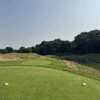
River Ridge Golf Course in Griswold offers an intriguing alternative approximately 20 minutes northwest of Elmridge, designed by the same Joseph and Charles Rustici team that created Elmridge and sharing similar architectural DNA. This public 18-hole layout opened in May 1999 and stretches to 6,871 yards from the gold tees with a par of 72, carrying a slope rating of 124 and playing across former orchard land that has matured into a challenging parkland test. The first three holes occupy relatively open terrain that was once an apple orchard, while the remaining 15 holes wind through rolling hills and wooded corridors that echo Elmridge’s tree-lined aesthetic. River Ridge benefits from a comprehensive irrigation system and careful maintenance that keeps tees, fairways, and greens in consistently good condition throughout the season, with bent grass greens that typically roll true and at moderate speeds. The course sits atop a scenic hilltop location similar to Elmridge, providing sweeping views of southeastern Connecticut’s countryside and catching the same cooling breezes that make summer golf tolerable. At approximately 200 acres, River Ridge occupies a slightly smaller footprint than Elmridge but concentrates its design on a single 18-hole routing rather than splitting acreage among three nines. Players who enjoy Elmridge’s strategic, positioning-based golf will find River Ridge offers similar values at full 18-hole length, with the Rustici brothers’ characteristic use of natural topography to create variety and their preference for strategic width over penal tightness. River Ridge appeals most to mid-handicappers who want more golf in a single round than Elmridge’s nine-hole loops provide while maintaining a similar architectural philosophy and price point, though Elmridge’s 27-hole configuration offers more variety for regular players who rotate through different nine-hole combinations.
Final Word
The practice facilities at Elmridge support player development with a grass driving range that allows full swings with all clubs, giving golfers the opportunity to warm up properly before rounds or work on specific swing issues between loops. A dedicated putting green sits adjacent to the clubhouse, providing space to read breaks and dial in speed before heading to the first tee. The facility lacks a dedicated short-game area or practice bunker, which represents the primary gap in the practice amenities for players looking to work on wedge play or sand technique. The clubhouse anchors the property with a full-service restaurant and lounge that welcomes both golfers and non-golfers, serving lunch and dinner with indoor seating and an outdoor patio that overlooks portions of the course. The pro shop carries a reasonable selection of equipment, apparel, and accessories appropriate for a mid-sized public facility, with staff available for club fitting and lessons by appointment. Cart rental is available for those who prefer riding, though the course remains walkable despite its moderately hilly terrain, and pull carts can be rented for players who want to walk but prefer not to carry their bags.
The North course at Elmridge proves its value through intelligent strategic design that rewards thoughtful play across a manageable distance, making it accessible to a wide range of abilities while still challenging better players who must execute precise iron shots to score well. The Rustici brothers’ decision to work with rather than against the property’s natural topography created a routing that feels organic and site-specific, with elevation changes and landforms that introduce variety and visual interest without resorting to artificial features or manufactured difficulty. The course’s integration into a 27-hole facility provides exceptional flexibility for regular players, who can rotate through different nine-hole combinations to keep the golf experience fresh over multiple visits while maintaining relationships with playing partners who prefer shorter rounds. Conditioning has improved markedly in recent years, with fairways that run firm and fast during dry periods and greens that roll true at moderate speeds conducive to both aggressive putting and careful lag strokes. The combination of Joseph Rustici’s local knowledge, his family’s multi-generational stewardship of the land, and the course’s evolution from dairy farm to respected golf facility creates a sense of place and authenticity that distinguishes Elmridge from many modern public courses built purely as real estate amenities. For players in southeastern Connecticut seeking strategic golf at public rates within a scenic, well-maintained setting that emphasizes shot-making over pure length, the North course delivers consistent satisfaction and represents genuine value in a region where golf can be expensive.

David is an avid golfer who loves walking Connecticut’s courses and playing alongside his family. He’s passionate about golf course architecture and one day hopes to play at Pebble Beach.