Eastwood Country Club is a public par-36 course measuring approximately 2,933 yards from the tips. The course was originally designed in 1962 and is located in Torrington, Connecticut.
Eastwood Country Club emerged during the early 1960s golf boom when municipal and public facilities began proliferating across Connecticut’s Litchfield County. The course opened its doors in 1962 on rolling hillside terrain off Route 8, serving the Northwest Hills region as an accessible option for recreational golfers. The original designer remains unknown, though the routing demonstrates a clear understanding of the natural topography with holes that ascend and descend through wooded corridors. Over its six decades of operation, the facility has undergone periodic maintenance improvements, with the most significant enhancement program occurring within the past several years. Recent capital investments have focused on infrastructure renewal, including the construction of new tee complexes, comprehensive bunker restoration, and systematic fairway reconditioning. These renovations have elevated playing conditions considerably, with observers noting marked improvements in surface quality and presentation compared to the course’s condition five years ago. The greens have received particular attention, with updated maintenance practices yielding consistent roll and true putting surfaces that rank among the best in the facility’s history.
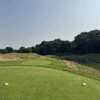
The property encompasses an estimated 60 to 75 acres situated within the Litchfield Hills, exhibiting the moderate elevation changes characteristic of northwestern Connecticut’s glacial terrain. The routing employs an out-and-back configuration with fairways generally oriented parallel to one another, creating a compact footprint that maximizes playability while minimizing walking distance. Mature pine trees define most playing corridors, establishing both aesthetic appeal and strategic significance through their positioning along fairway edges. Ground movement ranges from gentle undulation to more pronounced slopes, with several holes featuring blind or semi-blind tee shots that reward local knowledge. The design philosophy reflects a traditional, straightforward approach without elaborate strategic complexity, making the course particularly appealing to recreational players, seniors seeking a manageable walking experience, and juniors developing their games. The layout favors accuracy over distance, with the premium placed on keeping the ball in play rather than generating maximum yardage. Players who appreciate classic parkland golf in an unpretentious setting will find Eastwood’s honest, no-frills character refreshing. The facility’s nine-hole format also suits those with limited time or players looking to complete 18 holes by playing the course twice, with slightly different tee positions available for variety on the second loop.
Strategic Test
The strategic demands at Eastwood Country Club reflect its modest length and straightforward design philosophy, presenting decision-making opportunities that scale appropriately to player skill level. From the championship tees at 2,933 yards, most holes do not require drivers, instead emphasizing positional play with fairway woods and long irons to navigate the tree-lined corridors. The two par-5s incorporate severe doglegs that create distinct route options, with longer hitters able to challenge the corners while shorter players must accept layup positioning. However, the narrow fairway widths and abundant tree encroachment limit aggressive angles of approach, often relegating strategic choices to club selection rather than alternative lines. The short par-4 fifth hole, measuring approximately 285 yards, presents the clearest risk-reward scenario, potentially driveable for stronger players but protected by hazards that punish overly aggressive attempts. Greenside bunkers appear selectively rather than systematically, with trees posing the primary penalty for wayward approaches. The putting surfaces exhibit subtle to moderate contouring without severe undulation, requiring thoughtful speed control on sloping terrain but rarely demanding heroic recovery from extreme positions. For high-handicap players, the compressed yardage eliminates forced carries beyond their capabilities, while the relatively modest slope rating of 113 suggests manageable scoring potential with sensible course management. Mid-handicappers will find adequate variety to maintain engagement across 18 holes, though the repetitive tree-lined aesthetic may lack the architectural diversity some players seek.
The course rating of 33.9 against par 36 indicates that a scratch golfer would be expected to shoot approximately two under par over nine holes, reflecting the layout’s relative ease for accomplished players. The slope rating quantifies the proportional difficulty increase for bogey golfers compared to scratch players, with Eastwood’s 113 falling slightly above the neutral baseline of 113 that represents average difficulty. This numerical relationship reveals that while the course poses minimal challenge to low-handicap competitors who can consistently strike quality shots, it maintains sufficient difficulty for recreational players whose less-consistent ball-striking produces more frequent tree encounters and missed greens. The combination of forgiving length and moderate slope creates an accessible environment where course management skills prove more valuable than raw distance. Understanding these metrics helps players calibrate expectations and select appropriate strategies matched to their capabilities.
| Handicap | Course Strategy |
|---|---|
| High Handicap (18+) | Players should utilize the forward tees measuring approximately 2,550 yards with a course rating around 64.5 for 18 holes. From these markers, the emphasis shifts to consistent contact and keeping the ball in play rather than pursuing distance. The slope rating near 112-113 suggests high handicappers will add roughly 18-25 strokes to par over a full round depending on exact index. Strategy should prioritize hybrid clubs and fairway woods off tees on longer holes, accepting that reaching greens in regulation represents success rather than expectation. The narrow corridors demand conservative aim points favoring fairway centers over aggressive lines near tree edges. Short game proficiency becomes crucial, as missed greens occur frequently, making practice on the putting green before the round a worthwhile investment. |
| Mid Handicap (8-18) | Mid-handicap players should consider the middle tees near 2,700 yards with a course rating approximating 67.0 for 18 holes. This group will add between 8-18 strokes to par typically, with the slope rating indicating that course management significantly influences scoring outcomes. Strategic choices emerge on the two par-5s, where decisions between laying up and attempting to reach in two depend on tee shot quality. Driver becomes playable on several holes but requires discipline to avoid the tree-lined edges. Approach shot club selection merits careful attention, as the elevated and sloped green complexes penalize both short and long misses. Pin placement influences strategy, with back positions requiring aggressive carries while front flags allow ground game options. Mid-handicappers benefit from plotting conservative routes during the first nine and potentially becoming more aggressive on the second loop once they understand green speeds and pin positions. |
| Low Handicap (0-8) | Low handicappers playing the back tees at 2,933 yards with a 33.9/113 rating should expect to shoot 70-78 for 18 holes depending on conditions and second-nine adjustments. The short yardage removes distance as a competitive advantage, shifting emphasis to precision iron play and putting performance. Strategic interest centers on the par-5 opportunities, where birdie represents the expectation rather than bonus. The narrow fairways still demand accuracy despite generous distance margins, as offline tee shots beneath tree canopies eliminate aggressive flag attacks. The course rewards tactical conservatism, with pars accumulated through fairways and greens rather than spectacular shot-making. Single-digit players may find limited strategic variety, with most holes playing as straightforward propositions. Scoring depends heavily on putting efficiency and avoiding the occasional tree encounter that produces bogey or worse. |
The ninth hole stands as the course’s signature strategic examination, a lengthy par-5 measuring approximately 470 yards that incorporates both water hazards and severe dogleg geometry. From the championship tee, players face a demanding tee shot where an imposing oak tree positioned at the dogleg’s apex creates a central hazard that influences drive positioning. The fairway splits into two strategic corridors, with the outside route providing a safer but longer path, while the inside line flirts with hazard areas but shortens the remaining distance substantially. A small pond appears in the landing zone approximately 92 yards from the tee, providing a bit of psychological pressure. After navigating the tee shot successfully, players must traverse a bridge over another water feature before approaching the green complex. The putting surface sits partially obscured from typical second-shot positions, creating a semi-blind approach that rewards familiarity with precise yardages and green dimensions. High handicappers should employ a three-shot strategy, laying up with a fairway wood or hybrid around 180 yards, then positioning a mid-iron to approximately 100 yards, and finishing with a controlled wedge to the green. This conservative routing eliminates catastrophic penalty strokes while maintaining reasonable par opportunities. Mid-handicappers face the central strategic dilemma, deciding whether second-shot positioning for a wedge third merits the risk of challenging the dogleg more aggressively. The ideal approach involves a 210-yard fairway wood that reaches the optimal wedge distance while avoiding both water hazards. Low handicappers should seriously consider reaching the green in two shots with a well-executed drive followed by a long iron or hybrid from approximately 220 yards, though the blind nature of the approach and green-front bunkering makes this gambit less appealing than on more open par-5s. The hole epitomizes Eastwood’s honest character, rewarding thoughtful execution without requiring spectacular shot-making, while still providing enough variables to maintain strategic engagement across multiple skill levels.
Nearby Course Alternatives
Green Woods Country Club in Winsted presents a compelling alternative roughly 10 minutes north via Route 8, offering a semi-private facility that welcomes public play on a 10-hole layout measuring 2,980 yards from the championship tees with a slope rating of 129 and course rating of 69.0. Designed by Al Zikorus and established in 1903, Green Woods occupies a distinctive position as one of Connecticut’s oldest continuously operating facilities, sitting on approximately 70 to 90 acres of moderately sloped terrain in Litchfield County. The course exhibits more pronounced elevation changes than Eastwood, with several holes climbing and descending hillsides that add strategic complexity through stance variations and forced carries. The facility has earned recognition for exceptional conditioning standards, with immaculately groomed fairways, consistently fast greens, and meticulously maintained bunkers that reflect substantial investment in agronomy. The elevated slope rating compared to Eastwood indicates greater challenge for recreational players, stemming from tighter landing areas, more severe green complexes, and aggressive hazard placement. Green Woods offers superior practice facilities including a driving range and expansive putting surfaces, along with a modern clubhouse featuring a full-service restaurant and banquet capabilities. The tenth hole, a par-5 threading through dense woodland, ranks among Connecticut’s most memorable nine-hole offerings. Players seeking a more refined presentation with heightened strategic demands and superior amenities will find Green Woods worth the brief drive north, particularly mid-handicappers who appreciate courses that reward thoughtful execution. The increased difficulty and slightly higher green fees position it as an upgrade experience compared to Eastwood’s recreational focus, though single-digit handicappers may still find the overall yardage insufficient for sustained challenge.
Stonybrook Golf Course in Litchfield offers another public nine-hole option approximately 8 minutes southwest on Route 202, measuring 2,996 yards from the back tees with a slope rating of 125 and course rating of 35.1 for par 35. Also designed by Al Zikorus and opened in 1966, Stonybrook occupies an estimated 60 to 75 acres carved into the rolling Litchfield Hills topography with more dramatic elevation changes than either Eastwood or Green Woods. The routing incorporates significant uphill and downhill holes that create variety in stance and approach angles, with the par-4 fifth playing steeply uphill to a shallow green perched above a fronting bunker. The narrow seventh hole, measuring 385 yards through a tree-lined corridor, earns distinction as the course’s most demanding test. Stonybrook maintains a reputation for excellent playing conditions, with bentgrass fairways and greens receiving high marks from regular competitors. The facility includes a putting green but no driving range, limiting pre-round preparation options. The clubhouse features a full-service restaurant known for quality food that enhances the overall experience beyond pure golf. The higher slope rating compared to Eastwood reflects tighter fairways, more aggressive green contouring, and forced carries that punish mishits more severely. Players who enjoy pronounced topography and the visual interest created by elevation changes will appreciate Stonybrook’s varied terrain, particularly those with strong short games capable of navigating the undulating putting surfaces. Mid-to-high handicappers seeking a scenic round with memorable hole corridors and quality dining afterward should consider the slightly longer drive to Litchfield, though the increased slope rating means scoring may prove more challenging than Eastwood’s forgiving layout. The course rewards position play and accurate iron work, making it ideal for players whose games emphasize precision over power.
Final Word
Beyond the golf course itself, Eastwood Country Club provides fundamental practice and preparation facilities including a driving range with mat hitting areas and a dedicated putting green where players can calibrate speed before their rounds. The clubhouse functions as a straightforward gathering space featuring a pro shop stocked with essential equipment and apparel, along with a restaurant and bar offering casual dining options for post-round meals and beverages. The facility offers club repair services through its golf professional, addressing equipment needs without requiring trips to off-site vendors. Cart availability supports those preferring to ride, though the compact routing and manageable terrain make walking a viable option for most fitness levels. The course accommodates league play and tournament outings, with the staff demonstrating flexibility in scheduling and event coordination. While the amenities portfolio lacks the elaborate fitness centers, swimming pools, or tennis courts found at full-service country clubs, this streamlined approach aligns with Eastwood’s mission as a no-frills public facility prioritizing affordable access over comprehensive recreation. The emphasis remains squarely on the golf experience rather than peripheral attractions.
What distinguishes Eastwood Country Club within Connecticut’s crowded public golf landscape is its unpretentious commitment to providing accessible golf at reasonable rates without sacrificing playability or basic maintenance standards. The recent infrastructure improvements demonstrate ownership’s dedication to elevating course conditions while maintaining the facility’s welcoming character for players across all skill levels. The honest, straightforward routing rewards fundamental skills without requiring heroic shot-making or extensive local knowledge, making it particularly valuable for recreational players, seniors, and juniors building their games. The tree-lined corridors create visual definition and strategic parameters without becoming punitive for those with occasional wayward shots. The nine-hole format serves multiple constituencies effectively, from lunch-break executives seeking quick rounds to retirees playing 18 holes at a measured pace. Eastwood’s value proposition extends beyond the scorecard, encompassing its role as Torrington’s only golf course and its function as a community gathering point for league play and casual rounds among friends. While the course may not satisfy accomplished players seeking championship-caliber examination or architectural sophistication, it fulfills its intended purpose admirably by delivering solid conditions, fair challenges, and genuine hospitality. The facility proves that compelling golf experiences need not require elaborate length, extensive acreage, or premium pricing. For those seeking honest golf in a pleasant setting without pretense or unnecessary complications, Eastwood Country Club delivers consistent satisfaction.

David is an avid golfer who loves walking Connecticut’s courses and playing alongside his family. He’s passionate about golf course architecture and one day hopes to play at Pebble Beach.