

Chippanee Country Club is a private par-70 course measuring approximately 6,310 yards from the tips. The course was originally designed in 1923 and is located in Bristol, Connecticut.
Chippanee was founded in the early 1920s by a group of local enthusiasts who converted a hilltop estate into a golf course and clubhouse. It began as a 9-hole layout before expanding to a full 18 in the mid-century, with much of the shaping and construction completed by members themselves. This unusual development story gives the course a distinctive, almost hand-crafted feel that remains today. The site’s elevation, nearly 900 feet above sea level, provides a commanding position over the surrounding landscape. Over time, the course has become a hub of community life, blending golf with swimming, tennis, and dining. Its greens are small and fast, its fairways tree-lined, and its layout designed to reward thoughtful play rather than sheer length. Generations of golfers have found the course to be an intimate, challenging, and rewarding experience, combining traditional charm with a competitive edge.
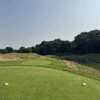
The course is laid out over approximately 150 acres of rolling Connecticut countryside. It follows a two-loop routing that returns to the clubhouse after each nine, a classic feature of Golden Age designs. The terrain consists of moderate elevation changes, creating a rhythm of uphill, downhill, and sidehill lies that influence club selection and stance. Mature corridors of trees frame most holes, giving each fairway a defined target zone. The design is compact but highly strategic, with push-up greens that repel indifferent approaches. It embodies a classic New England parkland style: shorter in length than modern resort layouts, but demanding in precision and decision-making. Players who enjoy accuracy, placement, and short game creativity will thrive here. Those who rely on raw distance may find themselves constrained, while those who embrace shot-making will find the course deeply satisfying.
Strategic Test
Chippanee emphasizes placement over power. Off the tee, players face repeated choices between playing conservatively for position or trying to cut corners for a shorter approach. Several holes allow for aggressive driver lines, but risk comes in the form of tree-lined rough, fairway bunkers, and narrowing corridors. Into the greens, the challenge heightens. Small, slightly elevated putting surfaces require accurate iron play; approaches must be judged not only for line but also for trajectory, since a ball arriving on the wrong angle often fails to hold. While the course rewards creativity and shot-shaping, it remains forgiving enough that players can find playable lies if they opt for safer lines.
High-handicap golfers will find the course accessible provided they choose the forward tees. The relatively modest yardage helps, but the tree corridors demand straight hitting. The greens, while quick, are fair and can be navigated with good lag putting. Mid-handicaps will enjoy the balance of reward and punishment: there are opportunities to gamble on tighter lines, but the course rarely requires brute force. Low-handicap players will find a subtle but engaging challenge. To score well, they must manage angles, use controlled tee shots rather than simply hitting driver, and display precision with wedges and short irons.
The course rating of approximately 70.5 and slope of 129 illustrate the test. A scratch golfer can expect to shoot near level par, but bogey golfers will struggle to keep pace. The higher slope indicates that misses are punished more severely than at an average course, which makes smart course management essential.
| Handicap | Course Strategy |
| High Handicap (18+) | Play the forward tees around 5,600 yards. Focus on keeping the ball in play by favoring hybrids or fairway woods. Aim for the widest fairway zones and play to the center of greens. Expect a score above your handicap due to narrow corridors and small targets. |
| Mid Handicap (8–18) | Middle tees around 6,000 yards provide balance. Choose driver carefully; laying up to comfortable yardages is often smarter than overextending. Use strategy to avoid blow-up holes and accept that bogeys will come. A solid short game keeps scores near handicap. |
| Low Handicap (0–8) | Back tees at 6,310 yards reveal the full design intent. Use three-wood or long iron off tees where accuracy trumps distance. Attack when safe but play conservatively when angles are poor. To beat the course rating, low handicaps must excel in placement and wedge control. |
A standout hole is the par-5 4th, stretching to about 540 yards from the back tees. Off the tee, accuracy is paramount, as the fairway pinches between trees. High handicaps should lay up short and play the hole in three shots, using a wedge to carry the water in front of the green. Mid handicaps face a choice: lay up to 100 yards or attempt to carry in two. The lay-up is usually wiser unless conditions are perfect. Low handicaps may attempt the heroic second shot with a fairway wood, but only with an ideal lie. The green is small and slightly raised, so even those who succeed in reaching must execute a precise approach. This hole embodies Chippanee’s philosophy: options for every level, but no easy birdies without risk.
Nearby Course Alternatives
Shuttle Meadow Country Club in Kensington offers members a distinguished alternative approximately 15 minutes southeast of Chippanee. Willie Park Jr designed this 6,329-yard par 71 layout in 1917, bringing his renowned strategic sensibility to 400 acres of dramatically rolling terrain. The two-time Open champion famously declared that a man who can putt is a match for anyone, and his design philosophy here reflects that conviction through boldly contoured greens and thoughtfully positioned hazards. The slope rating of 127-130 and 71.0 course rating suggest a layout that demands precision over pure length, with the famed 18th green rising six feet across three distinct tiers. Bruce Hepner’s 1996 renovation work preserved Park’s original strategic intent while modernizing playing surfaces. The property showcases significant elevation changes across its expansive acreage, creating a sense of scale that surpasses Chippanee’s more intimate 150-acre footprint. The course has earned recognition as one of Connecticut’s finest private layouts, having hosted numerous Connecticut State Golf Association championships and U.S. Amateur qualifying rounds. Players who appreciate strategic complexity and dramatic topographical variety will find Shuttle Meadow particularly compelling, as the routing exploits natural elevation shifts that create blind approach shots and require careful course management rather than relying solely on distance. The golfer seeking a more cerebral test with bolder green complexes and greater vertical movement will find this Willie Park Jr design offers distinct character from Chippanee’s traditional members layout.
Farmington Woods Golf Club in Avon presents another private alternative roughly 23 minutes northeast of Chippanee. Desmond Muirhead crafted this 6,577-yard par 72 course in 1970 during his period of traditional design work, before his later ventures into symbolic architecture. The layout plays approximately 270 yards longer than Chippanee from the tips, with a slope rating of 134 and course rating of 72.4 indicating a stern examination of ball-striking ability. Muirhead’s background in master-planned communities informed his thoughtful routing through the residential development, creating distinct playing corridors that maintain strategic integrity despite surrounding homes. The bent grass surfaces throughout reward precision off the tee and on approach shots, with accuracy proving more valuable than length across most holes. Several holes incorporate out-of-bounds markers and elevation changes that require strategic course management, though the property lacks the extreme vertical movement found at other regional layouts. Reviews consistently note that the course favors the accurate player who can shape shots and find specific landing areas rather than the long hitter who relies on distance. The golfer who prioritizes a longer test with modern conditioning and demands for positional play will appreciate Farmington Woods’ challenge, particularly those who enjoy Muirhead’s methodical approach to integrating golf architecture with residential settings. Players seeking a more substantial yardage examination with emphasis on course management over the tight, traditional character of Chippanee’s golden-age inspired design will find Farmington Woods delivers a distinctly different strategic proposition within convenient driving distance.
Final Word
Beyond the golf course itself, Chippanee Country Club maintains comprehensive practice facilities that allow members to refine their skills before venturing onto the layout. The driving range provides ample space for working through the bag, while a dedicated practice putting green enables members to dial in their speed control on surfaces similar to those they will encounter during their round. The Olympic-size swimming pool stands as a centerpiece of warm-weather recreation, complemented by a separate kiddie pool that makes the facility genuinely multigenerational in its appeal. Tennis enthusiasts benefit from Har-Tru courts, the distinctive green-colored crushed stone surface that plays similarly to clay and offers a unique alternative to standard hard courts. The full-service restaurant and dining facilities accommodate up to 200 guests for both casual meals and special events, providing members with quality culinary options and banquet capabilities. These amenities collectively transform Chippanee from merely a golf destination into a complete country club experience where families can spend entire days without exhausting the available activities. The elevated location at 900 feet above sea level contributes to the property’s distinctive character, offering views and climate conditions that set it apart from lower-elevation facilities in the region.
What ultimately distinguishes Chippanee is its commitment to maintaining the intimate, traditional character of a members course while steadily enhancing the overall experience. The relatively compact 150-acre footprint creates a walkable layout where members frequently encounter one another across the round, fostering the social connections that form the foundation of private club life. The modest 6,310-yard playing length from the tips might suggest an easy afternoon, yet the combination of small greens, strategic bunkering, and tight fairways ensures that scoring requires thoughtful execution rather than simply overpowering the course. This design philosophy aligns perfectly with members who appreciate golf as a game of angles and strategy rather than a pure test of athleticism. The 1923 vintage of the original nine holes places Chippanee firmly within the golden age of golf architecture, even if architect Herb Lagerblade remains less celebrated than contemporaries working during that era. By preserving these fundamental design principles across both the original front nine and the 1950 addition on the back, the club delivers consistency of character that rewards repeated play and intimate course knowledge. For members seeking a private club experience emphasizing tradition, walkability, and strategic interest over championship length and modern flash, Chippanee Country Club provides exactly that combination in a setting that has served Bristol families for over a century.

David is an avid golfer who loves walking Connecticut’s courses and playing alongside his family. He’s passionate about golf course architecture and one day hopes to play at Pebble Beach.





Passed this place but never been here. anyone know the initiation fee here?