Candlewood Lake Club is a private par-30 course measuring approximately 1,775 yards from the tips. The course was originally designed in 1935 by Ted Farley and is located in Brookfield, Connecticut.
The origins of Candlewood Lake Club trace back to 1929 when the Farley Organization, led by Robert Farley and his sons Calvin and Theodore, purchased the White Farmhouse overlooking the newly created Candlewood Lake. The golf course evolved in phases across two decades, with the first five holes along the flats completed in 1937 during the Depression era when funding constraints limited the original vision. Two additional holes followed in 1948, and the course reached its current configuration in 1950 with the completion of the final two holes. Ted Farley, the principal architect and driving force behind the club’s development, devoted most of his life to the property before retiring to Florida in 1978. The club has since maintained the course’s original character while making incremental improvements to the playing surfaces and adding practice facilities including a driving range.
The course occupies an estimated 40 to 50 acres of rolling terrain along the eastern shore of Candlewood Lake, Connecticut’s largest lake. The routing takes advantage of natural elevation changes and lakeside vistas, with the early holes nicknamed the flats playing across more level ground before the layout transitions into hillier topography. The design philosophy reflects a compact, efficient use of land that prioritizes strategic shot values over distance, featuring bent grass greens and fairways that demand precision over power. Players who appreciate thinking their way around a course rather than overpowering it will find considerable merit in this layout, particularly those comfortable with a more intimate scale where course management and accurate iron play determine scoring. The lakeside setting and mature tree-lined corridors create a peaceful environment well-suited to members seeking a relaxed pace of play without the time commitment of longer layouts.
Strategic Test
The strategic depth at Candlewood Lake Club reveals itself through green complexes and approach angles rather than tee shot decisions, given the abbreviated yardages that place most holes within mid-iron or wedge range off the tee. With an average hole length under 200 yards, the premium sits squarely on precision approach play and green reading, where undulating putting surfaces penalize wayward iron shots more severely than the scorecard might suggest. The course lacks an official USGA rating in many databases, though one source indicates a rating of 29.8 with a slope of 96 from the white tees, numbers that reflect the abbreviated distance while acknowledging the challenge of navigating small, contoured greens. Course rating measures the expected score for a scratch golfer under normal conditions, while slope rating assesses the relative difficulty for bogey golfers compared to scratch players on a scale from 55 to 155, with 113 representing standard difficulty. When played twice to constitute 18 holes, these figures translate to approximately 59.6/96, positioning the layout as highly accessible for mid-to-high handicappers while still requiring low handicappers to execute precise iron play to score well.
The absence of significant length democratizes play across skill levels, though the course rewards different abilities in distinct ways. High handicappers benefit from forgiving tee shots that eliminate the driver and reduce opportunities for wild misses, allowing them to focus on consistent contact and green-finding rather than distance management. Mid-handicappers face an interesting test where bogey-free golf becomes an achievable target if approach distances are well-managed, yet the short yardages remove the advantage typically held by longer hitters, placing greater emphasis on wedge play and putting touch. Low handicappers must demonstrate exceptional precision to separate themselves from the field, as birdie opportunities abound but only for those who can consistently attack pins on greens where subtle breaks and firmness dictate scoring outcomes.
| Handicap | Course Strategy |
|---|---|
| High Handicap (18+) | Playing from forward tees around 1,400 to 1,500 yards removes intimidation factor and allows focus on contact quality and green-finding percentage without distance pressure, with the modest slope suggesting enough green complexity to prevent easy scoring |
| Mid Handicap (8-18) | Middle tees from 1,600 to 1,700 yards emphasize precision iron play where course management becomes critical in club selection to avoid running through greens, with slope indicating enough defense to challenge but not overwhelm this skill level |
| Low Handicap (0-8) | Championship tees at 1,775 yards demand surgical iron accuracy to generate birdies on a layout where par represents solid execution, with the relatively modest slope suggesting scoring opportunities exist for those who consistently hit small targets |
The ninth hole encapsulates the course’s strategic philosophy through its role as a closer that demands both distance control and accuracy. While specific championship yardages remain difficult to confirm across sources, this par-3 finishing hole appears to play in the range of 170 to 190 yards to an elevated green with pronounced fall-offs that reject anything but pure strikes. High handicappers should consider club-up and aim for the center of the putting surface, accepting a two-putt par as a solid finish rather than flirting with trouble by attacking pins near edges. Mid handicappers face a genuine decision about aggression level based on wind direction and pin position, where a well-struck mid-iron can set up birdie but a slight miss leaves a challenging up-and-down from slopes around the green. Low handicappers must execute a precise iron to a specific quadrant of the green based on pin location, as the hole rewards those who can flight their ball to the correct tier and avoid the three-putt possibilities created by the green’s internal contours.
Nearby Course Alternatives
Ridgewood Country Club in Danbury offers an 18-hole private alternative approximately 10 minutes west that provides a dramatically different experience through its 6,570-yard, par-71 layout with a course rating of 72.5 and slope of 138 from the championship tees. Originally designed by Devereaux Emmet in 1920 with later renovations by Roger Rulewich, this course unfolds across approximately 120 to 140 acres of rolling terrain marked by significant elevation changes and tree-lined corridors that demand accuracy off the tee. The higher slope rating and greater yardage create strategic complexity absent at Candlewood Lake Club, with Ridgewood’s design pedigree and larger scale appealing most to accomplished players seeking a traditional parkland test where length management and shot shaping separate quality scores from mediocre rounds. Players who value dramatic elevation transitions and prefer to work their driver throughout a round will find Ridgewood’s demands more aligned with championship-style golf than the precision iron focus at Candlewood.
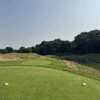
Brooklawn Country Club in Fairfield presents a compelling alternative 25 minutes southeast that represents Connecticut private club golf at its most prestigious, featuring an A.W. Tillinghast design from 1930 across 18 holes measuring 6,711 yards with a course rating of 73.3 and slope of 138 from the championship tees. Occupying approximately 150 acres in one of the state’s most established communities, Brooklawn’s championship pedigree includes hosting five USGA championships and traces its lineage to 1895, making it one of the earliest USGA members. The course showcases Tillinghast’s signature undulating greens and strategic bunkering, recently refined by architect Ron Forse to restore classic design elements while maintaining tournament-caliber conditioning. Members seeking the most complete traditional country club experience with deep golf heritage, championship tournament history, and Tillinghast’s architectural brilliance would find Brooklawn’s combination of prestige and playability particularly compelling. Players who appreciate Golden Age architecture and the cachet of club membership at a facility where Gene Sarazen once served as assistant professional will value Brooklawn’s historical significance and architectural merit over Candlewood’s more modest scale.
Final Word
Beyond the golf course, Candlewood Lake Club provides members with practice facilities including a driving range and putting green that support game development, alongside a fully stocked pro shop under the direction of Head PGA Professional Alex Bardani who oversees a comprehensive junior golf program for members’ children starting at age five. The historic clubhouse, originally the White Farmhouse purchased in 1929, serves as the social hub for the residential community and offers dining options that transition from formal dinners to casual gatherings, creating spaces where members gather beyond golf rounds. Tennis courts with organized ladies and mens play, a private beach accessible to all community residents, marina access on Candlewood Lake, and recreational fields round out the amenities, positioning the property as a comprehensive residential country club environment where golf represents one component of a broader lakeside lifestyle. The integrated nature of the golf course within this residential community creates a distinctive dynamic where the layout serves members who reside on property and value convenient access to familiar holes over constantly changing playing experiences.
What distinguishes Candlewood Lake Club within Connecticut’s golf landscape lies not in architectural innovation or championship credentials but in its unpretentious execution of a compact layout that delivers genuine shot values despite abbreviated yardages. Ted Farley’s design, developed across two decades as resources permitted, reflects a pragmatic approach to routing that maximizes the available terrain while maintaining strategic integrity through green complexes that demand respect regardless of approach distances. The course proves its value through consistent conditioning of bent grass surfaces, efficient pace of play that respects members’ time commitments, and a scale that encourages frequent play without the physical or temporal investment required by longer layouts. For members seeking a walking-friendly course where precision iron play and putting touch determine scores more than driving distance, Candlewood Lake Club delivers a distinctly New England golf experience that prioritizes accessibility and playability without sacrificing the strategic elements that make repeated rounds continually engaging.

David is an avid golfer who loves walking Connecticut’s courses and playing alongside his family. He’s passionate about golf course architecture and one day hopes to play at Pebble Beach.