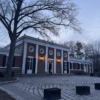
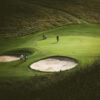
Burning Tree Country Club is a private par-72 course measuring approximately 6,902 yards from the tips. The course was originally designed in 1962 by Hal Purdy and is located in Greenwich, Connecticut.
Burning Tree was founded in 1962 when prospective members were interviewed in the old Showboat Hotel, now the Delamar at Greenwich Harbor, and the front nine opened in 1963 with the back nine completed in 1965. Hal Purdy, who had previously worked with Robert Trent Jones, brought his practical construction experience to shape the routing across tight acreage. Over time, architects Robert McNeil and Tripp Davis refined the course through bunker renovations, practice area enhancements, and complete green rebuilds while preserving Purdy’s strategic intent. Unlike many older clubs in the region, Burning Tree emphasized family and inclusivity from its inception, layering in tennis, paddle, and swimming to match the golf experience. A major clubhouse rebuild in 2005 and upgrades to racquet and aquatic facilities deepened the family-oriented identity. The club has since hosted U.S. Open qualifying and regional amateur events, underscoring both its architectural credibility and its role as a community hub.
The course stretches across approximately 160 acres, divided into two distinct halves. The front nine moves across open corridors with ponds and streams influencing play, giving a feeling of breadth but demanding precise placement near water edges. The back nine tightens considerably into dense hardwood forest, routed along Rockwood Lake Brook, where fairways narrow and doglegs turn sharply. This dual character ensures variety: the outward nine rewards strategic line selection around water, while the inward nine tests accuracy and shot-shaping through wooded corridors. The greens, once modest push-up surfaces, are now rebuilt to USGA specifications, providing more pinnable zones yet retaining quick speeds and subtle tilts. Players who enjoy precision, thoughtful angles, and alternate routes will find the design ethos rich and layered, while those relying on raw distance may find the corridors less forgiving. The course appeals to golfers who appreciate strategic nuance and mental challenge, demanding more calculation than brute force.
Strategic Test
Burning Tree consistently demands decision-making both off the tee and into the greens. Doglegs require judgment on whether to cut corners or play safe, and water features force a choice between attacking aggressive lines or bailing to wider areas. On par 5s, such as the 7th, length tempts a two-shot green attempt but hazards and slopes make laying up the smarter play for many. Even on shorter par 4s, players must decide whether to use less than driver to secure position. The routing ensures players are rarely on autopilot: each hole poses a fresh question of risk versus reward.
The design rewards players who can shape shots and manage angles. Many fairways bend, and the ability to play a draw or fade to open approaches is critical. On the back nine, narrow corridors between trees severely punish wayward drives, demanding control over length as well as line. On the front nine, ponds and creeks dictate where tee shots can land to leave clean approaches. The greens, with their expanded pinnable surfaces, require precise trajectories and spin to access tucked flags. Straight ball-strikers can survive, but the golfer with a full shot-making repertoire is the one best positioned to score.
From the championship tees the course rating of 74.1 and slope of 137 indicate a layout that challenges scratch players and heavily penalizes bogey golfers. The high slope means that high-handicap players will see their scoring differential widen if they play too far back, while a selection of forward tees reduces forced carries and makes the course accessible. Mid-handicap players who manage their game and avoid compounding mistakes can score near their index. Low-handicap players must demonstrate precision throughout the round, as even small errors can lead to bogeys. Burning Tree’s challenge scales well with tee choice, ensuring a fair but demanding test across levels.
| Handicap Level | Effect of Slope and Course Strategy |
| High (18+) | Must use forward tees to avoid unmakeable carries; scores rise quickly with errant shots; safest to play center of fairways and accept bogeys. |
| Mid (8–18) | Manageable if club selection is conservative; bogey-par golf possible by avoiding hazards and aiming for safer sections of greens. |
| Low (0–8) | Rating requires consistent precision; birdie chances exist only through accurate shaping; mistakes are amplified by narrow corridors and water. |
One hole that encapsulates the course’s character is the 18th, a par-3 playing 191 yards from the back tee, with 176 to the front and 203 to the back. A full pond fronts the green, forcing a committed carry, while bunkers left and long add equal peril. The bailout short-left leaves a delicate chip over sand to a green sloping away. Low-handicap players must take a long iron or hybrid directly at the center, trusting spin and distance control. Mid-handicaps should choose a club that easily clears the 176-yard front, playing for the fat of the green even if it leaves a long putt. High-handicaps are best served by using forward tees to minimize carry; if playing back, extra club and a safe aim point to the front-left margin are critical. The hole demands precision under pressure and provides a fittingly dramatic conclusion.
Nearby Course Alternatives
Beyond the championship golf experience, Burning Tree Country Club provides members with comprehensive practice facilities including a driving range for honing your long game, multiple putting greens for perfecting your stroke, and a dedicated short game practice area for working on those crucial up-and-down shots. The club’s impressive 158-acre property features a recently renovated aquatics center with a 25-meter competition pool and splash pad, paddle tennis courts, a state-of-the-art fitness center, and an elegant clubhouse offering refined dining experiences in the Grille Room, Founders Bar, and outdoor patio spaces. For Greenwich golfers seeking alternative private club experiences, two distinguished courses within the same community offer their own compelling blend of championship golf and Golden Age architecture.
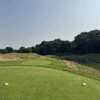
Round Hill Club in Greenwich, located approximately 10 minutes northeast in the mid-country area, presents a classic Walter Travis design that opened in 1924 and spans 200 acres of rolling Connecticut countryside. Measuring 6,525 yards from the tips with a par of 71, the course plays to a 71.3 rating and 127 slope, making it slightly more forgiving than Burning Tree’s 135 slope despite its deceptively strategic design. Travis’s original routing, enhanced by Robert Trent Jones Sr. in the 1960s and refined by Kenneth Dye in the late 1990s, showcases significant elevation changes throughout the property and features the architect’s trademark sweeping, undulating green complexes protected by thick rough. The course’s signature 11th hole, a dramatic 178-yard par-3 requiring a carry over a picturesque pond, exemplifies Jones’s enhancement work and stands as one of Greenwich’s most memorable one-shotters. Round Hill’s shorter overall length belies its strategic complexity, with three par-4s on the back nine playing under 350 yards and demanding precision over power. The club complements its historic golf pedigree with tennis and pickleball courts, a modern pool complex with a 25-meter lap pool, bocce courts, and an iconic clubhouse featuring an intimate fire pit seating area. Players who appreciate strategic placement over raw distance, enjoy dramatic topographical variation, and prefer Golden Age architecture with mid-century modern enhancements would find Round Hill a compelling alternative to Burning Tree’s more contemporary shotmaking demands.
Tamarack Country Club in Greenwich, situated approximately 12 minutes northwest near the New York border, offers one of Charles “Steam Shovel” Banks’s finest solo designs from 1929, recently restored to its original glory through a comprehensive nine-month renovation by architect Brian Schneider. Playing 6,841 yards to a par of 71 with a 72.9 rating and 126 slope, Tamarack stretches slightly longer than Burning Tree while presenting a gentler slope rating, though its celebrated template holes demand thoughtful strategic play. Banks, a protégé of Golden Age masters C.B. MacDonald and Seth Raynor, incorporated dramatic architectural features throughout the routing including faithful renditions of the Eden (3rd), Redan (7th), Biarritz (12th), Cape (2nd), Alps (6th), and Road Hole (14th), creating what Golf Digest ranks among Connecticut’s top five courses. The architect’s signature “steep and deep” bunkering remains intact, most prominently at the sweeping 508-yard 17th where the enormous “Big Bertha” bunker guards an elevated green, and the innovative center-line hazards on the par-4 4th exemplify modern restoration work honoring Golden Age principles. Schneider’s recent work opened up tree-lined corridors and restored dramatic green-to-tee elevation changes, particularly visible on the spectacular run from holes 5 through 8 along the property’s southwestern boundary. The club’s 55,000-square-foot grand clubhouse commands the highest point on the property with panoramic views, while the recently constructed poolside bar and 13,000-square-foot pool deck, along with tennis courts and year-round dining venues, provide a complete country club experience. Architecture enthusiasts who appreciate Golden Age template holes, players seeking dramatic slopes and bold bunkering that reward strategic thinking, and those drawn to courses with championship pedigree and recent professional restoration work would find Tamarack’s cerebral challenges a refreshing contrast to Burning Tree’s more straightforward modern design philosophy.
Final Word
Burning Tree Country Club blends strategic golf with a family-focused atmosphere, delivering a course that asks questions of precision and placement while offering full recreational breadth. Its front nine of water and open corridors contrasts with the wooded back nine, creating variety and sustained engagement. With a long-standing tradition of inclusivity and modern amenities, it remains one of Greenwich’s most complete club experiences. Strategically demanding, socially vibrant, and historically rooted, Burning Tree proves its value by combining architectural substance with a welcoming club culture.

David is an avid golfer who loves walking Connecticut’s courses and playing alongside his family. He’s passionate about golf course architecture and one day hopes to play at Pebble Beach.