There are multiple ways to assess where the ball is striking the clubface—foot spray, dry-erase markers, high-speed cameras—but in an indoor simulator setting, those options can be messy or impractical. That’s where the Lihengkong Golf Impact Stickers shine. I love using these at Golf Lab CT, where space is clean, tech-driven, and designed for data. I originally chose these stickers because they were the cheapest per sticker I could find on Amazon, but they’ve turned out to be one of the best golf purchases I’ve made.
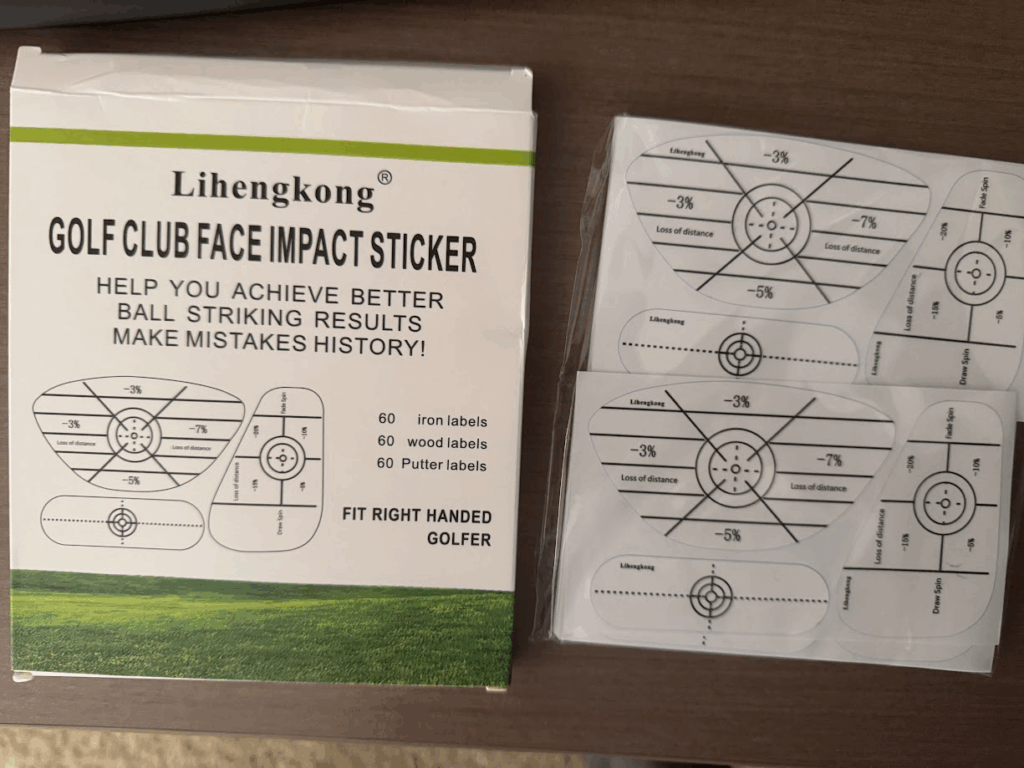
The pack includes sticker sets for drivers, irons, and putters. Although the putter sticker seems a little unnecessary, I personally like to place them at the bottom of my iron to capture topped shots. Application takes seconds—just peel and stick. The stickers stay secure during the swing and don’t shift even after multiple shots. Removing them doesn’t leave any residue on the clubface. Each sticker lasts for approximately 10-15 quality shots before losing clarity. The pack includes enough stickers for dozens of practice sessions. They’re clearly labeled and easy to apply in alignment with grooves.
Efficacy
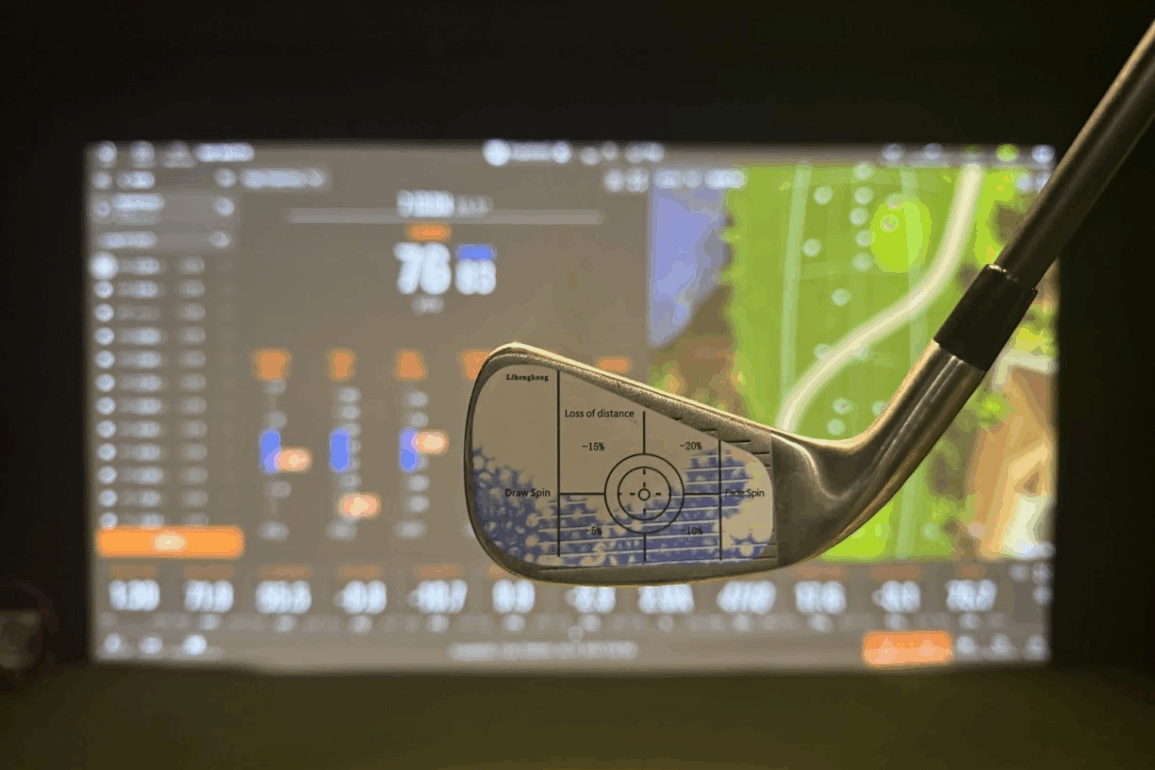
The Lihengkong stickers reliably capture impact locations, even after multiple swings. Visual feedback is immediate and intuitively easy to interpret. Sweet spot hits result in a clean purple center mark, while toe, heel, thin, or fat strikes leave distinct patterns. The sticker doesn’t just confirm the location of impact—it also reinforces how a mis-hit sounds and feels. This teaches your hands and ears to recognize poor contact even without visual proof, creating a sharper internal feedback loop.
When compared with data from TrackMan, the accuracy of the stickers becomes especially apparent. In the image provided, the TrackMan software reported a clear toe strike—exactly mirrored by the sticker’s mark. This synergy between tech and tactile aid helps build muscle memory. Over time, golfers can begin to recognize toe or heel contact instinctively, even when not using the sticker. That kind of proprioceptive training is invaluable for developing consistent, repeatable ball striking.
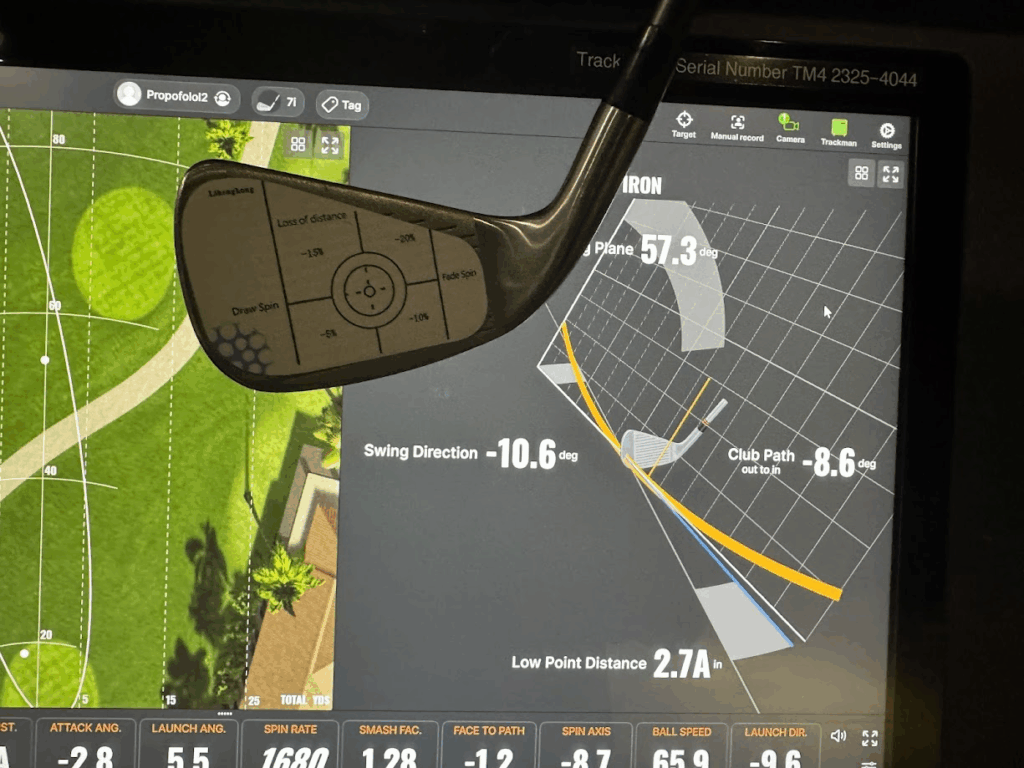
The printed zones also help categorize strike tendencies—heel, toe, high, low, or center—and quickly reveal patterns that may point to setup flaws, swing path issues, or face control errors. The stickers work extremely well in tandem with a launch monitor, but they’re equally valuable in solo practice, offering a clear, low-tech snapshot of each swing’s quality. These strike tendencies can guide useful corrections. Toe strikes may signal you’re standing too far or swinging excessively from the inside. Heel strikes could indicate overcrowding or an over-the-top move. Hitting above the sweet spot may suggest early extension or wrist flipping, while low strikes can often be traced to poor posture or too much shaft lean. These stickers don’t just identify the problem—they nudge you toward the fix.
Strike Location Feedback Table
| Strike Location | Most Common Cause & Drill |
|---|---|
| Toe | Often caused by standing too far from the ball. Use a gate drill with two tees just wider than the clubhead. Place one tee outside the toe and one inside the heel. Practice hitting the ball without striking the outer tee to retrain path and distance from the ball. |
| Heel | Typically from standing too close or an over-the-top path. Same gate drill applies: focus on avoiding the inner tee to eliminate heel contact. Maintain better posture and inside path through the zone. |
| Above Sweet Spot | Often the result of early extension or standing up through the swing. Place a strip of painter’s tape 1–2 inches in front of the ball and try to brush the tape after contact. This promotes a shallower angle of attack and consistent low point. |
| Below Sweet Spot | Usually caused by poor low-point control or too steep of an angle. Place a coin or plastic tee 1–2 inches in front of the ball and focus on brushing the ground past the ball to improve bottoming out post-impact. Encourages proper shaft lean and forward contact. |
Final Word
Lihengkong’s Golf Impact Stickers are one of the most effective and budget-friendly additions to any serious golfer’s training arsenal. They deliver immediate, visual feedback, require no tech setup, and integrate seamlessly into any practice setting—whether you’re grinding on a TrackMan or hitting into a backyard net. Their power lies in converting vague swing sensations into crystal-clear impact data. For under $10, they offer one of the most cost-effective ways to gain insight into your ball striking. I originally chose them based on value—and they’ve far exceeded expectations. Unlike high-speed cameras or foot spray, these stickers are mess-free, portable, and take seconds to use.

While the performance is outstanding, a few small improvements could elevate the product even further. The putter sticker feels unnecessary and could be replaced by extra iron or driver stickers, which get far more use. The iron sticker could be slightly larger to offer more surface coverage, especially on mid-irons. And a thinner material might allow for a bit more gear effect visibility on wedges—useful when working on compression and strike quality. These are minor critiques of what is otherwise a smart, versatile, and thoughtfully designed tool.
For any golfer committed to measurable improvement, I can’t recommend these enough. They combine affordability, clarity, and consistency in a way few other training aids do. I keep a few sheets in my bag at all times and pair them with TrackMan sessions for double confirmation. Whether you’re just starting out or dialing in your peak-season form, these stickers make every swing more productive.

David is an avid golfer who loves walking Connecticut’s courses and playing alongside his family. He’s passionate about golf course architecture and one day hopes to play at Pebble Beach.