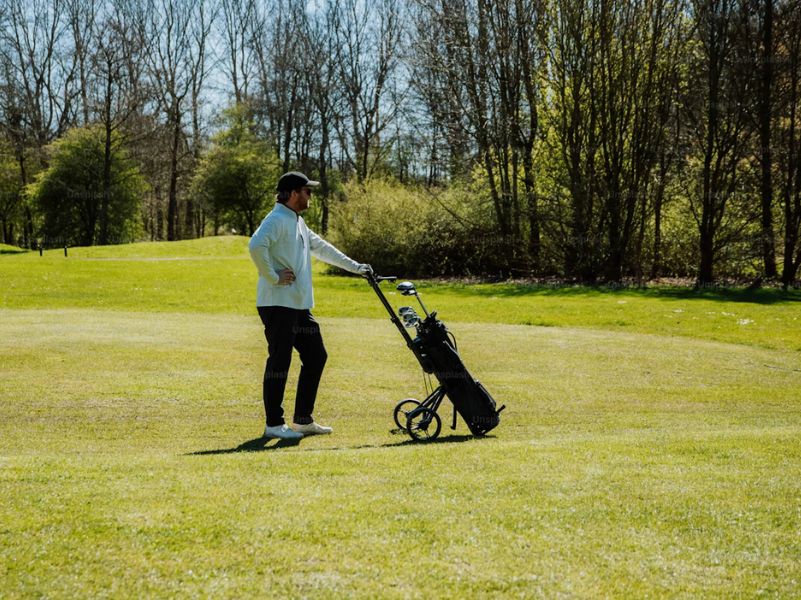
The wait is over. After months of simulator sessions, range nets in the garage, and watching Golf Channel highlights from warmer climates, Connecticut courses are finally opening for the season. This week’s forecast — 65 to 70°F with partial sun — is bringing golfers out in force. Hamden Vue is already open and taking tee times. Shennecossett, Fenwick, and Alling Memorial in New Haven are expected to open within the next week or two as conditions improve and superintendents finish early-season prep work.
But let’s be honest: early spring golf in Connecticut is not Augusta in April. Fairways are saturated from snowmelt and March rain. The rough is more swamp than grass. Greens are soft enough that balls plug on well-struck approach shots. Your first round of the season will not be your lowest score of the year, and that’s fine. This is about getting back outside, shaking off the rust, and remembering what real golf feels like after a winter of hitting into nets.
This article covers what to expect from early-season conditions in Connecticut, how to adjust your game when fairways play like sponges, and how to protect fragile turf so the course improves as the season progresses. If you’re heading out this week — and you should be — here’s what you need to know.
What to Expect: Soggy Fairways, Plugged Balls, and No Roll
The defining characteristic of early spring golf in Connecticut is simple: everything is wet. Fairways are soft. Rough is soaked. Greens are receptive to the point that balls don’t just land — they stick. The turf has been dormant all winter, and while temperatures are warming, the grass is just beginning to grow. Drainage systems are working overtime, but until we get consistent dry weather and warmer overnight lows, courses will remain soft.
Here’s what that means for your game:
The Course Plays Longer — Plan for It
When fairways are wet, there is almost no rollout. A drive that normally carries 230 yards and rolls out to 250 will stop at 232. Approach shots that usually release 10 yards on firm greens will plug and stay put. The effect is cumulative: every shot plays shorter than it does in summer, which means the course plays longer overall. A 400-yard par 4 that feels manageable in July will require a driver and a 4-iron in March. Accept this. Take more club. Do not try to force a 7-iron to cover 160 yards when the conditions demand a 6-iron.
Balls Plug in Fairways and Greens
Soft conditions mean balls embed on landing, even in the fairway. You’ll find your ball sitting down in its own pitch mark more often than sitting up on a fluffy lie. On the greens, well-struck wedge shots create deep ball marks that need to be repaired immediately. Plugged lies in the fairway are playable but awkward — more like a fairway bunker shot than a clean lie. Expect to lose a bit of distance and control when the ball sits down.
Mud Happens — and It Affects Ball Flight
Wet fairways mean mud on the ball. Every shot. Sometimes a little, sometimes a lot, but it’s unavoidable. Mud on the ball changes ball flight in unpredictable ways — usually causing the ball to curve away from the side where the mud is caked. A ball with mud on the right side will tend to fly left. This is not something you can control or plan for. Clean the ball whenever the rules allow (on the green, or when taking relief). Between shots, wipe the clubface. Bring extra towels — at least two — because one will be soaked by the turn.
Greens Are Slower Than Summer Pace
Soft greens don’t roll true. Even when mowed and rolled, early spring greens in Connecticut run slower than they will in May or June. Expect stimp speeds closer to 8 or 9 rather than 10 or 11. This is not a complaint — it’s a fact. Adjust your putting stroke accordingly. Hit putts firmer. The ball will not release as much on soft, damp surfaces. If you’re used to dying the ball into the hole, you’ll leave everything short in these conditions.
How to Play Wet Conditions: Practical Adjustments for Early Spring Golf
Playing in soggy conditions requires small adjustments that add up to better scoring and less frustration. These are not swing changes. These are strategic and logistical adaptations that acknowledge the realities of March golf in New England.
- Club up — always: When in doubt between clubs, take the longer one. Wet fairways kill distance. A well-struck 7-iron that normally carries 155 yards will carry 150 in wet conditions and stop dead. If the yardage is 160 to the pin, hit the 6-iron. The penalty for being short in soft conditions is severe — you’re chipping from heavy rough or worse. The penalty for being long is minimal — the ball will not roll through the green.
- Waterproof shoes are non-negotiable: Your feet will get wet if you wear mesh golf shoes. Bring waterproof leather shoes or boots designed for wet conditions. Wet socks by hole 3 ruins the round. Invest in quality footwear or accept that you’ll be miserable.
- Bring extra towels and keep them dry: One towel for your hands, one for the ball and clubface. Keep at least one towel in a dry pocket or zippered compartment. A soaked towel is useless. If you run out of dry towel surface by hole 9, the back nine becomes a battle against mud and moisture.
- Clean the ball on every green: Mark it, lift it, wipe it thoroughly. Mud affects putting lines. A clean ball rolls truer. This is legal on the green — take advantage of it.
- Expect rust and manage expectations: This is your first round in months. Your swing will feel unfamiliar. Your timing will be off. Your distance control will be inconsistent. This is normal. Do not spiral into frustration when you blade a wedge or pull a drive. The goal of the first round is to enjoy being outside and start building rhythm, not to shoot your handicap. If you’re looking for ways to sharpen your game as the season progresses, check out our guide to tempo training for consistency.
- Play the ball down only if it’s truly fair: If your ball is embedded in the fairway or sitting in a puddle, take relief under the embedded ball rule or casual water rule. Early spring conditions make “play it as it lies” unnecessarily punitive. Use the rules to your advantage. This is not cheating — this is understanding that March conditions are not July conditions.
Supporting Video Resources
Playing Golf in Wet Conditions: Tips and Tricks

How Do Caddies Reveal Spring Golf Course Nuances?
Protecting the Course: Why Early Spring Turf Care Matters
Turf in early spring is fragile. The grass is just beginning to grow after months of dormancy. Root systems are shallow. The soil is saturated, which makes it more susceptible to compaction. Every footstep, every divot, every unrepaired ball mark creates damage that takes longer to heal in March than it would in June.
Connecticut course superintendents work year-round to get courses ready for opening day. The condition you play in March is the result of months of planning, drainage management, and careful monitoring of weather patterns. As golfers, we have a responsibility to protect that work.
- Replace divots — every single one: If you take a divot, replace it. Press it down with your foot. If the divot is shredded or missing, use the sand/seed mix provided on carts or at tee boxes. Fairways in early spring cannot regenerate as quickly as they do in summer. An unrepaired divot becomes a bare patch that lasts weeks.
- Repair ball marks on greens immediately: Soft greens mean deep ball marks. Repair yours, and if you see others, repair those too. A ball mark left unrepaired becomes a brown spot within 24 hours and takes weeks to recover. Use a proper ball mark repair tool. Insert it around the perimeter of the mark, gently push inward toward the center, and tap down with your putter. Do not lift the center of the mark — this damages the roots.
- Avoid extremely wet areas: If a section of fairway or rough is visibly waterlogged — standing water, mud, saturated turf — walk around it. Yes, this might mean a slightly longer walk. Do it anyway. Foot traffic on saturated turf causes compaction that restricts oxygen to the roots and delays recovery. Superintendents often rope off or mark the worst areas. Respect those markers.
- Keep carts on paths when required: Many Connecticut courses enforce cart path only rules in early spring. This is not to inconvenience you. This is to prevent ruts, compaction, and turf damage that would make the course unplayable by mid-April. Walk the extra steps. Carry a lightweight Sunday bag if cart path only rules frustrate you.
The condition of the course in May depends on how golfers treat it in March. Be part of the solution. Repair your marks, replace your divots, and avoid damaging fragile turf. The course will thank you with better conditions as the season progresses.
Final Word
Early spring golf in Connecticut is not perfect. Fairways are wet, greens are slow, and your first round will be ugly. But after a winter of waiting, none of that matters. The courses are open. The weather is warming. Hamden Vue is taking tee times right now, and Shennecossett, Fenwick, and Alling Memorial will be open soon.
Pack extra towels. Wear waterproof shoes. Take more club than you think you need. Repair your ball marks and replace your divots. Manage your expectations and enjoy the fact that you’re playing real golf on real grass under real sky. The conditions will improve as April arrives and the turf dries out, but for now, this is what we have. And honestly? It’s enough. Before you load up the trunk, check out our in-depth review of The Vue Golf Club to see how it’s holding up this season.

David is an avid golfer who loves walking Connecticut’s courses and playing alongside his family. He’s passionate about golf course architecture and one day hopes to play at Pebble Beach.