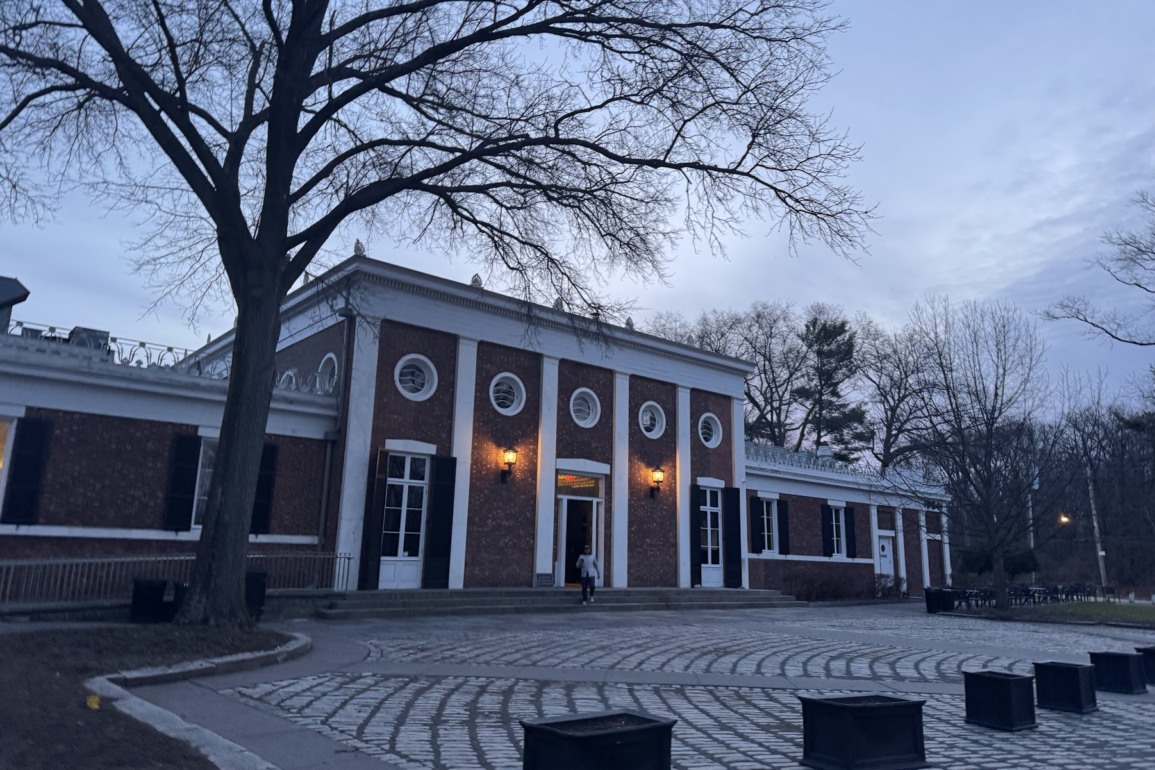
Pelham Bay & Split Rock Golf Courses is a public 36-hole facility featuring two distinct 18-hole layouts: Split Rock, a par-70 measuring approximately 6,682 yards from the tips (rating 72.0, slope 129), and Pelham Bay, a par-71 measuring approximately 6,480 yards (rating 69.8, slope 118). Both courses were originally designed in 1935 by John Van Kleek and are located in the Bronx, New York.
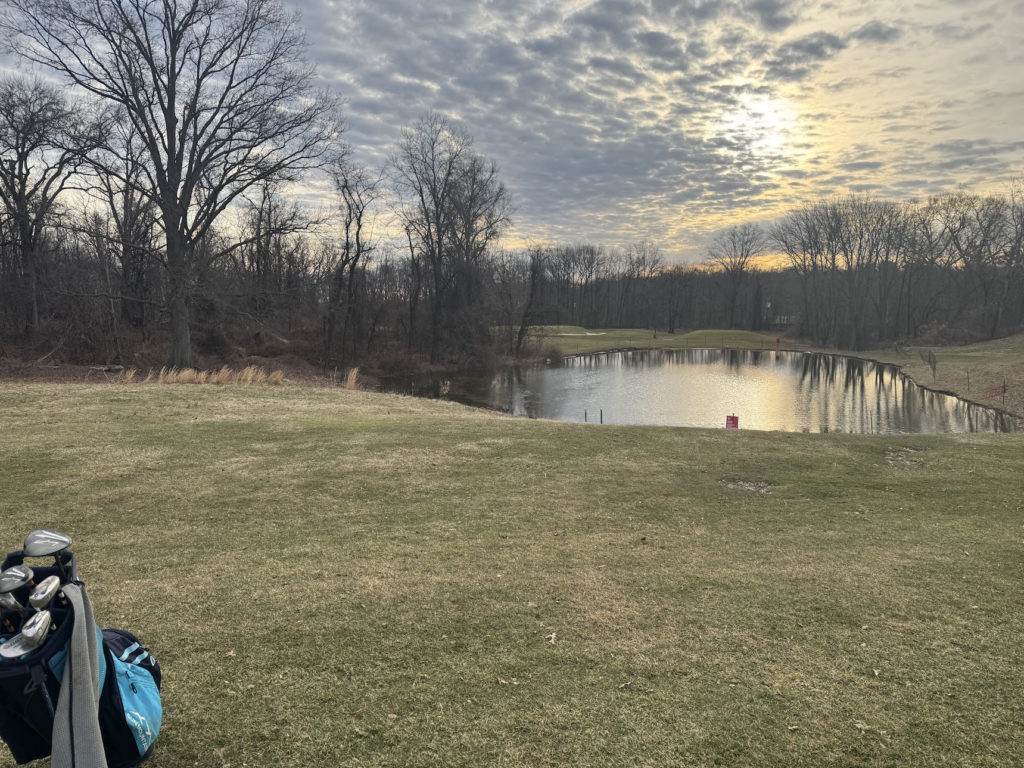
I came to this facility out of necessity as much as curiosity. It was early spring, and most Connecticut courses were still closed for the season — the exceptions being Fairchild Wheeler, Alling Memorial, and The Vue — and the few that were open, like Traditions at Oak Lane in Woodbridge, weren’t taking tee times before 9am. Pelham Bay & Split Rock, just 20 minutes from Greenwich in light early-weekend traffic, was the obvious answer.
I arrived with restrained expectations for a New York City municipal experience — something navigable but architecturally ordinary. What I found was considerably more interesting. Pelham Bay has existed in some form since 1901, when it opened as the nine-hole Pell Golf Course, making it one of the earliest public golf venues in the United States. Split Rock arrived three decades later as a Works Progress Administration project under Parks Commissioner Robert Moses, opening in 1936 alongside a fully redesigned Pelham Bay, with John Van Kleek shaping both layouts into their current 18-hole forms.
The facility drew national attention almost immediately — Bobby Jones toured both courses shortly after opening and was particularly taken with Split Rock. Since 1983, American Golf Corporation has managed both courses on behalf of New York City Parks. The landmark Greek Revival clubhouse, designed in 1936 by architects John Matthews Hatton and Aymar Embury II, underwent a comprehensive restoration in the 2000s under architect Page Ayres Cowley.
The 36-hole complex occupies approximately 300 acres of Pelham Bay Park — a 2,772-acre property and the largest municipal park in New York City — providing a natural buffer of forested corridors that effectively separates the golf experience from the surrounding borough. Split Rock is the topographically assertive layout of the two, threading tight, tree-lined fairways through hilly terrain that demands spatial awareness and shot-shaping. Pelham Bay plays wider and more open, with a links-influenced character that still offers enough green complexity and bunkering to engage the thinking golfer. The player who will find Split Rock most rewarding is the shotmaker — someone drawn to push-up greens, strategic centerline bunkering, and the satisfaction of executing a well-judged approach under tree pressure.
Walkability
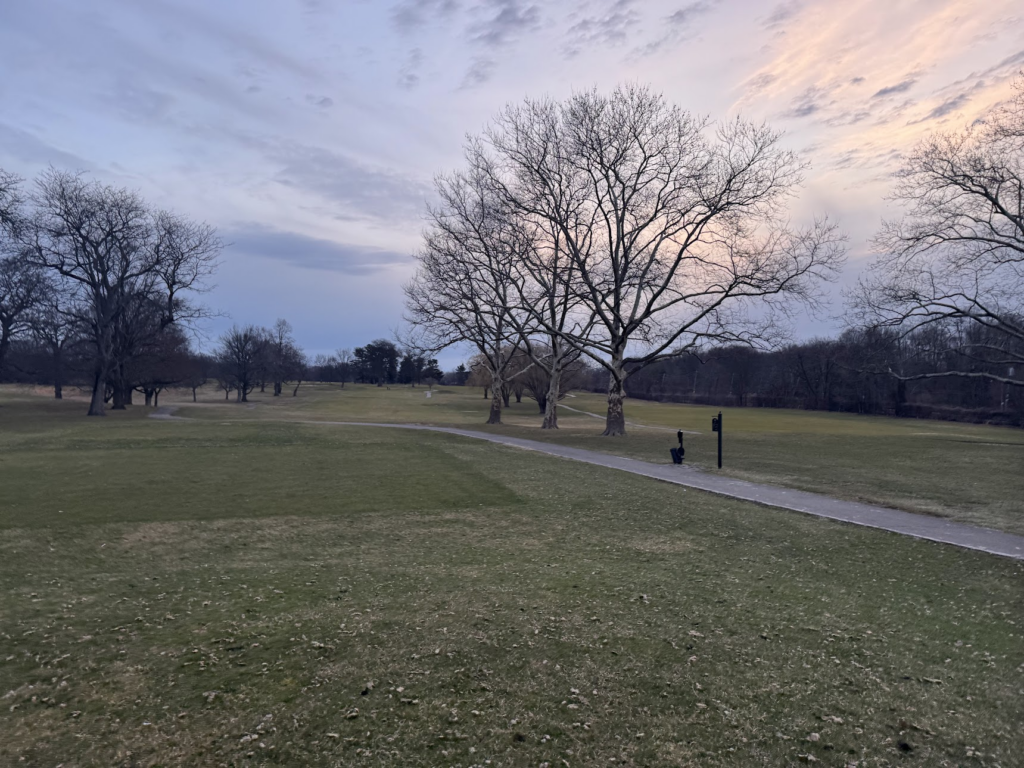
Split Rock occupies a rolling, forested portion of the 300-acre golf property and is a moderately walkable course with important caveats. Several green-to-tee transitions involve meaningful elevation change, and walkers who underestimate the cumulative physical demand do so at their own expense.
The front nine is the more demanding half on foot. The opening three holes — the 432-yard 1st, the semi-blind 410-yard 3rd, and the 515-yard par-5 5th — establish an immediate rhythm of sustained corridor walking without significant rest. The climb to the 6th tee, a 220-yard par 3 playing fully uphill, is a significant transition arriving when energy reserves are already partially drawn. The notorious Amen Corner sequence from holes 5 through 8 compounds this, with back-to-back elevation shifts across four consecutive demanding holes — the 515-yard 5th, the 220-yard 6th, the 447-yard 7th (number-one handicap), and the 441-yard 8th. Walkers should budget for a physically engaged round, not a stroll.
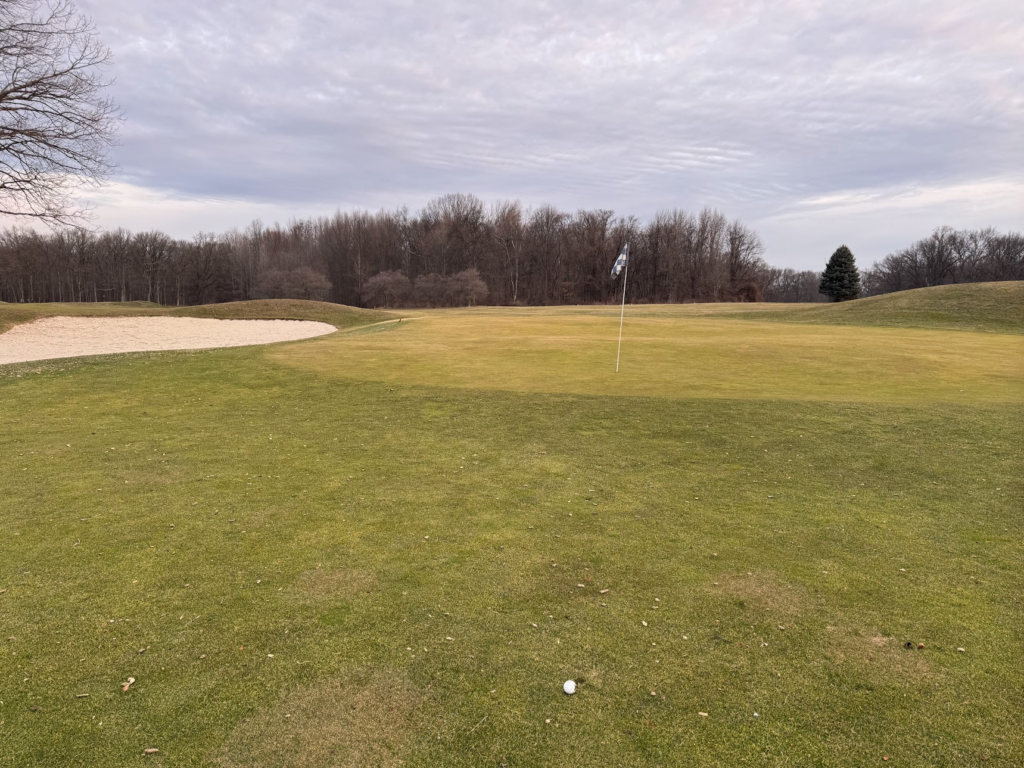
The back nine eases slightly in topographic severity. The routing near the highway around the 13th — a 496-yard par 5 pressing close to Route 95 — briefly breaks the park immersion. The 14th, a 372-yard slight dogleg left, plays markedly longer than its card distance suggests due to uphill grade and firm conditions, adding mental fatigue to an already demanding stretch. The green-to-tee transition between the 15th and 16th involves a notable elevation drop that resets the legs for the closing stretch.
Pelham Bay, set on the lower, more open portion of the property with gentler grades across its approximately 150 acres of routing, is the more comfortable walking experience. For walkers taking on Split Rock, an early tee time is strongly recommended both for pace of play and to beat the weekend crowds.
Strategic Test
Split Rock is genuinely stratified by risk appetite throughout the round — the hallmark of Van Kleek’s design philosophy here. The front nine demands corridor management above all else, where positioning off the tee is more consequential than raw distance. The 7th hole at 447 yards culminates in a small double-plateau green with front-left and back-right tiers defended by bunkers on both sides. Par here is not taken for granted at any handicap level.

The downhill 11th, a 439-yard par 4 with a crossbunker at approximately 310 yards and a knob-laden back-to-front green, is Van Kleek at his most architecturally compelling — a hole that recalls Macdonald-Raynor sensibility and rewards the player who reads the contour and lands the approach in the correct green sector.
The 8th hole is the course’s most instructive strategic case study. Playing 441 yards as a tight dogleg left, the tee shot is semi-blind toward a fairway bending left at approximately 220 yards, flanked by large bunkers at the apex. The hole then runs downhill over a creek to a back-to-front sloped green guarded by a moat-like bunker on the right.
The aggressive play calls for a driver drawn at the left tree corridor — carry the apex bunkers at 220 yards and cut the corner to set up a downhill 8- or 9-iron from an ideal angle into the green. The reward is a clear look at birdie; the risk is a plugged bunker lie or a blocked recovery from the trees. The conservative play — a 3-wood or hybrid to the right-center fairway before the bend — avoids the tee-shot bunkers but leaves 195-plus yards downhill over the creek, demanding a 4- or 5-iron from a comfortable lie. A slightly short iron finishes in the hazard; a quality strike still demands a composed putt to avoid a three-putt. Big numbers follow modest errors from either strategic line.
Playability
Split Rock plays to a course rating of 72.0 and a slope of 129 from the Blue tees at 6,682 yards — a legitimate championship test that demands respect from every handicap tier. A scratch golfer is expected to match the course at even par; a 10-handicap player is looking at approximately 82; a 20-handicap player at the low 90s. The White tees at 6,304 yards (rating 70.4, slope 124) offer a more manageable challenge for mid-handicappers, and the Gray tees at 5,249 yards (rating 70.3, slope 117) bring the course into realistic scoring range for higher-handicap players. Pelham Bay, with its rating of 69.8 and slope of 118 from the tips, plays approximately three to four shots easier than Split Rock for any given handicap level — a meaningful difference that makes it the natural starting point for those new to the property.
Pelham Bay’s wider fairways, more forgiving rough, and gentler topography make it the more accessible of the two layouts. The two-course format is one of the property’s most player-friendly structural features, allowing groups of mixed ability to find the right challenge without leaving the grounds.
On Split Rock, the 15th hole provides a welcome change of register for higher-handicap players. At 347 yards — the shortest par 4 on the course — the hole plays as a slight dogleg right with a forced water carry from the tee that adds genuine visual drama. A well-struck 7- or 8-iron clearing the hazard leaves a short wedge into a green featuring a prominent knob on the front left and deep bunkers on either side.
A bogey 5 is entirely attainable for the high-handicapper with a clean tee shot. Mid-handicappers will see a legitimate birdie opportunity from inside 100 yards; lower-handicap players will find that the green complexities punish anything short of a precise approach. It is the kind of hole that delivers a satisfying and differentiated experience regardless of ability level.
Atmosphere
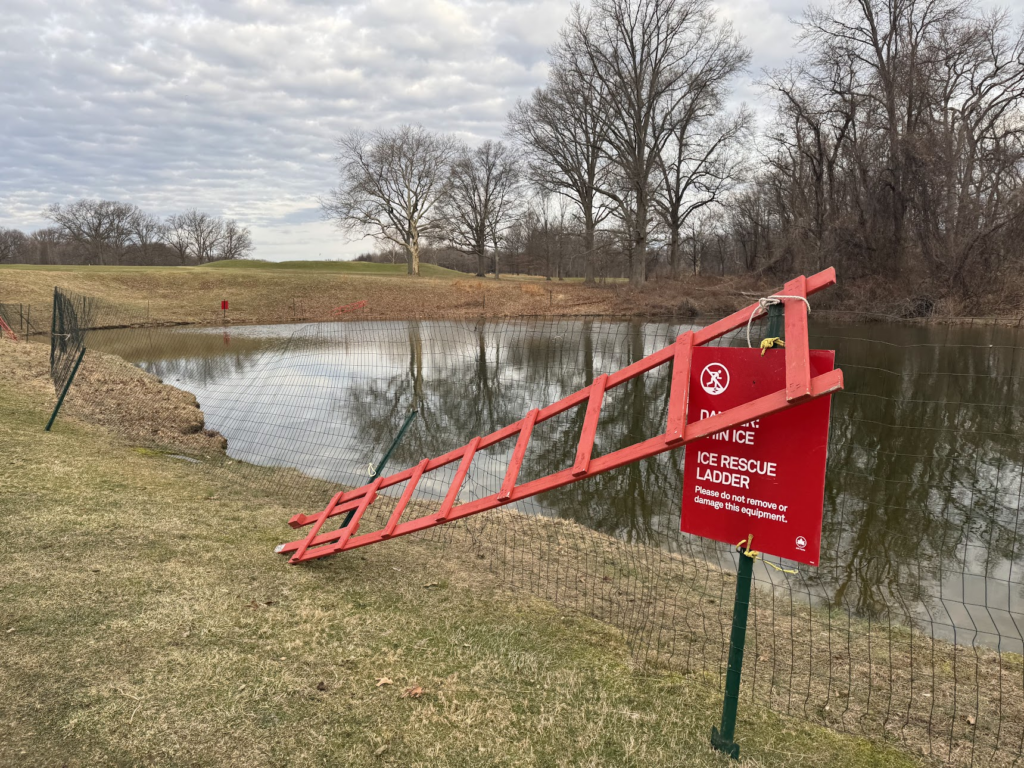
Split Rock consistently produces a sense of escape that would surprise first-time visitors. Set within the forested acreage of Pelham Bay Park, the course’s tree-lined corridors effectively screen the surrounding borough — on holes where the canopy closes in, the ambient quality approaches that of a private inland parkland course. The Greek Revival clubhouse, perched above the shared practice area, anchors the property with architectural presence, its white columns and stone terrace a visible reminder of the New Deal era in which it was built.

Longtime visitors often remark that the property carries the feel of a country club rather than a municipal facility, and the combination of mature tree cover, varied topography, and a well-maintained routing gives that perception considerable legitimacy.
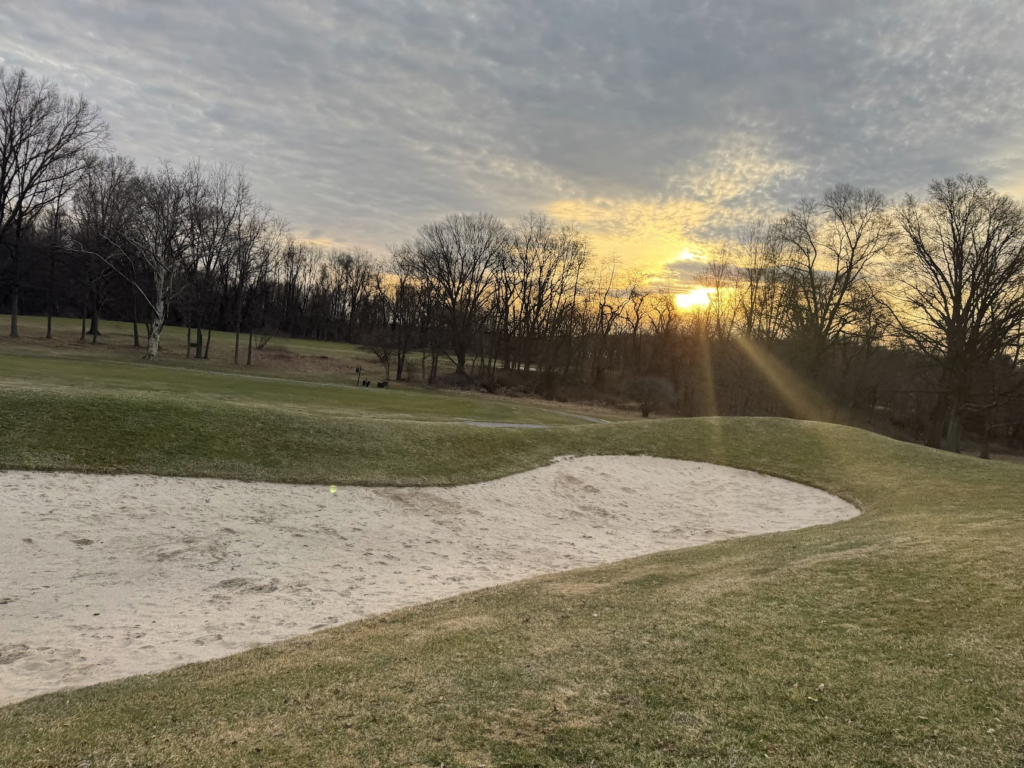
Among the most atmospherically resonant stretches on the course is the 13th hole — a 496-yard par 5 that plays along the outer edge of the property beside a natural creek. The sound and presence of moving water adds a sensory dimension to what is, in purely design terms, a tight OB-flanked corridor with bunkers positioned at 300 yards on either side. The creek runs as a peripheral feature rather than a forced carry, but its proximity to the fairway line focuses the mind on every shot.
In early spring, when the canopy is thin and the creek runs at full volume, the ambient sound of the water against bare tree lines gives the hole a quiet, contemplative character. It is one of those stretches where the environment does as much work as the architecture itself, and that combination lingers well after the round is complete.
Nearby Course Alternatives
Van Cortlandt Park Golf Course in the Bronx is approximately 15 minutes southwest of Pelham Bay & Split Rock. As the oldest public municipal golf course in the United States — opened in 1895 on a 1,146-acre park and originally laid out by Tom Bendelow — Van Cortlandt carries enormous historical weight. It operates as an 18-hole, par-70 layout measuring 6,002 yards from the tips, with a rating of 68.5 and a slope of 119. Architect Stephen Kay renovated the course in 2008, introducing seven new greens, updated tee boxes, and substantially improved drainage across the course’s approximately 150-acre routing. The front nine features engaging hilly topography with blind shots and elevated greens that give it genuine strategic character; the back nine is flatter and more open. Van Cortlandt lacks the bunkering sophistication and multi-tiered green complexity of Split Rock, and the distance between several holes makes the walk more arduous. The golfer who would prefer it over Split Rock is the historically inclined player — or the higher-handicapper who wants topographic variety in a shorter, less punishing package.
Dunwoodie Golf Course in Yonkers is approximately 20 minutes north of Pelham Bay & Split Rock. A Westchester County-managed public facility dating to 1903, Dunwoodie occupies approximately 126 acres atop Dunwoodie Heights and is characterized by dramatic topography, steep slopes, and a layout that alternates between narrow tree-lined front-nine corridors and a more open, flatter back nine. The course plays 5,830 yards from the tips as a par 70, with a slope of 123 and a rating of 68.1 — a notably more scoring-friendly test than Split Rock, playing roughly four shots easier for any given handicap. There is no water on the course, and while the design lacks Van Kleek’s bunkering drama and green complexity, the topographic interest of the front nine — including a challenging 386-yard uphill par 4 at the 4th and a compelling downhill 373-yard par 4 at the 3rd — creates an engaging sequence for players who enjoy hillwork in a compressed setting. Practice facilities include a lighted driving range, chipping area, and putting green — a meaningful edge over Split Rock’s limited pre-round options. The player who would most enjoy Dunwoodie is typically the mid-to-high handicapper who appreciates elevation drama without the scorecard penalty of every offline tee shot.
Final Word
I know this isn’t a Connecticut course, but at roughly 45 minutes from Fairfield County, it’s close enough to warrant the trip — and walking Split Rock, I kept finding myself thinking of Fairchild Wheeler back in Bridgeport, my home course. The parallels are hard to ignore: both are WPA-era Van Kleek designs, both lean on tight tree-lined corridors, tilted push-up greens, and strategic bunkering, and both deliver a parkland intimacy that feels disproportionate to their municipal pedigree. If Fairchild Wheeler is in your regular rotation, Split Rock will feel like a natural extension of that vocabulary.
On the practice side, there is no driving range at the facility, so players should arrive with their swing already warmed up. The putting and chipping green adjacent to the clubhouse is a solid pre-round option but does not fully substitute for range work. The restored Greek Revival clubhouse houses a full-service restaurant, a well-stocked pro shop, and event venues — including a glass-enclosed pavilion — capable of accommodating up to 220 guests.
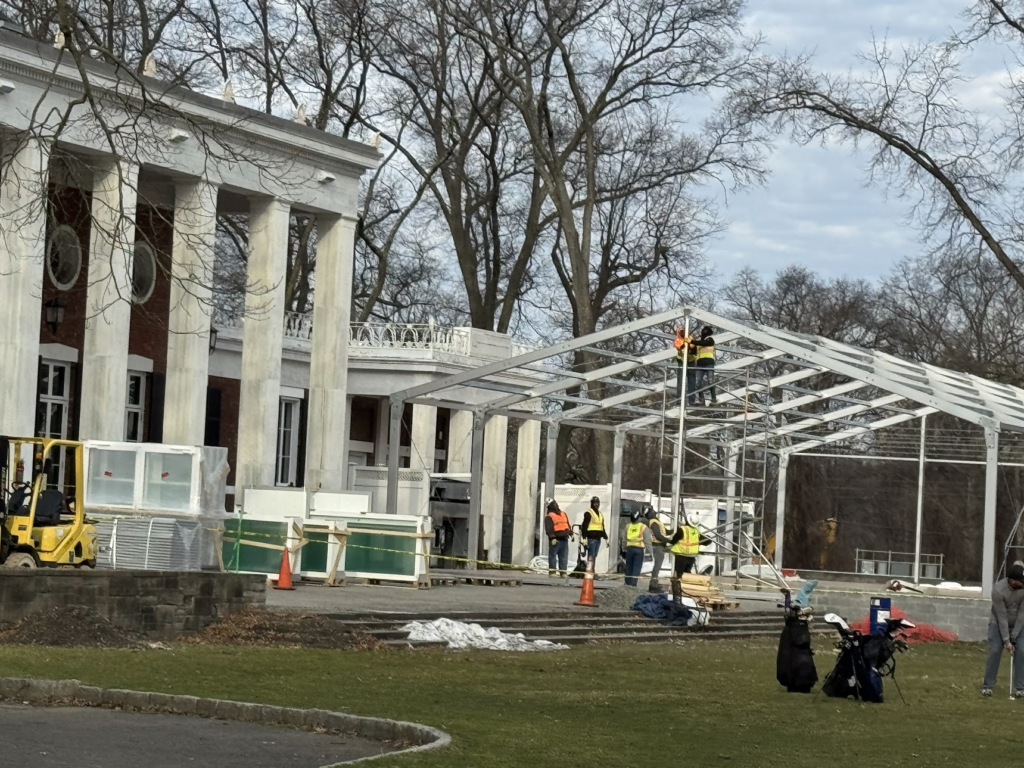
Golfers visiting in early spring should plan accordingly: March rounds may encounter incomplete seasonal setup, including the possible absence of tee box distance markers and bunker rakes not yet in the sand. A visit later in the season ensures the course presents at full strength. Nearby alternatives worth considering include Van Cortlandt Park Golf Course for a historically grounded, more forgiving challenge 15 minutes to the west, and Dunwoodie Golf Course in Yonkers for a shorter, topographically compelling round with a full practice facility attached.
What elevates Pelham Bay & Split Rock above the average New York City muni is the rare alignment of authentic Van Kleek architecture, a WPA-era clubhouse of genuine civic merit, and the natural scale of Pelham Bay Park as a setting — all within a 36-hole format that ensures golfers of every ability level find a proportionate and memorable challenge. Few public facilities in the metropolitan area can match what this property delivers.

David is an avid golfer who loves walking Connecticut’s courses and playing alongside his family. He’s passionate about golf course architecture and one day hopes to play at Pebble Beach.