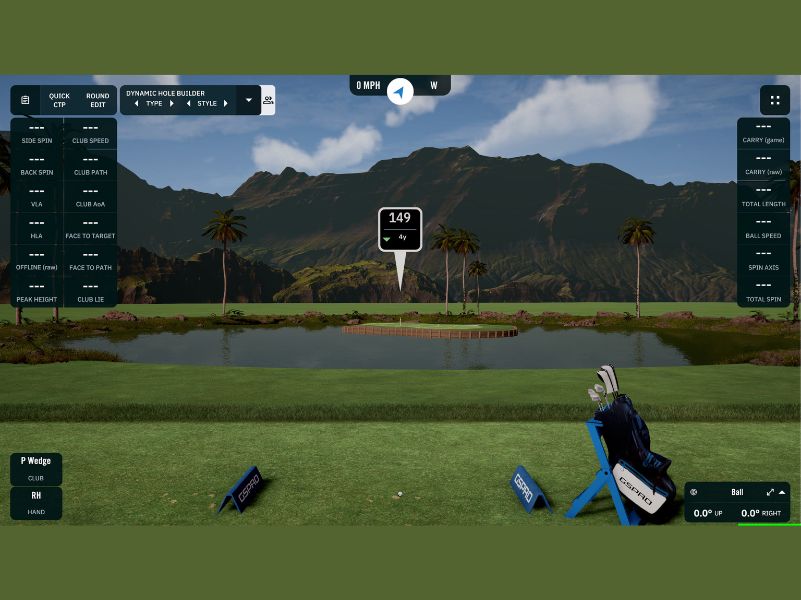
I have a problem with simulator practice. Not the setup—my launch monitor is dialed in, GSPro runs smoothly, and the ball flight looks realistic enough that I trust the data. The problem is motivation. After 30 minutes of hitting wedges into Pebble Beach #7 or grinding driver swings on a virtual range, I get bored. There’s no structure, no feedback loop beyond raw numbers, and no reason to keep going beyond vague aspirations of ‘getting better.’ So I quit early, walk upstairs, and tell myself I’ll be more disciplined next time.
Then I found RISE. It’s a career-style progression mode built on top of GSPro by TekBud, a developer who supports it through Patreon for about $12 per month. I tried it a few weeks ago mostly out of curiosity, and I’ve been using it almost daily since. It turns simulator practice into something that feels less like isolated drills and more like a structured training program—with challenges, goals, boss battles, seasonal competitions, and a progression system that actually tracks improvement in ways that matter.
This article explains what GSPro is, what RISE adds to the experience, and why gamified practice tools like this might be the missing piece for golfers who struggle to stay engaged during simulator sessions. If you own a home simulator or frequent an indoor golf lounge during Connecticut winters, this is worth your attention.
What GSPro Is and Why Simulator Golfers Love It
GSPro is golf simulator software—one of the most popular platforms among home simulator owners and commercial indoor golf facilities. It connects to launch monitors (like Bushnell, SkyTrak, Uneekor, TrackMan, or GCQuad) and translates shot data into realistic ball flight on a virtual course. The graphics are high-quality, the physics engine is accurate, and the course library is massive thanks to a dedicated community that creates and shares lidar-scanned recreations of real courses.
What makes GSPro stand out is realism. Ball flight responds to spin, launch angle, and club path the way it does on a real course. Wind affects shots. Greens have realistic break and speed. The software doesn’t feel arcade-like or forgiving—it feels like golf. You can play full 18-hole rounds at Pebble Beach, St Andrews, or hundreds of other courses without leaving your garage or basement. For golfers in climates like Connecticut where winter shuts down outdoor play for months, GSPro is the closest thing to real golf you can get indoors.
But here’s the issue: playing simulated rounds gets repetitive. After you’ve played Pebble Beach a few times, the novelty wears off. Range mode—where you just hit shots and analyze data—is useful for working on swing mechanics or dialing in distances, but it’s not inherently engaging. There’s no structure, no progression, no sense that you’re building toward something. You’re just hitting balls. For some golfers, that’s enough. For me, it wasn’t.
Supporting Video Resources
Why You NEED GSPro in Your Golf Simulator
The BEST COURSES on GS Pro – Episode 1
What RISE Adds: Challenges, Progression, and Boss Battles
RISE is a plugin that sits on top of GSPro and transforms it into a career progression game. Instead of just playing rounds or hitting range balls, you work through a structured series of challenges, each with specific goals and performance requirements. Complete a challenge, earn experience points, level up, unlock new challenges, and progress through seasons. It’s part golf training program, part RPG.
Here’s how it works:
Skill-Based Challenges
RISE presents you with a variety of challenges that target specific skills. Some focus on accuracy (hit X greens in regulation from 150 yards). Some focus on distance control (land wedges within 10 feet of the pin). Some focus on scrambling (get up and down from rough or bunkers). Each challenge has clear success criteria and performance targets. You know exactly what you need to accomplish, and the feedback is immediate.
This is what I was missing in standard simulator practice. Instead of aimlessly hitting 7-irons and wondering if I’m improving, I’m working toward a concrete goal: hit 7 out of 10 greens from 160 yards. The challenge tells me whether I succeeded. If I don’t, I adjust and try again. The structure keeps me focused.
Boss Battles and Seasonal Competitions
This is where RISE gets unexpectedly fun. Boss battles are high-pressure challenges where you face off against an AI opponent or a difficult scoring target. Beat the boss, and you unlock the next tier of challenges. Lose, and you have to retry or improve your skills before attempting again.
Seasonal competitions add a time-based element. Each season (which lasts a few weeks in real time) introduces new challenges and leaderboards. You compete against other RISE users globally, which adds a layer of external motivation. I’m not naturally competitive with strangers on the internet, but seeing my name move up a leaderboard after completing a difficult challenge is oddly satisfying.
Progression System That Actually Tracks Improvement
RISE tracks your performance across sessions and visualizes improvement over time. You earn experience points for completing challenges, level up, and unlock access to harder challenges that test more advanced skills. The progression feels earned. You can’t skip ahead—you have to demonstrate competence at one level before advancing to the next.
This is different from just looking at TrackMan averages or tracking your handicap. RISE shows you that you’ve improved at specific skills—wedge accuracy, driver consistency, bunker play—and it does so in a way that feels rewarding rather than clinical.

Why Gamified Practice Tools Help You Improve Faster
There’s research backing the idea that gamification improves skill acquisition. When practice includes clear goals, immediate feedback, and progressive difficulty, learners stay engaged longer and retain skills better. This applies to everything from language learning apps to physical rehabilitation programs—and it applies to golf.
The problem with traditional simulator practice is that it lacks structure. You can hit balls all day, but without a plan or feedback loop, you’re not optimizing for improvement—you’re just reinforcing existing patterns. RISE solves this by imposing structure: specific challenges, measurable outcomes, and a progression system that ensures you’re always working at the edge of your current ability.
This is especially valuable during winter months in Connecticut. When you can’t get to the course, simulator practice is your only option for maintaining and improving skills. But unstructured simulator time often feels like maintenance at best. RISE turns it into active skill development. Instead of hitting 50 wedges and hoping you’re getting better, you’re completing a challenge that requires you to land 8 out of 10 wedges within 15 feet. The difference is meaningful.
For golfers who struggle with motivation during indoor practice, gamified tools like RISE provide the external structure that keeps you showing up and pushing yourself. It’s the same reason training programs work better than ‘just go to the gym and lift weights.’ Structure matters. Feedback matters. Progression matters.
For more on building structured practice habits and making measurable improvements, see our article on tempo training and consistency.
Final Word
RISE costs $12 per month through TekBud’s Patreon. That’s not free, but if you own a home simulator or spend regular time at an indoor golf facility using GSPro, it’s absolutely worth it. I’ve spent more on range balls that I hit without purpose. Twelve dollars a month for a structured training system that keeps me engaged and tracks my improvement is a bargain.
Is RISE essential? No. You can improve without it. But if you’re like me—someone who struggles to stay motivated during long simulator sessions, who gets bored hitting the same shots without clear goals, who wants practice to feel more purposeful—RISE is exactly what you need. It transforms simulator practice from something you know you should do into something you actually want to do.
I’m three weeks in, and I’ve completed more deliberate practice in that time than I did in the previous three months. The challenges keep me focused. The progression system keeps me coming back. The boss battles—absurd as it sounds—give me something to work toward that feels rewarding in the moment and useful for my actual game.
If you have GSPro and you’re not using RISE, try it. Give it a month. See if it changes how you approach simulator practice. For me, it did. And that’s made all the difference this winter. Of course, the software is only half the battle—see how it all comes together in our 10k Dream Golf Simulator build guide.

David is an avid golfer who loves walking Connecticut’s courses and playing alongside his family. He’s passionate about golf course architecture and one day hopes to play at Pebble Beach.