Silvermine Golf Club is a private par-70 course measuring approximately 5,301 yards from the tips. The course was originally designed in 1959 by John E. Warner and is located in Norwalk, Connecticut.
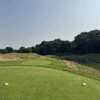
Silvermine Golf Club opened in 1959 as a nine-hole layout before expanding to its current 27-hole configuration, with the main course consisting of 18 holes formed from the Woods Nine and Barn Nine combinations. The facility was designed by John E. Warner, whose work created a layout that sits compactly on the northern edge of Norwalk along the Wilton town line. Over the decades, the course has remained relatively true to Warner’s original design philosophy, with refinements focused on maintaining conditioning standards and updating infrastructure rather than wholesale architectural changes. The club celebrated its 50th anniversary in 2009, marking a half-century of private golf in Fairfield County. The facility occupies an estimated 90 to 100 acres of undulating terrain that features significant elevation changes and mature tree coverage throughout. The routing makes efficient use of the available land, creating a relatively short but demanding test where accuracy supersedes distance. The course incorporates numerous water hazards and pushup greens with substantial contours, many of which sit elevated above fairway grade. Warner’s design philosophy emphasizes target golf over bombers’ paradise, with narrow landing corridors that penalize wayward drives and force thoughtful club selection. The Barn side of the property offers glimpses of Long Island Sound in the distance, adding visual interest to several holes. This layout appeals most to the strategic player who values course management and precision over pure length, making it particularly suitable for mid-handicappers who can score well through smart positioning and those who appreciate classic northeastern parkland design where thinking outweighs power.
Strategic Test
| Handicap | Course Strategy |
|---|---|
| High Handicap (18+) | Players in this range should consider the Forward tees at 4,743 yards (rating 66.5, slope 114 for men). The manageable yardage and moderate slope rating suggest that high-handicappers can avoid severe score inflation, with the slope indicating they might add approximately 5 to 7 strokes above their handicap on an average day. The shorter forced carries and reduced emphasis on distance control make this an accessible option. The 17th hole, a par 5 measuring 485 yards from the back tees, offers an excellent scoring opportunity from the forward markers where it plays considerably shorter. This hole provides the chance to reach in regulation or set up a comfortable wedge approach, with generous width off the tee before the fairway narrows approaching the green. High-handicappers should favor accuracy over distance on the tee shot and resist the temptation to force a risky second shot, instead laying up to their comfortable wedge distance. |
| Mid Handicap (8-18) | The Middle tees at 5,116 yards (rating 68.2, slope 117) provide an ideal challenge for this skill level, offering manageable length while still requiring strategic thought. The slope rating suggests mid-handicappers will add approximately 4 to 5 strokes to their handicap, making this a fair test without overwhelming difficulty. The course’s design rewards players who can work the ball both directions and execute approach shots to elevated greens. The 17th hole at 485 yards from the championship tees plays somewhat shorter from the middle markers while maintaining its risk-reward profile. As the number two handicap hole, it demands respect with its length and typically requires a solid drive followed by a fairway wood or hybrid for most mid-handicappers. The approach must be judged carefully given the green’s elevation, and club selection becomes critical in reading the uphill distance. This hole exemplifies Silvermine’s emphasis on strategic positioning rather than brute force. |
| Low Handicap (0-8) | Low-handicappers should embrace the Back tees at 5,301 yards (rating 66.4, slope 122), which presents a unique challenge for accomplished players. While the yardage is modest by contemporary standards, the slope of 122 indicates the course still has teeth, with scoring dependent on accuracy and short game prowess rather than distance. Better players might expect to shoot 1 to 2 strokes under their handicap on a good day, though the elevated greens and water hazards can quickly turn a round if ball-striking falters. The 17th hole, stretching 485 yards as a par 5, becomes a genuine three-shot hole for many scratch players who must navigate narrow landing areas twice before executing a precise approach to an elevated green. The hole’s ranking as the second-hardest suggests it yields few birdies even to accomplished players. The tee shot requires a controlled draw or fade to maximize distance while staying in the fairway, followed by a strategic layup that avoids fairway bunkers and positions the ideal angle into the green. The approach demands precise distance control given the elevation change and green contours. |
Nearby Course Alternatives
Shorehaven Golf Club in East Norwalk offers an intriguing comparison just 5 minutes east of Silvermine. Measuring 6,548 yards from the championship tees, Shorehaven plays to a par 71 with a substantially higher slope rating of 136 and course rating of 72.4, making it a notably more challenging examination than Silvermine’s 122 slope. Designed by Robert White and opening in 1924, Shorehaven predates Silvermine by 35 years and occupies approximately 100 acres along the Connecticut coastline with spectacular water views of Long Island Sound. The course features a traditional links-style layout on its back nine holes, where coastal winds and visual intimidation from water hazards create memorable moments. The routing incorporates tree-lined fairways on the front nine before transitioning to more open, wind-swept holes near the water, demanding versatility in shot-making. Shorehaven’s reputation includes hosting numerous Met and Connecticut championships, with particular acclaim for what many consider the finest collection of par 3s in the region, including the signature 17th hole that often plays directly into prevailing winds. The terrain offers moderate elevation changes, less dramatic than Silvermine but sufficient to create strategic interest. This course appeals most to the accomplished mid-to-low handicapper who seeks a longer, more demanding test and appreciates links-influenced design elements combined with traditional parkland characteristics. Players who struggle with long forced carries or fighting wind conditions might find Silvermine’s more protected, wooded environment preferable.
Birchwood Country Club in Westport provides a fascinating contrast located just 10 minutes south of Silvermine. This nine-hole facility measures 3,332 yards from the tips with a par of 36, though the course’s true character emerges in its remarkable slope rating of 132 when played twice around for 18 holes, rating 37.3 for nine holes. Originally designed by Orrin E. Smith and opening in 1900, Birchwood represents one of the oldest continuously operating courses in Connecticut, occupying approximately 35 to 40 acres in downtown Westport. The layout was recognized by Sports Illustrated in 1997 as one of the top ten nine-hole courses in the United States, earning acclaim for its supremely maintained velvet bent greens that are rarely found this far south. The course’s architectural pedigree includes subsequent work by Stephen Kay and Doug Smith, who have refined the original routing while preserving its character. The terrain features significant elevation changes with several dramatic uphill and downhill holes, including a memorable finishing par 5 that plays to 483 yards with strategic positioning requirements on both the drive and layup. The compact property creates an intimate experience where mature trees frame tight corridors and protect greens, demanding accuracy off the tee despite modest yardages. Birchwood appeals most to players who appreciate strategic nine-hole layouts and those seeking a traditional country club experience that emphasizes green contours and approach play over length. High-handicappers who prefer a shorter, more manageable test might gravitate toward Birchwood, while players who desire full 18-hole variety and distance might find Silvermine’s main course more satisfying.
Final Word
Silvermine Golf Club provides members with comprehensive practice facilities including a driving range with limited-flight balls for quick warm-ups, a dedicated short-game area for wedge work and bunker practice, and multiple putting greens that prepare players for the contoured surfaces they will encounter on the course. The Pro Shop 9, an executive nine-hole layout with five par 3s and four par 4s totaling approximately 1,984 yards, offers an excellent option for quick rounds, junior play, and beginners throughout the year with no tee time restrictions, operating weather permitting even during winter months. The clubhouse serves as a comfortable gathering space open daily for dining from April through November, featuring casual fare and a patio that overlooks the course with views toward the Barn side. The club maintains a family-oriented atmosphere with robust junior programming led by award-winning PGA professionals, including Head Professional Stuart Waack who has twice received the Met PGA Junior Leader Award for his commitment to youth golf development. Members enjoy an active tournament schedule for both men and women, with options ranging from competitive stroke play events to social formats that encourage participation across skill levels. Tennis and swimming amenities complement the golf offerings, though the primary focus remains squarely on the game itself. What makes Silvermine Golf Club special is its ability to present a legitimate strategic challenge on modest acreage without relying on excessive length, proving that thoughtful architecture and course management can create engaging golf regardless of total yardage. The club’s commitment to conditioning, particularly the elevated push-up greens that demand precise approach play, demonstrates how a golden-age design can remain relevant for contemporary players. For members who value shot variety, strategic positioning, and the thinking person’s game over pure distance, Silvermine delivers an authentic private club experience that rewards skill and intelligence rather than simply power.
David is an avid golfer who loves walking Connecticut’s courses and playing alongside his family. He’s passionate about golf course architecture and one day hopes to play at Pebble Beach.