Torrington Country Club is a private par-72 course measuring approximately 6,609 yards from the tips. The course was originally designed in 1929 by Orrin Smith and is located in Goshen, Connecticut.
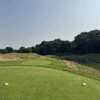
The club’s origins trace back to August 1926, when Dr. H.E. Bartle and D.F. Hildreth convened a meeting to establish a golf course for Torrington, attracting thirty-five interested men. A site committee examined twelve farms before recommending a 180-acre property in Goshen composed of farms owned by Fred and Ed Johnson, F.L. Oviatte, and Fred Vail, purchased for $18,000. Orrin Smith, a New Britain golf architect who made his name as construction superintendent to Willie Park Jr. and field supervisor on numerous Donald Ross projects, was awarded the contract in October 1926. The initial nine holes opened for play in spring 1929, with the clubhouse constructed that summer and all eighteen holes completed by 1932. In the mid-1990s, noted restoration architects Ron Forse and Jim Nagle developed a master plan to restore original course features, with ongoing improvements to bunkers, strategic tree management, and tee renovations continuing the club’s commitment to preserving Smith’s design intent. Golf Magazine recognizes Torrington Country Club as one of Orrin Smith’s finest course designs. Situated in Connecticut’s Northwest Hills on rolling terrain estimated at 180 acres, the routing follows the natural contours of the land with significant elevation changes throughout. Smith demonstrated remarkable restraint in his design, respecting the swirling topography to create a layout where some fairways tilt dramatically enough that centerline tee shots can bound into the rough. The design philosophy emphasizes strategic positioning over distance, with elevated push-up greens featuring false fronts, wildly varied green complexes ranging from perched knobs to bowl settings, and undulating surfaces that demand precision on approach shots. Players who value strategic course management, appreciate Golden Age design principles, understand how to work the ball into different green quadrants, and enjoy the intellectual challenge of uneven lies will find this layout particularly rewarding. The course rewards thoughtful shot placement over brute force, making it ideal for students of architecture who understand that proper angles into greens matter more than raw yardage.
Strategic Test
| Handicap | Course Strategy |
|---|---|
| High Handicap (18+) | From the White tees at 5,694 yards with a 68.2 rating and 132 slope, higher handicappers face significant challenges with the elevated greens and uneven lies that characterize the property. The slope rating indicates approximately 13-14 strokes above course rating for a bogey golfer, suggesting rounds in the mid-80s for players at the top of this handicap range. Strategic elements include playing to wider landing areas on tilted fairways to avoid bounding into rough, accepting front-edge pin positions as off-limits when false fronts are in play, and taking extra club on uphill approaches to elevated greens. The 12th hole, a par-5 measuring 502 yards from the Gold tees, offers the most strategic interest for this player as it presents a legitimate birdie opportunity with smart course management. This hole features a hard dogleg right with trees guarding the ideal landing area approximately 200 yards out, requiring a fade off the tee or a conservative line to avoid the gnarly rough, followed by a layup to a comfortable wedge distance rather than attempting to cut the corner or reach in two. |
| Mid Handicap (8-18) | From the Blue tees at 6,285 yards with a 70.4 rating and 132 slope, mid-handicappers will find Torrington plays significantly longer than the yardage suggests due to elevation changes and firm, fast conditions. The slope indicates this group should score approximately 11-12 strokes above rating, placing typical rounds in the low-to-mid 80s. Strategic considerations include managing the abbreviated par-5s that measure between 472 and 514 yards, where reaching in two brings serious trouble into play behind and beside greens. Course management requires accepting that some elevated greens simply cannot hold long irons from sidehill lies, necessitating intelligent up-and-down strategies. The 3rd hole, a par-3 playing 173 yards from the Gold tees, exemplifies the strategic demands placed on this player with yawning bunkers at right front and left front creating a narrow entrance corridor. The green slopes back-to-front, making anything beyond the pin a difficult two-putt, and the false front means short misses tumble well away from the putting surface. Club selection becomes critical—a thin 6-iron might find the green through the gap, but a pure strike with insufficient spin will bound over, while taking a 7-iron and playing to the fat of the green requires accepting a lengthy lag putt. |
| Low Handicap (0-8) | From the Gold tees at 6,609 yards with a 71.5 rating and 134 slope, scratch players will find Torrington extracts its toll through green complexes rather than length. The slope suggests approximately 6-7 strokes above rating for a bogey golfer equivalency, indicating this routing punishes mistakes severely despite modest yardage. Strategic elements revolve around precise distance control into greens with severe back-to-front slopes, creative shot-shaping to access different quadrants of greens, and superior short game execution from collection areas surrounding push-up greens. The abbreviated par-5s tempt aggressive plays but feature severe consequences—miss the small target greens and recovery becomes nearly impossible. The 13th hole at 319 yards from the Gold tees presents maximum strategic intrigue for accomplished players, appearing drivable with a hill running down to the green from 60 yards out but featuring a fairway that slopes upward to a crest before falling sharply. The green sits perched on a hill with a nearly sheer drop behind it, making going long catastrophic. Wedge shots from the fairway play blind to an incredibly small green, rewarding players who lay back to a precise yardage around 80-90 yards where they can generate maximum spin control, while aggressive drivers must execute a precise draw that crests the hill with enough momentum to reach but insufficient pace to bound through. |
Nearby Course Alternatives
Hop Meadow Country Club in Simsbury presents a compelling alternative approximately 30 minutes northeast of Torrington Country Club for members seeking a different private club experience. This Geoffrey Cornish design from 1961 stretches to 6,915 yards from the championship tees with a 73.9 rating and 136 slope, offering slightly more length and difficulty than Torrington’s 6,609 yards and 134 slope. The course occupies rolling Farmington Valley terrain with strategic bunkering and well-designed green complexes characteristic of Cornish’s architectural style. While Torrington emphasizes elevated greens and false fronts as its primary defense, Hop Meadow relies more on length, with an average par-3 distance of 192 yards compared to Torrington’s 180 yards. The property features distinctive cliff-hanger par-3s and several extreme dogleg holes that some find quirky, contrasting with Torrington’s more naturalistic routing that follows the land’s contours. Hop Meadow offers a full family country club experience with eight outdoor Har-Tru tennis courts, platform paddle courts, and an Olympic-size swimming pool, appealing to families prioritizing multi-sport amenities alongside golf. Players who prefer a longer, more modern test with dramatic elevation features and enjoy variety in recreational offerings beyond golf would find Hop Meadow’s setting particularly attractive, especially those willing to trade Torrington’s Golden Age subtlety for Cornish’s bolder architectural statements and comprehensive family programming in a central Connecticut location.
Litchfield Country Club in Litchfield offers an intimate nine-hole experience approximately 15 minutes southeast of Torrington for members who appreciate understated golf within a nature conservancy setting. This venerable layout, established in 1892 with redesign work attributed to Tom Bendelow in 1898, plays to 5,618 yards for a full 18-hole round with a 68.0 rating and 117 slope from the longest tees, presenting a markedly different challenge than Torrington’s 6,609 yards and 134 slope. Nestled within the White Memorial Foundation property with views of the Litchfield Hills, the course routes along the meandering Bantam River, which comes into play on six of the nine holes, creating strategic water hazards that contrast sharply with Torrington’s reliance on bunkering and green contours. Four sets of tees for each green provide variety on the second nine, though the abbreviated yardage and gentler slope make this a less demanding examination than Torrington’s uneven lies and elevated greens. The property features changing elevations that make walking a stimulating workout, and the club maintains a no-cart-requirement policy with many walking members, appealing to traditionalists who value exercise alongside their golf. Beyond golf, Litchfield offers four Har-Tru tennis courts, platform tennis, swimming and wading pools, and a summer children’s program, all housed in a restored mid-19th century farmhouse clubhouse overlooking the Bantam River. Players who prefer a more relaxed, shorter round with a walking emphasis, value intimate nine-hole golf where they know every blade of grass, appreciate nature conservancy settings, or seek a less architecturally demanding layout while maintaining private club amenities would gravitate toward Litchfield’s understated charm and family-oriented atmosphere in a bucolic Litchfield County setting.
Final Word
The practice facilities at Torrington Country Club provide comprehensive preparation opportunities with a spacious driving range featuring mat stations, a dedicated putting green, and a short game area for chipping and bunker practice. The clubhouse functions as the social heart of the club, offering multiple dining venues including The TCC Restaurant with spectacular golf course views providing first-class service and fine dining, while the Lounge offers a more casual atmosphere perfect for post-round gatherings or watching sporting events on television. The Patio extends outdoor dining during favorable weather, capitalizing on the picturesque Northwest Hills setting. The Ivy Mountain Banquet Room, Formal Dining Room, and Board Room accommodate weddings, business functions, and special occasions, demonstrating the club’s commitment to serving as a complete social venue beyond golf. The pro shop maintains inventory of equipment and apparel while the professional staff offers instruction for players seeking to improve their games. Tournament hosting capabilities have been proven through Connecticut Open, Connecticut State Men’s and Women’s Amateur Championships, New England Women’s Championship, and multiple USGA and state qualifiers, validating the layout’s championship credentials. What distinguishes Torrington Country Club is the authenticity of its Golden Age pedigree married to thoughtful modern restoration work that honors Orrin Smith’s original design intent rather than imposing contemporary architectural trends. The green complexes alone justify membership, presenting an encyclopedia of push-up, bowl, perched, and plateau configurations that force players to think three-dimensionally about how balls will react on false fronts, back-to-front slopes, and severely contoured surfaces. Smith’s routing demonstrates how architecture can extract strategic interest from modest yardage through intelligent use of natural topography, creating a thinking person’s course where bogeys result from mental errors as often as physical execution failures. The club’s commitment to gradual, restoration-focused improvements under Forse and Nagle’s guidance ensures the course will continue evolving while maintaining its historic character, making Torrington Country Club a distinctive private option in northwestern Connecticut for players who value architectural substance over cosmetic flash.

David is an avid golfer who loves walking Connecticut’s courses and playing alongside his family. He’s passionate about golf course architecture and one day hopes to play at Pebble Beach.