The Course at Yale is a public par-70 course measuring approximately 6,825 yards from the tips. The course was originally designed in 1926 by Seth Raynor and Charles Blair Macdonald and is located in New Haven, Connecticut.
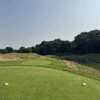
The Course at Yale represents one of the most significant achievements in American golf course architecture, built on a 700-acre tract of swamp and woodland gifted by Sarah Wey Tompkins in memory of her husband Ray, a former Yale football captain. Seth Raynor, working under the consultation of Charles Blair Macdonald and with construction oversight by Charles Banks, transformed this rugged wilderness into what would become America’s finest collegiate golf course at a then-record cost of 400,000 dollars. The property’s challenging topography required extensive blasting, drainage work involving 35,000 feet of pipe, and the clearing of dense forest and rock formations before opening in April 1926. The course underwent various modifications over subsequent decades, including work by Roger Rulewich in the 1990s, though these alterations moved the design away from its original Raynor vision. In 2024, Yale commenced a comprehensive 25 million dollar restoration under Gil Hanse, closing the course through 2026 to restore bunkers, expand greens, improve drainage, and return the layout to its 1926 scale and character. The facility occupies approximately 200 acres of the original estate, with the routing navigating severe elevation changes across rocky, tumbling terrain that gives the course its distinctive penal and strategic character. The design philosophy centers on Raynor’s template holes, including world-class examples of the Biarritz, Road, Cape, Knoll, Alps, and Redan, all rendered at massive scale with greens often exceeding 10,000 square feet and bunkers so deep they require wooden stairs for entry. The player who thrives here possesses both precision ball-striking ability and strategic thinking, understanding that placement trumps distance on a course where fairway width varies dramatically and greens feature severe internal contouring that can render two-putt outcomes nearly impossible from the wrong tier.
Strategic Test
| Handicap | Course Strategy |
|---|---|
| High Handicap (18+) | From the Short tees at 5,468 yards (par 70, rating 70.7, slope 124), course management becomes paramount for double-digit handicappers navigating Yale’s penal architecture. The slope rating indicates scores will balloon quickly when missing fairways into dense rough or finding the cavernous bunkers that define the layout’s strategic framework. The par-3 5th hole at 147 yards presents the most approachable birdie opportunity, requiring only a short iron or wedge to a relatively flat green, though the putting surface sits ten feet above surrounding bunkers that encircle the target. Club selection here depends entirely on pin position within the massive green complex, with a front flag playing closer to 135 yards while a back location stretches to 160 yards. High handicappers should focus on finding the center of these enormous greens rather than attacking pins, as missing on the wrong tier creates three-putt scenarios that are difficult to avoid. The forgiving width on certain holes provides breathing room, but errant tee shots into Yale’s distinctive geometric bunkering require precise recovery work to salvage bogey. |
| Mid Handicap (8-18) | The Regular tees stretch 6,122 yards (par 70, rating 72.6, slope 131), presenting mid-handicappers with a stern examination of every facet of their game across Raynor’s demanding template designs. The 131 slope suggests that consistent ball-striking and sound course management separate respectable scores from complete breakdowns, particularly on holes where blind shots and dramatic elevation changes obscure landing areas. The par-3 9th hole, Raynor’s famous Biarritz at 196 yards, exemplifies the challenge mid-handicappers face at Yale, requiring a forced carry of approximately 175 yards over water to a two-tiered green measuring 64 yards in depth. A swale five feet deep bisects the putting surface, creating essentially two separate targets depending on pin position, with the front section playing as an approach area and the back portion representing the green proper. From the Regular tees, a well-struck 4-iron or 5-iron must carry the water and avoid the deep swale that punishes shots lacking sufficient distance or precision. Players must commit fully to their club selection, as indecision leads to finding either the pond short or the swale that creates impossible recovery situations. |
| Low Handicap (0-8) | From the Long tees measuring 6,749 yards (par 70, rating 72.9, slope 132), Yale reveals its championship pedigree, testing accomplished players with angles, carries, and green complexes that demand both power and precision. The slope rating of 132 reflects how quickly scores deteriorate when missing fairways or approaching greens from incorrect angles, as Raynor’s penal design philosophy punishes wayward shots severely. The par-4 4th hole at 437 yards, Raynor’s interpretation of the Road template, represents perhaps the most demanding test on the property, requiring a 150-yard forced carry over water from the championship tee to a fairway that narrows as water encroaches from the right at the 230-yard mark. Longer hitters who successfully navigate the carry face an additional water hazard that curves back into the landing zone, making driver a risk-reward proposition that requires careful consideration of wind and pin position. The approach shot then plays uphill to an elevated green complex, typically requiring a long iron or hybrid from 190-210 yards depending on drive distance and fairway position. Low handicappers must weigh the benefit of extra distance against the penalty for missing fairways, as recovery from Yale’s brawny bunkers or dense rough leaves minimal margin for error in reaching greens that feature false fronts and severe back-to-front slopes. |
Nearby Course Alternatives
New Haven Country Club in Hamden offers a contrasting strategic examination approximately 10 minutes north of Yale, presenting accomplished players with a Willie Park Jr. design that emphasizes precision over power across rolling terrain with less severe elevation change. The private facility stretches 6,580 yards from the tips with a par of 71, course rating of 72.3, and slope of 134, playing slightly tighter than Yale while maintaining comparable difficulty through intricate green complexes rather than massive scale. Established in 1898 and relocated to its current Lake Whitney location in the 1920s, New Haven Country Club sits on substantially less acreage than Yale’s sprawling 700-acre estate, creating a more intimate routing that flows naturally across parkland rather than wilderness terrain. Park’s design philosophy centers on 17 original greens featuring severe ridges, distinct plateaus, and dramatic valleys that require precise approach work, with recent restoration efforts by Brian Schneider expanding playing surfaces and bringing fairway bunkering back into strategic relevance. The course boasts particularly memorable par-3s including the drop-shot 9th and the surrounded 17th, both demanding heroic carries to well-defended targets. The player who prefers New Haven to Yale likely values subtle ground game options over aerial assault, appreciating firm conditions and smooth bent greens that enhance the property’s natural contours rather than overwhelming them with manufactured features. Mid-handicappers find the reduced yardage and absence of Yale’s extreme elevation changes more manageable, while the iron-only driving range and short game practice area with two bunkers provide adequate preparation facilities in a more traditional club setting. The distinctive Scottish-style clubhouse with its red-tile roof maintains an historic atmosphere that contrasts with Yale’s more modern William S. Beinecke Golf House, offering members a purist’s golf experience where the course remains the primary focus rather than extensive amenities.
Race Brook Country Club in Orange provides a more accessible private club experience roughly 15 minutes southwest of Yale, featuring 27 holes designed by Robert D. Pryde that opened in 1912 and offer varied strategic challenges across rolling Connecticut landscape. The championship 18-hole course measures 6,403 yards from the tips with a par of 71, course rating of 71.9, and slope of 131, playing slightly shorter and more forgiving than Yale while still presenting accomplished tests through well-positioned hazards and undulating greens. The facility includes an additional 9-hole course and the O’Sullivan inside nine, providing members with combination options that create diverse playing experiences within the club’s more compact footprint compared to Yale’s expansive acreage. Race Brook’s remarkable conditioning of both the championship course and practice areas delivers year-round playability for members of all ages and skill levels, with the remodeled 2002 clubhouse offering traditional golf club atmosphere and comprehensive amenities including private lounge, grille room, and facilities for weddings and banquets. The golf shop, redesigned by Procraft Heritage Creations in 2010, stocks a full range of equipment and apparel, while club professionals provide private instruction and clinics throughout the season. The player who gravitates toward Race Brook over Yale typically values consistent conditioning and traditional country club services over architectural pedigree, appreciating a layout that presents strategic interest without the extreme blind shots and forced carries that characterize Raynor’s design. High handicappers find the reduced length and gentler terrain more enjoyable for regular play, while the practice area and short game facilities allow for pre-round preparation unavailable during Yale’s restoration period. The club’s century-plus history as the former home course for Yale’s golf team creates interesting historical continuity, as the university’s students played Race Brook before the construction of their own facility in 1926, making the club an integral part of Yale golf’s developmental timeline.
Final Word
The William S. Beinecke Golf House, dedicated in 2015, serves as the operational center for Yale Golf Course, housing a well-appointed pro shop with curated equipment and apparel selections alongside locker rooms that maintain the historic character befitting a Golden Age facility. The clubhouse provides views of both the 1st tee and 18th green, allowing visitors to observe the course’s dramatic opening and closing sequences while enjoying food and beverage service in an understated but comfortable setting. Practice facilities underwent significant expansion during the 2024 restoration, with the driving range becoming fully accessible to all players for the first time since the course transitioned to public daily-fee operation in 2020, addressing a longstanding limitation that restricted pre-round preparation. The short game area features multiple bunkers and an undulating green for chipping and pitching practice, essential preparation for navigating the severe green complexes that define Raynor’s architectural philosophy. Large practice greens positioned near the clubhouse allow players to acclimate to the speed and break characteristics of Yale’s massive putting surfaces before teeing off. The course operates as a public daily-fee facility following the 2024 restoration, representing a significant departure from its historical membership model and providing unprecedented access to one of America’s most significant architectural treasures. Yale’s ambitions extend beyond daily play to hosting major championships, with informal discussions underway with the NCAA, USGA, PGA Tour, and LPGA regarding potential events including NCAA nationals, U.S. Amateur, Walker Cup, and even a Ryder Cup. The restoration positions Yale to reclaim its standing among America’s elite layouts, with General Manager Peter Palacios and his team committed to maintaining championship-level conditions through significant maintenance endowments and sustainable turf management practices. What makes this course truly special extends beyond its architectural significance or championship pedigree to the ambitious vision of making authentic Raynor-Macdonald design accessible to the general public, a rarity in American golf where similar layouts remain sequestered behind private gates. The 2026 reopening promises to reveal a sleeping giant awakened, with Gil Hanse’s faithful restoration returning the property to its 1926 scale and character while incorporating modern drainage, irrigation, and turf advances that ensure long-term sustainability and playability that honors both Raynor’s original vision and the expectations of contemporary championship golf.

David is an avid golfer who loves walking Connecticut’s courses and playing alongside his family. He’s passionate about golf course architecture and one day hopes to play at Pebble Beach.