Tamarack Country Club is a private par-71 course measuring approximately 6,841 yards from the tips. The course was originally designed in 1929 by Charles Banks and is located in Greenwich, Connecticut.
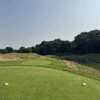
Tamarack Country Club traces its origins to 1909 as the Port Chester Country Club in Westchester County, New York, where it operated on 107 acres until 1928 when the municipality purchased the land for a new high school. The club relocated across the state line to Greenwich, acquiring rolling farmland in the backcountry that would become the current 170-acre property. Charles Banks, protégé of Seth Raynor and C.B. Macdonald, was commissioned to design the new course, which opened on July 4, 1929. The property has undergone significant tree removal campaigns beginning in the 2010s to restore corridor visibility, followed by a comprehensive restoration completed in 2023 by Brian Schneider of Renaissance Golf Design that focused on reestablishing original fairway parameters, tying green entrances into approaches, and returning bunkering shapes to Banks’ original schemes. The routing unfolds around a prominent hilltop clubhouse with expansive views across the property, presenting a bold architectural statement through massive scale, dramatic earthwork, and Banks’ signature steep and deep bunkering. The course showcases numerous Golden Age template holes including an Eden third, a Redan seventh, a Punchbowl eleventh, and a Biarritz twelfth, mixed with original designs on the back nine that feature equally imaginative green complexes and strategic challenges. The terrain is characterized by significant elevation changes, particularly as holes venture southwest from the flatter middle section, with rolling fairways that provide generous width for recovery but demand precise positioning for optimal scoring angles. This layout rewards the player who appreciates strategic architecture, understands the importance of green-entry angles, and enjoys the mental challenge of navigating template holes with modern equipment against designs conceived nearly a century ago.
Strategic Test
| Handicap | Course Strategy |
|---|---|
| High Handicap (18+) | High handicappers will find the most enjoyment from the Gold tees at 5,719 yards with a course rating of 67.6 and slope of 125, though the forward Red tees at 5,710 yards offer similar length with a more forgiving 112 slope rating for women. The massive fairway corridors provide ample room for wayward drives, with the recent tree removal and combined fairway on holes one and two offering particularly generous landing areas. The slope differential suggests bogey golfers will add approximately 12 strokes to their handicap on this course, primarily due to the severity of the greenside bunkering and the need for solid approach play into elevated putting surfaces. The seventh hole, the Redan template, plays 196 yards from the championship tees and features Banks’ characteristic bold shaping with a diagonally angled green that slopes from front-right to back-left. This par three demands nothing more than a hybrid or long iron for higher handicappers from forward tees, but the massive bunker guarding the right side and the severe green contours create significant recovery challenges for those missing the putting surface, making club selection and accepting bogey a prudent strategy. |
| Mid Handicap (8-18) | Mid handicappers should consider the White tees at 6,452 yards with a rating of 71.5 and slope of 133, which presents a balanced test requiring accurate ball-striking without overwhelming length. The 133 slope indicates these players will face approximately three additional strokes beyond their handicap, with the penal nature coming primarily from the demanding approach shots into elevated greens defended by deep bunkers and false fronts. Strategic positioning off the tee becomes paramount, as the generous fairway width creates options but penalizes poor angles with difficult recovery shots from Banks’ steep bunker faces. The seventh hole Redan at 196 yards presents an ideal mid-handicap challenge, requiring a mid to long iron to find a green complex that rewards understanding of the template’s strategic intent by playing to the high right side and using the slope to feed balls toward left pins. Missing the correct quadrant of this severely contoured green creates three-putt territory, while the back-right bunker famously labeled “No!” in the yardage book should be avoided at all costs, making course management and understanding green breaks more critical than pure distance. |
| Low Handicap (0-8) | Low handicappers will want to test themselves from the Blue tees at 6,783 yards with a rating of 73.9 and slope of 139, or the championship Black tees at 6,841 yards rated 73.3 with a slope of 137. These yardages combined with the slope ratings reveal a course where positioning trumps distance, as the relatively modest differential between rating and par indicates skilled players face strategic rather than pure length challenges. The narrow scoring margins come from the precision required on approach shots into intricate green complexes, the penalty for missing optimal angles into template greens, and the mental demands of navigating centerline hazards on holes like the fourth Bottle hole with its pinched landing area. The seventh hole Redan at 196 yards exemplifies the examination of accomplished ball-strikers, demanding a mid-iron that must account for wind exposure on the elevated tee, select the proper entry angle based on pin position, and commit to either the safe high-right approach or the aggressive low-left line that flirts with the cavernous front bunker. The extreme undulation of this putting surface means even well-struck approaches can leave challenging two-putt scenarios, while the infamous back-right bunker presents recovery demands that can quickly turn par into bogey, making this hole a true test of precision, course knowledge, and acceptance of strategic principles over aggressive play. |
Nearby Course Alternatives
The Stanwich Club in Greenwich, approximately 10 minutes northeast of Tamarack, presents a dramatically different architectural philosophy within the same affluent backcountry enclave. Measuring 7,445 yards from the championship tees with a par of 72, course rating of 76.6, and slope of 145, Stanwich plays significantly longer and more penal than Tamarack while occupying a similar 186-acre footprint on rolling Connecticut terrain. Originally designed in 1964 by William and David Gordon, the course has undergone extensive renovations by Tom Fazio and associate Tom Marzolf, most recently completing a five-green rebuild and complete reimagining of the first hole. The architectural pedigree differs fundamentally from Banks’ Golden Age template philosophy, instead emphasizing mid-century modern design principles with narrow fairways requiring precise driving, elevated greens heavily defended by front bunkers, and fast undulating putting surfaces that rank among the most notorious in the Metropolitan area. The property features less dramatic elevation change routing compared to Tamarack’s southwest holes, though the course makes captivating use of its terrain with a strong finishing stretch on the back nine, particularly the standout par-five seventeenth. Players who prefer championship length tests, pristine conditioning with exceptional greens, and tournament-caliber difficulty without the quirk of template holes will find Stanwich more appealing than Tamarack, particularly mid-to-low handicappers who can navigate the demanding 7,400-yard back tees and appreciate modern strategic architecture that emphasizes ball-striking precision over positional complexity.
Country Club of Fairfield in Fairfield, roughly 25 minutes east of Tamarack along the Connecticut coastline, offers a contrasting Seth Raynor design experience on dramatically different seaside terrain. Playing 6,358 yards from the tips with a par of 70, course rating of 71.6, and slope of 133, the course occupies approximately 170 acres of former onion fields and tidal marshes that required massive landfill operations to transform into the playable terrain opened in 1921. The original Raynor design underwent significant modifications by A.W. Tillinghast in the 1920s and 1930s, Robert Trent Jones Sr. in the 1960s, and recent restoration work by Tom Doak associate Bruce Hepner to reestablish Raynor’s aesthetic amid what one writer called a “topsy-turvy design history.” The routing features holes touching Long Island Sound with spectacular water views, coastal wind exposure critical to the strategic design, and the exceptional stretch of holes four through six including Tillinghast’s island par-four and what many consider the finest hole in Connecticut at the sixth. Recent tree removal has restored original seaside vistas and wind patterns that create difficulty transcending the modest yardage, with the 133 slope reflecting how coastal conditions and strategic bunkering complexes challenge bogey golfers significantly more than the rating suggests for scratch players. Players who value shoreline golf, appreciate the interplay of wind with template architecture, prefer a flatter routing with water views over dramatic elevation changes, and enjoy understanding the layered history of multiple Golden Age architects will find Country Club of Fairfield more compelling than Tamarack, particularly those who relish the unique character of seaside Connecticut golf and the challenge of coastal weather affecting play on Raynor greens.
Final Word
Beyond the championship golf course, Tamarack Country Club provides members with comprehensive amenities centered around the impressive 55,000-square-foot clubhouse that sits at the property’s highest elevation with commanding views across the layout and Connecticut landscape. The practice facilities include a driving range that cleverly utilizes the thirteenth fairway with a signal system alerting range users when players tee off on that hole, along with putting and chipping areas for short-game development. The club recently added a full-service outdoor poolside bar in 2024, featuring an 1,800-square-foot covered structure with large-screen televisions and comfortable seating that doubles as a halfway house for golfers making the turn. The pool complex itself spans 13,000 square feet with a zero-entry toddler pool, main pool with lap lanes and diving well, full locker facilities, and adjacent summer café. Tennis facilities include four Har-Tru courts with professional instruction available, competitive league teams in both Fairfield County and Westchester leagues, and organized clinics throughout the season. The clubhouse features multiple dining options with covered and uncovered terraces, a private dining room, fitness center, indoor golf practice facility, and pro shop. Family programming remains central to the club’s mission with popular kids’ camps, junior golf instruction, and Friday night pizza-and-tennis events that create multi-generational engagement. What distinguishes Tamarack among Connecticut’s premier private clubs is the successful integration of Charles Banks’ bold Golden Age architecture with modern conditioning standards and member amenities, creating an environment where serious golfers can study template holes in their fully restored glory while families enjoy comprehensive country club living. The 2023 Schneider restoration has elevated the course to its rightful place among the state’s finest layouts, with the massive scale of the property, the dramatic bunkering that defines Banks’ aesthetic, and the strategic complexity of both template and original holes providing an architectural education that rewards multiple plays and deepening understanding of Golden Age design principles.

David is an avid golfer who loves walking Connecticut’s courses and playing alongside his family. He’s passionate about golf course architecture and one day hopes to play at Pebble Beach.