Stonington Country Club is a private par-72 course measuring approximately 6,604 yards from the tips. The course was originally designed in 1992 by Al Zikorus and is located in Stonington, Connecticut.
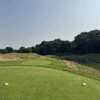
The first nine holes opened in August 1992 as the founding vision of members who financed development entirely through their own generosity. Al Zikorus executed the original routing across this 155-acre property of rolling hills and meadows tucked along a quiet country road in southeastern Connecticut. Two years later, in spring 1994, the back nine debuted with enhanced design work from Pennsylvania architect Ron Forse, who refined Zikorus’s earlier plans to complete the eighteen-hole layout. The 155-acre parcel provides ample breathing room for strategic corridors without the cramped feel of tighter New England routings. The terrain features gently rolling contours rather than severe elevation changes, creating a parkland character with mature tree-lined fairways and bentgrass playing surfaces throughout. The routing follows a traditional out-and-back structure that returns to the clubhouse after nine, allowing for straightforward navigation and solid pace of play. Players who appreciate thoughtful course management over raw distance find considerable reward here, as the sub-6,700-yard layout emphasizes positional play and green-reading skills over forced carries. The slope rating of 131 from the championship tees indicates a layout that punishes wayward shots while remaining fair from appropriate tees, making this an ideal venue for members who value strategic variety and consistency in conditioning over flashy design flourishes.
Strategic Test
| Handicap | Course Strategy |
|---|---|
| High Handicap (18+) | From the forward tees measuring 4,054 yards with a slope of 103 for men and 106 for women, high-handicap players encounter a forgiving test that rewards center-cut drives and conservative approach angles. The rating of 61.6 for men and 63.6 for women suggests scoring opportunities exist when avoiding trouble, as the slope differential indicates hazards are positioned to punish aggressive lines rather than center-fairway play. Hole 3, a 313-yard par 4 from the blue tees that scales down considerably from the forward markers, offers the most enjoyable strategic puzzle for this group. The shorter yardage creates legitimate birdie potential with a well-positioned tee shot, though the player must resist the temptation to attack with driver when a mid-iron leaves a comfortable wedge approach. Club selection becomes the primary decision, as laying back to a preferred yardage often yields better results than gambling on distance. |
| Mid Handicap (8-18) | The white tees at 6,154 yards with a slope of 126 and rating of 69.9 present the prototypical member experience, balancing challenge with playability across varied shot requirements. The slope increase of 23 points over the forward tees reveals strategic complexity that emerges as players attempt to attack pins and take aggressive lines. Hole 6, measuring 425 yards from the championship tees and rated as the number-one handicap hole, delivers the quintessential challenge for mid-handicap players. This substantial par 4 demands a quality drive to set up any reasonable approach opportunity, as missing the fairway leaves little chance of reaching the green in regulation. The mid-handicapper faces critical decisions on tee club selection, as an extra 20 yards of carry can mean the difference between a mid-iron and a long-iron approach. Green-reading skills become paramount on this hole’s contoured putting surface, where two-putts require careful speed control. |
| Low Handicap (0-8) | From the championship blue tees measuring 6,604 yards with a slope of 131 and rating of 71.9, scratch players confront a layout that demands precision rather than power. The modest yardage relative to modern championship courses shifts the emphasis toward positional accuracy and scrambling ability, as the 131 slope indicates hazards are positioned to penalize even slight misses. Hole 13, a 419-yard par 4 with the second handicap ranking, exemplifies the strategic demands placed on accomplished players. This lengthy two-shotter plays as one of the stoutest par 4s on the property, requiring a driver or strong 3-wood off the tee followed by a mid-iron approach. The low-handicapper must commit to an optimal driving line that provides the best angle into the green complex, as playing conservatively leaves an approach of 200-plus yards that severely limits birdie chances. The green’s contouring rewards precise distance control, separating those who flight their approaches with intention from those merely aiming at the center. |
Nearby Course Alternatives
Lake of Isles South Course in North Stonington, approximately 15 minutes northwest of Stonington Country Club, presents a vastly different architectural philosophy for private club members seeking championship-caliber challenge. Rees Jones designed this member-only layout in 2005 as the companion to the public North Course, stretching the South to 7,346 yards from the back tees with a formidable slope of 141 and rating of 76.2. The course occupies roughly 450 acres of the 900-acre Lake of Isles property adjacent to Foxwoods Resort Casino, providing dramatic elevation changes and extensive wetland features that shape nearly every hole. Jones employed a penal architectural approach with forced carries off most tees, elevated green complexes that demand aerial precision, and thick rough that severely punishes missed fairways. The routing incorporates the 90-acre namesake lake on multiple holes, including the par-3 11th with its peninsula green and the dramatic par-3 16th that plays across an inlet to a putting surface backed by water. Players who thrive on modern championship tests with extensive hazards and demanding length will find Lake of Isles South far more suitable than Stonington’s strategic subtlety, though conditioning quality remains exceptional at both facilities. The Jones design favors long hitters who can execute forced carries and elevated approach shots, whereas Stonington rewards course management and positional play regardless of distance, making the South Course ideal for accomplished players who enjoy conquering overtly difficult layouts.
The Misquamicut Club in Westerly, approximately 20 minutes southwest across the Rhode Island border, offers private members a golden-age classic that contrasts sharply with Stonington’s modern parkland aesthetic. Donald Ross completely redesigned this coastal property in 1923 after earlier work by Tom Bendelow, Willie Anderson, and Seth Raynor, creating an 18-hole par-69 layout measuring just 6,214 yards with a slope of 125 and rating of 70.0. The course occupies a unique dual-character routing where the front nine plays across dramatically undulating inland terrain while holes 11 through 17 literally traverse beachfront land adjacent to tidal marshes and the Atlantic coastline. Raynor’s influence appears most notably on the par-3 8th, called the Volcano hole, which features one of the most distinctive green complexes in New England with severe falloffs surrounding a pushed-up putting surface. The compact yardage and par-69 configuration create strategic interest through variety in shot values rather than length, as Ross maximized the movement in the ground to defend against scoring. Players who appreciate architectural history and golden-age design principles will find Misquamicut far more engaging than Stonington’s straightforward modern layout, especially those who favor creative short-game opportunities over measured approach shots to receptive greens. The coastal setting provides entirely different playing conditions from Stonington’s protected inland corridors, with seaside wind and firm-fast conditions testing shotmaking skills that rarely factor on more parkland-style layouts, making this an excellent complement for members who can access both facilities.
Final Word
Beyond the eighteen holes, Stonington Country Club provides comprehensive practice facilities that include a driving range with mat-based hitting stations, multiple putting greens for pre-round preparation and stroke work, and dedicated short-game areas with bunkers for refining wedge play and greenside technique. The practice range features clear yardage markers and adequate space for working on full-swing mechanics, though the mat surfaces rather than natural turf represent the primary limitation for players seeking authentic course conditions during practice sessions. The putting surfaces maintain the same conditioning standards as the course greens, allowing members to properly gauge speed and break before heading to the first tee. The clubhouse serves as the social hub of the facility, offering dining options and event spaces that foster the member community atmosphere essential to the club’s identity since its founding. Members financed the entire development through personal investment rather than external capital, creating a sense of shared ownership that permeates club culture and explains the consistent focus on maintaining exceptional playing conditions. The practice amenities, while straightforward rather than elaborate, provide everything necessary for serious game improvement and pre-round warmup routines. What distinguishes Stonington Country Club is its commitment to delivering a pure golf experience on a strategically sound layout that rewards thoughtful play across all skill levels, avoiding the modern tendency toward excessive length or artificial difficulty. The Zikorus and Forse collaboration produced a routing that maximizes the natural rolling terrain without resorting to forced carries or contrived hazards, creating honest shot values where execution determines outcomes. For members seeking a private club focused primarily on golf rather than extensive resort amenities, Stonington provides exactly what it promises: a well-maintained championship layout that challenges without overwhelming, set within a member community that values the game’s traditions and strategic demands above all else.

David is an avid golfer who loves walking Connecticut’s courses and playing alongside his family. He’s passionate about golf course architecture and one day hopes to play at Pebble Beach.