Stanwich Club is a private par-72 course measuring approximately 7,445 yards from the tips. The course was originally designed in 1964 by William and David Gordon and is located in Greenwich, Connecticut.
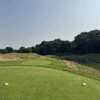
The club traces its name to a 1732 settlement established near the Mianus River Gorge, a piece of local history that has endured for nearly three centuries. The original layout by the father-son team of William and David Gordon was routed across former farmland and reclaimed swampland, presenting a relatively flat canvas for what would become one of Connecticut’s most demanding tests. Over the decades, the course has undergone significant evolution, most notably through work by Tom Fazio and his design associates beginning in 2002. The Fazio renovation addressed greenside bunkering, added strategic challenges throughout, and softened some of the Gordon greens that had become nearly unplayable at tournament speeds. More recent work by Stephen Kay and Tom Marzolf continued this trajectory, including a complete reimagining of the opening hole that transformed a tree-choked dogleg into a strategic test with multiple playing angles. Most recently, OCM Golf was appointed as consultant architects in late 2022, tasked with creating a comprehensive masterplan that includes redesigning the 8th and 16th holes and developing a new nine-hole short course called The Cauldron on recently acquired land. Stanwich occupies roughly 150 acres of gently rolling terrain in Greenwich’s backcountry, where mature tree lines frame each corridor and water hazards appear on approximately half the holes. The routing is traditional in nature, moving outward and returning, with elevation changes subtle enough to make the course highly walkable yet varied enough to create interesting stances and approach angles. The design philosophy centers on precision over power, demanding accurate tee shots to set up proper angles into elevated, heavily bunkered greens that feature significant front-to-back slope. The putting surfaces are renowned throughout the Metropolitan area for their speed and difficulty, routinely maintained at stimpmeter readings around 13. This is a course that rewards the thinking player who understands how to position the ball, manage risk around treacherous greenside complexes, and exercise discipline when the margin for error narrows. Players who appreciate strategic architecture, value shotmaking over brute force, and enjoy the challenge of lightning-fast greens will find Stanwich to be an endlessly engaging examination.
Strategic Test
| Handicap | Course Strategy |
|---|---|
| High Handicap (18+) | From the White tees at 6,131 yards with a 70.5 rating and 132 slope, the course remains formidable but more manageable for developing players. The slope rating indicates approximately 12 additional strokes compared to scratch play, meaning an 18-handicapper should target around 90 from these markers. The forward placement reduces forced carries and provides wider margins around the greenside bunkering. The par-3 13th hole measures 152 yards from the Whites, playing over a creek and pond to a raised, L-shaped green complex surrounded by bunkers. Club selection becomes critical here as the green’s undulation punishes anything long or short, and the elevated target creates optical illusions regarding distance. A smooth 7-iron or 6-iron that commits to the center of the green offers the highest probability of avoiding the steep penalty for missing. This hole exemplifies Stanwich’s design ethos: even at reduced yardages, precision matters more than power. |
| Mid Handicap (8-18) | The Blue tees at 6,619 yards present a rating of 73.2 and slope of 138, adding significant challenge through increased distance and tighter angles. A player in this range should expect to shoot in the low-to-mid 80s, as the slope translates to roughly 13-14 additional strokes over par. At this length, water hazards come into play more frequently off the tee, and approach shots must navigate more demanding angles into elevated greens. The 13th hole extends to 163 yards, requiring a confident mid-iron carry over both creek and pond. The margin for error decreases substantially from this distance, as anything short finds water and anything long faces a nearly impossible up-and-down from deep bunkers. A well-struck 5-iron or 6-iron aimed at the heart of the green represents sound strategy, accepting two-putt par as a victory. The elevated green demands players account for extra yardage, and the undulation means even center-struck putts require precise speed control. |
| Low Handicap (0-8) | The championship Witch tees stretch to 7,445 yards with a rating of 76.6 and slope of 145, creating one of the most formidable tests in Connecticut. Scratch players face approximately six additional strokes beyond par, while a 5-handicapper should target the mid-to-upper 70s. At this length, the course reveals its full strategic complexity: narrow driving corridors demand precision off the tee, water hazards become genuine threats on multiple holes, and approach shots must be struck from exact distances to hold firm, sloping greens. The 13th hole plays 198 yards, requiring a long iron or hybrid carry over substantial water to an elevated target. The raised green complex sits well above the tee, and the L-shaped putting surface creates multiple distinct zones where hole locations dramatically alter the required line. From the tips, a confident 4-iron or 5-iron must commit fully to the carry, as anything tentative will find water and anything aggressive risks the back bunkers. The green’s wicked undulation means even perfectly struck approaches can lead to three-putts if the ball finishes on the wrong tier. |
Nearby Course Alternatives
Round Hill Club in Greenwich offers an intriguing contrast for players seeking a more compact, strategic challenge approximately three miles southwest of Stanwich. Designed initially by Walter Travis in 1922 and modified by Robert Trent Jones Sr. in the 1960s, Round Hill measures just 6,525 yards from the championship tees with a par of 71, rating of 71.3, and slope of 127. The course occupies roughly 100 acres of varied topography, creating dramatic elevation changes that add visual interest and shot variety despite its modest yardage. Travis’s routing emphasizes strategic positioning over length, with multiple short par-4s on the back nine that tempt aggressive play while punishing wayward execution. The signature 11th hole, a 178-yard par-3 playing predominantly over a pond, showcases Robert Trent Jones’s penchant for heroic design and serves as the layout’s photographic centerpiece. The greens feature substantial slope and considerable size, demanding precise approach angles and thoughtful putting lines. The course benefits from meticulous conditioning and mature landscaping that frame each hole beautifully. Round Hill’s architectural pedigree rivals Stanwich, though its overall challenge measures somewhat less severe given the reduced yardage and gentler slope rating. Players who prefer strategic interest over raw distance, particularly those in the mid-to-high handicap range who find Stanwich’s length overwhelming, will appreciate Round Hill’s emphasis on angles, positioning, and thoughtful course management over pure power.
Tamarack Country Club in Greenwich provides template-hole enthusiasts with a Charles Banks design located approximately four miles northwest of Stanwich. Originally laid out in 1929 by Banks, a protégé of Seth Raynor, the course stretches 6,841 yards from the championship tees with a par of 71, rating of 72.9, and slope of 126. The property encompasses approximately 140 acres of rolling terrain that Banks utilized brilliantly, incorporating classic template holes throughout while taking advantage of natural elevation changes and strategic corridors. A comprehensive restoration by Brian Schneider of Renaissance Golf Design, completed in 2024, removed decades of tree encroachment, expanded fairways and greens to their original dimensions, and restored the bold, scaled bunker complexes that define Banks’s aesthetic. The par-3 collection stands out, featuring a 171-yard Eden at the 3rd, a 196-yard Redan at the 7th, and a 214-yard Biarritz at the 12th. The routing includes other template tributes such as the Cape 2nd, Alps 6th, and Road Hole 14th, creating a Golden Age architecture tour that educates while it challenges. The massive scale of Tamarack’s features—from cavernous bunkers like Big Bertha at the 17th to expansive fairway corridors—gives the course a grand, bold character distinct from Stanwich’s more contained, tree-lined aesthetic. While Tamarack measures shorter than Stanwich and carries a notably lower slope rating, its architectural interest and historical significance make it compelling for students of classic design. Players who value template-hole architecture, appreciate wide strategic corridors that reward creative shotmaking, and seek a course with significant architectural pedigree will find Tamarack delivers an experience rich in both challenge and charm.
Final Word
Beyond the championship course, Stanwich provides members with comprehensive practice amenities designed to develop all aspects of the game. The facility includes a full-length driving range with ample hitting stations, two separate putting greens that mirror the speed and contour of the course surfaces, and an extensive short game area for practicing chips, pitches, and bunker shots. These practice grounds receive the same meticulous maintenance standards as the course itself, ensuring consistent conditions and genuine preparation. The recently renovated clubhouse anchors the property with elegant dining spaces, including both formal and casual options, comfortable locker rooms, and gathering areas that foster community among members. The club also features outdoor tennis courts covered with a winter bubble for year-round play, paddle tennis facilities, and a heated swimming pool that serves as a summer focal point. Youth programming remains robust, with junior golf instruction, summer camps, and competitive opportunities designed to develop the next generation of players. The athletic facilities complement a year-round social calendar that includes member tournaments, themed events, and family-focused activities. Stanwich recently acquired an additional 24 acres adjacent to the clubhouse, commanding views of Long Island Sound, where OCM Golf is developing The Cauldron, a nine-hole short course that will enhance member play and family engagement. The club hosted the 2002 US Mid-Amateur Championship, where member George Zahringer became the oldest winner at age 49, claiming the title on his home course in what must have been a deeply satisfying achievement. More recently, Stanwich served as venue for the Arnold Palmer Cup, showcasing its tournament-ready conditioning and championship pedigree to future tour professionals. What distinguishes Stanwich from peer facilities is the singular focus on maintaining championship conditions while fostering a welcoming, family-oriented atmosphere. The greens represent arguably the finest putting surfaces in Connecticut, consistently praised by touring professionals who seek them out when in the area. The course demands strategic thinking, precise execution, and mental discipline, rewarding the player who understands how to navigate its challenges with patience and course management. For those fortunate enough to gain access, Stanwich delivers an experience that validates its reputation as Connecticut’s premier golf facility, combining architectural merit, conditioning excellence, and comprehensive amenities into a complete country club offering.

David is an avid golfer who loves walking Connecticut’s courses and playing alongside his family. He’s passionate about golf course architecture and one day hopes to play at Pebble Beach.