Shuttle Meadow Country Club is a private par-71 course measuring approximately 6,516 yards from the tips. The course was originally designed in 1917 by Willie Park Jr. and is located in Kensington, Connecticut.
The club traces its founding to 1899, though it relocated to its current site in 1917 when Willie Park Jr., the two-time British Open champion and pioneering transatlantic architect, laid out the original eighteen holes. Park’s work at Shuttle Meadow marked his first design on the American side of the Atlantic and represents an authentic example of Scottish traditional golf principles translated to New England terrain. In 1996, architect Bruce Hepner undertook a significant renovation that included rebuilding greens and bunkers, bringing Park’s original strategic concepts into sharper relief while maintaining the fundamental routing and character. The course occupies nearly 400 acres of rolling, wooded property in central Connecticut, positioned at the geographical center of the state. The routing follows classic out-and-back principles across undulating parkland framed by mature trees and punctuated by streams that wind through the property. Park employed varied elevation changes throughout, creating a mix of uphill, downhill, and sidehill lies that demand thoughtful club selection and ball flight control. The design philosophy leans toward strategic rather than penal golf, with generous fairway corridors balanced by boldly contoured greens that fall away at the edges and feature pronounced back-to-front slopes. Players who appreciate Golden Age architecture, value shot-making over distance, and enjoy courses where position trumps power will find Shuttle Meadow particularly rewarding. The layout suits those who can shape shots both ways and understand how to use ground contours to feed the ball toward pin positions.
Strategic Test
| Handicap | Course Strategy |
|---|---|
| High Handicap (18+) | From the forward tees at approximately 5,400-5,700 yards with a slope around 122-125, high handicappers face a manageable test that rewards accuracy over distance. The course rating in the high-60s to low-70s suggests scoring opportunities exist for players who keep the ball in play and avoid the penal areas around greens. The par-3 6th hole presents an ideal challenge at roughly 150-170 yards from the appropriate tees, playing downhill to a green fronted by a creek and surrounded by bunkers. Club selection becomes paramount as the downhill nature can cause mid-to-short irons to run out if hit too firmly. The visual intimidation factor tests course management skills, but a well-struck 7 or 8-iron that lands softly on the putting surface yields a realistic birdie opportunity for players in this handicap range. |
| Mid Handicap (8-18) | Playing from the middle tees at approximately 6,100-6,300 yards with slopes around 127-130 and ratings near 70-71, mid-handicappers encounter a balanced examination that exposes weaknesses in approach play and short game execution. The modest overall yardage belies the difficulty created by elevated greens, strategic bunkering, and significant green contours that reject poor approach angles. Park’s design philosophy becomes apparent as players must think several shots ahead, particularly on short par-4s where driver may not be the optimal play. Strategic positioning for approach shots proves more valuable than maximum distance off the tee, and understanding how to use the ground game on run-up approaches becomes advantageous on firm conditions. |
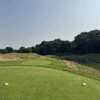
| Low Handicap (0-8) | From the championship tees at 6,516 yards with a slope of 127-130 and rating around 71-72, accomplished players face a precise shotmaking challenge that rewards creativity and penalizes poor execution. The relatively modest yardage by modern standards actually intensifies the strategic demands, as players must resist the temptation to overpower the layout and instead focus on angles, spin control, and distance management into greens. The par-3 15th hole exemplifies the test for skilled players, playing uphill with the green not visible from the tee and requiring precise distance control with a mid-to-long iron. Only the top of an extra-long flagstick provides visual reference, demanding commitment to yardage and club selection without visual confirmation. A well-struck 4 or 5-iron that carries the proper distance and holds the elevated green surface creates a legitimate birdie chance, while any miss typically results in a difficult recovery and potential bogey. |
Nearby Course Alternatives
Hartford Golf Club in West Hartford offers an intriguing alternative approximately 15 minutes northwest of Shuttle Meadow. This 27-hole facility measures 6,500-6,700 yards depending on which nines are combined, with slopes ranging from 130-135 and ratings from 71-73. The course sits on roughly 150-180 acres of rolling parkland terrain with more pronounced elevation changes than Shuttle Meadow. Founded in 1896, Hartford Golf Club features design work primarily attributed to Donald Ross and Devereux Emmet, establishing significant Golden Age pedigree. Bruce Hepner completed an extensive bunker and tee renovation in 2017 that restored the strategic intent of the original architects while updating playability for modern equipment. The Red and Blue nines typically combine to form the championship layout, offering a stern test with uphill and downhill approaches to elevated greens. Hartford’s reputation centers on its demanding par-4s and the quality of green complexes that require precise approach work. Players who particularly enjoy pronounced elevation changes and prefer a slightly longer, more physically demanding walk would find Hartford compelling, especially mid-handicap players who can capitalize on the dramatic topography to manufacture different shot shapes. The course appeals to those seeking a more assertive architectural statement and less subtle ground game than Shuttle Meadow provides.
Wethersfield Country Club in Wethersfield presents another compelling comparison roughly 10-12 minutes southeast of Shuttle Meadow. The Robert Pryde design from 1916 measures approximately 6,560-6,610 yards from the tips with a slope around 124-132 and rating of 72-72.5. Spanning a similar acreage to Shuttle Meadow, Wethersfield features more open, less tree-lined corridors with parkland characteristics that differ from Park’s tighter, more Scottish-influenced routing. The course famously hosted the Insurance City Open and later the Greater Hartford Open from 1952 to 1983, establishing tournament pedigree and conditioning standards. Recent renovations by Bruce Hepner focused on bunker restoration and strategic updating while maintaining Pryde’s original design concepts. The course offers a flatter overall profile than Shuttle Meadow with less dramatic elevation change, though strategic bunkering and water features create scoring challenges. Wethersfield’s greens tend toward larger, more receptive surfaces compared to Park’s smaller, more severely contoured putting complexes at Shuttle Meadow. Players who prefer wider fairways, a flatter walking experience, and more straightforward approaches to greens would gravitate toward Wethersfield, particularly high-handicap players who benefit from the additional margin for error off the tee. The course suits those who value a classic American parkland test over Scottish traditional principles and prefer length and carry requirements over ground game options.
Final Word
Shuttle Meadow Country Club provides comprehensive practice facilities including a driving range with both mat and grass tee options, allowing players to prepare for the round ahead with proper warm-up. The practice area includes a spacious putting green where members can familiarize themselves with the speed and break characteristics of Park’s boldly contoured greens before heading to the first tee. A short game practice area with bunkers enables players to work on the delicate touch required around Shuttle Meadow’s elevated and severely sloped putting surfaces. Beyond golf, the club has invested significantly in family-oriented amenities that distinguish it as a full-service country club rather than a golf-only facility. The recently renovated clubhouse features both formal and casual dining spaces with indoor and outdoor seating options that provide scenic views of the golf course. Tennis facilities include resurfaced Har-Tru courts that attract players throughout the season, while platform tennis extends racquet sport opportunities into colder months. The pool complex underwent renovation to enhance the aquatic experience for families, complemented by a new kids playscape that appeals to younger members. Miles of walking trails traverse the 400-acre property, offering non-golf recreation opportunities that take advantage of the natural beauty. What ultimately distinguishes Shuttle Meadow is the authenticity of Willie Park Jr.’s original design principles preserved across more than a century of operation, representing a genuine connection to golf’s Golden Age executed by one of the era’s most accomplished transatlantic architects. The course proves its value not through length or modern artifice but through strategic sophistication, where intelligent play consistently defeats brute force and where understanding angles, contours, and ground game options yields scoring success regardless of handicap level.

David is an avid golfer who loves walking Connecticut’s courses and playing alongside his family. He’s passionate about golf course architecture and one day hopes to play at Pebble Beach.