Rolling Greens Golf Course is a public par-70 course measuring approximately 6,000 yards from the tips. The course was originally designed in 1973 by Geoffrey S. Cornish and is located in Rocky Hill, Connecticut.
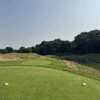
Rolling Greens opened in 1973 as one of prolific New England architect Geoffrey Cornish’s many Connecticut designs, part of a regional portfolio that demonstrates his functional, lay-of-the-land design philosophy. The course occupies an estimated 60 acres nestled within a residential area along Cold Spring Road, though most holes maintain a sense of seclusion from the surrounding development. The routing unfolds across rolling terrain with significant elevation changes throughout, a defining characteristic that gives the layout its name and strategic complexity. The property features mature tree-lined corridors framing tight fairways that demand accuracy over distance, bent grass greens set on elevated plateaus, and selective water hazards near the second and sixth greens. The design philosophy emphasizes positioning and shot-making rather than raw power, with doglegs at the first and sixth holes creating alternate angles of attack and forcing decisions off the tee. This woodland-style layout attracts thinking players who appreciate elevation-driven strategy, precise approach requirements to raised putting surfaces, and a course that rewards course management. The compact nine-hole format allows for brisk pace of play while presenting genuine architectural interest through varied shot requirements and dramatic topographical features that rarely appear on courses of this length.
Strategic Test
| Handicap | Course Strategy |
|---|---|
| High Handicap (18+) | From the forward tees measuring approximately 5,227 yards with a rating of 71.7 and slope of 130, higher handicappers face significant challenges primarily from the course’s elevation changes and push-up green complexes that demand full carries. The slope rating indicates these architectural features disproportionately impact scoring for developing players who struggle with consistent distance control and trajectory management. Hole 3 plays as a 191-yard uphill par 3 from the championship tees, requiring club selection consideration for the uphill shot to a narrow green perched on a plateau. The elevated target surface rejects anything short while the slope adds approximately one club to standard yardage calculations. For higher handicappers, this translates to mid-hybrid or fairway wood depending on individual carry distances, with the key strategic element being acceptance of bogey when the green proves elusive rather than attempting heroic recoveries from the steep falloffs. |
| Mid Handicap (8-18) | The white and blue tees at 6,000 yards present rating of 69.6 and slope of 127, positioning the course as moderately challenging for mid-handicappers who possess consistent ball-striking but lack elite precision. The slope differential suggests that course management decisions around the doglegs and elevated greens separate good scores from mediocre rounds. Hole 6 measures approximately 347 yards as a downhill dogleg right that plummets 80 feet from tee to fairway, creating dramatic visual intimidation and strategic complexity. The optimal play requires a controlled draw around corner trees positioned at the 200-yard mark, leaving approximately 100 yards to the green. Mid-handicappers must choose between aggressive driver lines that could cut distance but risk trees, or conservative fairway wood placement that ensures position but lengthens the approach. The elevation masks true playing distance, with the downhill slope effectively reducing the hole by 15-20 yards. |
| Low Handicap (0-8) | From the championship tees at 6,074 yards with rating 67.4 and slope 126, accomplished players find scoring opportunities balanced against precision requirements that prevent casual dismantling of the layout. The relatively modest slope indicates that elite ball-strikers neutralize many architectural challenges, though the elevated green complexes and tight corridors still demand execution. Hole 1 stretches 365 yards as a dogleg left playing 50 feet uphill to an elevated green, establishing the tone for the round with its combination of length, turning angle, and vertical climb. The narrow tree-lined fairway restricts driver lines, forcing low handicappers to shape controlled fades that hold the right side while avoiding the left rough. The approach plays one to two clubs longer than standard yardage due to elevation, typically requiring a mid-iron from 150-160 yards that must carry fully onto the plateau green complex. Anything landing short rejects down the slope, while the narrow green dimensions demand precise distance control and trajectory management that separates birdie opportunities from scrambling situations. |
Nearby Course Alternatives
Rockledge Golf Club in West Hartford offers a contrasting 18-hole municipal experience approximately 15 minutes north of Rolling Greens. The layout stretches 6,436 yards from the tips with a par of 72, carrying a 71.1 rating and 129 slope that positions it as slightly more demanding than Rolling Greens despite similar slope characteristics. Designed by Al Zikorus and opening in 1940, Rockledge occupies significantly more acreage with a routing that flows across gentler rolling terrain rather than dramatic elevation changes, creating a more traditional parkland experience. The strategic value centers on relatively open fairways balanced against small, undulating greens that require precise approach play, with multiple ponds and brooks introducing water elements absent from Rolling Greens. The bent grass surfaces throughout maintain consistent conditions, and the mature tree-lined corridors frame holes without the claustrophobic tightness found at Rolling Greens. Rockledge features full practice facilities including a large driving range and two putting greens, along with GPS-equipped carts and a full-service restaurant. The architectural pedigree includes subsequent work by various renovators, though the fundamental Zikorus routing preserves its historical character. Mid-handicap players seeking longer par 4s, more generous landing areas, and less severe elevation demands would find Rockledge more forgiving while still presenting legitimate scoring challenges through its subtle green complexes and strategic water placement.
Timberlin Golf Club in Berlin presents another municipal alternative approximately 20 minutes northwest of Rolling Greens with a more substantial championship layout. The Al Zikorus design from 1970 measures 6,733 yards from the championship tees with par 72, rated at 72.2 with a slope of 129, establishing it as considerably longer and more rigorous than Rolling Greens while maintaining similar slope characteristics. The course occupies approximately 150 acres nestled along the base of Ragged Mountain, utilizing rolling farmland terrain that creates elevation interest without the extreme vertical movement characterizing Rolling Greens. Strategic value derives from adequate fairway bunkering rarely found at public facilities, precise greenside protection through mounding and bunkers, and moderate green speeds that demand accurate lag putting. The layout includes demanding par 5s at holes 1 and 7 that test length and strategy, along with back-to-back-to-back challenging holes from 13-15 that can derail rounds for players lacking consistent execution. The bent grass greens and fairways maintain superior conditioning compared to Rolling Greens, while practice amenities include a six-station driving range, multiple practice greens, and full professional instruction from PGA staff. Recent renovation work by Stephen Kay, Doug Smith, and Ray Hearn has updated elements while preserving the fundamental Zikorus architecture that emphasizes fair, strategic golf over punitive design. Low handicap players seeking greater length, superior conditioning, championship-caliber bunkering, and a full 18-hole test would prefer Timberlin’s more substantial examination, particularly its demanding closing stretch that rewards complete shot-making skills over the compact, quirky challenges presented at Rolling Greens.
Final Word
Rolling Greens provides basic golf amenities appropriate to its nine-hole municipal format, with a pro shop stocked with essential equipment and accessories for daily play. The facility lacks a dedicated driving range or formal practice area, limiting pre-round warmup opportunities to on-course play or putting practice if available. The signature amenity remains Casa Mia on the Green, an Italian-American restaurant situated on the property that serves lunch, dinner, drinks and appetizers, creating a post-round gathering space that distinguishes the facility from bare-bones municipal operations. The restaurant provides full outdoor dining options during favorable weather, extending the golf experience beyond the course itself. Cart service includes standard golf carts without GPS technology, appropriate for the compact routing that presents minimal navigational challenges. Distance markers consist of 150-yard fairway sticks supplemented by yardage plaques affixed to trees lining fairways, a creative if unconventional approach to course management information. The facility maintains modest infrastructure reflecting its scale and municipal heritage, focusing resources on course maintenance rather than elaborate clubhouse amenities. What makes Rolling Greens special within the greater Hartford public golf ecosystem is its distinctive topographical drama compressed into nine holes, delivering elevation changes and strategic interest that challenge players to think beyond standard municipal golf expectations. The Geoffrey Cornish design philosophy shines through in routing decisions that maximize natural terrain features rather than imposing artificial earth movement, creating memorable holes like the plunging sixth and uphill first that linger in memory. The course proves its value by offering legitimate architectural interest at a scale that accommodates quick rounds without sacrificing strategic complexity, serving players who appreciate thoughtful design over championship length and understand that genuine golf architecture transcends hole count.

David is an avid golfer who loves walking Connecticut’s courses and playing alongside his family. He’s passionate about golf course architecture and one day hopes to play at Pebble Beach.