Portland West Golf Course is a public par-60 course measuring approximately 4,012 yards from the tips. The course was originally designed in 1985 by Al Zikorus and is located in Portland, Connecticut.
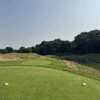
Portland West Golf Course opened its doors in 1985 following construction in the early 1980s, with Al Zikorus serving as both architect and construction consultant throughout the development process. The facility occupies approximately 70 acres of rolling terrain in the Connecticut River Valley, situated just off Gospel Lane in rural central Portland. The layout distinguishes itself through its intentional incorporation of man-made waterways, with a trio of ponds and series of creeks threading through at least half the holes. The property serves as a sanctuary for waterfowl, deer, and fox, creating a naturalistic corridor that remains notably free of residential encroachment. The executive format distributes twelve par-3s and six par-4s across returning nines, with the back nine claiming superiority through more pronounced elevation changes and a stronger collection of risk-reward scenarios. Players seeking efficient rounds without sacrificing strategic complexity will appreciate the design’s emphasis on accuracy over distance, as the layout demands precise iron play and thoughtful course management rather than brute force off the tee. The varied par-3 distances ranging from 131 to 215 yards ensure that nearly every club in the bag sees action, while the par-4s between 304 and 376 yards present positioning challenges that reward strategic thinking over aggressive play.
Strategic Test
| Handicap | Course Strategy |
|---|---|
| High Handicap (18+) | High handicappers playing from the white tees at 3,620 yards with a slope of 107 and rating of 59.6 will find Portland West an accessible yet legitimate challenge that can build confidence through achievable scoring opportunities. The 107 slope indicates the course plays slightly more difficult than bogey golf would suggest, meaning an 18-handicap player should expect to shoot approximately 95-97 for the round. The 14th hole, a 198-yard par-3 from the blue tees, exemplifies the examination that awaits players at this level. From the white markers at a more manageable distance, the hole still requires a confident mid-iron or hybrid over a forced carry, demanding commitment to the swing without the luxury of a bail-out area. The green’s elevation and surrounding hazards transform club selection from a simple yardage calculation into a psychological test where conservative play often yields better results than aggressive attempts at the flag. |
| Mid Handicap (8-18) | Mid-handicap players from the blue tees face 4,012 yards with a slope of 109 and rating of 60.9, presenting a scoring opportunity that nevertheless demands precision and course management to break par or shoot low-60s. The modest 109 slope suggests minimal separation between scratch and bogey golfers on this layout, making it fertile ground for players in this range to post career rounds if they control their misses. The 6th hole, a 366-yard par-4, stands as Head Pro Gerry D’Amora’s signature challenge and the number-one handicap on the front nine. Two ponds guard the left side of the fairway throughout the hole’s length, creating a severe penalty for pulls or hooks while simultaneously dictating that the tee ball must favor the right side for optimal positioning. The approach shot from 100-130 yards after a well-placed drive requires navigating past the water hazards while respecting the green’s contours, transforming what appears on the scorecard as a short par-4 into a genuine par-protection hole where a bogey often feels like a victory. |
| Low Handicap (0-8) | Scratch players attacking from the 4,012-yard blue tees with a 60.9 rating and 109 slope should target scores in the mid-50s, though the course rating suggests that breaking par-60 requires near-flawless iron play and putting. The relatively modest slope indicates the course doesn’t significantly separate elite players from the field through distance, instead relying on precision requirements and green complexes to defend par. The 10th hole, a 368-yard par-4 that opens the back nine, presents the thinking player’s dilemma that characterizes Portland West’s strategic merit. The uphill approach shot to a green perched above the fairway offers a receptive left-side bounce for approaches from the proper angle, while the right side of the putting surface falls away from incoming shots. Low-handicap players must execute a drive of approximately 220-240 yards to the ideal position, then deliver a controlled mid-iron approach that accounts for both the elevation change and the green’s internal contours, with the knowledge that missing the target line by more than a few yards results in a challenging up-and-down that can quickly inflate the scorecard. |
Nearby Course Alternatives
Quarry Ridge Golf Course in Portland offers a full-scale championship test just one mile from Portland West, measuring 6,389 yards from the black tees with a par-72 rating of 70.9 and slope of 124. Designed by Joe Kelly and Al Zikorus and opened in 1993, this public facility sits elevated with commanding views of the Connecticut River, dramatic ledge outcroppings, and the Meshomasic State Forest across approximately 150 acres of rugged terrain. The routing exploits the property’s natural granite formations and severe elevation changes, creating a visual spectacle that transports players to northern New England despite the central Connecticut location. Strategic value emerges through the judicious placement of gaping fairway bunkers, forced carries over quarry features, and severely contoured greens that present three-putt opportunities even for accomplished players. The course reputation rests on its signature sixth hole, a short par-5 filled with treachery from tee to green, and the demanding 11th, the number-one handicap hole that requires both power and precision on the drive and approach. Quarry Ridge lies just three minutes northeast up Rose Hill Road from Portland West, making it an ideal companion round for players seeking a traditional-length layout after an executive warm-up. Low-handicap players who prioritize elevation changes, dramatic vistas, and target golf over manufactured hazards will find Quarry Ridge provides the vertical movement and heroic shotmaking absent from Portland West’s more horizontal executive design.
Portland Golf Course in Portland delivers a Geoffrey Cornish design from 1974 that measures 6,213 yards from the championship tees with a par-71 rating of 70.5 and slope of 127. This public facility, owned and maintained by the Kelley family since opening, occupies approximately 120 acres of gently rolling Connecticut River Valley terrain with tree-lined fairways and varied elevation changes throughout the returning-nine routing. Cornish and co-designer Bill Robinson created strategic interest through large, threatening bunkers of varied shapes, fairway trees positioned in unconventional locations including mid-fairway placements, and green complexes featuring substantial internal movement with humps, falloffs, and dramatic slopes. The course’s architectural pedigree shines through details like the Cape hole at 16 and the Switchback par-5 12th, which many consider the layout’s finest hole for accomplished ball-strikers. Portland Golf Course sits approximately one mile southeast of Portland West along Bartlett Street, roughly four minutes by car through downtown Portland. The full-length Cornish design appeals particularly to mid-handicap players who appreciate Golden Age architectural principles, strategic variety without excessive length, and the opportunity to play a thoughtful routing that rewards course management and precision over raw power while maintaining walkability through the moderate terrain changes.
Final Word
Portland West provides comprehensive practice facilities anchored by a large driving range with mat stations that allow players to work on full swings throughout the season. The practice area includes a dedicated putting green and practice bunker for short-game refinement, ensuring that players can address all aspects of their game before or after their rounds. The modest on-site grill offers convenient food service for quick meals between nines or after completing 18 holes, though the facility maintains a BYOB policy for adult beverages. The course stays open year-round when weather and conditions permit, providing central Connecticut golfers with a reliable winter option for maintaining swing sharpness during the off-season. Electronic handicapping through the USGA system allows players to post scores and track their progress within the official framework, adding competitive legitimacy to what might otherwise be dismissed as merely a practice layout. The meticulously groomed conditions across tees, fairways, and greens demonstrate the ownership’s commitment to providing a quality product regardless of the executive designation. Portland West proves its worth through the fundamental architectural truth that strategic interest and shot-making demands need not correlate with overall yardage, as the varied par-3 distances, thoughtfully positioned water hazards, and elevation changes create genuine decision-making moments on nearly every hole. The course serves its market brilliantly by offering time-conscious players a legitimate test that can be completed in under three hours without sacrificing the core elements that make golf intellectually engaging, while simultaneously providing a venue where accuracy and course management skills developed here transfer directly to championship-length layouts.

David is an avid golfer who loves walking Connecticut’s courses and playing alongside his family. He’s passionate about golf course architecture and one day hopes to play at Pebble Beach.