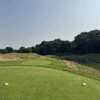
Hartford Golf Club is a private par-72 course measuring approximately 6,529 yards from the tips. The course was originally designed in 1914 by Donald Ross and Devereux Emmet and is located in West Hartford, Connecticut.
Hartford Golf Club traces its lineage to 1896, making it Connecticut’s oldest golf-dedicated facility and one that has witnessed more than a century of architectural evolution. The club initially occupied land where Elizabeth Park stands today before relocating in 1914 to its current West Hartford property, where Ross designed fourteen holes on the southern parcel while Emmet contributed to the early layout. The property expanded northward in 1945 with thirteen additional holes based on Ross designs, culminating in today’s 27-hole configuration comprising the Red, Blue, and Green nines. Most recently, architect Bruce Hepner completed a comprehensive bunker renovation in 2017 that refreshed all 132 sand hazards alongside reconstructing or building 45 tees and renovating the short game practice facility. The property spans approximately 256 acres of rolling parkland terrain situated on undulating ground that provides the routing with natural elevation changes without demanding excessive verticality. The Red and Blue combination, which represents the premier 18-hole routing among the three possible pairings, exhibits a three-loop configuration that belies its discontinuous origins through skillful terrain use and design continuity. This is a course for players who value positional golf and appreciate how classical bunkering creates strategic choices rather than mere visual intimidation. The layout rewards those who think their way around the course, using angles and understanding how Ross-style push-up greens interact with approach trajectories. The substantial green complexes demand precision with the putter, particularly when position above the hole brings gravity into play.
Strategic Test
| Handicap | Course Strategy |
|---|---|
| High Handicap (18+) | From the White tees at 6,281 yards with a 119 slope and 69.7 rating, higher handicappers face approximately 8-10 strokes above their handicap on a typical day once slope adjustment factors in. The generous fairway corridors provide room for errant drives, though tree-lined edges still require reasonable accuracy. The key strategic consideration centers on avoiding the penalty of being above the hole on approach shots, as the undulating greens can transform three-putt scenarios into scoring disasters. The par-4 7th hole on the Red nine, playing 388 yards from the White tees, exemplifies the course’s strategic architecture. This dogleg design features a creek wandering diagonally across the fairway that threatens drives attempting to cut the corner, creating a risk-reward decision off the tee. Conservative play favors a mid-iron or hybrid to the outside of the dogleg, leaving a mid-iron approach rather than gambling with driver. The green complex rewards those who accept their limitations and play for the center rather than attacking pins. |
| Mid Handicap (8-18) | The Blue tees at 6,529 yards with a 121 slope and 70.7 rating add approximately 250 yards of strategic complexity while introducing more demanding angles into the design equation. Mid-handicappers can expect to shoot 5-7 strokes above their index depending on green-reading aptitude and wedge precision. The increased length transforms several reachable par-5s into legitimate three-shot holes while making the par-3 collection more demanding with longer clubs. The strategic emphasis shifts from mere fairway-finding to controlling angle of approach, as Ross’s green contours become more penal when approached from incorrect positions. The 450-yard par-4 4th on the Blue nine presents the mid-handicapper with a substantial challenge featuring three visually imposing fairway cross-bunkers that create strategic layering. From the Blue tees at 450 yards, the tee shot demands either aggressive carry over the first bunker complex or acceptance of a longer approach from short of the hazards. A solid drive of 240-250 yards clears the primary obstacle, leaving a mid-iron into a green complex that rewards precision. This hole exemplifies how Hepner’s bunker renovation enhanced strategic definition without resorting to artificial difficulty. |
| Low Handicap (0-8) | From the championship Black tees, the course would extend beyond 6,760 yards with appropriately scaled slope and rating adjustments that demand scratch golfers execute at tournament tempo. However, the Blue tees at 6,529 yards with their 121 slope and 70.7 rating provide sufficient examination for most accomplished players, who should target even par to 2-over depending on conditions. The architectural sophistication becomes most apparent at this level, where the interaction between green contours, bunker placement, and strategic angles creates genuine decision-making rather than straightforward execution. Ross’s tendency toward subtle rather than dramatic features means the design reveals layers that require multiple plays to fully comprehend. The par-4 7th on Red, stretching to 407 yards from the back tees, becomes an elite examination of driving accuracy and approach precision. The diagonal creek crossing demands a calculated risk assessment: aggressive players can attempt a power draw toward the inside corner to shorten the approach to perhaps 130 yards, but the creek severely punishes miscalculation. Conservative strategy favors a 3-wood or driving iron to the safer right side, accepting a longer approach of 160-170 yards but eliminating creek interaction. The green contours favor approaches from the proper angle, demonstrating Ross’s genius for rewarding strategic thinking over pure power. |
Nearby Course Alternatives
Wampanoag Country Club in West Hartford sits approximately five minutes east of Hartford Golf Club and offers a compelling alternative for those seeking pure Donald Ross architecture in a concentrated 18-hole format. Measuring 6,610 yards from the championship tees with a slope of 133 and rating of 72.5, Wampanoag underwent a comprehensive restoration that reopened in 2023 under architect Andrew Green’s direction, refreshing Ross’s original 1924 design while extending total yardage beyond 7,000 yards from the tournament tees. The property occupies approximately 150 acres of rolling terrain that Ross shaped into a routing emphasizing diagonal angles and strategic bunkering patterns. The green complexes represent Ross at his most demanding, featuring severe undulations and slopes that create legitimate three-putt danger from beyond fifteen feet. The course rewards players who appreciate architectural nuance over raw length, as the restoration emphasized strategic choice points and recovery options rather than punitive rough lines. Wampanoag excels for the player who enjoys quick greens and values precision with approach irons, particularly the accomplished mid-handicapper who understands how to work the ball into proper green quadrants. The restoration’s emphasis on firm-and-fast conditioning means the course plays substantially different from Hartford’s more traditional parkland presentation, offering a links-influenced experience unusual for Connecticut’s inland geography. The shorter overall length compared to modern standards belies the scoring difficulty, as the green complexes demand exceptional short game execution that penalizes three-putt mistakes more severely than Hartford’s relatively flatter surfaces.
Tumble Brook Country Club in Bloomfield lies approximately ten minutes northwest of Hartford Golf Club and presents a unique 27-hole facility with architectural pedigree spanning multiple eras and designers. The most common 18-hole routing combines various nine-hole loops to create approximately 6,760 yards from the Black tees with a slope rating of 124 and course rating of 72.6, though the facility offers multiple routing combinations. The property encompasses substantial acreage across rolling terrain featuring scenic vistas toward Talcott Mountain and downtown Hartford. The architectural diversity stems from Willie Park Jr.’s original 1924 Red nine, Orrin E. Smith’s 1949 Blue nine, and George Fazio’s 1971 Green nine, all refreshed by Mark McCumber’s 2005 renovation that modernized bunkering and lengthened several holes for contemporary equipment. The three distinct nines each possess unique character: Park’s Red emphasizes strategic angles and diagonal hazards, Smith’s Blue features more elevation change and natural terrain integration, while Fazio’s Green incorporates water features and modern design aesthetics. Tumble Brook appeals most to the player who enjoys architectural variety and doesn’t mind routing configurations that lack the narrative flow of a traditional out-and-back or returning nine design. The facility excels for higher handicappers who benefit from the generous landing areas and multiple tee configurations, though the green complexes following McCumber’s renovation demand respectable short game execution. The panoramic views and varied hole presentations make Tumble Brook particularly attractive for social golf and member play where variety across multiple rounds outweighs singular architectural vision. Compared to Hartford’s Ross-Emmet consistency, Tumble Brook offers more dramatic elevation changes and contemporary conditioning standards that emphasize target golf over ground-game options.
Final Word
Hartford Golf Club extends far beyond its 27 holes of championship golf to encompass a comprehensive private club experience across 256 acres of meticulously maintained grounds. The practice facilities underwent renovation alongside Hepner’s 2017 bunker project and now include a full-length driving range, expansive putting green, and dedicated short game area that allows members to replicate on-course conditions. The 30,000-square-foot clubhouse, reminiscent of an English country manor, serves as the social centerpiece housing elegant dining rooms, casual gathering spaces, and banquet facilities capable of accommodating weddings and corporate events. Beyond golf, the club maintains nine Har-Tru tennis courts, four international squash courts, six platform tennis courts, three pickleball courts, and a four-lane duckpin bowling alley that preserves a charming historical amenity dating to the 1908 clubhouse reconstruction. The swimming complex, known as the Villa, features a six-lane Olympic-sized pool, separate diving pool, and children’s wading pool within a beautifully landscaped setting that operates Memorial Day through Labor Day. A state-of-the-art fitness center provides cardiovascular and strength equipment alongside personal training services, massage therapy, and group exercise classes. The club’s distinction lies not merely in amenity quantity but in how these elements combine to create genuine community rather than mere facility access. Hartford Golf Club proves its worth through architectural heritage that spans more than a century, conditioning standards that rival any private facility in Connecticut, and a member experience that recognizes golf as central but not exclusive to the country club lifestyle. The Red-Blue combination specifically demonstrates how thoughtful routing and consistent architectural vision can create a cohesive 18-hole experience from disparate nine-hole components, rewarding those who value strategic complexity and classical design principles over manufactured difficulty or modern length obsession.

David is an avid golfer who loves walking Connecticut’s courses and playing alongside his family. He’s passionate about golf course architecture and one day hopes to play at Pebble Beach.