Lyman Orchards Golf Club – Apple Nine is a public par-29 course measuring approximately 1,600 yards from the tips. The course was originally designed in 2012 by Mark Mungeam and is located in Middlefield, Connecticut.
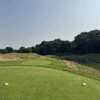
The Apple Nine opened in 2012 as the third course at the historic Lyman Orchards property, complementing the property’s Robert Trent Jones Sr. and Gary Player championship layouts. Mungeam’s design earned immediate recognition, receiving the American Society of Golf Course Architects’ inaugural Design Excellence award in its debut year. The layout has been consistently ranked as Connecticut’s top par-3 course and placed 10th overall in New England by New England Golf Monthly. The course occupies a compact footprint within the larger 1,100-acre Lyman Orchards property, which has been under continuous family ownership since 1741. The routing centers around the Golf Range Association of America’s Top 50 Public Practice Facility, creating an integrated learning environment. The nine-hole layout features seven par-3s and two par-4s, with holes ranging from approximately 76 to 314 yards across four tee sets. The bent grass surface provides consistent playing conditions throughout the season. The terrain is relatively gentle compared to the property’s championship courses, though Mungeam incorporated strategic undulation into several green complexes. The course appeals to multiple player types: juniors developing fundamentals, higher handicappers building confidence, experienced players working on scoring zones, and time-constrained golfers seeking quality repetitions in under two hours. The design philosophy emphasizes approachability without sacrificing strategic interest, offering genuine golf architecture scaled to executive length.
Strategic Test
| Handicap | Course Strategy |
|---|---|
| High Handicap (18+) | From the forward tees at 1,211 yards, the course provides an accessible introduction to golf architecture without overwhelming length. The slope rating of 87 indicates relatively forgiving scoring potential, though green complexes demand developing touch around the putting surfaces. Players face predominantly wedge and short iron selections, with the two par-4s offering opportunities to deploy fairway woods or hybrids. The key strategic element involves club selection discipline, as distance control trumps maximum distance on these compact holes. The third hole, measuring 188 yards from the championship tees, exemplifies the strategic variety, playing as a demanding mid-to-long iron that requires carry over bunkering to an elevated, well-defended green complex. |
| Mid Handicap (8-18) | From the middle tees at approximately 1,400 yards, the layout presents scoring opportunities while testing precision. The 28.2 course rating and 87 slope create realistic birdie chances for players who execute quality approach shots. Strategic emphasis shifts toward aggressive flag hunting, as the compact yardages permit direct attacks on tucked pins. The two par-4s become legitimate scoring holes when drives find optimal angles. Course management revolves around reading green speeds and contours accurately, as Mungeam designed several putting surfaces with significant internal movement. The third hole at 188 yards becomes a true test of commitment, requiring full swings with mid-irons while managing the psychological challenge of forced carries to elevated targets surrounded by hazards. |
| Low Handicap (0-8) | From the championship tees at 1,556-1,600 yards, accomplished players face a precision examination that punishes wayward execution. The layout demands exact distance control across the wedge-through-middle-iron range, with minimal room for imprecise contact. Strategic interest emerges through green complex architecture rather than fairway routing, as Mungeam incorporated subtle undulations and false fronts that reject poorly flighted approaches. Scoring depends on converting birdie opportunities on shorter holes while avoiding mistakes on the longer par-3s. The two par-4s, particularly the second hole at approximately 261 yards, create risk-reward tension between aggressive driver lines and conservative positioning. The third hole at 188 yards exemplifies the test, requiring controlled trajectory with long irons or hybrids to hold a green complex that penalizes both short and long misses through strategic bunkering and contour. |
Nearby Course Alternatives
Gainfield Farms Golf Course in Southbury presents another executive option approximately 30 minutes southwest of Lyman Orchards in Connecticut’s Naugatuck River Valley. This Al Zikorus design, opened in 1994, plays to 1,384 yards across nine holes at par-28, featuring eight par-3s and a single par-4. The layout occupies former farmland with moderate elevation changes that add strategic dimension beyond its compact yardage. Gainfield’s conditioning has earned particular praise, with green complexes maintained to standards approaching private facilities. The course routing incorporates strategic bunkering and undulating putting surfaces that elevate the design above typical pitch-and-putt facilities. Individual holes range from 86 to 261 yards, with the third hole’s 188-yard uphill challenge standing as the layout’s signature examination. The property’s parkland setting provides mature tree corridors that frame holes distinctly. Players seeking more dramatic elevation changes and a slightly more traditional executive layout length will appreciate Gainfield’s topographical variety. The course particularly suits developing players who want genuine strategic challenges without overwhelming length, as well as experienced golfers focused on short-game refinement in a relaxed atmosphere. The absence of official course rating data reflects its executive classification, though the design offers substantive architectural interest through green complex design and strategic hazard placement.
Westwoods Golf Club in Farmington delivers an 18-hole par-61 experience approximately 25 minutes northwest of Lyman Orchards in Hartford County’s southwestern corner. Geoffrey S. Cornish designed this 1966 layout, which plays to 4,407 yards from the championship tees with a 58.6 course rating and 85 slope rating. The routing features predominantly par-3 holes interspersed with strategic par-4s and a signature par-5, creating a full-length executive test that demands varied shot-making. Westwoods occupies rolling terrain with elevation changes throughout, offering dimensional variety that differs markedly from Lyman’s gentler topography. The bent grass surfaces and mature tree corridors establish distinct hole identities within the parkland setting. Cornish’s design philosophy emphasized strategic options from multiple tee positions, with the layout accommodating play from 3,597 to 4,407 yards. The property includes comprehensive practice facilities, including a driving range with both mat and grass tees, plus a 24,000-square-foot practice green. The municipal ownership structure provides accessible public golf with maintained conditioning standards. Players seeking longer playing distances and more varied par configurations will find Westwoods offers traditional stroke-play architecture scaled to executive length. The course particularly appeals to mid-handicappers who want routing complexity and distance variety beyond short-course formats, as well as low-handicappers using the layout for focused iron and wedge work within competitive stroke-play structure. The 18-hole configuration also accommodates players preferring full rounds over nine-hole circuits.
Final Word
The Apple Nine’s integration with the broader Golf Center creates a comprehensive improvement ecosystem rare among short courses. The 40-bay driving range, recognized nationally for its quality, provides both mat and grass hitting stations alongside dedicated short-game areas including practice bunkers, chipping greens, and expansive putting surfaces totaling 20,000 square feet. The facility’s instructional programming includes the largest ladies program in New England and the region’s most extensive PGA Jr. League operation, establishing the site as a development hub rather than merely a casual play venue. Indoor golf simulators extend year-round access when weather limits outdoor practice. The 1741 Pub & Grill offers full-service dining with course views, while the Apple Barrel Farm Market provides the property’s agricultural connection through seasonal produce and award-winning baked goods. The Lyman Homestead, listed on the National Register of Historic Places, adds event venue capability to the golf operations. These amenities position the Apple Nine within a destination framework that transcends typical executive course offerings. What distinguishes this layout is Mungeam’s architectural integrity applied to short-form golf, creating genuine strategic interest scaled appropriately to executive length. The course proves its value through thoughtful green complex design, strategic variety across multiple tee positions, and exceptional conditioning standards that mirror championship course expectations. The American Society of Golf Course Architects Design Excellence recognition validates the design’s architectural merit, while the New England Golf Monthly rankings confirm player appreciation. For juniors, developing players, time-constrained golfers, and experienced players seeking quality practice rounds, the Apple Nine delivers substantive golf architecture in an accessible format.

David is an avid golfer who loves walking Connecticut’s courses and playing alongside his family. He’s passionate about golf course architecture and one day hopes to play at Pebble Beach.