Hop Meadow Country Club is a private par-72 course measuring approximately 6,915 yards from the tips. The course was originally designed in 1961 by Geoffrey Cornish and is located in Simsbury, Connecticut.
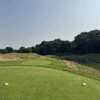
Established in 1961 by local residents in the heart of the Farmington Valley, Hop Meadow Country Club has evolved through thoughtful stewardship over its six decades of operation. The course sits on approximately 150 acres and features the distinctive characteristics of Geoffrey Cornish’s practical yet demanding design philosophy. Over the years, the membership has committed to comprehensive improvement programs that have enhanced key areas of the golf course, with architect Bill Love later contributing refinements that softened certain elements while preserving the championship character. The terrain presents significant elevation change that defines the routing strategy, with the clubhouse positioned in a valley and holes traversing upward to ridgeline positions before descending again. This creates a routing that climbs substantial elevation on both nines, offering panoramic views of the Farmington Valley but demanding thoughtful club selection and stamina. The bent grass fairways and greens are maintained to championship standards, with the course consistently rated among Connecticut’s finest private facilities. Players who appreciate classical strategic architecture, value precise iron play, and enjoy courses that test every club in the bag will find Hop Meadow particularly rewarding. The design favors thinking golfers who can shape shots and manage elevation effectively, with multiple par fours exceeding 450 yards that demand both length and accuracy. This is a course that reveals its strategic depth through repeated play, with subtle green complexes and well-positioned hazards that reward local knowledge and penalize careless execution.
Strategic Test
| Handicap | Course Strategy |
|---|---|
| High Handicap (18+) | Playing from the White tees at 6,134 yards with a slope of 128 and rating of 70.8, high handicappers face approximately 8-10 additional strokes beyond their handicap due to slope impact. The strategic focus should be on course management and avoiding the penalty areas that guard many approach zones. The shorter par fours like the 311-yard 5th hole from the championship tees provide scoring opportunities when playing from forward tees, though the elevated and canted green complexes throughout demand careful distance control. Hole 10 at 350 yards from the tips presents an ideal challenge for this player, measuring approximately 320 yards from the White tees. This relatively short par four requires a controlled tee shot to navigate fairway contours, followed by a short iron or wedge to a green that accepts well-struck approach shots. Club selection off the tee might be a fairway wood or long iron to ensure position, leaving a comfortable 100-120 yard approach that allows focus on accuracy rather than distance. The elevation changes throughout make club selection particularly important, as downhill and uphill shots play dramatically different from their measured yardages. |
| Mid Handicap (8-18) | From the Blue tees at 6,531 yards, mid handicappers encounter a slope of 132 and rating of 72.3, adding approximately 5-7 strokes to expected scores. This tee placement brings the strategic architecture into full relief, with risk-reward decisions on par fives and demanding approach angles on the longer par fours. The course’s three par fours over 450 yards from the tips become genuine three-shot holes from the Blue tees for many players in this category. Strategic positioning off the tee becomes paramount, as Cornish’s design features fairway corridors that tilt and cant, rewarding draws and fades to specific landing zones. Hole 8 at 458 yards from the championship tees offers excellent strategic interest for mid handicappers, playing approximately 435 yards from the Blue tees. This uphill par four demands a well-positioned drive that avoids fairway undulations and sets up a mid to long iron approach to an elevated green. Players must decide whether to challenge the optimal angle with an aggressive tee shot or play conservatively and accept a longer approach from a safer position. Club selection might involve driver or 3-wood off the tee depending on conditions and confidence, followed by a 5 or 6-iron approach that must account for the uphill climb and green firmness. |
| Low Handicap (0-8) | Championship players from the Green tees at 6,915 yards face a slope of 136 and rating of 73.9, demanding precision and strategic acumen throughout. The course reveals its architectural sophistication at this length, with multiple holes exceeding 450 yards that test driving accuracy and approach shot quality. The green complexes, averaging substantial size with back-to-front slopes characteristic of Cornish’s work, require careful consideration of pin position and approach trajectory. Par is earned rather than given, with several forced carries and strategic bunkering that punishes marginal shots. The elevation changes add complexity to club selection on nearly every hole, particularly on the uphill stretches where multiple clubs may be required. Hole 11 at 452 yards serves as an exceptional test for accomplished players, ranking as the number 2 handicap hole. This lengthy par four plays its full yardage with elevation factors potentially adding or subtracting distance depending on the day’s pin position. The tee shot must find the fairway to leave any reasonable angle for the approach, which likely requires a long iron or hybrid into a green that demands precision. Strategy centers on whether to take on the direct line or work the ball to the ideal approach angle, with club selection potentially ranging from driver and 4-iron in favorable conditions to 3-wood and 3-iron when playing into wind or to a back pin. The green’s contours make distance control as important as direction. |
Nearby Course Alternatives
Tumble Brook Country Club in Bloomfield offers a distinctly different private club experience approximately 15 minutes northeast of Hop Meadow. The 27-hole facility provides multiple combination options from its Red, Blue, and Green nines, with the most common rotation measuring approximately 6,600 yards from the championship tees. The course evolved in three distinct phases, with Willie Park Jr. designing the original Red nine in 1924, Orrin Smith adding the Blue nine in 1949, and George Fazio completing the Green nine in 1971, before Mark McCumber orchestrated a comprehensive renovation in 2005. This multi-generational development creates fascinating architectural variety, with the older Park nine displaying golden age design principles while the later additions reflect mid-century and modern sensibilities. The routing occupies approximately 140 acres with more moderate elevation change compared to Hop Meadow’s dramatic topography, making it somewhat more walkable despite its length. The course presents a different strategic challenge with panoramic views of downtown Hartford and rolling terrain that rewards strategic positioning but offers more forgiving landing areas. Tumble Brook’s slope rating varies by combination but generally falls in the 130-135 range, slightly less demanding than Hop Meadow’s championship layout. Players who prefer variety through multiple nine-hole configurations and appreciate the historical evolution of golf architecture will find Tumble Brook compelling. The course particularly suits players who enjoy examining how different architectural eras approached similar terrain, and those who value a slightly less severe physical test while maintaining championship strategic demands. Mid-to-low handicap players who appreciate architectural pedigree and historical context may find Tumble Brook’s multi-generational design more intellectually engaging.
Ellington Ridge Country Club in Ellington presents another Geoffrey Cornish design approximately 25 minutes northeast of Hop Meadow, offering an interesting comparison in how the architect approached different sites just two years apart. The course measures approximately 7,057 yards from the championship tees with a slope of 133 and rating of 73.8, making it slightly longer but marginally less difficult than Hop Meadow by the numbers. Designed in 1959 and occupying roughly 160 acres, Ellington Ridge sits atop a ridgeline with expansive views of the Connecticut River valley, creating a more open, windswept character compared to Hop Meadow’s valley-to-ridge routing. The course consistently ranks among Connecticut’s top private facilities and has hosted numerous prestigious state championships including the Travelers Championship qualifier, Connecticut PGA events, and CSGA tournaments. The design features Cornish’s characteristic long par fours with seven holes exceeding 400 yards and multiple approach shots demanding long irons or hybrids. The finishing stretch from holes 15 through 18 is particularly renowned for its difficulty and has determined many championship outcomes. Ellington Ridge offers superior practice facilities including a six-acre driving range, dual practice putting greens, and dedicated short game area. The course plays firmer and faster than Hop Meadow due to its ridgetop exposure, with approximately 90 bunkers strategically positioned throughout the routing. Players who prefer more consistent elevation rather than dramatic climbs and descents will appreciate Ellington Ridge’s ridgetop character. The course particularly appeals to accomplished players who relish championship conditions and a brutal closing stretch that separates scores in competitive play.
Final Word
Hop Meadow Country Club offers comprehensive practice facilities that support serious game improvement and pre-round preparation. The driving range features mat stations with adequate space for full swings and trajectory evaluation, complemented by a practice putting green that reflects the speed and true roll of the course greens. A dedicated short game area allows members to work on pitch shots, chips, and greenside bunker play under conditions that mirror on-course situations. Beyond golf, the club provides eight Har-Tru tennis courts maintained to high standards, with several illuminated for evening play, alongside two platform paddle tennis courts that extend racquet sports into winter months. The Olympic-sized swimming pool serves as a summer focal point for families, featuring dedicated lanes for lap swimming and a separate children’s pool area. The recently expanded outdoor patio and bar area, representing a substantial investment in member amenities, creates seamless flow between the golf course, tennis courts, and pool while providing panoramic views across the property. The clubhouse offers multiple dining spaces that accommodate both casual rounds and formal events, with the covered deck overlooking the course providing an ideal setting for post-round analysis. These comprehensive amenities position Hop Meadow as a true full-service family club rather than simply a golf facility. What makes this course particularly special is how Geoffrey Cornish’s practical yet demanding architecture has matured over six decades into a refined strategic test that rewards thoughtful play while remaining accessible to members of varying abilities. The dramatic elevation changes that define the routing create both challenge and spectacular views, with the course revealing increasing complexity through repeated play. The commitment to championship conditioning paired with the family-oriented club culture demonstrates how private facilities can maintain serious golf standards while fostering inclusive community. For players who value strategic architecture over manufactured difficulty and appreciate courses that demand every club while remaining playable from multiple tees, Hop Meadow represents an exemplary Connecticut private club that has stood the test of time.

David is an avid golfer who loves walking Connecticut’s courses and playing alongside his family. He’s passionate about golf course architecture and one day hopes to play at Pebble Beach.