Highland Golf Club is a private par-68 course measuring approximately 5,175 yards from the tips. The course was originally designed in 1900 by Frank G. Gates and is located in Shelton, Connecticut.
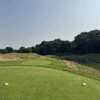
Highland Golf Club stands as one of Connecticut’s longest continually operating private golf clubs, having opened for play in 1900 with design work from Frank G. Gates, whose family was among the region’s prominent benefactors. The course has maintained its original nine-hole layout throughout its 125-year history, with members playing the course twice from different tee boxes to create an 18-hole round. In November 2024, a devastating fire destroyed the club’s historic clubhouse that had stood for over a century, leaving only a stone chimney standing. The membership demonstrated remarkable resilience, constructing a temporary clubhouse within four months to open for the 2025 season while simultaneously breaking ground on a permanent replacement expected to be completed in spring 2026. The course occupies a compact footprint estimated at approximately 50-60 acres nestled within an urban setting just minutes from downtown Shelton. The routing features rolling hills and target greens with bent grass putting surfaces and bluegrass fairways, creating a traditional parkland character that emphasizes precision over distance. The design philosophy revolves around accuracy to small, elevated greens defended by strategic bunkering and natural terrain movement. Players who appreciate shotmaking, course management, and the challenge of repeatedly playing the same holes from varied perspectives will find Highland particularly engaging, as the dual-tee system fundamentally alters playing angles and club selections for each hole on the back nine.
Strategic Test
| Handicap | Course Strategy |
|---|---|
| High Handicap (18+) | High handicappers will find the most enjoyment from the forward tees, which measure approximately 2,585 yards for nine holes with a course rating of 33.4 and slope of 116. The moderate slope rating suggests that bogey golfers face a reasonable challenge without overwhelming penal elements. The relatively short overall yardage allows higher handicappers to reach greens in regulation more frequently, though the elevated and contoured putting surfaces demand solid short game execution. The par-5 2nd hole at 490 yards presents an excellent scoring opportunity, playing downhill and offering legitimate chances to reach the green in two strokes with well-struck fairway metals or long irons. This reachable par-5 provides the best opportunity for high handicappers to post a birdie or comfortable par, making it the most enjoyable hole for this skill level. |
| Mid Handicap (8-18) | Mid-handicappers playing from the white tees will encounter approximately 2,585 yards for nine holes, while the blue tees extend to 2,590 yards with a course rating of 67.2 and slope of 125 for the full 18-hole experience. The increased slope rating reflects how the elevated greens and tighter approach angles create more pronounced scoring differentials for players in this handicap range. Course management becomes paramount, as the compact layout punishes wayward drives with limited bailout areas and recovery options. The par-5 12th hole at 495 yards from the blue tees offers an engaging strategic decision point, requiring either aggressive play with a long second shot toward an elevated green or conservative positioning for a controlled wedge approach. Mid-handicappers will appreciate how this hole rewards strategic thinking over raw power, with club selection ranging from driver-3wood-wedge to driver-layup iron-short iron depending on conditions and confidence level. |
| Low Handicap (0-8) | Low handicappers playing the championship white-blue combination will face the full test of 5,175 yards with a course rating of 67.0 and slope of 124. The relatively modest total yardage might suggest a straightforward examination, but the elevated target greens, precise approach requirements, and subtle contouring demand exceptional iron play and distance control. Better players must continuously adjust their mental approach to each hole as tee boxes shift and greens change for the back nine, testing their ability to execute different trajectories and manage varying wind angles. The par-4 3rd hole at 400 yards serves as the number one handicap hole and provides low handicappers with their most compelling strategic challenge. This demanding two-shotter requires an accurate drive to set up a mid-to-long iron approach to an elevated, well-defended green where par represents a solid score. Club selection typically involves driver or 3-wood off the tee depending on accuracy that day, followed by anything from a 5-iron to 7-iron into a green complex that rejects mishits and rewards precise shotmaking. |
Nearby Course Alternatives
Brownson Country Club in Shelton offers a contrasting experience located just minutes to the west within the same municipality, approximately 3 miles from Highland. This private facility features a full 18-hole championship layout measuring 5,713 yards from the tips with a par of 70, course rating of 70.0, and slope rating of 134. The original Albert Zikorus design opened in 1960 and received significant enhancement from the award-winning firm of Cornish, Silva, and Mungeam, elevating the strategic complexity considerably. Brownson occupies a larger property estimated at 100-plus acres with rolling elevation changes more pronounced than Highland’s terrain. Water hazards come into play on eleven holes, creating a wet-land strategic component entirely absent from Highland’s routing. The small, well-bunkered green complexes demand similar precision to Highland, but the additional 500-plus yards of length and higher slope rating make Brownson a more demanding examination of ball-striking. Players who enjoy navigating water hazards, prefer variety in hole types beyond what nine repeated holes can provide, and seek a more modern strategic architecture aesthetic would favor Brownson over Highland. Mid-to-low handicappers looking for greater length and a more severe scoring spread will find Brownson’s elevated difficulty more satisfying than Highland’s comparatively gentle rating of 67.2. The club features a family-oriented atmosphere with a pool complex, multiple dining venues, and comprehensive tournament programming that mirrors Highland’s community-focused membership model.
Oronoque Country Club in Stratford provides another distinctive private club alternative approximately 6 miles southeast of Highland, roughly 12 minutes by car. This Desmond Muirhead design opened in 1972 and plays to 6,573 yards from the championship tees with a par of 72 (73 for women), course rating of 73.0, and slope rating of 125. The layout sprawls across approximately 140 acres within the Oronoque Village retirement community, offering significantly more land and length than Highland’s compact footprint. Muirhead’s architectural signature includes characteristically bold green contouring described by Golf Digest panelists as upturned bowls that create diabolical putting surfaces far more severe than Highland’s traditional target greens. The course features four par-3s, ten par-4s, and four par-5s, providing greater variety in hole types and testing different clubs throughout the bag more comprehensively than Highland’s limited nine-hole set. Oronoque’s most distinctive element lies in its unique membership structure that eliminates separate men’s and women’s organizations in favor of a unified Member’s Golf Association with mixed-gender scramble formats. Players who prefer modern green complexity, enjoy longer courses exceeding 6,500 yards, and appreciate dramatic putting challenges would find Oronoque more compelling than Highland. The course particularly suits low handicappers who can score on demanding greens and players who value innovative membership models promoting gender equality in club governance and tournament play.
Final Word
Highland Golf Club offers members a well-maintained practice putting green that provides adequate preparation for the elevated target greens encountered throughout the round, though the facility lacks a dedicated driving range due to its compact urban setting. The club’s temporary clubhouse, constructed rapidly following the November 2024 fire, provides essential locker room facilities, pro shop services, and a functional bar and grille area overlooking the course. Members can look forward to the permanent clubhouse opening in spring 2026, which will feature a relocated bar room on the west side offering panoramic views of the entire golf course from both interior spaces and adjoining patios, as designed by Newman Architects and Langan Engineering. The club demonstrates remarkable community engagement through annual charitable events like the J&B Auto Hoodie Tournament benefiting the Boys and Girls Clubs of Lower Naugatuck Valley, reflecting the membership’s commitment to the local region. Highland’s PGA Professional Mike Martin exemplifies the club’s competitive spirit, having qualified for the 2026 PGA Professional Championship at Bandon Dunes after finishing fifth in the Connecticut PGA Section Championship, with previous accomplishments including participation in two U.S. Opens. What makes Highland Golf Club genuinely special extends beyond its historic 125-year pedigree to encompass the resilience demonstrated in rebuilding after catastrophic loss while maintaining operations and member satisfaction. The nine-hole format, though limiting in total variety, creates an intimate knowledge of each hole that rewards strategic thinking and course management over multiple rounds, as players learn subtle reads, optimal angles, and conditional adjustments that deeper understanding provides. The club proves its value through pristine conditioning standards, a family-more-than-club membership culture, and the distinctive challenge of mastering a compact routing that demands precision and creativity rather than raw distance.

David is an avid golfer who loves walking Connecticut’s courses and playing alongside his family. He’s passionate about golf course architecture and one day hopes to play at Pebble Beach.