Griffith E. Harris Golf Course is a public par-71 course measuring approximately 6,392 yards from the tips. The course was originally designed in 1963 by Robert Trent Jones Sr. and is located in Greenwich, Connecticut.
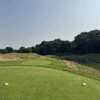
The course occupies 158.6 acres on King Street and carries a fascinating municipal pedigree rooted in public service. Originally dedicated in July 1965 as the Bruce Memorial Golf Course to honor philanthropist Robert M. Bruce, the facility took on its current name in 1999 to commemorate First Selectman Griffith E. Harris, who championed using state funds from Interstate 95 construction to purchase the property for golf. The terrain divides into two distinct personalities that define the strategic character of the layout. The front nine occupies former farmland and presents a longer, more open test favoring distance off the tee, while the back nine transitions into a tighter, hillier woodland routing that demands accuracy and course management. This dual-character design rewards players who can adapt their strategy mid-round. The topographical variety creates memorable elevation changes and forced carries, with the routing making full use of the natural terrain contours. Jones employed his signature style throughout with strategically positioned bunkers, crowned greens with significant slope, and corridor framing through mature tree lines. Players who appreciate tactical variety and elevation-based shot demands will find considerable appeal in this classic municipal design that continues to challenge golfers more than six decades after opening.
Strategic Test
| Handicap | Course Strategy |
|---|---|
| High Handicap (18+) | From the green tees at 5,415 yards with a 113 slope and 66.2 rating, higher handicappers face a manageable length but must contend with the course’s primary defense mechanisms of undulating terrain and Jones-era bunkering. The slope rating suggests approximately 13 strokes above par for an 18 handicapper, making bogey golf a reasonable target. The shorter yardage allows for more forgiving club selection off the tee, though the hillier back nine still demands accurate iron play into elevated or sloped green complexes. The par-4 10th hole at 308 yards from the blue tees offers an approachable scoring opportunity where course management trumps distance. Playing from forward tees might require a hybrid or long iron off the tee, followed by a short iron or wedge approach, making this an ideal confidence-builder where strategic positioning rather than power determines success. |
| Mid Handicap (8-18) | The white tees at 6,040 yards present a 120 slope and 68.9 rating, adding approximately 9 strokes for a mid-handicapper and creating a balanced test of all facets of the game. This yardage challenges players to mix driver holes on the open front nine with more controlled tee shots through the wooded back nine corridors. Green complexes with notable slope require distance control and proper angle selection on approaches. The par-4 13th hole at 385 yards from the blue tees has earned recognition for its strategic architecture and represents an ideal challenge for this skill level. The tee shot plays downhill into a valley with a dogleg left, requiring either a controlled draw or a layup position that opens the angle. The uphill approach to a steeply sloped green complex demands precise distance judgment and club selection, typically calling for one or two extra clubs to account for elevation gain. |
| Low Handicap (0-8) | From the blue tees at 6,392 yards with a 123 slope and 70.4 rating, accomplished players face approximately 1 stroke above par, with the course revealing its design sophistication through green contours and strategic hazard placement rather than length alone. The relatively modest championship yardage shifts emphasis to accuracy, course positioning, and precise iron play into crowned or angled green surfaces. Jones-era features like centerline bunkering and internal green contours create multiple pin positions with varying difficulty levels. The par-4 6th hole at 448 yards from the blue tees serves as the number one handicap and exemplifies the examination low handicappers should expect. The substantial length requires a well-struck drive to leave a manageable approach distance, while the green complex demands both distance and accuracy. Strategic players must select proper angles off the tee to avoid lengthening the hole or creating blocked approach lines through tree corridors. |
Nearby Course Alternatives
Sterling Farms Golf Course in Stamford presents an alternative public facility approximately 15 minutes northeast from Greenwich. The Geoffrey Cornish design opened in 1972 across 144 acres of former dairy farmland and plays to 6,423 yards from the tips as a par 72 with a 129 slope and 72.0 rating. The course underwent renovation work by Robert McNeil in 2005 to update bunkering and infrastructure while maintaining the original routing character. Sterling Farms trades the elevation extremes found at Griffith Harris for more rolling parkland terrain with mature specimen trees framing generous fairways. The strategic emphasis leans toward accurate approach play rather than positional driving, as the wider landing areas provide more margin for error off the tee. The facility reputation centers on conditioning quality and the demanding par-3 collection that requires both distance and accuracy. Players seeking a more accessible walking experience with less severe terrain will appreciate Sterling Farms over The Griff, particularly mid-to-high handicappers who benefit from the additional fairway width and more consistent lies. The practice facilities include a heated driving range that extends playability into cooler months, and the park-like setting creates a more relaxed atmosphere compared to the rugged topographical character found in Greenwich.
E. Gaynor Brennan Golf Course in Stamford offers another public option approximately 20 minutes north of Greenwich with a distinctly different architectural profile. Originally opened in the 1920s as the private Hubbard Heights club before transitioning to municipal ownership in 1949, the course plays to 5,931 yards as a par 71 with a 124 slope and 69.5 rating from the championship tees. The compact 70-acre property features narrow, tree-lined fairways that demand accuracy over distance, with course management and strategic positioning taking precedence throughout. Recent realignment work in 2020 created two new holes while maintaining the classic character of the layout. The shorter overall length creates a different strategic proposition than either Griffith Harris or Sterling Farms, with the emphasis shifting entirely to shot placement and scrambling ability around smaller, more accessible green complexes. Brennan rewards straight hitters who can navigate tight corridors and control trajectory beneath tree canopies. Higher handicappers seeking a less physically demanding test with reduced walking strain will find appeal in the flatter terrain and shorter distances, though the narrow fairways create their own penalty for offline shots. The facility known locally as The Heights maintains an unpretentious municipal character with Zody’s 19th Hole restaurant providing post-round amenities without the polish found at some higher-profile public courses in the region.
Final Word
Practice facilities at Griffith E. Harris include a full driving range with quality hitting mats, a putting green, chipping green, and practice bunker that allow players to prepare all aspects of their game before the round. The range setup provides adequate space for pre-round warmup though it operates as a hitting area rather than a dedicated practice center with extensive target greens. The administration building houses a full-service pro shop stocked with equipment rentals, apparel, and essential golf supplies, while the professional staff offers instruction and clinics for players seeking to improve their skills. The clubhouse restaurant provides both indoor dining and covered patio seating for post-round meals and gatherings, with a full bar and menu options suitable for casual dining or event hosting. The facility serves as more than just a golf course, functioning as a community recreational hub where the game intersects with the social fabric of Greenwich municipal services. The combination of practice areas, pro shop services, and food and beverage options creates a complete golf experience without requiring private club membership. What distinguishes Griffith E. Harris from other municipal facilities in the region is the authentic Robert Trent Jones Sr. design pedigree combined with significant topographical variety rarely found on public courses in lower Fairfield County. The routing maximizes dramatic elevation changes and strategic interest across the two distinct nine-hole characters, creating a memorable test that reveals new layers of complexity with repeated play. The course demands adaptation and strategic thinking rather than simply rewarding one-dimensional power or pure ball-striking, making it an ideal venue for players who approach golf as a tactical challenge. The municipal ownership ensures accessibility to Greenwich residents while maintaining the character and conditioning befitting a Jones design, proving that public golf can deliver both architectural merit and playable challenge without compromising either element.

David is an avid golfer who loves walking Connecticut’s courses and playing alongside his family. He’s passionate about golf course architecture and one day hopes to play at Pebble Beach.