

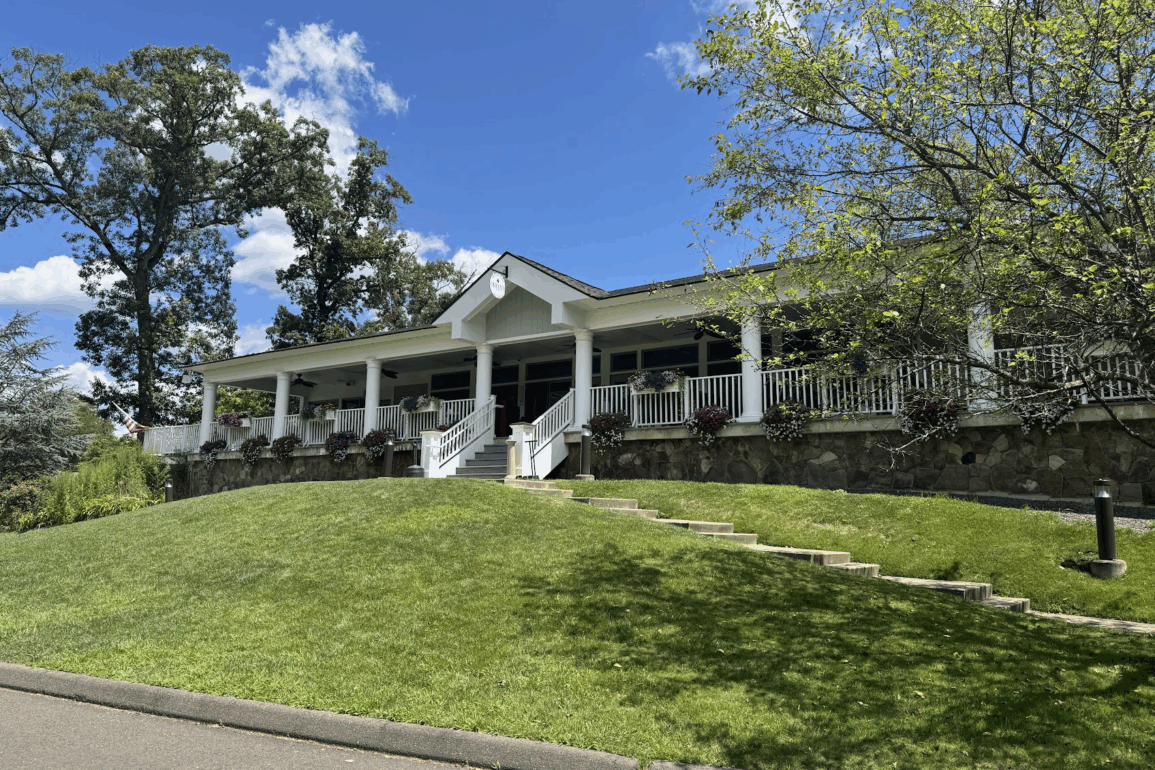
Oak Hills Park Golf Course is a public par-71 course measuring approximately 6,317 yards from the tips. The course was originally designed in 1969 by Alfred H. Tull and is located in Norwalk, Connecticut.
Set across a compact property—likely under 130 acres—Oak Hills punches above its weight with terrain that moves meaningfully, especially on the front nine. The routing winds through tight wooded corridors, gradually relaxing into more open ground on the back. The course asks for precision early and rewards width and power later, favoring players who can adapt to changing demands. This is not a bomb-and-gouge course, but rather a thinking player’s test, one that prizes club selection, positional awareness, and ground-game creativity. Tull’s signature elements—pot bunkers, chipping-friendly surrounds, and just punishment for imprecise play—are all present here.
Walkability
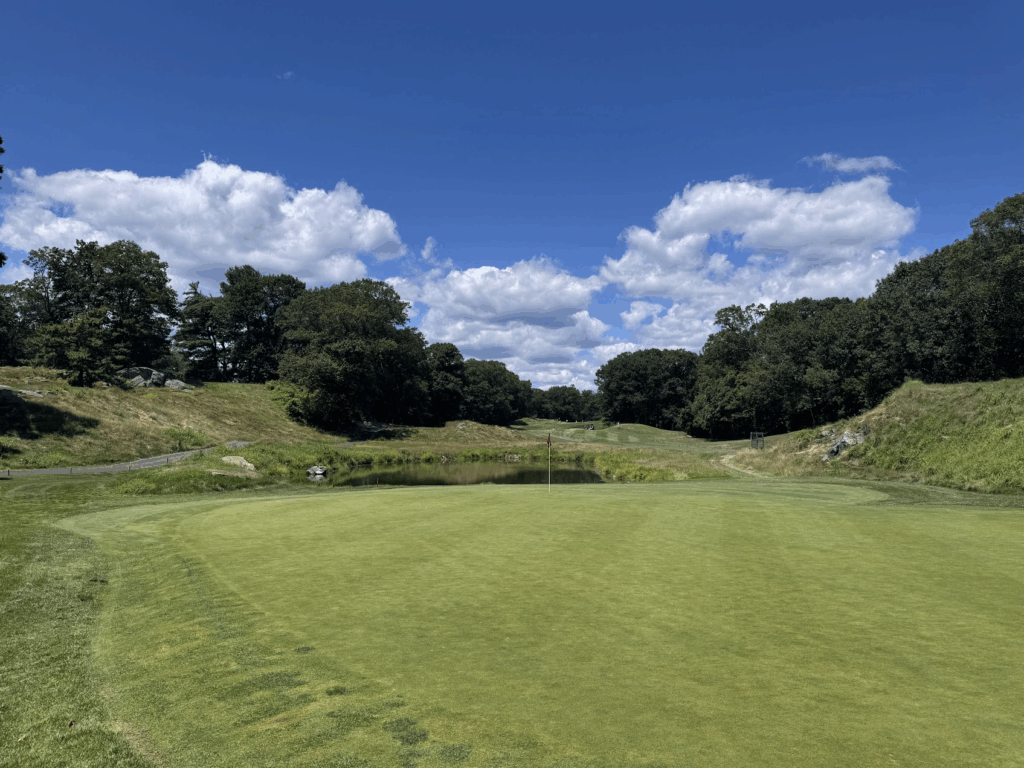
Oak Hills is very walkable—an increasingly rare and welcome trait among public courses. The compact nature of the routing minimizes travel between holes, and while the front nine features moderate elevation shifts, it remains physically manageable for most players. Holes 1 through 6 play over hilly terrain with modest but noticeable climbs. The transition from green to tee on several holes—most notably from Hole 1 to Hole 2, and Hole 6 to 7—can be disorienting without a map. The back nine flattens considerably and is far easier on the legs. The walk is fluid, with minimal backtracking or excessive cart path sprawl. The course feels honest to the land, and Tull’s ground-first design philosophy lends itself beautifully to walking.
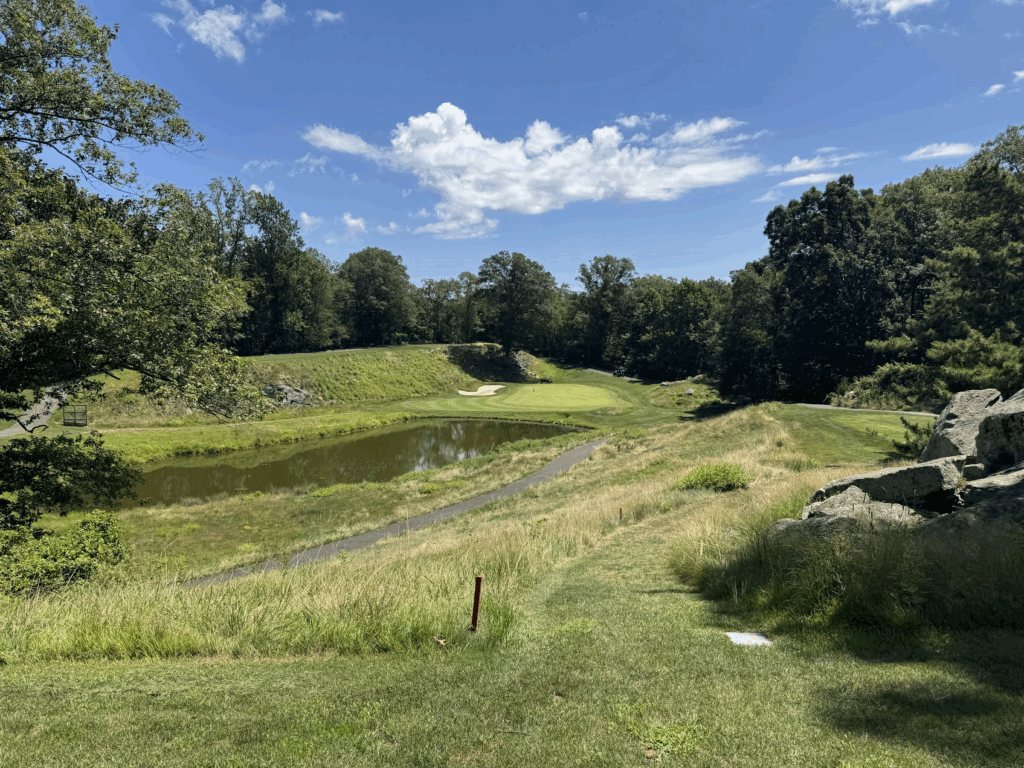
- Pro: The opening loop (1–6) is a classic Tull showcase of terrain use. Hole 5 is a standout: a heroic par 3 over water, framed by wildflowers and guarded by intelligent pot bunkering. The walk here feels immersive and well-paced. Hole 1’s twin greens, sitting adjacent and framed by gentle slopes, immediately signal a creative and non-formulaic layout. The transitions on the back nine, especially from 10 through 13, are exceptionally efficient, encouraging a brisk pace.
- Con + Fix: The routing from Hole 1 green to Hole 2 tee runs counterintuitively against flow and risks player confusion. Similarly, Hole 6 to 7 involves a disjointed shift with blind crossings that could use clearer signage or a small footpath extension. Better directional markings—or reorienting the Hole 2 tee slightly downhill toward the cart path—would solve the issue without altering hole integrity.
Strategic Test
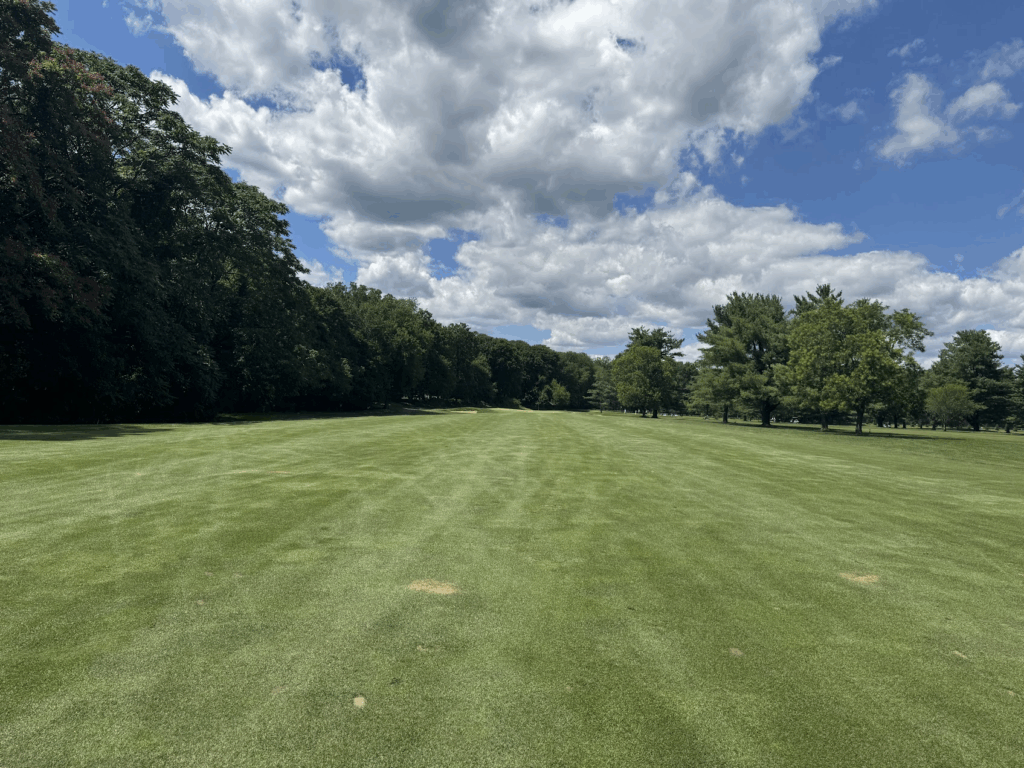
Tull’s routing at Oak Hills encourages thoughtful decision-making, especially where elevation and bunkering create angles of consequence. Shot values differ dramatically between holes, and many fairways narrow or bend at key landing areas. The mix of doglegs, blind shots, and elevation shifts keeps players calculating from tee to green. This is not a place where driver is always the right choice—club selection must account for elevation, fairway cant, and green orientation.
- Pro: Hole 7 is a wonderfully complex short par 4 with a blind tee shot over a rise. Longer hitters might attempt a draw over the left corner to catch the downslope, leaving only a wedge in. Conservative players may aim center-right with a 3-wood or long iron, staying short of hidden bunkers but leaving a longer uphill second to a green that slopes back to front. The elevation change on approach requires precise distance control—miss long and you’re left with a delicate downhill chip. The green itself is angled slightly left-to-right, favoring those who approach from the left half of the fairway. Tull brilliantly uses this hole to contrast decision-making philosophies: take on the blind risk for position or play to safety and accept a tougher angle. Adding to the complexity, players can’t see the pin from the tee or even their own landing zone, forcing commitment to a shape and strategy without visual reassurance. This is strategic golf of the highest order—multi-dimensional, site-integrated, and evolving with repeat play.
- Con + Fix: Hole 3 offers little in the way of strategic tension—a straight 147-yard par 3 with minimal shaping or hazard intrigue. Consider reshaping the green with a subtle diagonal axis and adding a central bunker front-right to create club selection anxiety and vary pin accessibility. Elevating the rear of the green slightly would also punish long misses and reward a high-spinning shot with more precision.
Playability
Oak Hills offers a fair test to mid- and high-handicappers, especially on the back nine where landing zones widen and green entrances allow for run-up shots. The course’s length is moderate, and most forced carries are avoidable with smart play. However, a few tee shots on the front can be penal to players without carry distance or shaping ability. There are minimal awkward lies in fairways, and greens generally offer accessible front openings.
- Pro: Hole 14, a 205-yard par 3, is intimidating in yardage but generous in width and green depth. From the forward tees (~135 yards), the hole remains visually dramatic but entirely manageable. Short hitters can chase a ball up the slope, and the wide green accepts low-trajectory approaches. Holes like 10 and 11 also provide clear lines of play without overbearing hazards—ideal for learning or returning players.
- Con + Fix: Hole 9, the 456-yard par 4, is a brute for short hitters even from the front tees. It plays slightly uphill and into prevailing wind, with a narrow approach guarded by bunkers. Introducing a fairway cut 60–80 yards from the green and repositioning a forward tee to reduce total length to 390–400 yards would add playability without compromising the hole’s stature. Additionally, a small bailout apron right of the green could offer recovery options for those laying up.
Atmosphere
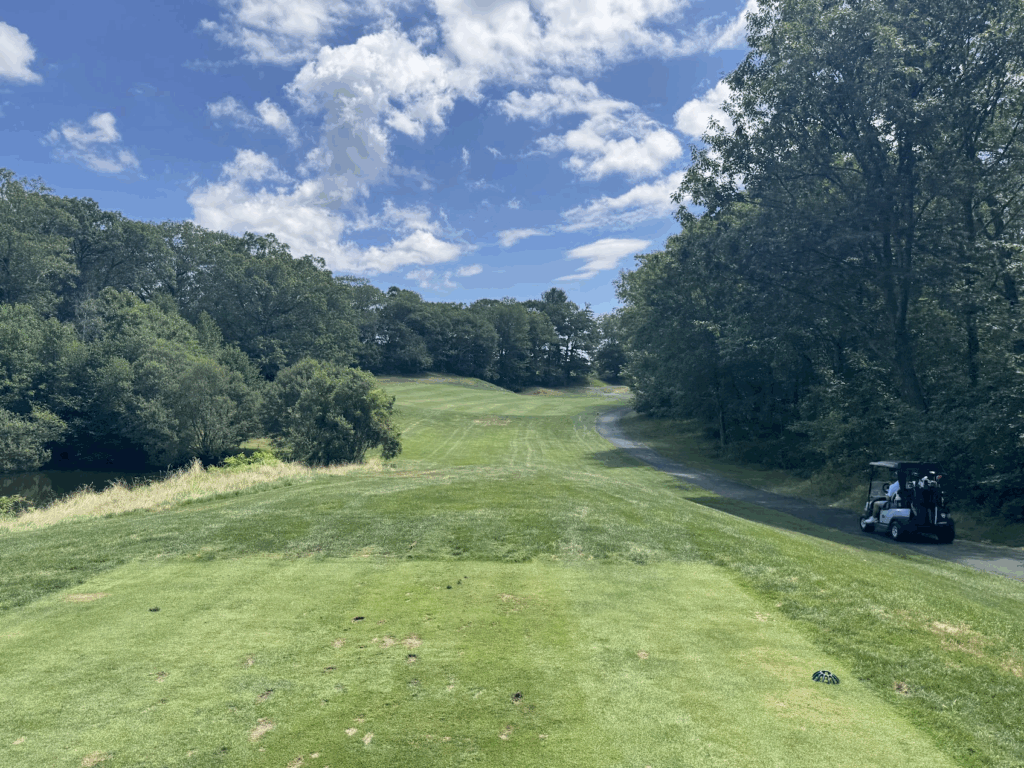
Oak Hills exudes local charm with a mix of natural tranquility and municipal bustle. The course is framed by mature woodland and dotted with wildflowers that soften the visual edges. While a few holes back up against community infrastructure, most of the property feels secluded enough to create moments of peaceful immersion. I particularly love the pond next to the clubhouse—it adds serenity to the turn and an anchoring focal point to the property. The wallflowers near the 5th green and again near the 12th tee create unexpected visual rewards.

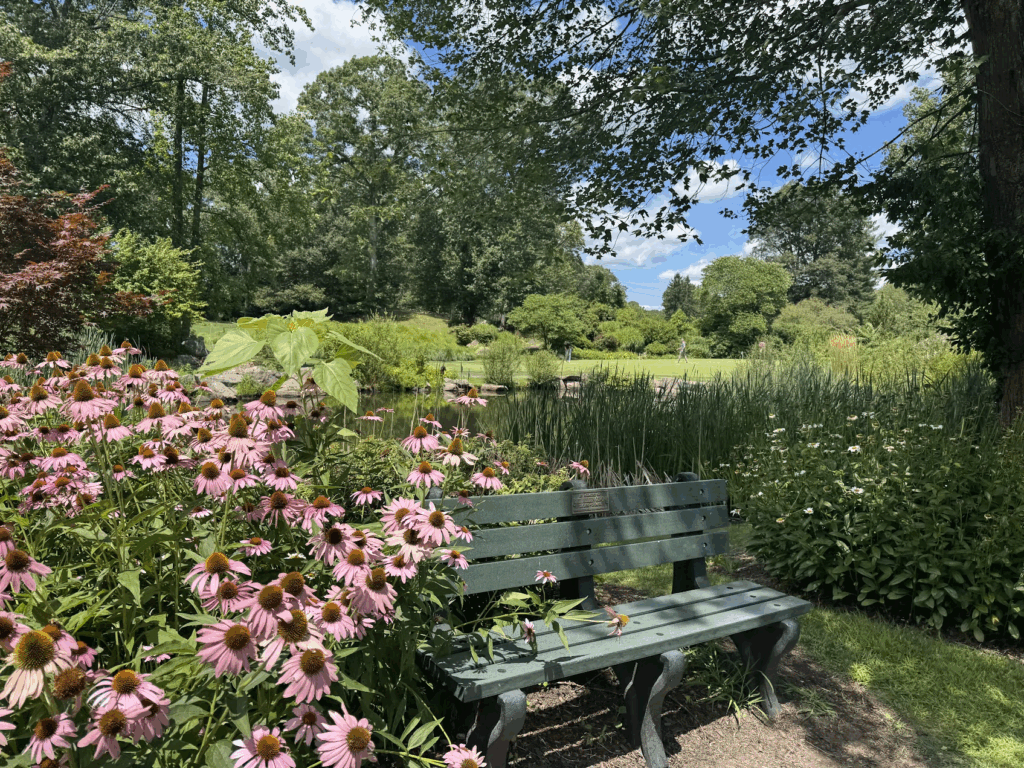
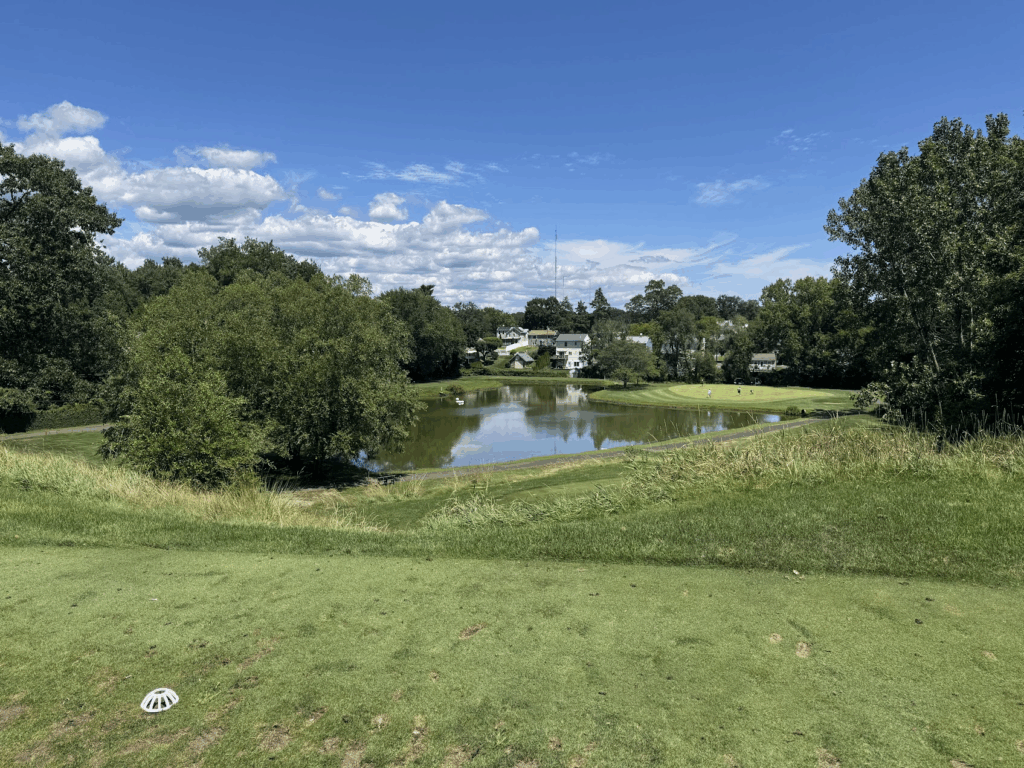
- Pro: Hole 5 is perhaps the most picturesque on the course. The pond crossing is substantial but fair, with pot bunkers sculpting the green surround and colorful wallflowers lining the water’s edge. It’s a visual and emotional crescendo early in the round. As players ascend to the tee box, the water feature unveils itself through a natural clearing in the trees. The soundscape shifts to birds and breeze, and the view across the pond is punctuated by the artful contrast of dark pines, glinting water, and tight fairway. Even the cart path is tastefully routed well off to the right, leaving the composition uncluttered. It’s a moment that transcends municipal expectations and feels worthy of a private sanctuary.
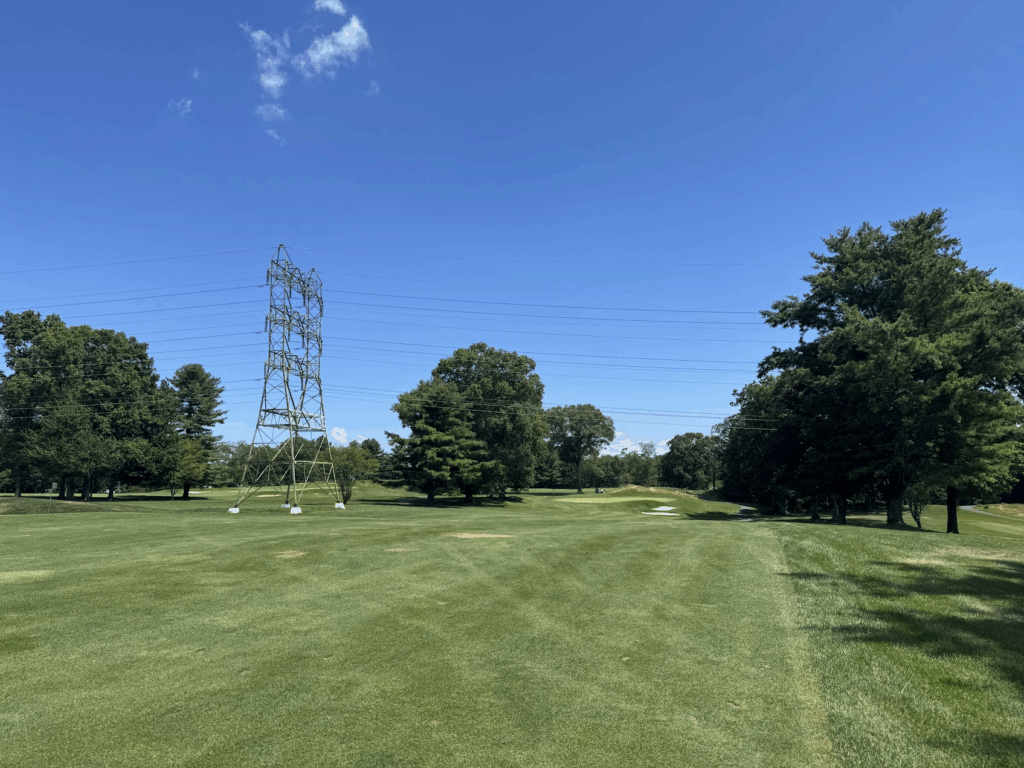
- Con + Fix: The atmosphere is slightly marred by power lines that crisscross parts of the property, breaking immersion. Additionally, many homes are visible from multiple vantage points—especially on the back nine—which can detract from the otherwise naturalistic vibe. More aggressive screening with tree planting or subtle mounding could restore a sense of seclusion. The corridor behind Hole 13 is particularly exposed and could benefit from environmental buffers.
Final Word
Oak Hills Park delivers a strong municipal golf experience shaped by the clever mind and feet of Alfred H. Tull. The course rewards patience, positional awareness, and creative recovery play. I especially admired how the routing evolves from tight, tree-lined corridors into a more expressive and scoreable back nine—mirroring the rhythm of a symphony. The wildflowers, heroic carries, and elevation shifts on the front are emotionally resonant, while the back allows players to chase scores and swing more freely.
Compared to other public options nearby—Sterling Farms in Stamford or Longshore in Westport—Oak Hills offers a more rugged, compact, and cerebral test. Where Sterling Farms feels flatter and more open, Oak Hills feels denser and more elemental. Where Longshore leans toward wide corridors and water, Oak Hills leans into elevation and strategic bunkering. Tull’s influence is particularly noteworthy—his ability to route intuitively without topographic maps lends the course a certain organic inevitability.
This is a course I will absolutely return to—not for the scorecard, but for the rhythm, the solitude between tree lines, and the satisfying mental puzzle Tull has left behind. It’s a course that improves with each visit, not because it reveals new features, but because it reasserts the value of old ones: the right line off the tee, the depth of a green, and the humility of playing one’s game instead of someone else’s.

David is an avid golfer who loves walking Connecticut’s courses and playing alongside his family. He’s passionate about golf course architecture and one day hopes to play at Pebble Beach.







Made a hole in 1 on hole 5 many years ago. One of the best days of my life