


Fox Hopyard Golf Club is a private par-71 course measuring approximately 6,912 yards from the tips. The course was originally designed in 2001 by Roger Rulewich and is located in East Haddam, Connecticut.
Sprawling across 530 acres of quintessential New England terrain, Fox Hopyard presents a masterful study in routing through diverse topography that includes rolling hills, dense forest, wetlands, and dramatic rock outcroppings. Rulewich’s design philosophy shines through in every corridor, emphasizing precision and strategic thinking over brute force—a refreshing departure from the bomb-and-gouge mentality that plagues modern championship courses. The routing seamlessly weaves through varied ecosystems, creating what feels like multiple courses within one round, from mountain-style elevated tees to lowland marsh crossings. This is a thinking golfer’s paradise that rewards course management and punishes the careless, making it ideal for players who appreciate cerebral shot-making over pure distance.
Walkability
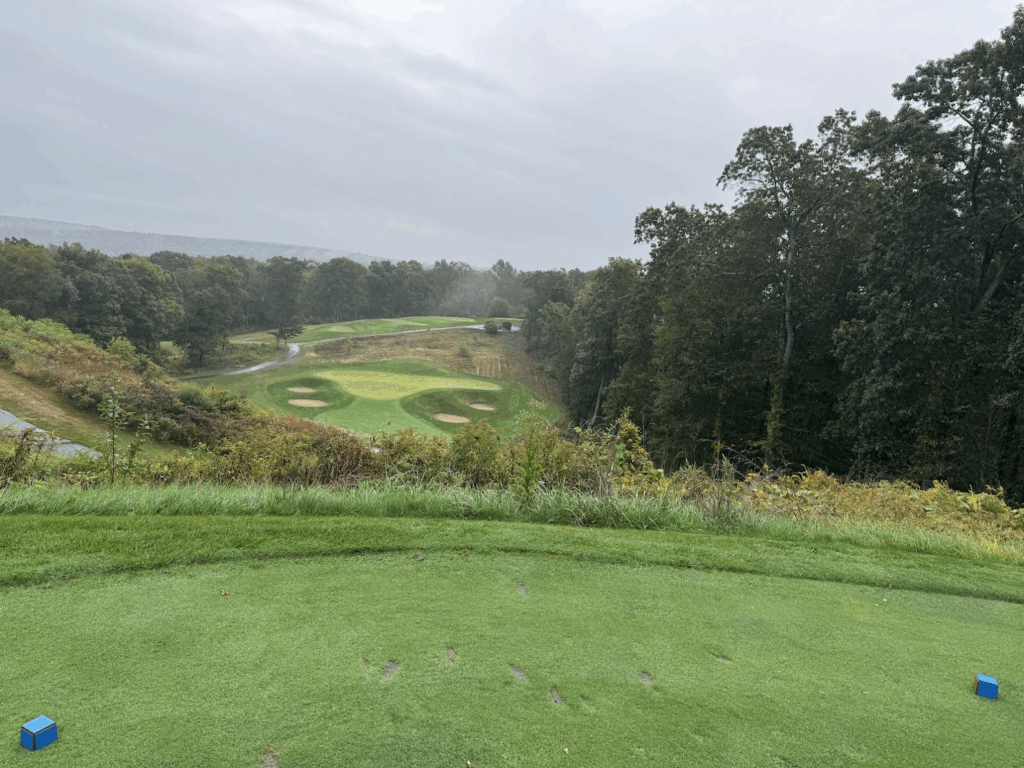
Fox Hopyard’s 530-acre footprint presents an invigorating walking experience that, while physically demanding, rewards ambitious pedestrians with an intimate journey through some of New England’s most spectacular golf terrain. The dramatic elevation changes that define the course’s character—most notably the breathtaking 90-foot plunge on the signature 4th hole—create a dynamic vertical adventure that transforms a simple round of golf into a hiking expedition through diverse ecosystems. The front nine’s series of climbs on holes 2 and 3, where the par-4 second plays significantly longer than its 383-yard measurement due to the sustained uphill grade, followed immediately by the similarly elevated par-5 third, provides an exhilarating sense of accomplishment as players conquer the property’s most challenging terrain.
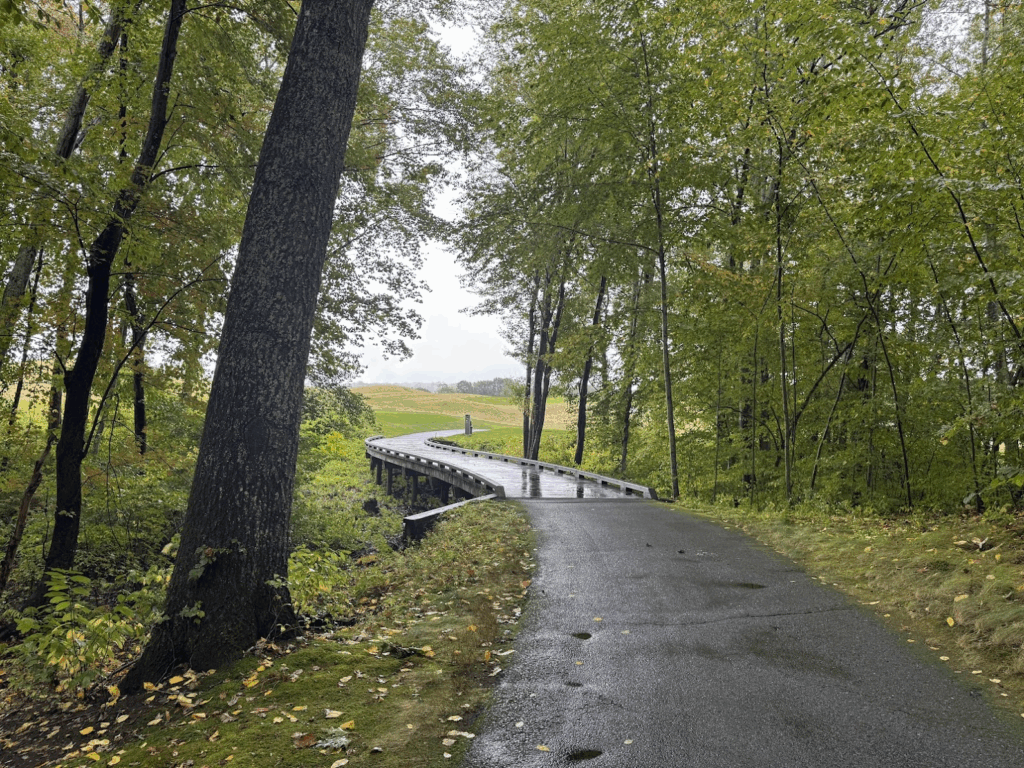
What truly elevates the walking experience are the course’s thoughtfully crafted bridges and passageways that guide players through the natural landscape with both functionality and aesthetic beauty. These lovely structural elements—ranging from rustic wooden bridges spanning babbling brooks to stone pathways navigating wetland areas—transform potentially challenging transitions into memorable moments of connection with the property’s natural features. The routing efficiency showcases Rulewich’s mastery in creating flowing corridors that feel like discovered paths rather than imposed walkways. Green-to-tee transitions, while involving substantial elevation changes, unfold as a series of scenic reveals, with the walk from the elevated 4th green down to the 5th tee offering particularly stunning vistas of the surrounding Connecticut River valley.
The course’s integration with wetlands and natural rock formations creates walking routes that follow natural contours, turning what could be mere functional transitions into mini-adventures through varied terrain. The back nine offers more manageable elevation changes while maintaining the property’s scenic character, providing welcome relief after the front nine’s mountain-style challenges. Even when cart path restrictions during wet conditions require additional walking, the well-maintained bridges and pathways ensure safe, comfortable passage while enhancing the overall experience of moving through this remarkable landscape. For those who choose to walk Fox Hopyard, each step reveals new perspectives on one of Connecticut’s most thoughtfully designed golf environments.
Strategic Test
Fox Hopyard excels in presenting genuine strategic dilemmas rather than artificial hazard placement, with nearly every hole offering meaningful choices that reward both bold and conservative play styles. The course’s design philosophy centers on what Rulewich himself describes as “precision over power,” creating scenarios where angle of approach matters as much as distance. Multiple corridor widths and varied green complexes ensure that different handicap levels can find appropriate risk-reward ratios, while the prevalence of forced carries—particularly over wetlands—adds consequence to poor execution without becoming unfair.
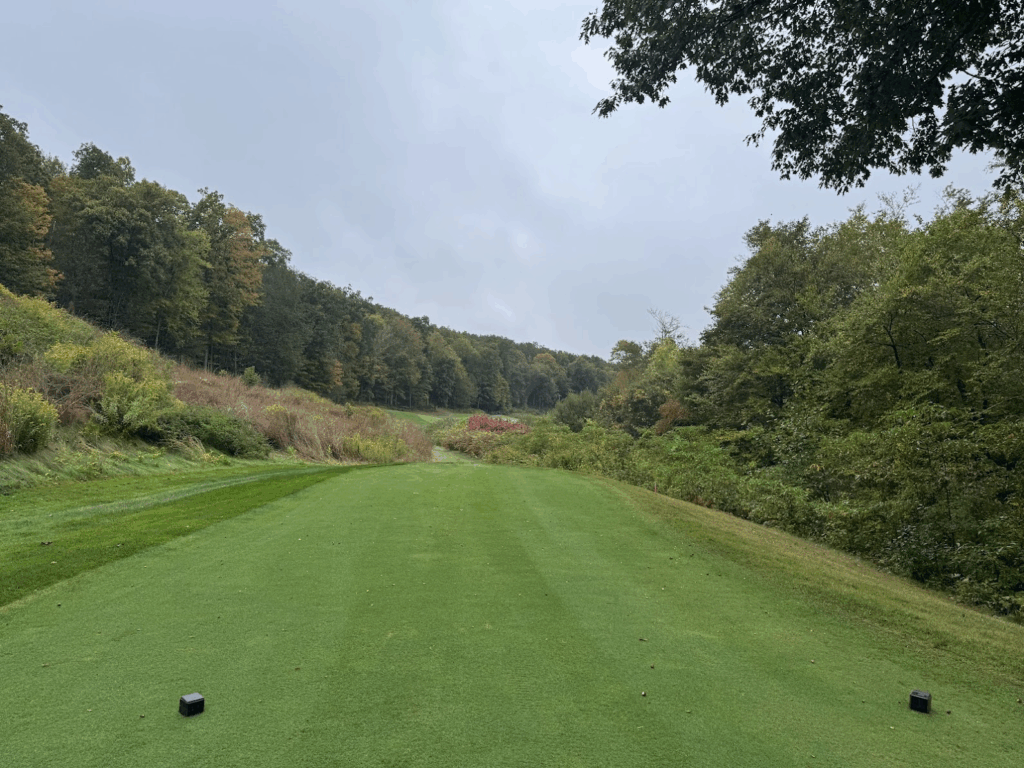
Hole 12 exemplifies the course’s strategic depth, presenting players from the championship tees with a beautiful risk-reward proposition involving a carry over dense, autumn-foliaged wetlands. Conservative players can bail out to the right side of the fairway, accepting a longer approach but eliminating the hazard from play entirely. This strategy typically leaves a 7 or 8-iron to a relatively open green complex. However, bold players who challenge the wetlands with a left-center tee shot—requiring precise distance control and perhaps a controlled draw to follow the fairway’s natural curve—are rewarded with a much more favorable approach angle and a shorter club, often just a wedge or 9-iron. The punishment for missing left is severe (penalty stroke and difficult recovery), while missing right merely leaves a longer second shot from a less advantageous position.
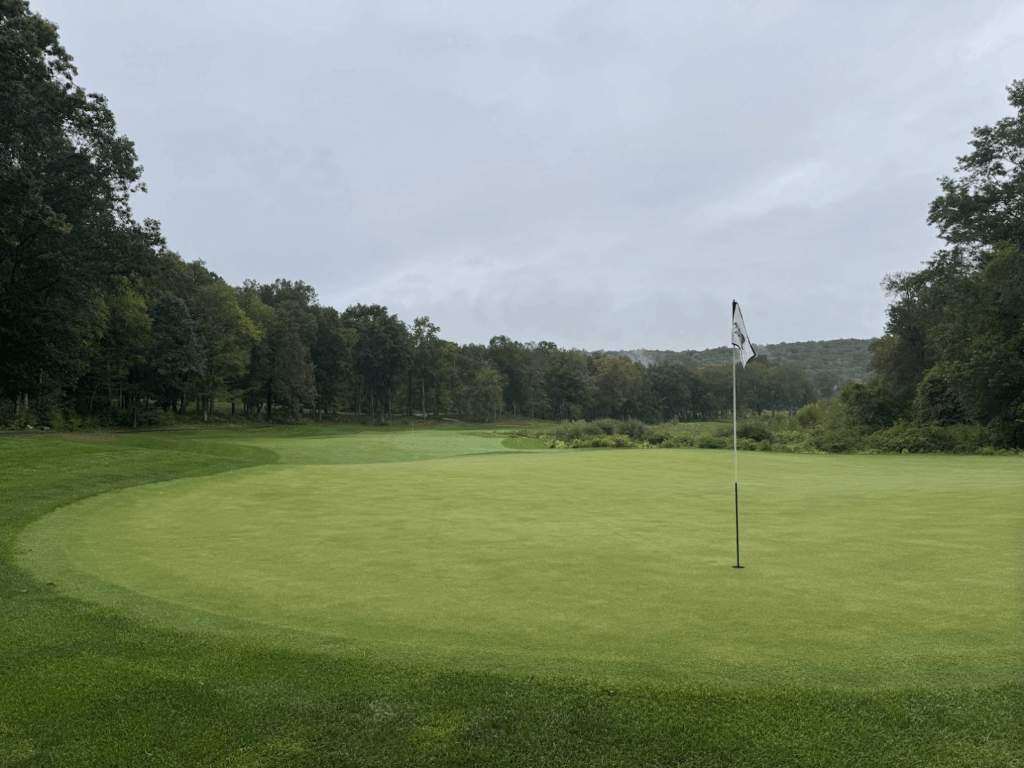
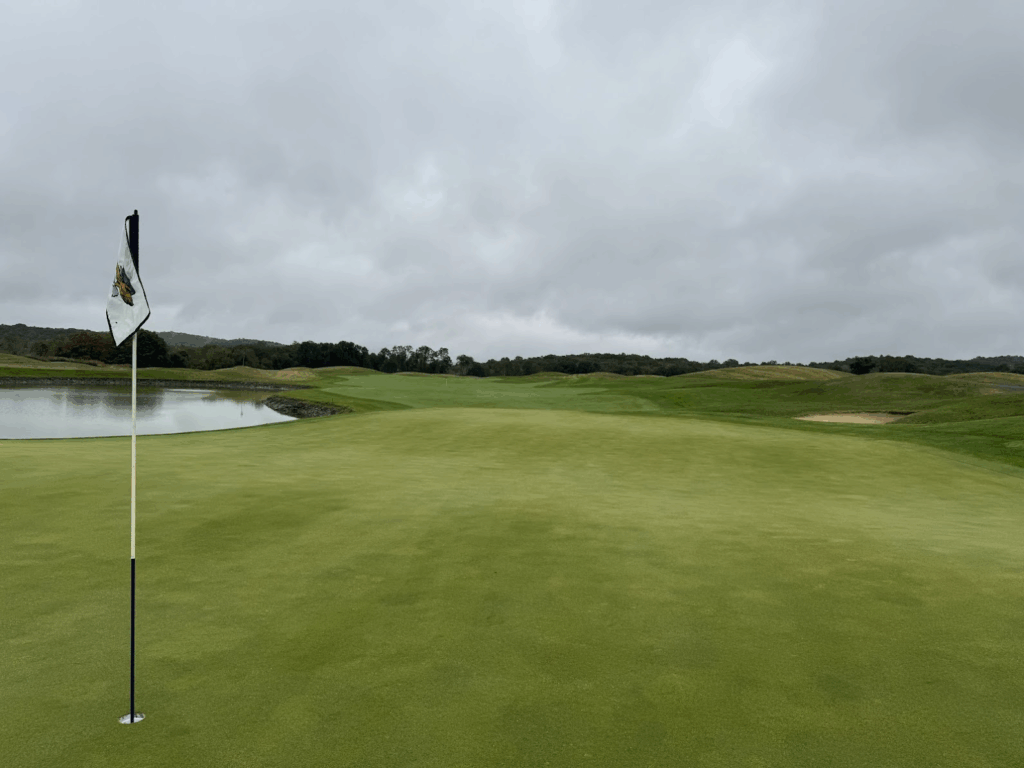
The strategic complexity deepens on approach shots, where green contours and pin positions create secondary decisions. Hole 5’s massive, undulating putting surface presents multiple target areas depending on flag placement, with approaches that miss in the wrong sections leaving virtually impossible two-putt scenarios. The course consistently rewards players who think two shots ahead, particularly around the green complexes where recovery shots require as much strategic consideration as full swings. This emphasis on sequential decision-making, combined with the course’s varied elevation changes and natural hazards, creates a strategic test that remains engaging across multiple rounds rather than becoming predictably repetitive.
Playability
Fox Hopyard brilliantly demonstrates how championship-caliber design can embrace rather than exclude players of varying abilities, with its 74.1/136 rating from the tips telling only part of the story. The course features exceptionally well-conceived multiple tee options on most holes, with forward tees positioned to provide optimal angles and distances that create genuine strategic interest rather than simply shortened versions of the same challenges. This design philosophy reaches its pinnacle on hole 8, where the red tees are positioned just 78 yards from a green protected by two bunkers and a water hazard. Far from creating a token short hole, this setup provides shorter hitters with a perfectly scaled strategic challenge that mirrors the decision-making faced by longer players—club selection becomes genuinely critical as players must carry both hazards while navigating a green-side bunker complex that rewards precision over power.
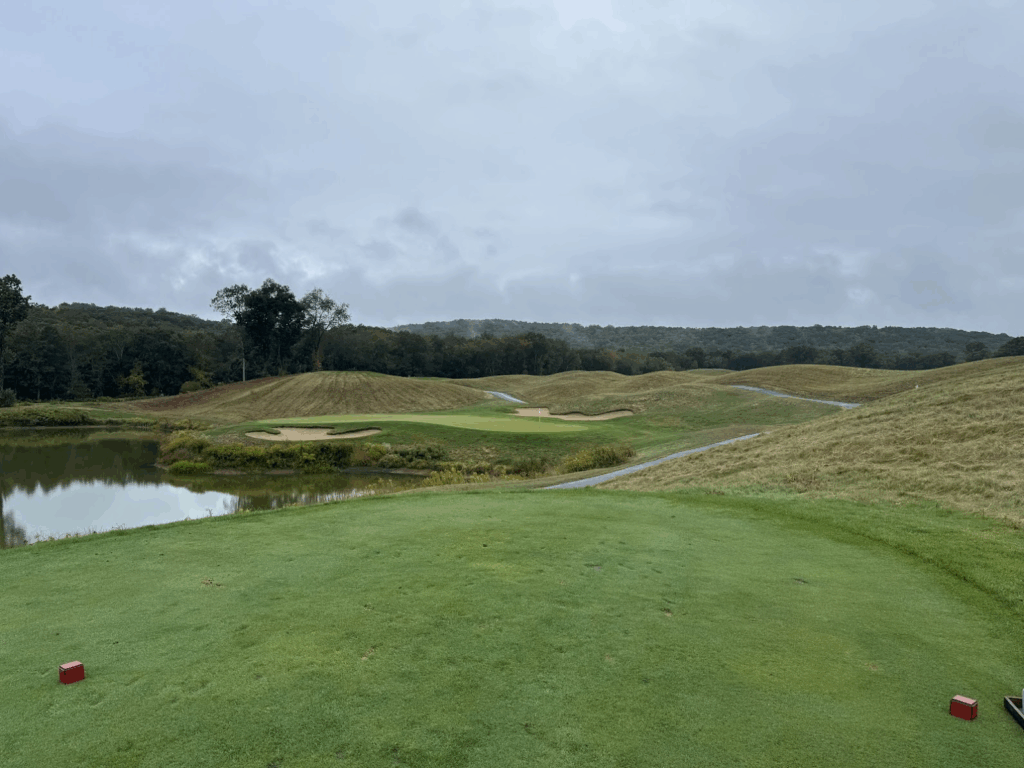
The course’s fundamental emphasis on precision over power creates a welcoming environment for higher-handicap players who understand course management, even if they lack significant distance. Fairway corridors, while often dramatically framed by trees and natural features, provide generous landing areas for those who keep their tee shots in play, and the strategic hazard placement consistently offers multiple routes of attack depending on player capability and risk tolerance. Forced carries, rather than feeling punitive, are scaled appropriately from each tee position and often provide thrilling moments of accomplishment when successfully navigated—particularly on holes like the 2nd, where conquering the wetland crossing from any tee creates a genuine sense of achievement.
The sophisticated green complexes, while featuring significant undulations and slopes that reward precision, are maintained at speeds that emphasize strategic putting over pure difficulty. This approach allows players of all abilities to appreciate the subtleties of Rulewich’s green designs without being overwhelmed by lightning-fast surfaces that punish even well-struck putts. The thoughtful pin placement options and absence of artificially penal features mean that patient, strategic play consistently yields rewarding results for players who select appropriate tees and manage their expectations realistically. Fox Hopyard succeeds brilliantly in the challenging balance of providing a stern test for accomplished players while remaining genuinely enjoyable for those still developing their games.

Atmosphere
Fox Hopyard achieves a rare atmospheric consistency across its diverse terrain, creating an immersive New England golf experience that feels both wild and refined. The course’s 530-acre canvas encompasses virtually every landscape element that defines the region—from dense hardwood forests and meandering brooks to expansive wetlands and dramatic granite outcroppings—yet Rulewich’s routing ensures these elements feel cohesive rather than disparate. The overall effect is of a course that grew organically from its surroundings rather than being imposed upon them, with each hole corridor feeling like a natural clearing discovered rather than carved from the landscape.
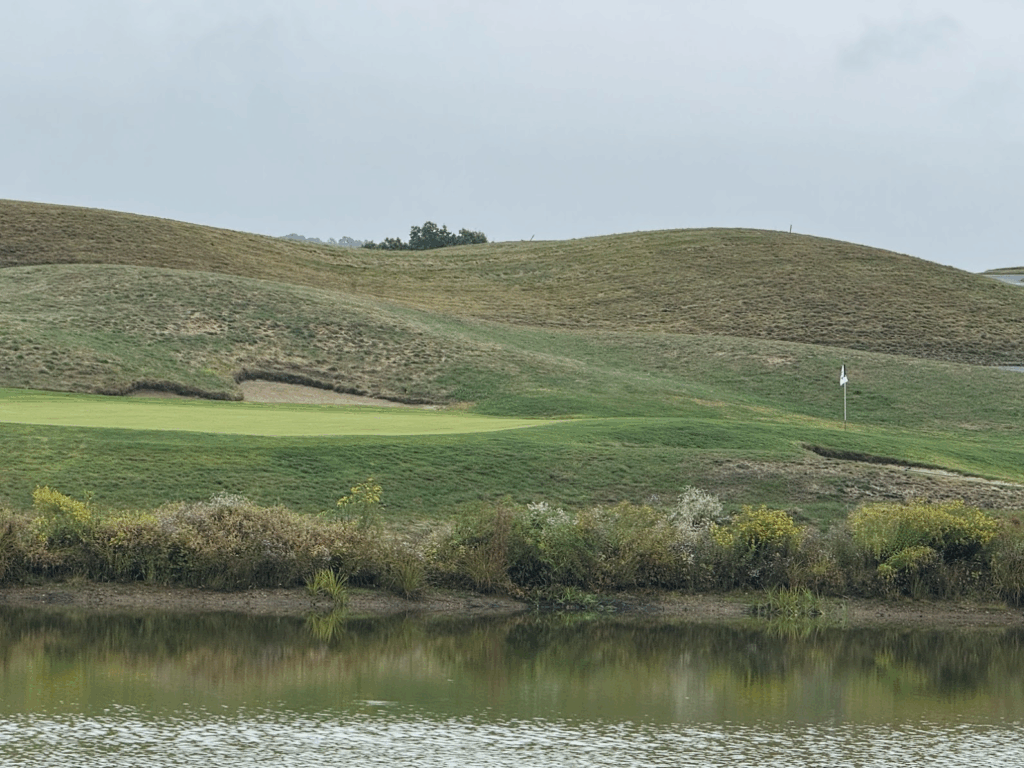
The visual progression throughout the round maintains consistent excellence, with particularly stunning moments where the routing takes advantage of elevation changes to create dramatic reveals. Hole 17 exemplifies this approach, offering serene water views that provide both visual beauty and strategic complexity as players navigate the final stretch toward the clubhouse. The course’s integration with Devil’s Hopyard State Park creates a sense of playing through protected wilderness, with the sounds of running water and dense forest providing a natural soundtrack that enhances the experience of escaping into the New England countryside.
Hole 4 stands as the course’s atmospheric masterpiece, combining dramatic elevation change with strategic challenge to create an unforgettable golf moment. The 90-foot descent from the elevated tee complex—which resembles a layer cake with its multiple tee options—provides a breathtaking panorama of the surrounding landscape while presenting one of Connecticut’s most visually striking golf shots. The green, nestled in a natural amphitheater and protected by four strategically placed bunkers, creates a target that feels both inviting and intimidating. This hole encapsulates Fox Hopyard’s ability to marry natural beauty with thoughtful design, creating moments that linger in memory long after the round concludes. The transition from this dramatic downhill experience to the subsequent uphill challenges demonstrates the course’s dynamic range and its commitment to providing varied emotional experiences throughout the round.
Final Word
Fox Hopyard stands as Roger Rulewich’s crowning design achievement, masterfully balancing world-class strategic complexity with stunning natural beauty and exceptional playability across all skill levels. The course’s recent elevation to private status has enabled meticulous conditioning and refined attention to detail that transforms an already outstanding architectural foundation into a facility that rivals New England’s most prestigious golf destinations. What distinguishes Fox Hopyard from respected regional competitors like Ridgewood Country Club in Danbury or TPC River Highlands in Cromwell is its extraordinary harmony with natural terrain and its sophisticated emphasis on strategic variety over manufactured difficulty. While TPC River Highlands relies on water hazards and forced carries for challenge, Fox Hopyard employs elevation change, natural corridors, and brilliantly conceived green complexes to create a more nuanced and rewarding test of golf skills and decision-making.
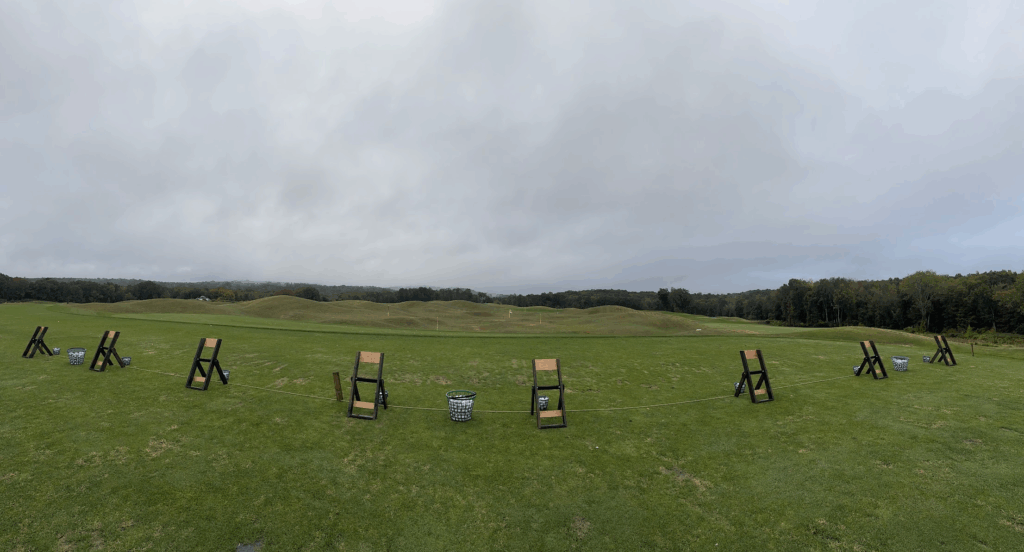
The course’s inspired routing through Connecticut’s diverse ecosystems creates what feels like a curated journey through multiple distinct golf experiences, from the exhilarating mountain-style elevated tees of the opening stretch to the contemplative lowland wetland crossings that define the middle portion of the round. This remarkable variety, enhanced by Rulewich’s unwavering commitment to precision over power, ensures that Fox Hopyard delivers fresh discoveries and renewed challenges across countless rounds while consistently rewarding thoughtful course management and strategic thinking. The exemplary attention to detail—particularly evident in areas like the inclusive design of hole 8’s red tees and the lovely bridges and pathways throughout—demonstrates a rare commitment to providing exceptional experiences for every golfer rather than simply creating an elite test that excludes average players. Fox Hopyard achieves that most elusive goal in championship golf design: a course that thoroughly challenges accomplished players while genuinely welcoming and rewarding those who approach it within their capabilities, creating memorable experiences that transcend mere scorekeeping.

David is an avid golfer who loves walking Connecticut’s courses and playing alongside his family. He’s passionate about golf course architecture and one day hopes to play at Pebble Beach.







Beautiful course hole 4 was my favorite