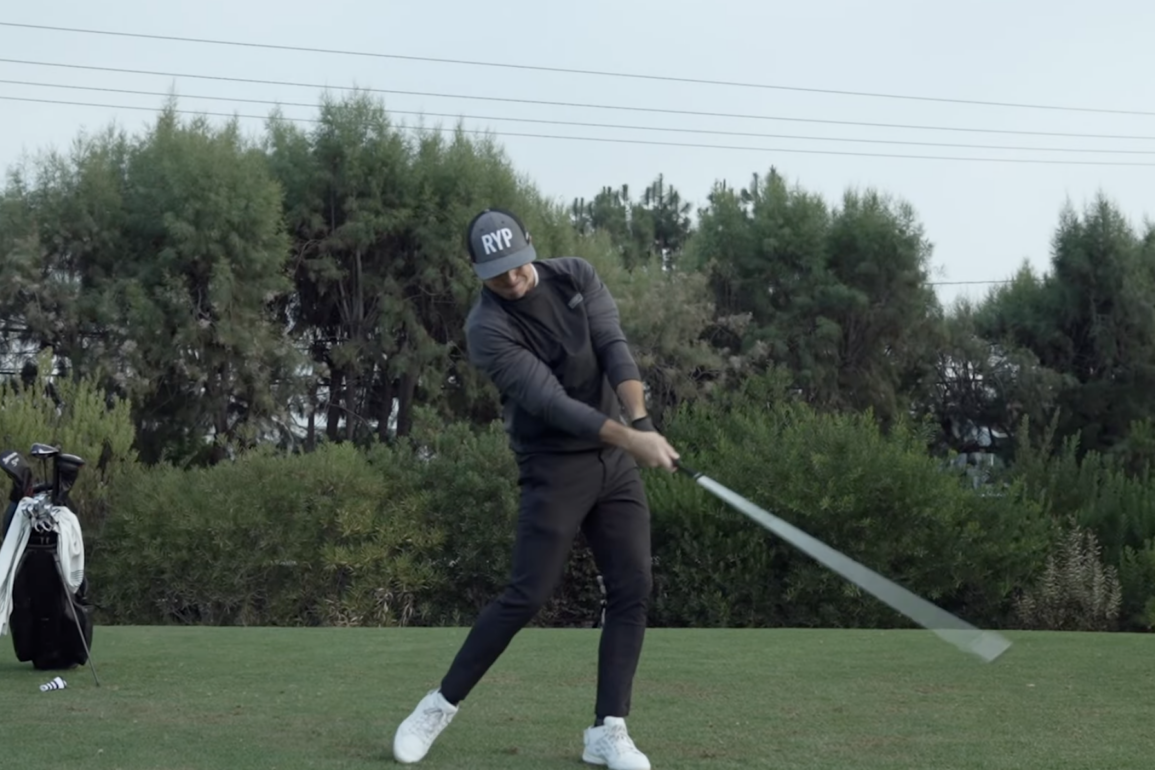
I bought a Rypstick for $199. After using it for six weeks alongside the HH-GOLF Speed Trainer that costs $33, I can tell you with complete certainty that I wasted $166. This isn’t a rant about getting ripped off—it’s an objective breakdown of what you’re actually paying for when you choose premium speed training equipment, and whether that premium delivers any measurable advantage.
Speed training works. The science is solid, the results are real, and I’ve gained 8 mph of driver swing speed using both systems. But here’s the uncomfortable truth for companies like Rypstick: the training effect is identical regardless of what you spend, because both products are mechanically and functionally the same.
What You’re Actually Buying
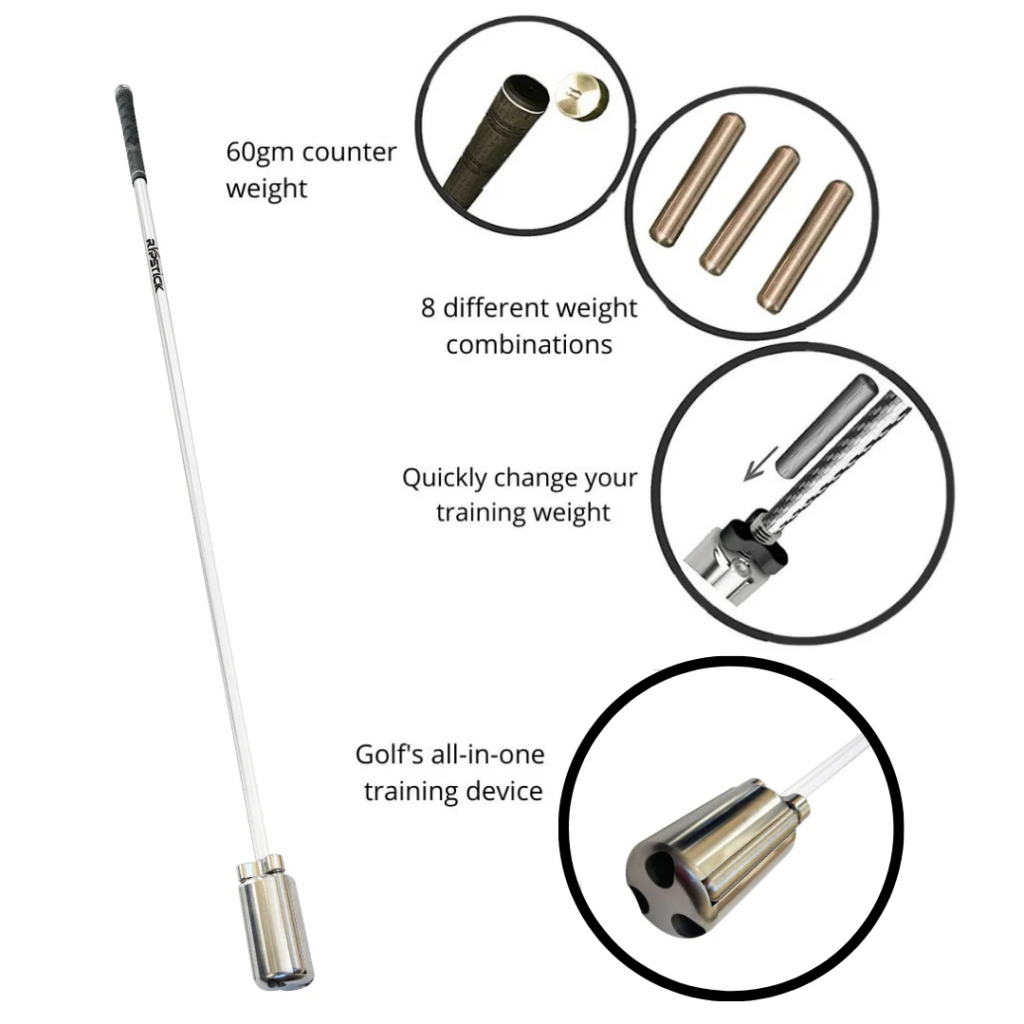
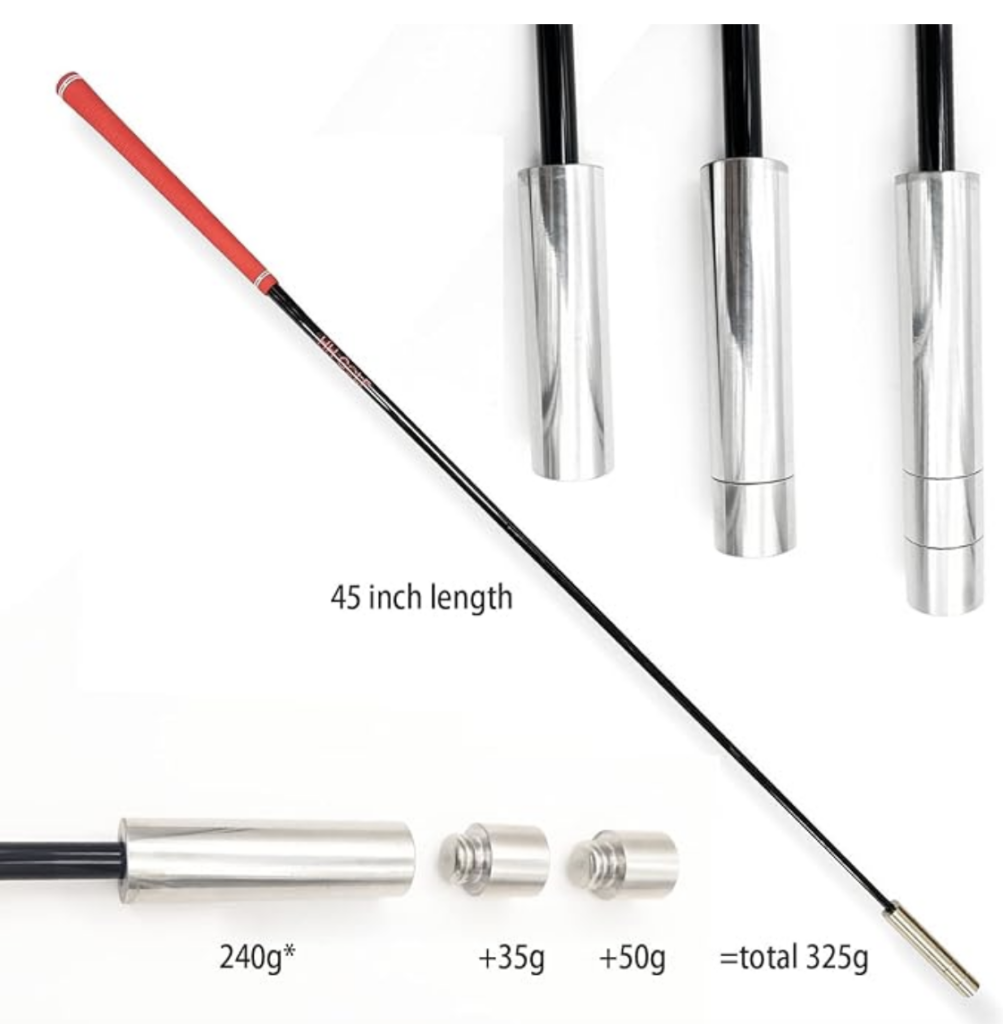
Both the Rypstick and HH-GOLF are single adjustable speed sticks with graphite shafts, rubber grips, and screw-on weight systems. Neither has electronics, sensors, or any sophisticated technology. The entire product is:
| Component | Rypstick | HH-GOLF |
|---|---|---|
| Shaft | Graphite | Graphite |
| Grip | Rubber | Rubber |
| Weight system | Screw-on discs | Screw-on discs |
| Weight range | 270g, 300g, 330g, 360g (420g w/ counterweight) | 240g, 275g, 325g |
| Adjustability | One stick, swap weights | One stick, swap weights |
| Electronics | None | None |
| App dependency | No (app is free) | No (use any app) |
The core design is identical. You’re swinging a weighted shaft that you can make lighter or heavier by adding or removing screw-on weight discs. The Rypstick offers 5 weight configurations (including the optional counterweight), while the HH-GOLF offers 3. Both use the same training methodology: swing light for speed, swing heavy for strength, alternate to force adaptation.
The Real Manufacturing Cost
Let’s break down what these products actually cost to manufacture, because this is where the pricing disconnect becomes obvious. I’ve dabbled in sourcing / product development, and the component costs for speed sticks are straightforward:
Rypstick Manufacturing Cost (estimated):
- Graphite shaft blank: $8-12 (bulk pricing for mid-grade graphite)
- Rubber grip: $1-2 (standard compound grip)
- Weight head assembly with threading: $4-6 (machined aluminum or steel)
- Three weight discs (brass or steel): $3-5
- Optional counterweight: $2-3
- Packaging: $2-3
- Assembly labor: $2-3 Total: $22-34 per unit
HH-GOLF Manufacturing Cost (estimated):
- Graphite shaft blank: $6-10 (similar quality, possibly lower-tier supplier)
- Rubber grip: $1-2
- Weight head assembly: $3-5
- Two weight discs (304 stainless): $2-3
- Packaging: $1-2
- Assembly labor: $1-2 Total: $14-24 per unit
| System | Est. Manufacturing Cost | Retail Price | Markup |
|---|---|---|---|
| Rypstick | $22-34 | $199 | 585-904% |
| HH-GOLF | $14-24 | $33 | 138-236% |
Both companies are making profit, as they should. But Rypstick’s markup is 4-5x higher than what would typically be considered reasonable for a product with no sophisticated technology, no ongoing software costs, and no R&D amortization beyond the initial design (which was completed years ago and has been recouped across thousands of units sold).
The HH-GOLF markup is standard for a consumer product that needs to cover manufacturing, distribution through Amazon, marketing, and profit margins. The Rypstick markup suggests they’re either spending massive amounts on marketing and Tour pro endorsements, or they’re simply charging what the market will bear because golfers have been conditioned to accept premium pricing.
The App Offers Features, But Not $166 Worth
Rypstick’s primary justification for the price premium is their training app, which offers structured workouts, progress tracking, and instructional videos from Dr. Luke Benoit. Let me be specific about what the app actually includes, because this is where Rypstick makes their value argument:
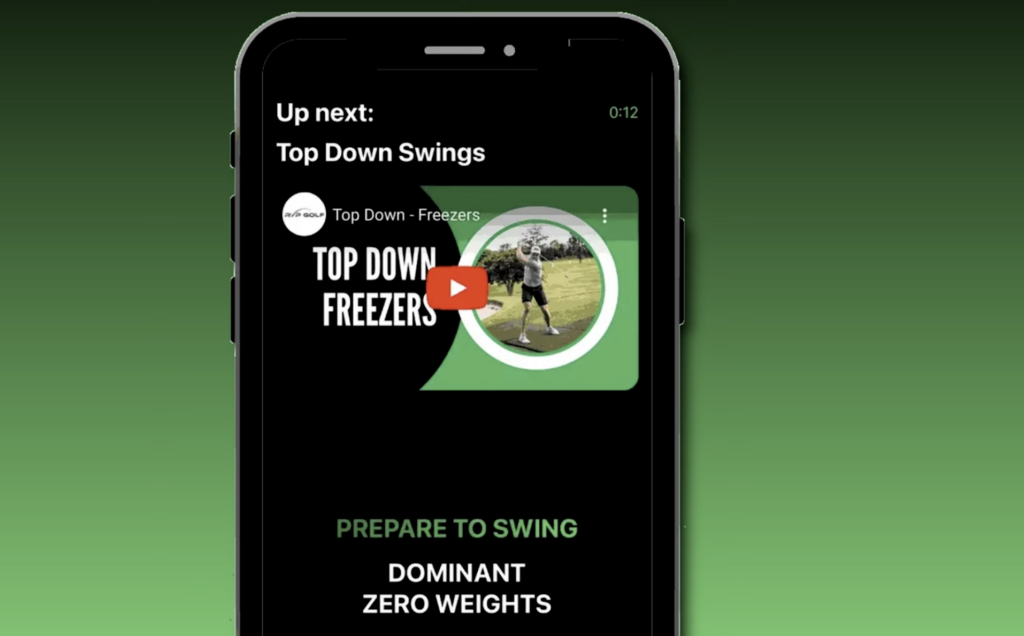
Rypstick App Features:
Training Protocols (The Core of What You’re Paying For):
- Level 1 Protocol: 3 swings per weight (270g, 300g, 330g, 360g), alternating dominant and non-dominant hand. Specifically: 3 swings right-handed with 270g, 3 swings left-handed with 270g, rest 60 seconds. Move to 300g, repeat. Continue through all weights. Total: 24 swings per session, roughly 12 minutes including rest. Designed for weeks 1-3 of training.
- Level 2 Protocol: Same volume (24 swings) but with emphasis on maximum effort and tempo cues. The app specifically tells you “slow on backswing, explosive through the ball” with a metronome counting 1-2-3 on the way back. Adds mental focus on “feeling fast” rather than swinging hard. Designed for weeks 4-8.
- Level 3 Protocol: Increases volume to 5 swings per weight (40 swings total), with 90-second rest periods. Introduces “step drills” where you start with feet together and step into the swing to engage lower body. Duration increases to 18-20 minutes per session. Designed for weeks 9+.
- Maintenance Protocol: 2 sessions per week instead of 3, with 3 swings per weight but only using two weights (270g and 360g). Takes 8-10 minutes. For maintaining speed gains during competitive season.
- Pre-Round Warmup: 2 swings per weight, dominant hand only, ascending through all weights. Takes 3-4 minutes. Designed to activate fast-twitch fibers before teeing off.
Built-in App Features:
- Automatic rest timers that beep when it’s time for next set
- Swing speed tracker where you manually enter your radar measurements
- Progress graphs showing speed trends over 4-week blocks
- Form tip videos (20+ videos, 2-5 minutes each) covering posture, grip pressure, sequencing
- Drill library with variations: kneeling swings, seated swings, “whoosh” drills without the stick
One-Time Services Included:
- Free swing video analysis: Submit 3-5 swings on video, receive written feedback within 48 hours analyzing sequencing, tempo, and areas for speed improvement
- Access to private Facebook group where Dr. Benoit’s team answers training questions
On paper, this is more comprehensive than I expected. The app is well-designed, the protocols are clearly explained, and the automatic timers are convenient. But here’s the problem: none of this is proprietary information, and the convenience features can be replicated for free.
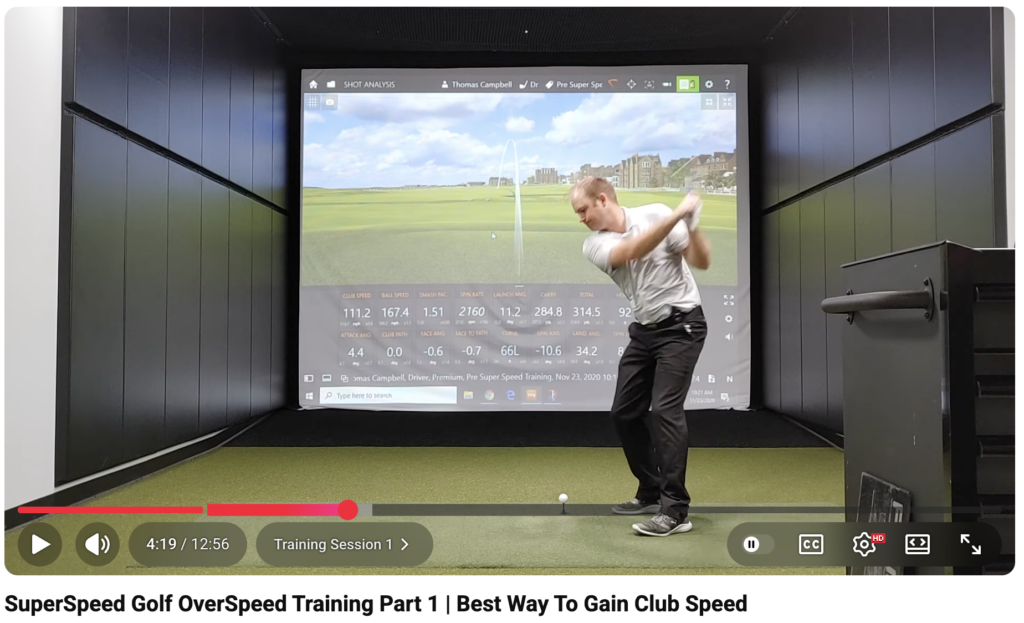
What You Get Free on YouTube:
SuperSpeed Golf (Rypstick’s main competitor) has published their entire Level 1-3 protocol structure on YouTube. Their exact protocol, which is publicly available and used by thousands of golfers:
- SuperSpeed Level 1: Light stick: 3 swings dominant hand + 3 swings non-dominant hand. Medium stick: 3 swings dominant + 3 swings non-dominant. Heavy stick: 3 swings dominant + 3 swings non-dominant. Rest 45-60 seconds between weight changes. Total: 18 swings, 10-12 minutes per session, 3x per week.
This is functionally identical to Rypstick’s Level 1 protocol—the only difference is Rypstick adds one more weight (360g) for 6 additional swings. The core methodology is exactly the same.
- SuperSpeed Level 2: Same structure with emphasis on maximum effort swings and tempo work. They specifically teach “slow and smooth on backswing, explosive through impact”—the exact same tempo cue Rypstick uses.
- SuperSpeed Level 3: Increases to 5 swings per weight with longer rest (90 seconds) and introduces step drills where you start with feet together and step into the swing. Again, identical to Rypstick’s Level 3 protocol.
The tempo cues, form tips, and drill variations that Rypstick charges $199 to access via their app are all available in free YouTube videos. Search “SuperSpeed Golf protocol” and you’ll find complete workout videos walking through exactly what to do. Me and My Golf, Athletic Motion Golf, and dozens of other instructors have also published free videos explaining overspeed training protocols using the exact same methodology.
The step drills? SuperSpeed has multiple free videos explaining them—start with feet together, step toward target with lead foot as you start downswing, generates lower body power. The kneeling drills? Multiple free tutorials available showing how to swing from your knees to isolate upper body speed and eliminate lower body compensation. The form tips about maintaining posture and sequencing? That’s basic swing instruction available in thousands of free videos from instructors like Clay Ballard, George Gankas, and Monte Scheinblum.
App Feature Alternatives:

| Rypstick App Feature | Free Alternative | Cost |
|---|---|---|
| Rest interval timers | Interval Timer app (iOS/Android) | Free |
| Swing speed tracking | Notes app or Google Sheets | Free |
| Progress graphs | Google Sheets with auto-charting | Free |
| Form tip videos | YouTube (SuperSpeed, AMG, etc.) | Free |
| Drill variations | YouTube search: “speed training drills golf” | Free |
| Swing analysis | Post in /r/golf or GolfWRX forums | Free |
The one genuinely valuable service is the free professional swing analysis from Dr. Benoit’s team. That probably costs Rypstick $20-30 in instructor time per customer who uses it (many don’t). If you got a single online lesson from a teaching pro, you’d pay $50-100 and get the same or better feedback. Building this into every unit’s price means you’re subsidizing everyone else’s swing reviews whether you use the service or not.
The Bottom Line on the App:
The Rypstick app is well-executed and convenient. If it added $20-30 to the product cost, I’d say it’s worth it for the convenience of having everything in one place with automatic timers and clean UI. But it doesn’t add $166 of value when the same information and better alternatives are freely available. You’re paying for packaging and branding, not for access to secret training knowledge.
Build Quality Assessment
After six weeks of using the Rypstick, I can report that it’s a well-built product. The graphite shaft feels solid with no flex issues, the rubber grip is standard compound identical to what’s on my regular clubs, and the weight discs screw on and off smoothly with good threading. The white finish has some minor scuffing from contact with my garage floor, but nothing that affects function. The optional 60g counterweight is a nice feature if you want to train with very heavy resistance (420g total).
Looking at HH-GOLF specifications and the 500+ verified purchase reviews on Amazon, the build quality appears comparable. Users consistently report solid construction, with the main complaints being that weights can loosen if not properly tightened (same issue with any screw-on weight system, including Rypstick) and that the grip may need replacement after heavy use (standard for any rubber grip that costs $5-8 to replace).
The graphite shafts are the same material. The grips are the same compound. The weight attachment mechanism is the same screw-on design. One reviewer who owned both a premium speed stick and the HH-GOLF noted they were “basically the same at 1/4th the price.” Another user reported that after one year of use, despite some cosmetic wear, the HH-GOLF was “still working great, and I truly hit driver about 20-30 yards longer than when I started.”
If the Rypstick cost $50-60 and offered marginally better threading or finish, I could see justifying a small premium. At $199 vs $33, any build quality differences are too minor to matter for training effectiveness.
The Bottom Line
The Rypstick is a good product. It works exactly as advertised, it’s well-built, and it will help you gain swing speed if you use it consistently. I gained 8 mph over six weeks using it, which is in line with what they promise. But after analyzing what you’re actually paying for and comparing it to the HH-GOLF specifications and user reviews, I can’t justify the $166 premium.
The two products are functionally identical where it matters—the training stimulus they provide. Both are adjustable graphite speed sticks with screw-on weights. Both use the same training methodology because there’s only one way to do overspeed training. The protocols in Rypstick’s app are the same protocols available free on YouTube. The build quality differences are minimal and don’t affect performance.
If you value the professional app, the brand name, and having everything packaged together, and $166 is negligible to your budget, buy the Rypstick. You’ll be happy with it because it works. But if you’re looking at this as a value proposition—which training aid gives you the best results per dollar spent—the HH-GOLF delivers the same training effect for $33.
I paid $199 for the Rypstick. If I could go back, I’d have just bought the HH-GOLF, saved $166, and gotten the same swing speed gains using free YouTube protocols. The lesson here isn’t that Rypstick is a bad product—it’s that premium pricing in golf training aids rarely delivers proportional value when the underlying technology is this simple.
Have you tried different speed training systems? What’s your experience with premium vs budget equipment? Drop a comment—I’m genuinely curious if anyone found enough difference to justify the premium?
David is an avid golfer who loves walking Connecticut’s courses and playing alongside his family. He’s passionate about golf course architecture and one day hopes to play at Pebble Beach.