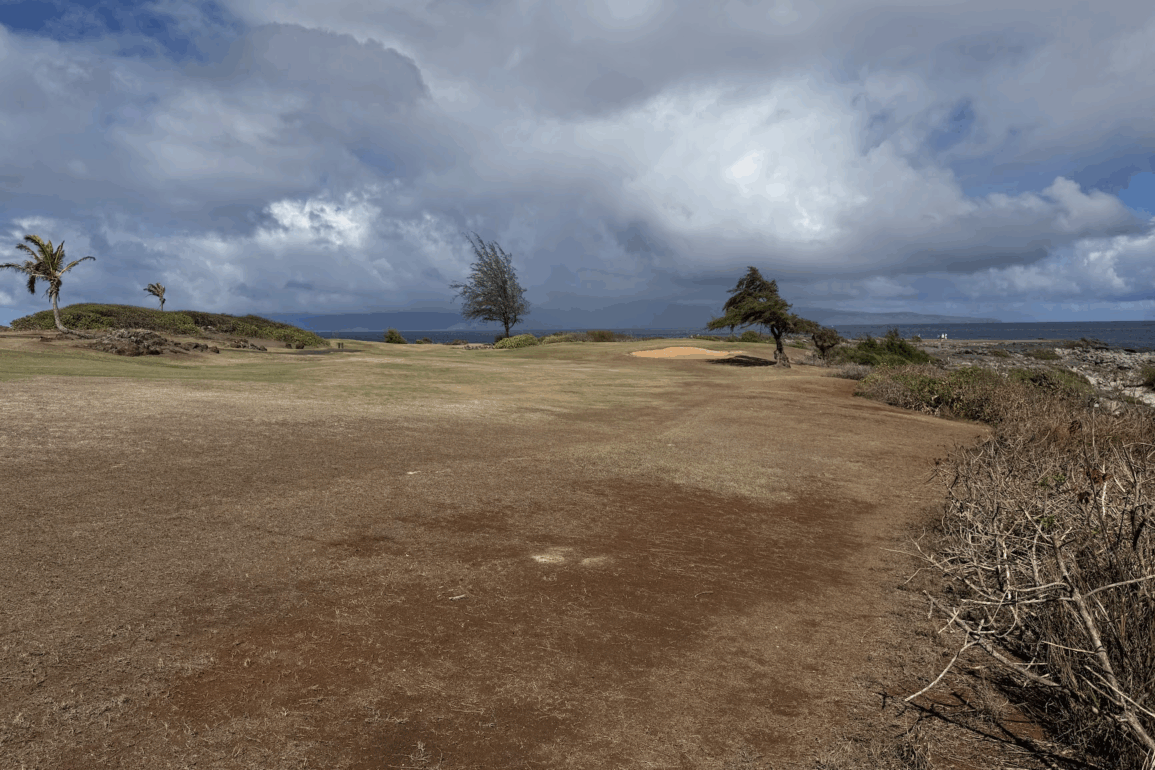
When you think of Hawaiian golf, images of lush green fairways against impossibly blue ocean backdrops come to mind. Kapalua Resort has long been synonymous with world-class golf, hosting PGA Tour events and gracing the covers of golf magazines for decades. So imagine my shock when I visited what’s supposed to be Hawaii’s premier golf destination only to find hole after hole of dead, brown grass that looked more like a neglected field than a championship course. This isn’t just disappointing for golf enthusiasts—it’s a crisis that raises serious questions about the future of professional golf on Maui.
From Dragon Teeth to Dead Fairways
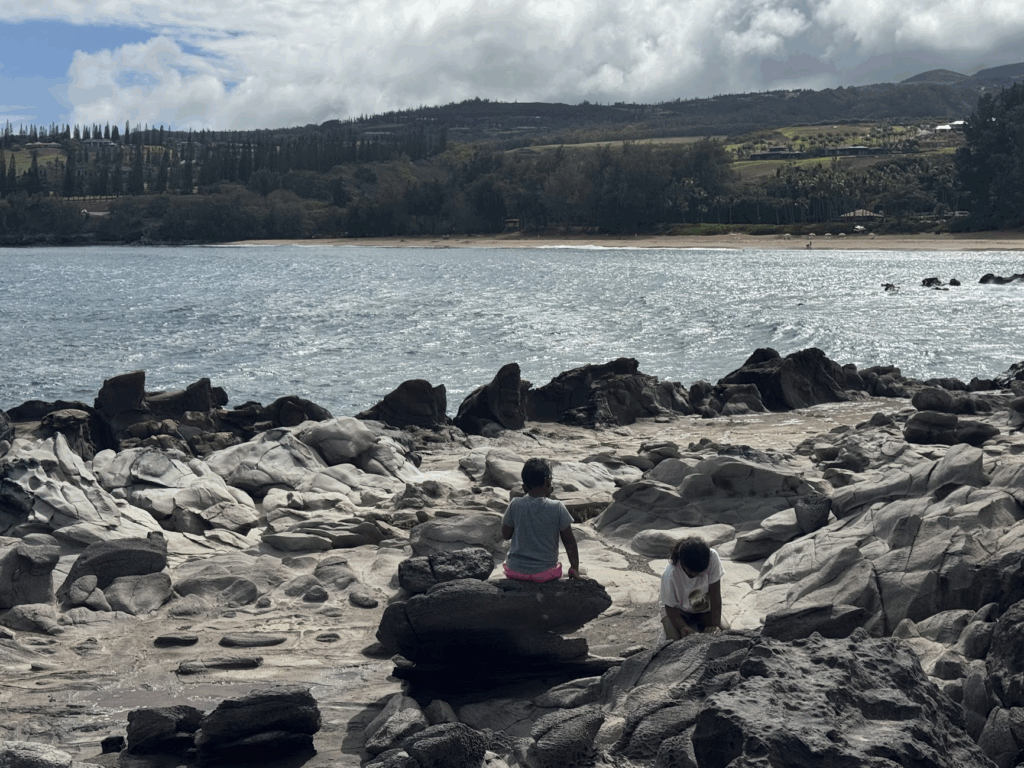
Our day started beautifully at Dragon Teeth (Makaluapuna Point), one of Maui’s hidden natural wonders. These dramatic lava rock formations jutting into the Pacific are truly spectacular—jagged spires carved by centuries of wind and waves. Watching the kids explore the ancient volcanic landscape was magical, the kind of raw, untouched beauty that reminds you why people fall in love with Hawaii. But as we walked from Dragon Teeth back toward Kapalua Resort, the stark contrast hit hard. The golf course that should complement this natural beauty looked devastated.
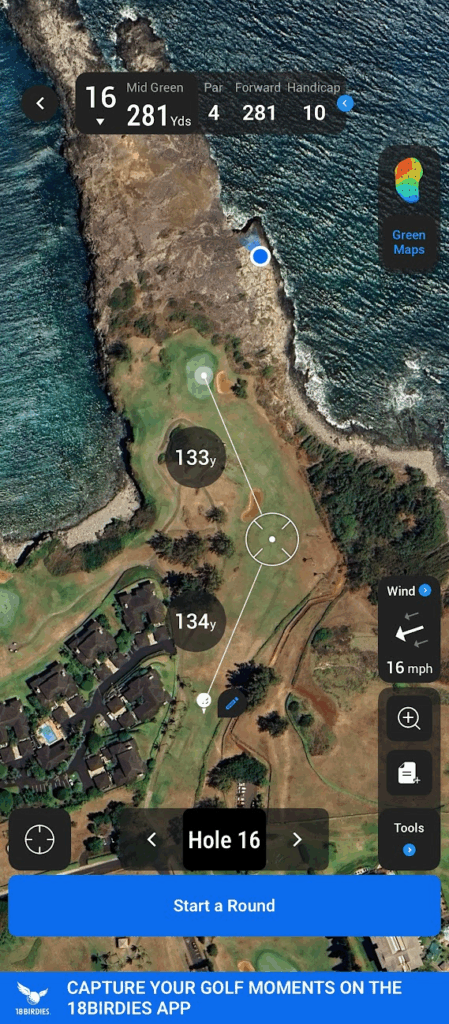
The Bay Course at Kapalua, particularly the famous Hole 16, should be one of the most photographed holes in golf. At 281 yards playing from an elevated tee down toward the Pacific Ocean, it’s an iconic par 4 that’s graced countless golf magazines and travel features. The ocean backdrop, the strategic bunkering, the wind—it should be unforgettable for all the right reasons. Instead, what we found was genuinely shocking: vast stretches of dead Bermudagrass, patchy fairways the color of straw, and what should be greens looking more brown than green. The wind-battered trees, their forms permanently bent away from the relentless trade winds, added to the desolate atmosphere. My 18Birdies app showed Hole 16’s layout and confirmed the 16 mph winds that day, but no app could capture just how dead the grass really was. This should have been a postcard moment. Instead, it was genuinely sad to see such an iconic course in this condition.
A Legal Battle Over Water—Not Just a Drought
The timing of my visit was eerily appropriate. Just weeks earlier, on September 16, 2025, the PGA Tour announced that the 2026 playing of The Sentry—the tour’s season-opening Signature Event worth $50 million to Maui’s economy—would not be contested at Kapalua’s Plantation Course because of ongoing drought conditions and related challenges on the island of Maui. But here’s where it gets complicated: this isn’t just a simple drought story. It’s a bitter legal dispute between two billionaires that has put one of golf’s most iconic venues in jeopardy. In August 2025, TY Management Corporation—owned by Tadashi Yanai, the founder of Uniqlo and Japan’s richest man—filed a lawsuit against Maui Land & Pineapple Company (MLP). Yanai’s company, which purchased the Bay Course in 2010 and the Plantation Course in 2009, claims MLP has failed to maintain the century-old Honokōhau Ditch System, an 11-mile network of tunnels, ditches, pipes, and reservoirs that was originally built to divert mountain water to dry parts of West Maui for pineapple and sugarcane cultivation.
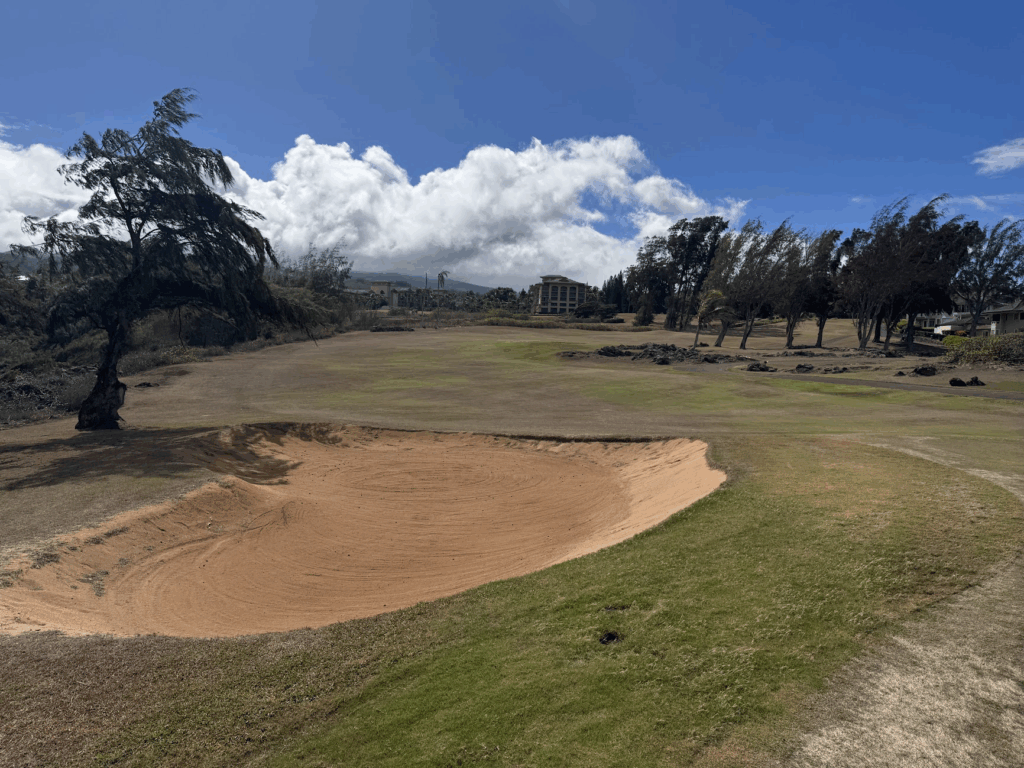
The lawsuit makes a stunning claim: the water shortage isn’t due to lack of rainfall. According to U.S. Geological Survey data cited in the complaint, the watershed in the West Maui mountains receives more annual rainfall than Seattle and Portland. “Water is scarce not because rain is falling in significantly smaller quantities,” the lawsuit alleges. “Rather, water is scarce because MLP has knowingly allowed the Ditch System to fall into a state of demonstrable disrepair.” The state Commission on Water Resource Management has documented numerous damaged or deteriorated features in the water diversion system, some broken by floods in 2018 that were allegedly never properly repaired. The lawsuit claims that when Yanai bought the golf courses, he entered into water delivery agreements stipulating that MLP “will at all times exercise commercially reasonable efforts to manage, repair and maintain” the ditch system. The complaint notes that in the 154 days leading up to the lawsuit filing, the plaintiffs “have been restricted to using no irrigation water for 136 days, and restricted to using only forty percent of their historical irrigation water usage for the remaining 18 days.”
But MLP fired back with a countersuit in September 2025, painting a very different picture. The company alleges that TY Management and homeowners associations violated water restrictions throughout June 2025, using water meant for fire protection for the entire Kapalua community. According to MLP’s filing, in June 2025 alone—during Tier 4 restrictions that prohibited all irrigation—the golf courses consumed more than 11 million gallons of water, compared with just 80,000 gallons for Maui County drinking water. Race Randle, CEO of Maui Land & Pineapple, stated that the company is following directions from the state Commission on Water Resource Management, which mandated new minimum stream flow levels in 2021. State law, he argues, prioritizes stream health, fire protection, and potable water uses over irrigation. “They used water that they were not entitled to—at the expense of our community,” Randle said. MLP’s counterclaim contends that TY Management has engaged in a defamatory publicity campaign and established the website kapaluawater.org containing false information. The golf courses were shut down for 60 days starting September 2, 2025, in a desperate attempt to save what remained. Alex Nakajima, general manager of Kapalua Golf, told reporters: “The golf course has been damaged with no water for months. Every day the golf course is dying.”
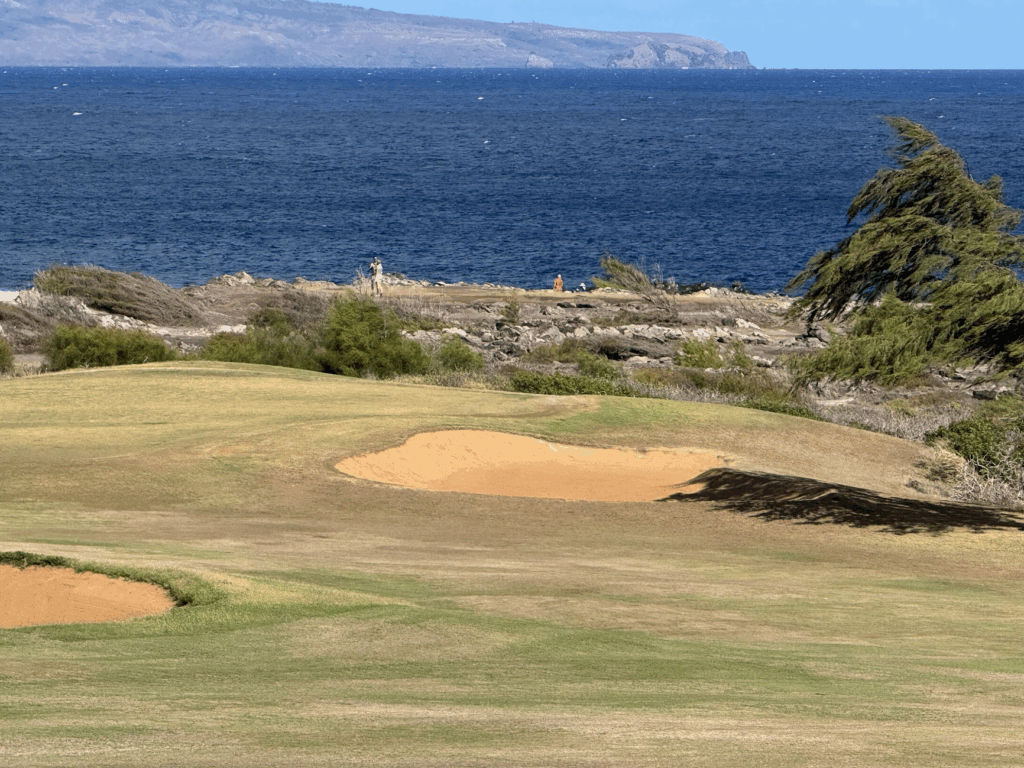
Standing on what should be one of Hawaii’s crown jewels of golf, I honestly couldn’t see how professional golf could be played here anytime soon. When the PGA Tour’s agronomy team visited in early September, they concluded that the Plantation Course had been significantly compromised. Looking at the Bay Course’s condition, it’s clear both courses are in crisis. The Bay Course is supposedly the best course in Hawaii. Right now, it doesn’t even look playable for amateurs, let alone the best players in the world competing for a $20 million purse. The legal battle has now expanded beyond water to include a dispute over control of the Kapalua Resort Association itself, with MLP allegedly adding nearly 2,000 acres of undeveloped land to gain supermajority voting power. This fight could drag on for years.
The Long Road Back: What Revival Would Really Take
So what would it actually take to bring Kapalua back to PGA Tour standards? The answer is extraordinarily complex, expensive, and time-consuming—and it all hinges on resolving the water dispute that has nothing to do with agronomy and everything to do with lawyers. Both the Plantation and Bay courses use Bermudagrass throughout, with the greens constructed from TifEagle Bermudagrass and the fairways, tees, and rough replanted in 2019 with Celebration Bermudagrass as part of a major $10+ million renovation designed to bring back the firm, fast conditions that made Kapalua famous. That renovation stripped 100 acres of fairways down to bare dirt and regrassed everything—ironically, just six years before this crisis would render that work nearly meaningless.
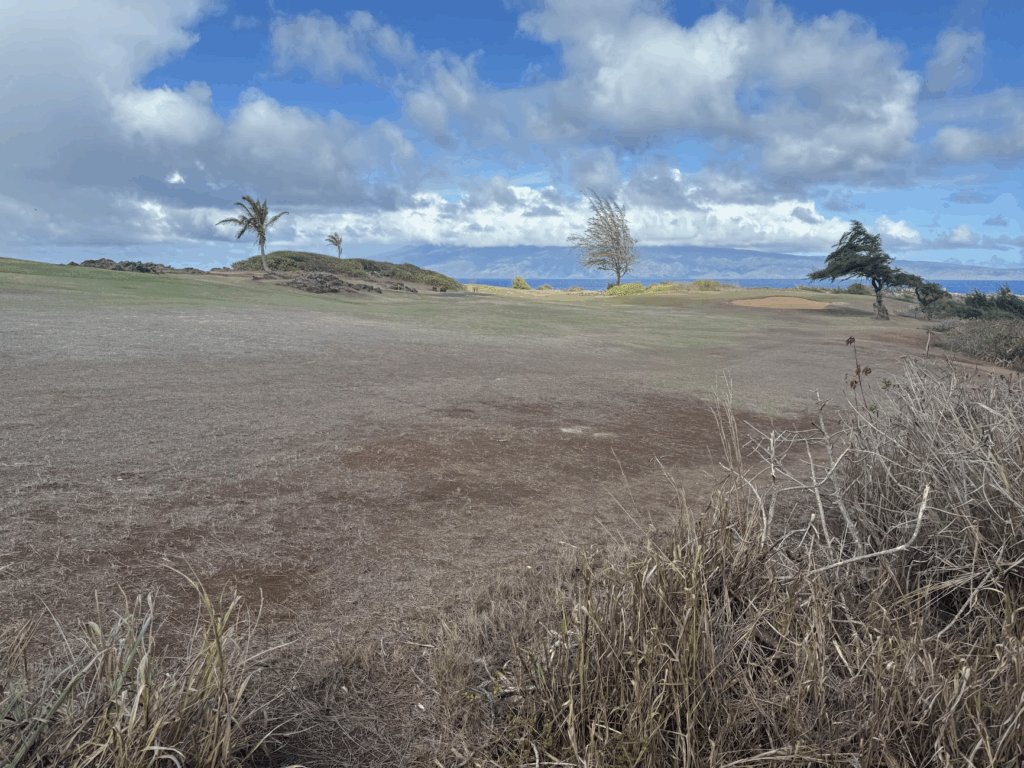
Bermudagrass is notoriously demanding. Unlike some drought-tolerant grasses, Bermudagrass requires full sun exposure and consistent water to maintain its dense, dark green appearance. It spreads through stolons—horizontal stems that grow along the ground—which means it can recover from damage quickly when conditions are right. But when water is restricted for months, as happened at Kapalua, those same stolons die off, the grass goes dormant, and eventually, large sections simply die. Bermudagrass fairways on a championship course typically need 1-2 inches of water per week during active growing season. In Maui’s full sun and wind, that can mean hundreds of thousands of gallons daily across both courses. Without it, the grass doesn’t just turn brown—it deteriorates to the point where even with unlimited water, it won’t come back. Large sections would need to be completely replaced. The grainy nature of Bermudagrass—which makes it such an interesting putting surface when healthy—also means it requires meticulous maintenance. The grain grows toward the ocean, and reading the “burnt edge” of the cup is essential for putting at Kapalua. But dead grass doesn’t have grain. It just has patches of dirt.
Before any agronomic recovery can begin, the fundamental issue must be resolved: guaranteed water access. The Honokōhau Ditch System needs either comprehensive repairs (if MLP prevails in court) or potentially a new water source entirely (if TY Management wins and MLP refuses to maintain the system). Either way, we’re talking about infrastructure that serves not just the golf courses but also farms, homeowners, and the Ritz-Carlton and Montage hotels. The legal battle could drag on for years. Even if settled quickly, establishing a reliable water delivery system that satisfies state environmental regulations, community needs, and fire protection requirements will take time. Water must flow consistently before any serious restoration work begins—and not just for a few weeks, but for 12-18 months of sustained growing season.

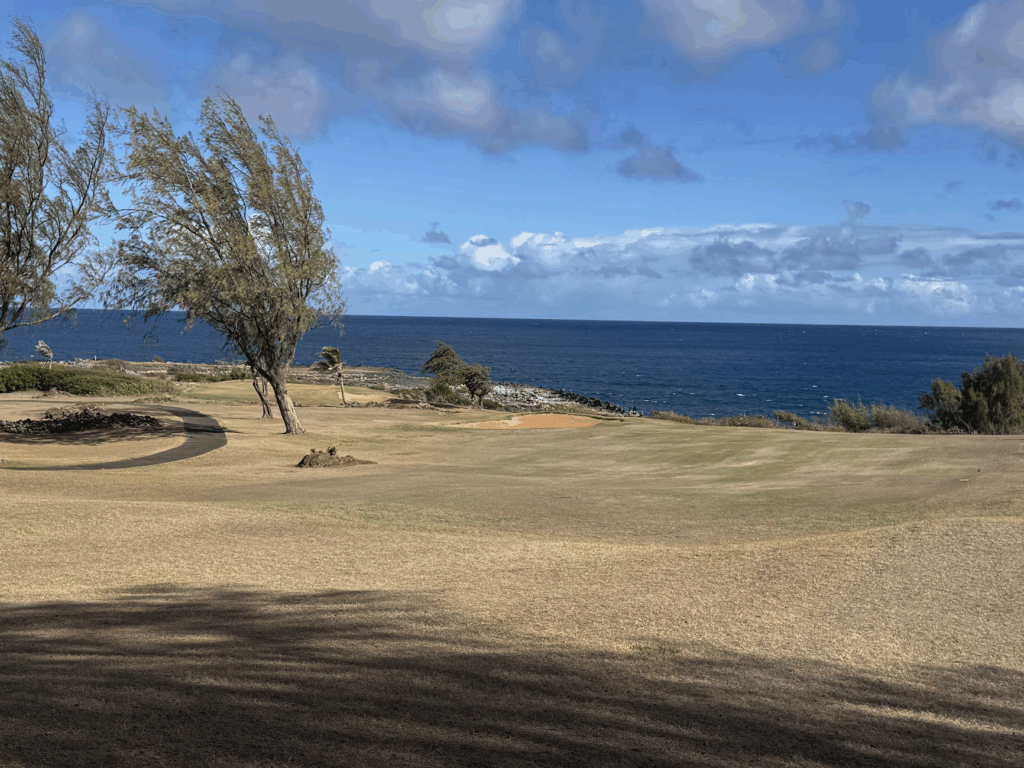
Here’s what people don’t understand about PGA Tour conditions: they’re not just “nice.” They’re a product of industrial-level precision. Fairways must be mowed to exactly 0.5 inches with perfect density and uniformity. Greens need to run at 12-13 on the Stimpmeter—so fast that a slight misread means your ball rolls 20 feet past the hole. Every bunker must have consistent sand depth and perfect edges. The rough must be precisely controlled at 3-4 inches. And this isn’t just for tournament week—this conditioning must be maintained for months in advance so the grass adapts and players can trust the surfaces. The tour’s agronomy team starts preparing a course 6-12 months before an event. They conduct site visits, test surfaces, and require detailed reports. The final 8-12 weeks involve intensive daily maintenance. Given Kapalua’s current condition, we’re not talking about months of recovery—we’re talking about years before the course could even begin the pre-tournament conditioning process.
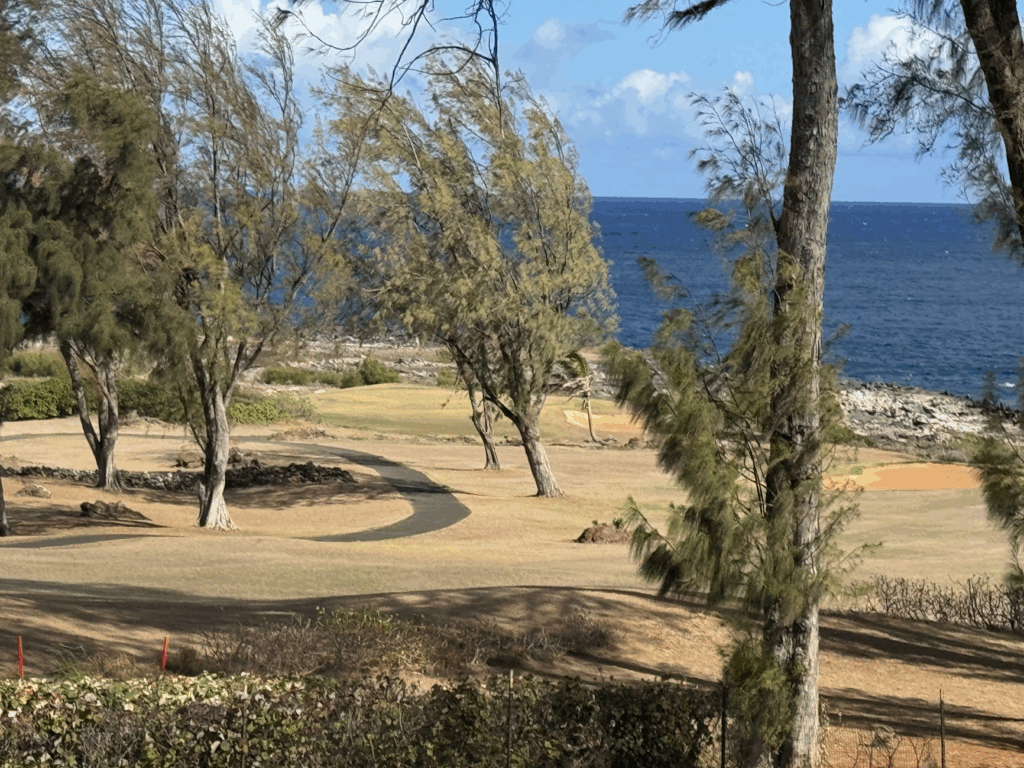
If water access were resolved today, here’s what a realistic restoration would require:
| Restoration Phase | Timeline & Cost |
|---|---|
| Water System Resolution and Testing – Legal settlement or court ruling on water rights, repair or replacement of Honokōhau Ditch System infrastructure, installation of upgraded irrigation controls and sensors, extensive testing to ensure reliable daily water delivery, coordination with state Commission on Water Resource Management | 6-12 months, $2-5 million |
| Comprehensive Turf Assessment and Planning – Detailed agronomic survey of all dead and damaged areas, soil testing across entire course (pH, nutrients, structure, salinity), development of detailed restoration plan by certified agronomists, selection of appropriate Bermudagrass varieties for different areas, timeline development and phased approach planning | 2-3 months, $150,000-250,000 |
| Soil Remediation and Preparation – Deep cultivation and aeration of compacted areas, amendment of soil based on testing (typically requiring lime, sulfur, organic matter), installation of improved drainage in problem areas, leveling and grading work where needed, application of starter fertilizers | 3-4 months, $800,000-1.2 million |
| Turf Replacement – Fairways and Rough – Complete re-sodding or re-sprigging of dead fairway areas (likely 60-80 acres across Bay Course), installation of Celebration Bermudagrass sod for continuity with Plantation Course, seeding of rough areas with appropriate Bermuda blend, initial establishment care including daily watering, fertilization, and light mowing, protection from play during establishment period | 4-6 months, $3-4 million |
| Greens Recovery and Reconstruction – Assessment of TifEagle Bermudagrass greens (may need complete reconstruction if rootzones compromised), possible re-grassing of severely damaged greens, intensive recovery program for savable greens including topdressing, fertilization, and growth regulation, installation of improved sub-surface drainage if needed | 3-4 months, $1-1.5 million |
| Bunker Restoration and Maintenance Facilities – Cleaning and restoration of all bunkers (sand replacement, edge work), repair of maintenance facilities and equipment damaged by extended shutdown, replacement of irrigation heads and controls, restoration of cart paths and infrastructure | 2-3 months, $400,000-600,000 |
| Grow-in and Establishment Period – Daily maintenance including irrigation, mowing, fertilization, pest and disease management programs, gradual opening to limited play for recovery testing, monitoring and adjustment of maintenance practices, staff retention and training during recovery period | 12-18 months, $1.2-2 million ($100,000-150,000 monthly) |
| PGA Tour Preparation and Certification – Intensive pre-tournament conditioning program, PGA Tour agronomy team site visits and testing, fine-tuning of surfaces to tour standards, infrastructure for tournament (temporary facilities, hospitality, etc.), coordination with PGA Tour, Sentry Insurance, and broadcast partners | 6-8 months, $500,000-800,000 |
| TOTAL ESTIMATED INVESTMENT | 3-4 years minimum, $8.5-14.5 million |
Perhaps most troubling is what this investment doesn’t solve: the long-term sustainability question. Even if Kapalua spends $10-15 million restoring the courses to tour standards, there’s no guarantee that rainfall patterns will support continued maintenance or that the water delivery system disputes won’t flare up again. Climate models suggest that drought conditions may become more frequent in Hawaii. The very real possibility exists that within a few years of restoration, another extended dry period or legal battle could put the courses right back where they are today. The PGA Tour needs certainty. They need ironclad guarantees that six months before an event, the course will be in championship condition. They can’t risk having the world’s best players, title sponsors, and television crews show up to find patchy fairways and unreliable greens. That’s why they pulled the 2026 tournament—and given the ongoing legal battle, the unresolved water infrastructure issues, and the extensive restoration required, it’s hard to imagine The Sentry returning to Kapalua before 2028 or 2029 at the earliest, if ever.
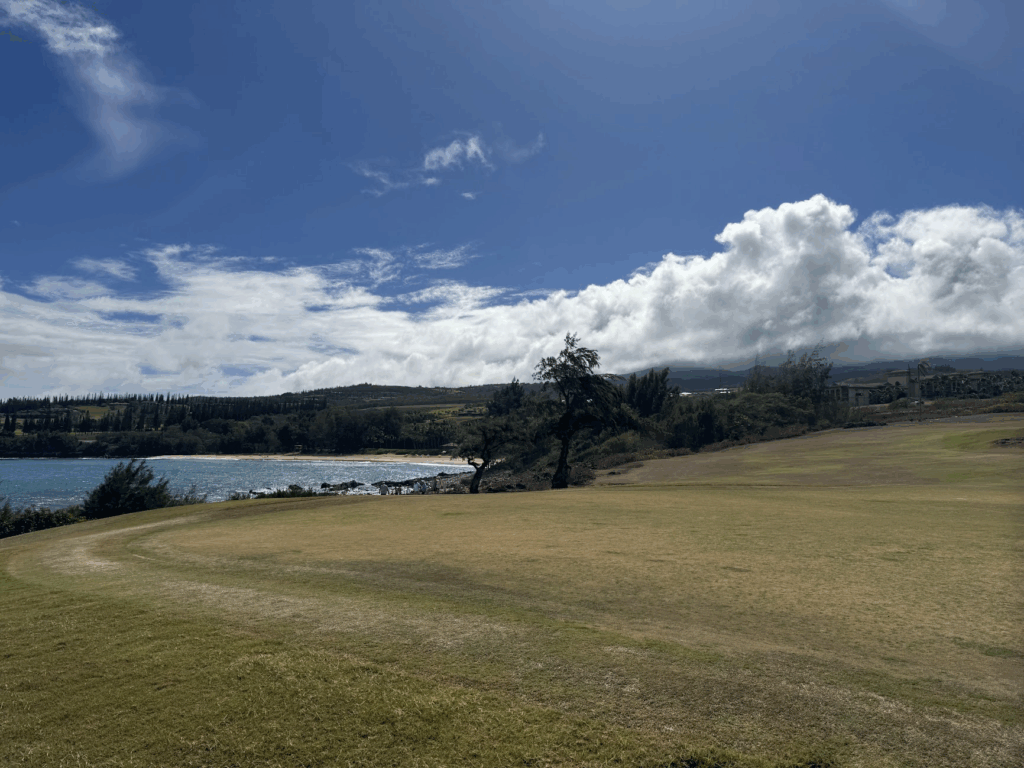
Looking at these photos and thinking about what I saw, the path back to hosting professional golf seems incredibly long and uncertain. The views from Hole 16 remain spectacular—the ocean is still impossibly blue, the coastal cliffs dramatic, the sense of place undeniable. But the course itself is a shadow of the world-class facility that’s been praised for decades. If you’re planning a golf trip to Maui, definitely call ahead and ask detailed questions about course conditions and whether the courses are even open. Better yet, you might want to consider Oahu, where Waialae Country Club will host the 2026 Sony Open without interruption. For now, Kapalua’s golf glory days are indefinitely on hold—caught in a legal battle between billionaires, waiting for water that may or may not flow again, and facing a multi-year, multi-million dollar recovery process even if the water dispute is resolved tomorrow. The Dragon Teeth were absolutely worth the visit. The golf course? That was a disappointment I wasn’t expecting, and one that tells a bigger story about the complex challenges facing destination golf courses when water rights, community needs, and luxury resort expectations collide.

David is an avid golfer who loves walking Connecticut’s courses and playing alongside his family. He’s passionate about golf course architecture and one day hopes to play at Pebble Beach.