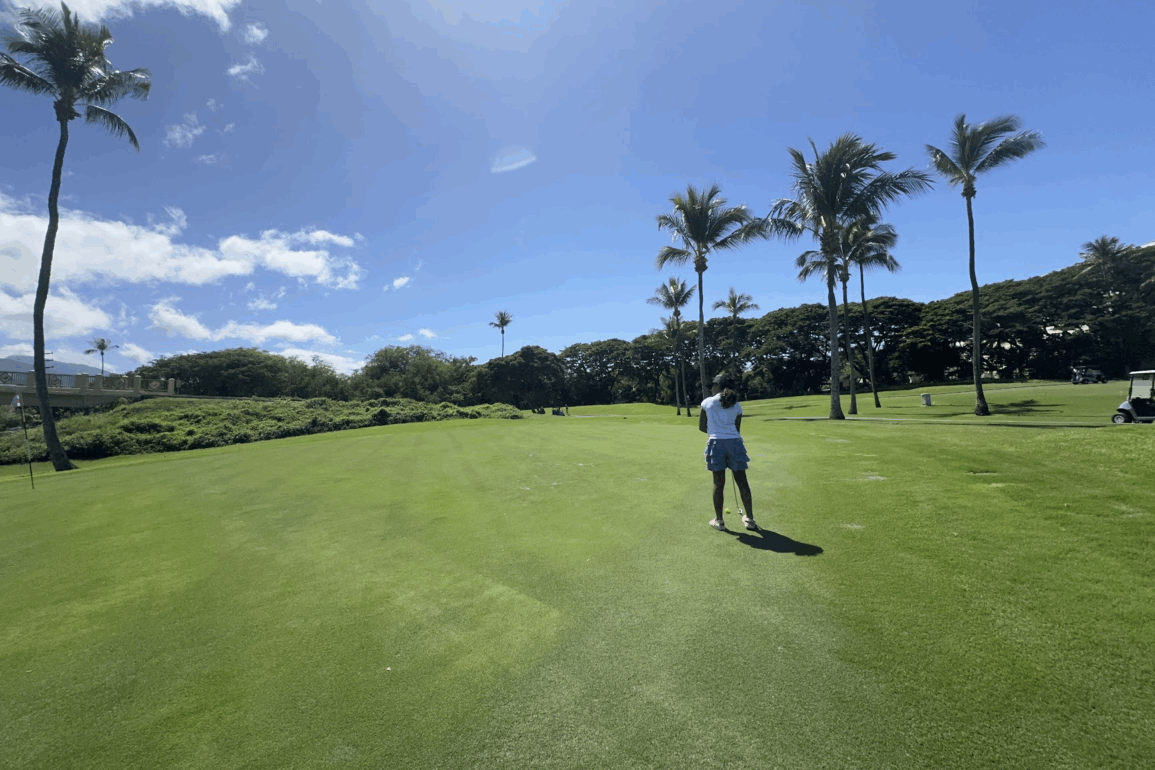
Ka’anapali Kai Course is a public par-70 course measuring approximately 6,400 yards from the tips. The course was originally designed in 1976 by Arthur Jack Snyder and is located in Lahaina, Maui, Hawaii.
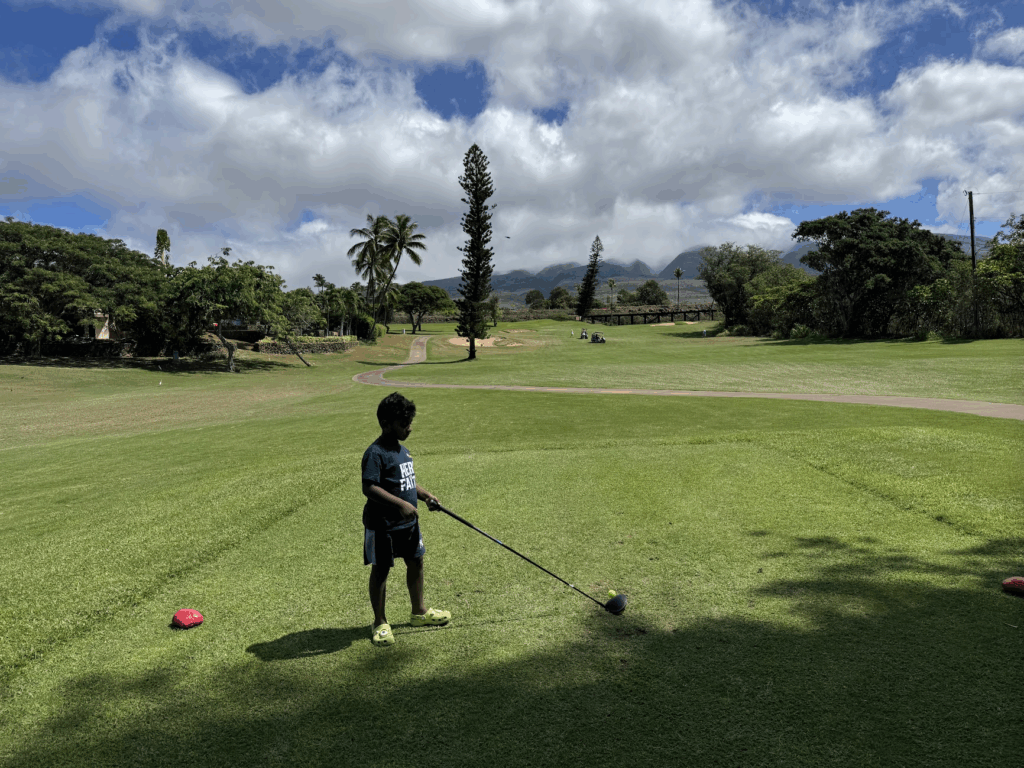
I played the Kai Course with my family and two young children, and immediately appreciated its strategic character. The layout occupies roughly 300 acres within the larger 1,200-acre Ka’anapali Resort, positioned on former sugar cane plantation land that once served as a royal retreat. The routing demonstrates intelligent use of moderate elevation changes—the course begins makai (oceanside) before transitioning into the foothills of the West Maui Mountains. This isn’t dramatic mountain golf, but rather a thoughtful exploitation of terrain that provides visual variety without punishing elevation penalties. The design philosophy rewards players who emphasize positioning over power. Narrow fairway corridors lined with Norfolk pines and coconut palms establish clear target lines, while natural features—gulches, canals, and volcanic rock boundaries—frame strategic considerations. The undulating, push-up style greens with their subtle breaks suit all skill levels, encouraging ground game approaches while still accepting aerial attacks. Players seeking a thinking person’s test will find satisfaction here, particularly those who enjoy managing angles rather than overpowering a layout.
History and Renovations
The Ka’anapali Kai Course originated as an executive layout before Snyder’s 1976 redesign established the current par-70 configuration. Robin Nelson, Hawaii’s most prolific course architect, conducted an extensive renovation in 2005 that refined the strategic elements while preserving the original routing character. Nelson’s touch is evident in the enhanced bunkering schemes—particularly around greens where complex shapes and strategic placement reward precision over distance. The course gained television exposure in 2008 when selected to host the Golf Channel’s Big Break Ka’anapali series, bringing national attention to the layout’s playability and strategic merit. The land itself carries historical significance as the playground of Maui’s royal chiefs, who reportedly played a form of lawn bowling with stones on these very fairways. Unlike its sister Royal Ka’anapali course, the Kai has avoided major championship tournament hosting, maintaining its identity as an accessible strategic test rather than a championship proving ground. Recent years have seen attention to conditioning details, though like much of Maui, the course has navigated irrigation challenges that occasionally affect turf presentation.
Walkability
The Ka’anapali Kai Course presents as highly walkable, a significant achievement for a routing spread across approximately 300 acres with meaningful elevation transitions. The property’s moderate footprint—substantially more compact than championship resort courses that can sprawl across 500+ acres—contributes to efficient green-to-tee transitions that rarely feel labored or excessive. From the opening holes near sea level to the upper reaches in the mountain foothills, the course gains perhaps 200-250 feet of total elevation, but the change occurs gradually across the routing rather than in punishing climbs. The green-to-tee walk from holes 1 to 2 crosses a charming pedestrian bridge, setting an immediate tone for manageable transitions. The course maintains this consideration throughout, with most connections requiring simple cart path walks rather than extended journeys.
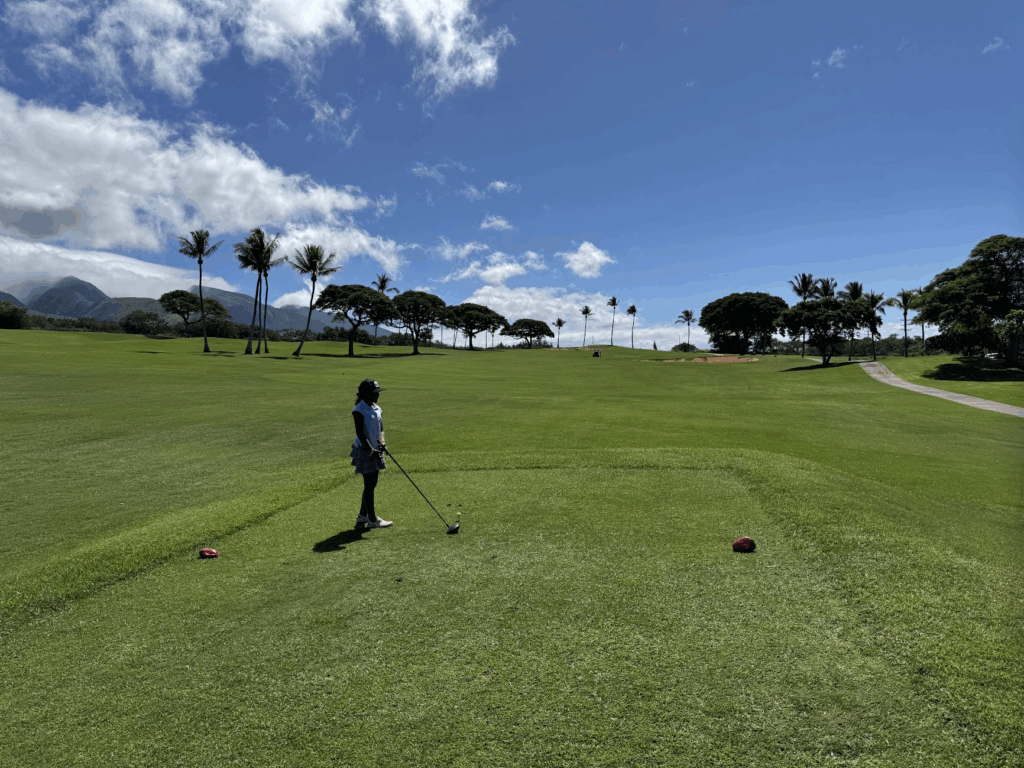
The back nine continues this walker-friendly pattern, though a few transitions involve slightly longer distances when moving between elevation zones. The walk from hole 14’s green to hole 15’s tee represents one of the more substantial connections, but even here the distance remains reasonable for those carrying a bag or pushing a trolley. The downhill hole 9—a beautiful par-4 pointing directly at the Pacific—offers perhaps the most dramatic single-hole elevation change, dropping enough to provide genuine visual drama without requiring a brutal uphill return. The course’s compact nature means pace of play affects walkability more than pure distance. During our round, slower play meant more standing than walking, which can be more taxing than steady movement. For comparison, walking this 300-acre layout feels similar to walking courses in the 6,500-yard range at sea level—the elevation adds interest without adding punishing distance. Players in reasonable fitness will find the Kai Course entirely walkable, though the combination of tropical heat and humidity means morning tee times offer the most comfortable conditions for walking. The terrain never approaches mountain golf difficulty, instead presenting as rolling parkland-style movement that keeps the round flowing without excessive vertical demands.
Strategic Test
The Ka’anapali Kai Course operates on a fundamental design principle: precision and positioning trump power. With a USGA rating of 71.6 and slope of 136 from the championship tees, the course presents sufficient challenge for accomplished players while remaining accessible from forward tees (the Hibiscus tees measure just 4,522 yards). The narrow fairway corridors—tighter than the sister Royal course—establish immediate strategic considerations. Players cannot simply bomb drives without consequence; rather, the layout demands specific placement to establish ideal angles into greens defended by Nelson’s substantial bunkering. The course rarely offers alternate routes or genuine risk-reward options off the tee, instead establishing preferred corridors and punishing wayward drives with recovery challenges. This represents classical strategic design—establishing an optimal line and rewarding those who find it while avoiding modern tendencies toward multiple lines of play.
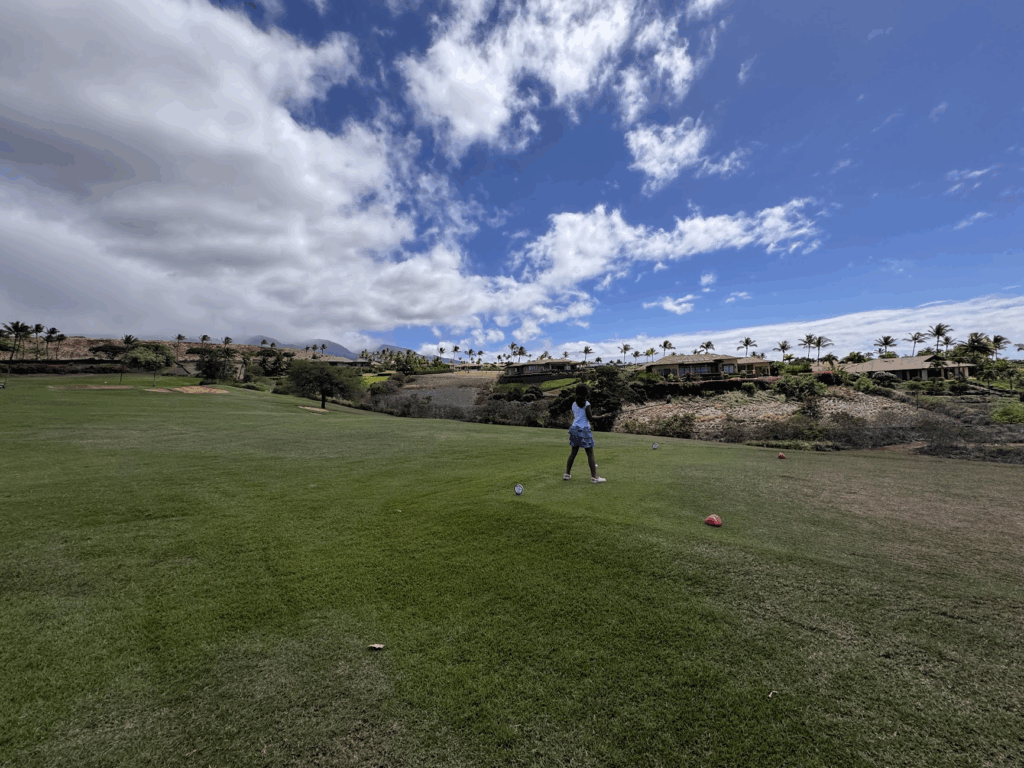
The green complexes, with their subtle push-up construction and moderate undulation, create strategic depth through contouring rather than severe slopes. Players face legitimate choices about whether to attack pins or play to central areas, with green-side bunkering positioned to punish aggressive misses while leaving conservative approaches with manageable distances. The course design generally favors players who can control distance and trajectory rather than those relying purely on length. Approach shots benefit from understanding how the trade winds affect ball flight, adding another layer of strategic consideration beyond simple yardage management. Natural hazards—the canals, gulches, and lava rock boundaries—appear throughout the routing but function more as framing devices than constant threats, establishing clear parameters without creating excessive penalty.
Take hole 7 as a case study in strategic architecture. This 395-yard par-4 presents the round’s signature forced carry—a ravine filled with scrub brush requiring 190-210 yards from the regular tees to clear. The bold strategy involves using a driver to carry the hazard and reach the fairway’s preferred left side, establishing a shorter approach and better angle into a green defended by bunkering. This line demands accurate execution—too far left finds trees, insufficient distance finds the ravine. A player adopting this strategy might hit driver, clearing the hazard at 215 yards and leaving 180 yards to the green, then attacking with a 6-iron to a pin position. The reward for successful execution includes a legitimate birdie opportunity, but failure brings bogey or worse. The safe strategy involves playing from the Hibiscus tees where the carry becomes manageable, or laying back with a mid-iron from the championship tees to avoid the hazard entirely. A conservative player might hit 5-iron to 180 yards, then a 7-iron layup to 100 yards, followed by a wedge approach—accepting par or bogey while eliminating disaster. The hole exemplifies the course’s strategic philosophy: aggressive lines exist but demand precise execution, while conservative routes remain available at the cost of scoring opportunities. This creates genuine strategic interest rather than simply punishing length or favoring one style exclusively.
Playability
The Ka’anapali Kai Course demonstrates remarkable accessibility for mid-to-high handicap players, a design philosophy evident in both routing decisions and hazard placement. The 71.6/136 rating-slope combination from the tips translates to approximately 69.5/132 from the white tees and 68.0/127 from the gold tees, with the forward Hibiscus tees at 4,522 yards offering genuine playability for developing players. These numbers reveal a course that scales difficulty appropriately across tee selections rather than simply shortening while maintaining the same challenges. For scratch players, the course presents a legitimate par test without overwhelming difficulty—the rating suggests approximately 72 strokes in ideal conditions. Single-digit handicappers will find scoring opportunities balanced by strategic demands that prevent mindless attacking. The narrow fairways require accuracy, and the push-up greens accept approaches while still defending par through contouring and bunkering. Mid-handicap players (10-18 index) face their optimal challenge—the course provides sufficient width from appropriate tees while establishing clear strategic parameters that reward good decisions without creating excessive penalty for ordinary misses.
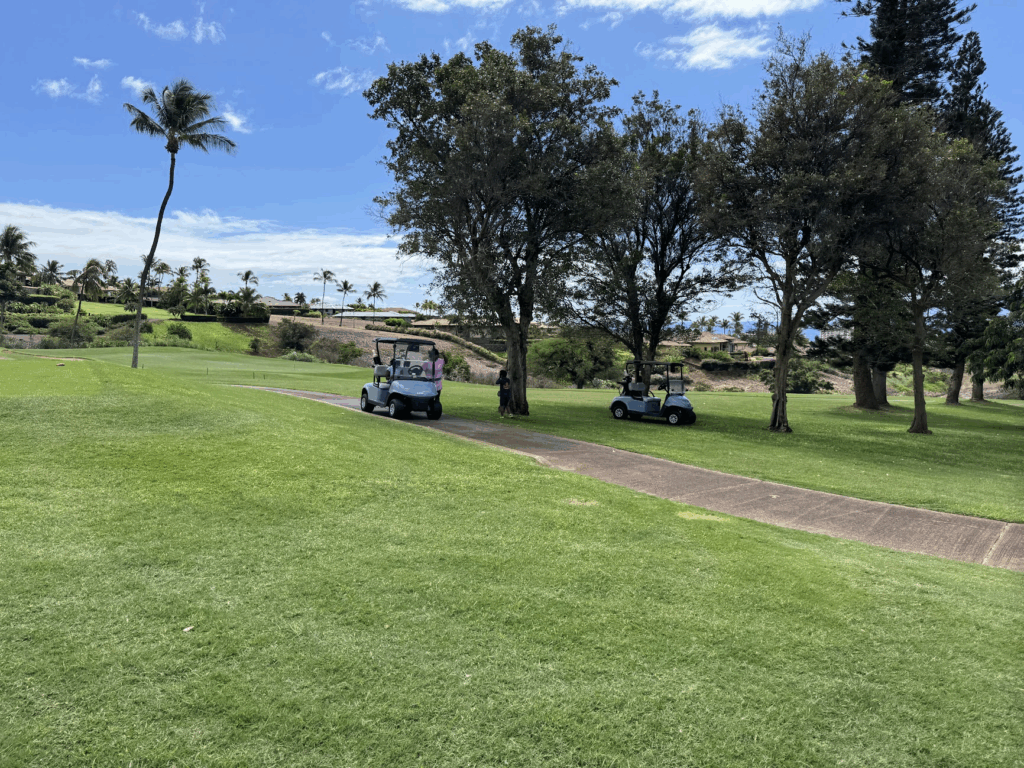
High-handicap players (20+ index) will appreciate the course’s generally forgiving nature once appropriate tees are selected. The Hibiscus tees eliminate most forced carries, including the signature hole 7 ravine that can intimidate from back tees. The fairway corridors, while narrow, rarely feature severe OB or lost-ball hazards—errant drives typically find recovery positions rather than creating stroke-and-distance situations. This distinction proves crucial for pace of play and enjoyment. Consider hole 5, a gentle uphill par-4 that exemplifies high-handicap accessibility. From the Hibiscus tees at approximately 310 yards, the hole presents straightforward strategy: hit a fairway wood or hybrid from the tee, advance an iron toward the green, then chip and putt. The uphill nature means approaches stay on the putting surface, while green-side recovery areas offer reasonable up-and-down opportunities. No water threatens, no forced carries intimidate, and the hole presents a genuine par opportunity for the 25-handicapper who executes basic shots. During our family round, this accessibility proved crucial—the children found legitimate engagement without constant frustration, exactly the balance recreational layouts should provide.
The slope rating of 136 from the tips indicates that high-handicappers will face challenges, but the forward tee options mitigate this significantly. The course demonstrates admirable restraint in hazard placement—natural features establish strategic interest without creating constant penal consequences. Players who miss fairways find rough rather than forests, while green-side misses encounter manageable recovery situations rather than severe falloffs. The push-up green construction means approach shots can be bumped onto putting surfaces, a critical playability feature for players who struggle with aerial trajectories. This ground-game accessibility, combined with four distinct tee options and generally fair hazard placement, establishes the Kai Course as genuinely welcoming to recreational players who select appropriate tees and accept strategic parameters. The course never insults accomplished players with excessive width or trivial challenges, but neither does it adopt the penal philosophy that can frustrate developing golfers and slow pace of play.
Atmosphere
The Ka’anapali Kai Course delivers compelling visual drama despite the intrusion of residential development that diminishes some of the natural immersion. The routing’s movement from makai (oceanside) to mauka (mountain foothills) creates genuine variety in perspective and setting—players experience both Pacific Ocean vistas and West Maui Mountain backdrops within a single round. The flora establishes authentic tropical character: native hibiscus, bougainvillea, and plumeria line corridors with Norfolk pines and coconut trees framing fairways. This landscaping succeeds in creating distinctly Hawaiian atmosphere rather than generic resort golf aesthetics. The natural features—volcanic rock boundaries, gulches carved by ancient water flow, and original Hawaiian stone walls preserved during construction—add historical and geological context that transcends pure golf architecture. These elements connect players to the land’s heritage as royal playground and agricultural landscape.
However, the residential intrusion cannot be ignored. Nearby condominiums and homes visible from multiple holes compromise the sense of natural sanctuary that distinguishes elite resort courses. Rather than feeling immersed in Hawaiian landscape, players frequently confront the reality of modern development. This represents a common compromise in accessible resort golf—proximity to lodging enhances convenience but diminishes atmosphere. The course succeeds despite this limitation through strategic use of vegetation screening and thoughtful hole orientations that maximize ocean and mountain views while minimizing dwelling visibility. The trade winds contribute atmospheric authenticity, keeping conditions comfortable while adding strategic complexity to club selection and shot shaping. The breezes carry the scent of tropical flowers and occasionally the ocean, sensory details that enhance the island golf experience beyond pure visual elements.

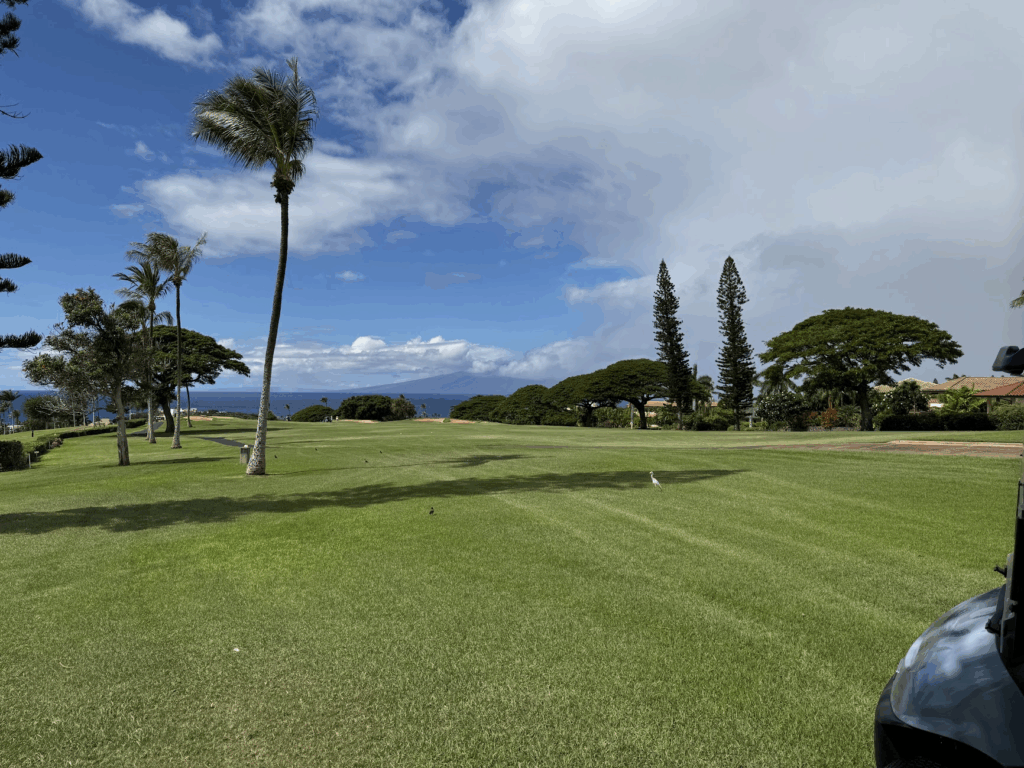
Hole 9 exemplifies the course’s atmospheric potential when natural elements align. This downhill par-4 points directly toward the Pacific Ocean, establishing one of Maui’s most photogenic golf holes. Standing on the elevated tee, players face a descending fairway framed by palm trees with the cobalt Pacific dominating the horizon and neighboring islands Molokai and Lanai visible on clear days. The hole drops approximately 40-50 feet from tee to green, enough elevation change to create genuine visual drama and affect club selection. The downhill nature means drives carry farther than usual, offering most players a realistic birdie opportunity if they can avoid the fairway bunkers positioned strategically left and right. The green sits at the bottom of the descent, a welcoming target that accepts well-struck approaches while defending par through subtle contouring and green-side bunkering. This hole succeeds atmospherically because the ocean view dominates the perspective—even with resort buildings in peripheral vision, the Pacific’s expanse captures attention. The emotional resonance comes from the combination of dramatic elevation change, stunning ocean backdrop, and strategic clarity that creates both photographic appeal and genuine golf interest. During our family round, this hole generated the most excitement—the children immediately recognized its special quality despite limited golf architecture knowledge. That visceral response indicates successful atmospheric design: the hole transcends technical considerations and creates memorable experience through natural beauty and thoughtful routing that maximizes visual impact.
Nearby Course Alternatives
Wailea Golf Club – Emerald Course in Kihei offers a compelling alternative approximately 35 minutes southeast of Ka’anapali. The Emerald measures 6,825 yards from the championship tees to a par of 72, with a course rating of 72.8 and slope of 135 from the tips—remarkably similar difficulty to the Kai Course. Designed by Robert Trent Jones Jr., Donald Knott, and Gary Linn in 1994, the Emerald occupies more expansive acreage in Wailea’s prestigious resort corridor on Haleakala’s lower slopes. The course demonstrates Jones Jr.’s characteristic bold bunkering and dramatic green complexes, with over 90 bunkers creating visual intimidation and strategic depth. The routing incorporates ancient lava rock walls (mana walls) and meticulous tropical landscaping featuring bougainvillea, plumeria, and ti plants. The Emerald’s signature feature involves a shared double-green serving holes 10 and 17, bordered by a 2.7-million-gallon lake that creates stunning reflections and strategic water considerations. The course favors players who enjoy aerial golf and precise iron play—the larger, more undulating greens reward trajectory control and distance management rather than the ground-game options the Kai Course provides. Accomplished players seeking a more modern, resort-style test with expansive conditioning and dramatic visual flourishes will prefer the Emerald, particularly those who appreciate Jones Jr.’s bold architectural style. The Emerald typically presents superior turf conditions and more polished presentation, though at premium pricing. Players who value strategic simplicity and walkability over championship pedigree and resort amenities may find the Kai Course’s more modest presentation equally satisfying.
The Dunes at Maui Lani in Kahului presents a dramatically different experience approximately 30 minutes northeast of Ka’anapali. This Robin Nelson design opened in 1999 and measures 6,841 yards from the Black tees to a par of 72, with a formidable 73.6/139 rating-slope combination—significantly more challenging than the Kai Course. The Dunes occupies ancient sand dune terrain in central Maui, creating Hawaii’s only authentic links-style layout. Nelson preserved the million-year-old dunes’ natural topography, routing holes through dramatic elevation changes and rumpled terrain that mimics British Isles courses. The severe undulation and firm turf conditions create ground-game emphasis and strategic unpredictability absent from typical tropical resort courses. Wind plays a more dominant role at The Dunes than at oceanside Ka’anapali, with central Maui’s exposure creating variable conditions that dramatically affect strategy and scoring. The course features substantially more severe contour and blind shots than the straightforward Kai layout, with approaches requiring local knowledge to navigate effectively. Players who value traditional links architecture, embrace unpredictability, and seek maximum strategic challenge will find The Dunes compelling, particularly accomplished ball-strikers who enjoy firm, fast conditions. The course typically offers better value than resort alternatives while delivering championship-caliber difficulty. However, developing players and those seeking predictable, accessible golf should favor the Kai Course’s gentler terrain and clearer strategic parameters. The Dunes rewards multiple plays to understand nuances, while the Kai Course reveals its character immediately—a fundamental distinction in design philosophy that determines which layout suits individual preferences.
Final Word
The Ka’anapali Kai Course succeeds through strategic clarity rather than championship pedigree or resort luxury. The practice facilities include a grass-tee driving range with target greens, a putting area, and short-game practice spaces that provide adequate preparation though lacking the elaborate practice complexes found at premium resort venues. The clubhouse offers basic amenities—pro shop, locker facilities, and dining options through the resort—without pretension to architectural significance or luxury spa treatments. These represent appropriate amenities for an accessible public course emphasizing golf quality over auxiliary experiences. The proximity to Ka’anapali Resort’s hotels provides convenient lodging options within walking distance, though the course maintains independence from the resort’s ownership structure that governs many Maui layouts. FootGolf availability on a 9-hole loop demonstrates creative use of property to maximize accessibility and revenue, though golfers should note the additional flags scattered throughout the layout to avoid confusion.
When considering the Wailea Emerald Course and The Dunes at Maui Lani as alternatives, strategic preferences and skill level guide the decision. The Emerald offers championship pedigree, expansive conditioning, and Jones Jr.’s bold modern architecture—ideal for accomplished players seeking resort luxury and dramatic visual presentation. The Dunes provides authentic links golf and severe strategic challenge on ancient dune terrain—perfect for experienced players who embrace unpredictability and value traditional architectural philosophy. The Ka’anapali Kai Course occupies a middle ground: strategic enough to engage accomplished players, accessible enough to welcome developing golfers, and atmospheric enough to satisfy those seeking authentic Hawaiian golf without championship pretension. Its greatest strength lies in honest architectural values—clear strategic parameters, fair difficulty scaling across tees, and terrain-driven routing that creates variety without gimmickry.
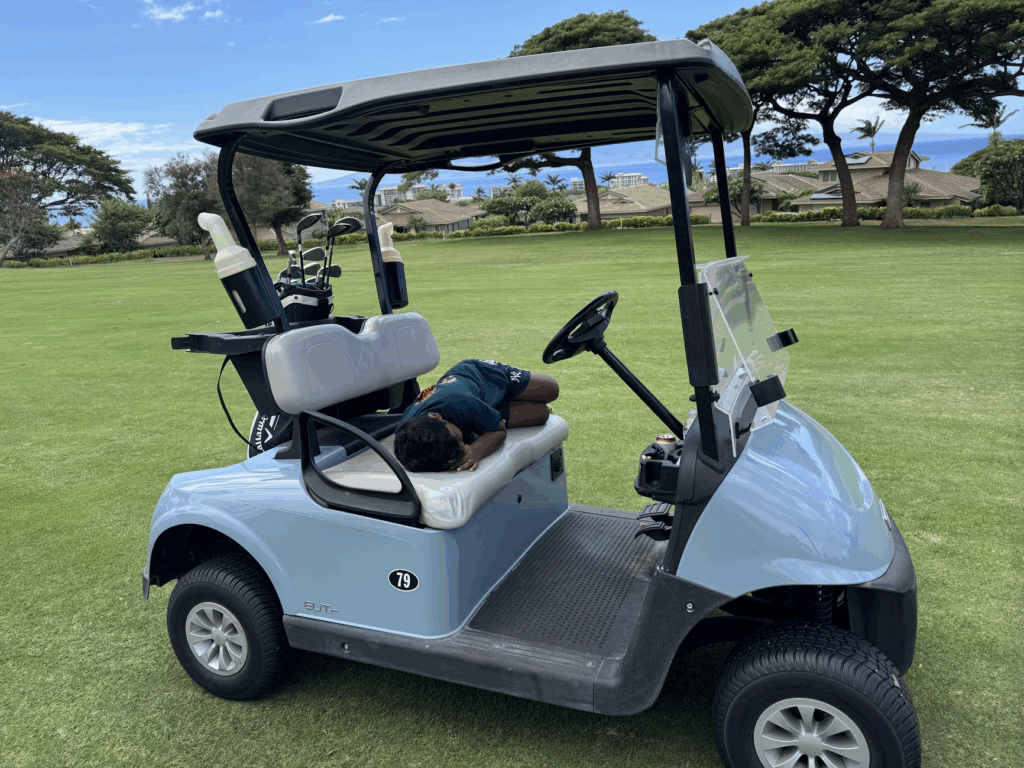
Playing the Kai Course with family reinforced these strengths. The layout provided genuine engagement for adult players managing strategic decisions while remaining welcoming to children learning the game’s fundamentals. Discovering a coconut on hole 6 and navigating strategic water carries on holes 16 and 18 created memorable experiences that transcended score. The ocean views from hole 9, the elevation changes providing visual drama, and the palm tree-framed corridors established authentic island golf character. Despite irrigation challenges affecting turf presentation and residential development diminishing natural immersion, the course delivers satisfying golf through intelligent routing and strategic architecture. For players seeking a thinking person’s test in a genuine Hawaiian setting at accessible public pricing, the Ka’anapali Kai Course proves its value through honest design principles and strategic clarity that rewards thoughtful play over mindless power.

David is an avid golfer who loves walking Connecticut’s courses and playing alongside his family. He’s passionate about golf course architecture and one day hopes to play at Pebble Beach.