Farmington Woods Country Club is a private par-72 course measuring approximately 6,577 yards from the tips. The course was originally designed in 1969 by Desmond Muirhead and is located in Avon, Connecticut.
Farmington Woods opened in 1969 as part of an ambitious master-planned residential community, representing one of the earliest integrated golf course and condominium developments in Connecticut. The course was carved from 122 acres of rolling countryside, with Muirhead leveraging the natural topography to create a demanding examination of golf within a residential setting. During the 1970s, the layout gained regional recognition when qualifying rounds for the Greater Hartford Open were contested here, establishing its credentials as a championship-caliber test. The original developer maintained ownership and operational control until 1978, when the homeowners association assumed management responsibilities. Over the subsequent decades, the course has undergone selective maintenance and enhancement projects focused on preserving Muirhead’s design intent while updating infrastructure. The bent grass playing surfaces have remained consistent with the original specifications, and the property has retained much of its native foliage despite the surrounding residential development. The course has maintained its private status throughout its history, serving primarily the residents of the Farmington Woods community and their guests.
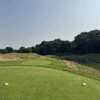
The 122-acre routing occupies property that straddles the Avon-Farmington municipal boundary, with the majority of acreage lying within Avon. The terrain presents modest but strategic elevation changes throughout the round, with several holes featuring pronounced uphill and downhill playing corridors that affect both distance control and visual perspective. Muirhead’s design philosophy emphasized incorporating golf within the residential fabric rather than isolating it, resulting in corridor-style fairways framed by mature deciduous trees and the adjacent housing stock. The property drains well given its varied elevation, though several low-lying areas bring water into play on eight holes, typically positioned to challenge approach shots rather than tee balls. The routing flows in a logical out-and-back sequence with minimal backtracking, allowing for efficient pace of play despite the tight confines. This layout rewards the thinking golfer who values precision over power, as wayward shots frequently encounter out-of-bounds stakes that define property lines adjacent to residential units. The player profile best suited to Farmington Woods appreciates strategic shot-making, possesses reliable directional control, and doesn’t require wide-open spaces to enjoy their round. Higher handicappers must exercise patience and course management discipline, as errant drives are often penalized severely by the omnipresent boundary stakes.
Strategic Test
Strategic decision-making at Farmington Woods operates on two distinct levels depending on the player’s skill set and risk tolerance. For accomplished ball-strikers, the premium lies in working the ball both directions to attack pin positions on the large, undulating green complexes that serve as the course’s signature feature. Many greens incorporate false fronts and internal contours that reject shots landing in the wrong quadrant, requiring players to consider not just line but precise distance control and trajectory management. Off the tee, the layout presents relatively few forced carries, but the narrow corridors bordered by penalty areas demand committed swings and consistent shape. The course rarely offers true alternate routes or bailout areas—most holes present a single, defined playing line with minimal margin for error. This unforgiving nature creates a fascinating tension: aggressive players must weigh the reward of attacking pins against the legitimate penalty for missing by even a small margin. The 23 strategically positioned bunkers guard primarily the green complexes rather than driving zones, suggesting Muirhead trusted the tight boundaries to police tee shots while reserving sand for approach play defense. Water hazards appear on eight holes but typically function as secondary rather than primary hazards, reinforcing the theme that accuracy matters more than distance.
The accessibility spectrum at Farmington Woods skews toward more accomplished players, though the forward tees provide reasonable scoring opportunities for those willing to play conservatively. Understanding slope and course rating proves essential for realistic expectation-setting, as these metrics quantify the relative difficulty adjustment for players of varying abilities. Course rating represents the expected score for a scratch golfer playing from a specific tee set under normal conditions, while slope rating measures how much more difficult the course becomes for bogey golfers compared to scratch players. The slope scale runs from 55 to 155, with 113 representing standard difficulty. Higher slope values indicate the course penalizes mishits more severely, widening the scoring gap between accomplished and developing players. At Farmington Woods, the elevated slope ratings across all tee boxes—ranging from 117 on the forward tees to 134 from the tips—signal a layout that magnifies small technical deficiencies into significant scoring damage. The tight corridors, penal boundaries, and demanding green complexes extract higher costs from mis-executed shots than would be typical on more forgiving designs.
| Handicap | Course Strategy |
|---|---|
| High Handicap (18+) | Playing the Red/Green tees at 5,325 yards with a 117 slope and 66.4 rating offers the most forgiving experience, though the tight layout still demands consistent directional control. The 117 slope suggests a bogey golfer might expect to shoot approximately 18 strokes over the course rating, placing realistic targets in the mid-to-upper 80s for this group. Strategic priorities include accepting bogeys as successful outcomes, laying up short of trouble rather than attempting heroic carries, and using more lofted clubs off tees to prioritize accuracy over distance. The generous yardage reduction helps offset the precision demands, making par 3s reachable with mid-irons and many par 4s accessible with hybrid or fairway wood approaches. |
| Mid Handicap (8-18) | The White tees at 6,119 yards provide appropriate challenge with a 128 slope and 70.6 rating, positioning target scores in the low-to-mid 80s range. This group faces the most interesting strategic dilemmas, as their increasing skill level tempts aggressive lines that may exceed their consistency threshold. The slope increase of 11 points over the forward markers signals meaningfully higher penalty for wayward shots, particularly driver mishits that find out-of-bounds territory. Smart play involves selective driver usage, favoring accuracy clubs on tighter holes while taking advantage of wider corridors when available. Approach play becomes critical, as the undulating greens reward shots hit to the correct tier while punishing those landing in wrong zones with difficult two-putt scenarios. |
| Low Handicap (0-8) | The Blue tees at 6,577 yards with a 134 slope and 72.6 rating represent a genuine championship examination, with scratch players targeting rounds in the low-to-mid 70s. The elevated slope indicates this track plays tougher than its modest yardage suggests, primarily due to the precision requirements throughout. Strategic emphasis shifts to working the ball both directions to access tucked pins, managing distance control on approach shots to avoid difficult recovery situations, and executing consistent lag putting on the undulating surfaces. The relatively short yardage tempts aggressive play, but experienced competitors recognize that par represents a strong score on many holes given the penal nature of mistakes. Course knowledge becomes paramount for navigating the subtle reads in the green complexes and understanding which pins merit aggressive attack versus conservative two-putt approaches. |
The 18th hole epitomizes Farmington Woods’ strategic philosophy while providing a fitting conclusion to the round. This 520-yard par 5 plays as the 13th handicap hole, suggesting it yields birdies more frequently than most holes while still presenting legitimate challenge. From the championship tees, longer hitters face an immediate decision regarding driver usage, as the tee shot must navigate a corridor framed by residential property on both sides with out-of-bounds stakes defining the boundaries. Players who favor accuracy over distance might consider a 3-wood or hybrid off the tee to ensure finding the fairway, accepting that the green becomes unreachable in two shots but prioritizing a stress-free approach to the dance floor. Those opting for driver must execute a committed swing down the intended line, as any hesitation or steering typically results in penalty strokes. The second shot presents another calculation: aggressive players with 230-240 yards remaining might attempt to reach the putting surface in two, but the large, undulating green features multiple tiers that must be accessed correctly to leave manageable birdie putts. Conservative play dictates laying up to a full wedge distance—ideally 80-100 yards—to maximize spin and distance control on the approach. High handicappers should treat this as a three-shot hole regardless of their position after two strokes, prioritizing accuracy over heroics and accepting that a well-played bogey represents success. Mid-handicappers face the most interesting dilemma: their skill level permits realistic consideration of reaching in two with perfect execution, yet the consequences of missing the green in regulation often lead to bogey or worse. Low handicappers typically view this as a birdie opportunity if they’ve driven the ball well, but respect the demanding green complex enough to ensure their approach shot finds the correct level rather than simply hitting at the flagstick.
Nearby Course Alternatives
Wampanoag Country Club in West Hartford offers a compelling alternative approximately 10 minutes southeast of Farmington Woods, presenting a more traditional private club experience on classic Donald Ross architecture. The par-72 layout stretches to 6,610 yards from the championship tees with a slope rating of 133 and course rating of 72.3, placing it in similar difficulty territory to Farmington Woods despite originating from a different design era. Ross completed the original routing in 1924, and the course has undergone various renovation efforts over the decades, including recent restoration work guided by architect Kyle Franz to recapture the master’s intent after years of well-meaning but ultimately detrimental modifications. The property encompasses more expansive acreage than Farmington Woods, affording wider fairway corridors and less intrusive residential presence, though several Brooks wind through the property providing both visual interest and strategic complication. Ross’s characteristic push-up green complexes, subtle ground game options, and strategic bunkering present a markedly different examination than Muirhead’s more penal approach at Farmington Woods. The course rewards creativity and shotmaking versatility, with multiple routes to many greens depending on pin position and ground conditions. Players who value architectural pedigree, appreciate the strategic flexibility of Golden Age design, and prefer more breathing room off the tee would find Wampanoag a superior option. Mid-handicappers particularly benefit from the wider margins for error and the ground game alternatives that allow running approaches when aerials aren’t feasible. The club’s extensive amenities including multiple dining venues, eight Har-Tru tennis courts, and Olympic-size pool position it as a full-service country club rather than primarily golf-focused facility.
Tumble Brook Country Club in Bloomfield provides another distinguished private option approximately 15 minutes northeast of Farmington Woods, distinguished by its 27-hole configuration offering rotating course combinations throughout the season. The facility’s three nine-hole courses—Red, Blue, and Green—were designed by different architects across multiple eras, creating varied strategic examinations within a single membership. Willie Park Jr. crafted the original Red nine in 1924, Orrin Smith added the Blue nine in 1949, and George Fazio completed the Green nine in 1971, with Mark McCumber conducting comprehensive renovations across all 27 holes in 2005. The Red/Blue combination stretches to 6,785 yards, while Green/Red measures 6,613 yards, both presenting similar challenge levels to Farmington Woods but with greater variety in hole design and strategic demands. The property occupies more expansive rolling terrain than Farmington Woods, with elevation changes providing dramatic vistas of downtown Hartford and the surrounding valleys. The 27-hole rotation allows the superintendent to distribute wear more evenly and permits greater flexibility in tournament hosting and daily course conditioning. Strategic variety across the three nines rewards players who adapt their approach rather than relying on a single game plan throughout the round. Low handicappers who value architectural diversity, appreciate the conditioning benefits of 27-hole rotation, and enjoy the challenge of learning and mastering three distinct nines would find Tumble Brook particularly appealing. The club’s comprehensive amenities mirror those at Wampanoag, including five Har-Tru tennis courts, two paddle tennis courts, and a family-oriented pool complex. The Troon management company oversees operations, bringing professional expertise and access to reciprocal playing privileges at other Troon facilities nationally.
Final Word
Farmington Woods distinguishes itself through comprehensive practice facilities and well-appointed amenities that extend beyond the golf course proper. The complex features a driving range that accommodates both mat and grass hitting stations, allowing members to maintain their games through various weather conditions and seasonal transitions. A dedicated pitching and chipping area provides space for short game refinement, while the practice putting green offers opportunities to familiarize oneself with the speed and grain characteristics that define the course’s bent grass surfaces. These training venues receive regular maintenance attention, ensuring members can practice on surfaces that accurately represent on-course conditions. The teaching professional staff provides instruction for all skill levels through both private lessons and group clinics, with programming designed to address specific technical elements rather than generic swing advice. The 16,000-square-foot clubhouse serves as the community’s social and recreational hub, housing a full-service restaurant and pub that operates year-round to accommodate both golf and non-golf occasions. Banquet and meeting spaces provide venues for member functions, private celebrations, and business gatherings, with catering services available to support events of varying scales. Men’s and women’s locker rooms offer changing facilities and secure storage, while the pro shop stocks equipment, apparel, and accessories appropriate for the member demographic.
The residential integration at Farmington Woods creates a unique dynamic uncommon at traditional private clubs, as the property’s four swimming pools, seven tennis courts, and paddle tennis facility serve the broader community rather than exclusively golf members. The Byron pool features a dramatic cantilevered deck overlooking a hillside, while the heated 25-meter Guilford pool caters to lap swimmers seeking structured workouts. The Mallard and Greenwich pools offer quieter alternatives for those preferring more intimate settings away from the social bustle. Four of the seven tennis courts include lighting for evening play, and an active league organizes matches throughout the season for players seeking regular competition. The paddle tennis facility extends racquet sports into winter months, providing year-round athletic options that distinguish Farmington Woods from golf-only facilities. This comprehensive amenity package positions the club as a true lifestyle destination rather than purely golf-focused venue, appealing to families seeking multiple recreational outlets within a single membership structure. The private nature ensures consistent access without public tee time pressures, though reciprocal playing privileges with other private clubs remain limited given the community-centric ownership model.
Farmington Woods Country Club proves its value through the rare combination of genuine strategic interest, championship-caliber conditioning, and comprehensive family amenities within a residential community setting. Desmond Muirhead’s 1969 design has aged remarkably well, with the fundamental architectural bones remaining sound despite evolving equipment technology and agronomy practices. The layout’s emphasis on accuracy over distance creates a refreshing counterpoint to modern power-focused designs, rewarding disciplined course management and precise execution rather than simply bombing drives. The large, contoured greens provide endless variety in pin positions while demanding approach shots struck to the correct tier, ensuring the course plays differently throughout the season despite its relatively compact acreage. The integration of golf within the residential fabric, rather than in isolation from it, creates a unique playing experience that some find charming while others might consider restrictive—the omnipresent out-of-bounds stakes serve as constant reminders that wayward shots carry legitimate consequences. For members who value a thinking person’s test within a family-oriented private club environment, Farmington Woods delivers a compelling package that balances golf excellence with comprehensive recreational and social amenities. The course demands respect and rewards preparation, ensuring that accomplished scores feel genuinely earned rather than simply purchased through length. Players seeking wide-open spaces and forgiving margins should look elsewhere, but those who appreciate strategic subtlety, pristine conditioning, and the intimacy of a community-focused club will find Farmington Woods hits its intended target with precision.

David is an avid golfer who loves walking Connecticut’s courses and playing alongside his family. He’s passionate about golf course architecture and one day hopes to play at Pebble Beach.