Birchwood Country Club is a private par-36 course measuring approximately 3,157 yards from the tips. The course was originally designed in 1946 by Orrin Smith and is located in Westport, Connecticut.
Birchwood’s history reflects the changing social landscape of mid-20th century America, when returning World War II veterans purchased the dormant Westport Country Club property in 1946 and created an inclusive haven for those previously excluded from area establishments. The original 18-hole Westport Country Club had been squeezed onto the same 83-acre property before laying fallow during the war years. Smith was tasked with creating a challenging 9-hole layout to replace the old, restricted course, transforming overcrowded routing into strategic brilliance. The club gained national recognition when Sports Illustrated ranked it among the Top 10 Nine Hole Golf Courses in the United States in 1997. The course’s commitment to premium conditioning includes rare velvet bent grass greens, a strain typically found much farther north but thriving in Birchwood’s microclimate due to careful maintenance and favorable site conditions. Smith’s routing incorporated mature specimen trees and natural elevation changes to create strategic interest within compact dimensions. The club’s transformation from exclusionary institution to welcoming community reflects broader social progress while maintaining championship-caliber golf standards.
The 83-acre layout demonstrates masterful use of limited space, with Smith’s routing creating strategic variety through thoughtful incorporation of natural terrain contours and elevation changes. The course features tree-lined corridors that frame landing areas without creating penal restrictions, allowing skilled players to work the ball in both directions while providing clear targets for higher handicappers. Push-up green complexes reward precision approach shots while offering collection areas for slightly mishit balls, creating strategic interest at multiple skill levels. The design philosophy emphasizes shot value over raw length, requiring players to think strategically about club selection and course management rather than relying purely on distance. Elevated tee positions provide strategic preview of each hole’s challenges, allowing players to formulate attack plans based on pin positions and playing conditions. The course appeals to analytical players who appreciate nuanced short game requirements, varied approach angles, and green complexes that reward precise execution. Players who enjoy walking golf and strategic decision-making will find Birchwood’s intimate scale and walkable routing particularly appealing, especially those seeking quality golf experiences within time-efficient formats.
Strategic Test
Birchwood’s architectural merit lies in its ability to present genuine strategic choices despite compact dimensions, with Smith’s routing creating meaningful decision points off multiple tees where players must weigh risk versus reward based on pin positions and playing conditions. The course rewards different playing styles through varied approach angles into green complexes, with some holes favoring draws while others benefit from fades, though the tree-lined corridors require precise execution regardless of shot shape preference. Push-up green sites create natural collection areas that can assist slightly off-target approaches while also providing challenging pin positions on elevated sections, offering strategic flexibility for players who can execute different trajectory shots. The design particularly excels in accommodating different skill levels through multiple tee options and strategic flexibility in club selection, though higher handicappers must exercise course management discipline to avoid penalty areas and difficult recovery positions.
Course rating and slope provide quantitative measures of difficulty relative to scratch golfers and bogey players respectively, serving as standardized metrics for strategic planning and score expectations. Birchwood’s 37.3 course rating indicates that a scratch golfer would be expected to shoot approximately 37.3 for nine holes, or about 1.3 strokes over par, suggesting that even skilled players will find strategic challenges throughout the routing. The 131 slope rating measures the relative difficulty for bogey players compared to scratch golfers, with 113 being average for all courses nationwide. At 131, Birchwood plays moderately more difficult for higher handicappers than for scratch players, indicating that strategic precision and course management become increasingly important as handicaps rise. This slope differential suggests that players who rely primarily on distance without strategic positioning will struggle more than those who emphasize accuracy and smart decision-making, particularly around the challenging green complexes that define Smith’s architectural approach.
| Handicap | Course Strategy |
|---|---|
| High Handicap (18+) | Forward tees around 2,400-2,600 yards provide appropriate challenge while maintaining playability. Slope impact suggests conservative strategy essential, prioritizing fairway position over distance and accepting bogeys as good scores while avoiding penalty areas that can lead to large numbers. |
| Mid Handicap (8-18) | Middle tees around 2,800-2,900 yards balance challenge with strategic interest. Course rating suggests par remains achievable with solid course management, favoring center-line approaches over aggressive angles and emphasizing two-putt strategies on undulating green complexes. |
| Low Handicap (0-8) | Championship tees at 3,157 yards utilize full strategic potential through shot-shaping capabilities and aggressive lines. Course rating indicates scoring opportunities exist with precise iron play, allowing strategic positioning off tees to create optimal approach angles for birdie chances on push-up greens. |
The course’s signature 9th hole exemplifies Smith’s architectural philosophy through its 499-yard par-5 design that demands strategic navigation rather than raw power, serving as the ultimate test of course management skills. The hole plays as a legitimate three-shot par-5 for most players, with the opening tee shot favoring the right side to open up the ideal approach angle for the subsequent layup and approach sequence. From the 150-200 yard range, players face the hole’s critical strategic decision: lay up left of the dominant guardian tree to ensure clear access to the green complex, or attempt to challenge the tree line with a right-side approach that provides more direct access to certain pin positions. High handicappers should employ conservative strategy by playing left on all three shots, accepting the longer final approach in exchange for avoiding the penal tree and potential recovery problems. Mid-handicappers can challenge the right side off the tee but should prioritize safe layup positioning left of the tree, using wedges from 80-100 yards for their approach shots. Low handicappers possess the precision to challenge the tree with mid-irons from 140-160 yards, creating genuine birdie opportunities when executed properly while risking bogey or worse if the strategic gamble fails.
Nearby Course Alternatives
Birchwood Country Club offers members excellent practice facilities including a driving range, pitching and chipping area, and putting green to refine all aspects of their short game. Beyond golf, the club features seven Har-Tru tennis courts, two lighted paddle tennis courts, and three recently added pickleball courts that have quickly become member favorites. The swimming pool complex includes both a main pool and kiddie pool, providing year-round recreational opportunities for families. The clubhouse has undergone recent renovations and enlargements, with the restaurant earning particular acclaim as one of Westport’s finest dining establishments, now featuring an expanded menu focused on organic and sustainable options. These facility improvements have positioned Birchwood as an increasingly attractive venue for both member events and private functions. For golfers seeking different playing experiences, two distinguished private clubs within a short drive offer compelling alternatives to Birchwood’s compact nine-hole layout.
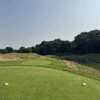
Shorehaven Golf Club in East Norwalk provides a dramatically different golf experience just 10 minutes east of Birchwood. This championship 18-hole layout stretches to 6,548 yards from the tips with a par of 71, slope rating of 132, and course rating of 72.2. Designed by the renowned Robert White and Willie Park Jr. in 1924, Shorehaven occupies a spectacular waterfront setting along Long Island Sound, offering genuine links-style golf rarely found in Connecticut. The course has earned Golf Digest recognition as the 11th-best course in Connecticut for 2025-26, a testament to its architectural merit and conditioning. Shorehaven’s greatest distinction lies in its collection of par-3s, particularly the signature 17th hole that plays long into prevailing winds with water views throughout. The property’s coastal location creates firm, fast playing conditions with strategic bunkering and wind patterns that demand thoughtful club selection and creative shot-making. Players who appreciate traditional links golf, dramatic water vistas, and courses with genuine championship pedigree will find Shorehaven offers substantially more length and strategic complexity than Birchwood’s nine-hole layout, making it ideal for accomplished players seeking a full 18-hole test in a scenic coastal setting.
Silvermine Golf Club in Norwalk presents a versatile 27-hole facility approximately 10 minutes north of Birchwood, straddling the Wilton town line. The main 18-hole Sier Hill course plays to 6,077 yards with a par of 70, slope rating of 107, and course rating of 65.0, designed by John E. Warner and opened in 1954. The layout features numerous dog-leg holes, small elevated greens, and strategic water hazards that demand precise iron play and course management. Complementing the main course is the nine-hole Sier Crest executive layout, measuring 1,984 yards at par 31, which provides a quick-play option similar in concept to Birchwood’s format. Established in 1959, Silvermine has cultivated a reputation as one of Fairfield County’s most active private clubs with strong family-oriented programming. The club’s 27 holes spread across more acreage than Birchwood’s property, offering greater variety in hole design and playing conditions. The main course’s undulating terrain provides more pronounced elevation changes than Birchwood’s relatively flat layout. Golfers who value having both a challenging 18-hole championship course and a shorter executive nine for quick rounds or family play will appreciate Silvermine’s dual-course setup, particularly players seeking more dramatic elevation changes and those who enjoy the flexibility of choosing between serious competitive golf and casual family rounds at the same facility.
Final Word
Birchwood Country Club proves that architectural excellence transcends mere acreage through thoughtful routing, strategic variety, and impeccable conditioning standards. Smith’s masterful design demonstrates how nine holes can provide complete strategic testing while maintaining playability across skill levels, particularly through the rare velvet bent grass surfaces that create superior putting conditions year-round. The club’s transformation from exclusionary institution to welcoming community reflects broader social progress while preserving championship-caliber golf in an intimate, walkable format that respects both tradition and modern sensibilities. For discerning players seeking strategic depth over raw length, Birchwood offers exceptional value through its unique combination of architectural merit, conditioning excellence, and genuine nine-hole character that remains increasingly rare in contemporary golf.

David is an avid golfer who loves walking Connecticut’s courses and playing alongside his family. He’s passionate about golf course architecture and one day hopes to play at Pebble Beach.