Airways Golf Course is a public par-71 course measuring approximately 5,845 yards from the tips. The course was originally designed in 1976 by Geoffrey S. Cornish, ASGCA and is located in West Suffield, Connecticut.
Airways Golf Course opened in the mid-1970s as part of Geoffrey Cornish’s prolific career designing accessible public layouts throughout New England. The family-owned operation has maintained the original Cornish routing while implementing gradual conditioning improvements over the past decade. Recent efforts have focused on fairway turf density, particularly on holes three through five and fourteen through sixteen, where tree thinning has improved sunlight penetration and grass establishment. The course remains open year-round weather permitting, with occasional routing modifications during spring when the 16th fairway experiences flooding.
The property occupies roughly 100 acres of gently rolling ex-farmland northwest of Bradley International Airport. Cornish employed his signature lay-of-the-land philosophy here, creating a routing that minimizes earth-moving while extracting strategic interest from existing topography. The design reflects Cornish’s democratizing approach to golf architecture—he was known as the Johnny Appleseed of New England golf, prioritizing playability and maintenance economy over flashy features. Tree-lined fairways provide natural corridor definition throughout most holes, though the layout avoids the extreme tightness that would punish developing players. The course particularly appeals to mid-to-high handicappers seeking forgiving corridors, league play, and an unpretentious test that emphasizes position over power, though accomplished players will find adequate challenge in approach shot precision and green reading.
Strategic Test
The strategic complexity at Airways resides primarily in green approaches rather than tee shot positioning. With generous fairway widths throughout most holes and limited fairway bunkering (fourteen bunkers total across the property), the course permits aggressive driving lines without severe penalty. However, this openness creates a different strategic calculus—players must balance the temptation to attack par with the reality that greens feature enough tilt and surrounding contour to reject poorly shaped approaches. Several holes incorporate water hazards via a medium-sized brook affecting five holes and small ponds, but these primarily function as boundary definition rather than strategic choice points. One reviewer noted the course as “a sleeper of a golf course that should be played for its solid layout,” while another observed “it has its share of challenging holes” despite the straightforward presentation.
The slope rating of 106 from the blue tees (course rating 66.0) indicates a layout that rewards accuracy more than it punishes wayward shots. Course rating represents the score a scratch golfer should shoot under normal conditions, while slope rating measures the relative difficulty for bogey golfers compared to scratch players, with 113 being average. Airways’ slope of 106 sits below average, meaning the scoring gap between scratch and bogey golfers compresses—high handicappers won’t see scores balloon as dramatically as on more penal designs. The course rating significantly below par reflects both the modest yardage and the generally receptive nature of playing corridors. For single-digit handicappers, the challenge becomes maintaining focus when birdies feel accessible but execution errors around greens can quickly erase gains. This rating structure suggests that while scratch players should expect to shoot several strokes under par on good days, higher handicappers can reasonably pursue bogey golf without encountering the catastrophic holes that often derail rounds on higher-sloped layouts.
| Handicap | Course Strategy |
|---|---|
| High Handicap (18+) | From the gold tees (5,175 yards), Airways presents an ideal scoring environment for developing players. The modest slope rating means bogey golf remains achievable without perfect execution. Focus should remain on keeping drives in play and avoiding the brook crossings on holes where water threatens. Green approaches can utilize ground game where contours permit, reducing the technical demand of aerial precision. The course rating suggests a 90-95 target score is realistic for 20-handicap players. |
| Mid Handicap (8-18) | The white tees (5,543 yards) create the most balanced test—enough length to require solid contact but not so much that par becomes inaccessible. Strategic decisions center on approach club selection, as several greens sit above grade or feature back-to-front tilt that demands accurate distance control. Players should identify which par-4s offer genuine birdie opportunities versus those requiring defensive pars. A 12-handicap player can reasonably target an 84 based on the slope and rating. |
| Low Handicap (0-8) | From the 5,845-yard blue tees, scratch players face a scoring opportunity that requires discipline. The short par-4s (several under 330 yards) tempt aggressive plays, but green complexes demand precision. The sub-par course rating of 66.0 indicates that scratch players should expect to shoot in the mid-to-upper 60s when executing well, though complacency around scoring can lead to careless errors that cost strokes around push-up greens and elevated putting surfaces. |
The 18th hole, a par-4 measuring 318 yards from the championship tees, encapsulates Airways’ strategic philosophy in miniature. The hole plays as a slight dogleg right that presents accomplished players with a genuine risk-reward dilemma. High handicappers from forward tees benefit from the abbreviated distance, treating the hole as a straightforward short par-4 that rewards two solid strikes—a fairway wood or hybrid off the tee followed by a short iron approach to a double-bunkered green complex. Mid-handicappers from white tees face approximately 300 yards, placing the green just beyond reach for most but creating temptation for stronger ball-strikers who can execute a controlled fade around the dogleg. Low handicappers from the championship tees possess the distance to drive the green with a fade, but the double-bunkered green complex punishes overly aggressive lines that fail to hold the putting surface. The hole functions effectively across all skill levels—providing a manageable finishing hole for developing players while offering scratch golfers one final birdie opportunity that demands precise trajectory control and distance management rather than simply rewarding raw power.
Nearby Course Alternatives
East Hartford Golf Club in East Hartford represents a compelling alternative approximately 20 minutes southeast from Airways. The 6,208-yard, par-72 layout (slope 124, rating 69.1) occupies similar yardage territory but offers considerably more elevation change across its routing. Designed originally by Devereux Emmet in 1930 with modifications by Al Zikorus in 1954, the course features Golden Age architectural elements including greenside mounding and strategic bunkering that creates a more layered visual aesthetic than Airways. The property spans roughly 120 acres with rolling parkland character, and recent management under Troon has improved conditioning significantly. Players who prefer courses where topography influences club selection and stance will find East Hartford more engaging, though the additional elevation and tighter tree-lined corridors create a higher penalty for errant shots. The Emmet pedigree and classical design elements make this particularly appealing to architecture enthusiasts willing to trade Airways’ straightforward simplicity for more complex strategic problems and more dramatic green contours.
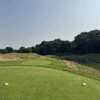
Keney Park Golf Course in Hartford delivers a distinctly different experience approximately 15 minutes south of Airways. At 6,449 yards with a par of 70 (slope 118, rating 68.2), Keney represents one of Connecticut’s premier municipal renovations. The front nine was designed by Devereux Emmet in 1927, with Robert “Jack” Ross completing the back nine in 1931, and Matthew Dusenberry executed a comprehensive restoration in 2016 that returned template holes and Golden Age bunkering elements. The property features dramatic elevation changes and severely contoured greens that demand advanced green-reading skills—a sharp contrast to Airways’ more subtle undulations. Keney’s 693-acre park setting provides expansive views and a sense of scale absent from Airways’ more intimate agricultural character. Players seeking architectural pedigree, historical significance, and a genuine test around the greens should prioritize Keney, though the severe green contours and elevation changes make it considerably more difficult than Airways’ slope rating would suggest. Single-digit handicappers who appreciate template holes and aggressive green complexes will find Keney more architecturally rewarding than Airways’ functional layout.
Final Word
Airways Golf Course provides modest practice amenities befitting its no-frills character. A small clubhouse anchors the property, offering a snack bar and restaurant that serves standard golf fare in a welcoming atmosphere. The facility includes a small outside patio and gazebo overlooking the ninth green, providing a pleasant post-round gathering spot during warmer months. While Airways doesn’t feature an extensive driving range or elaborate short-game practice areas, the focus remains squarely on delivering an honest golf experience rather than resort-level amenities. The family-run operation maintains a respectful atmosphere that accommodates league play, tournaments, and flexible tee times for single players, creating an accessible environment that prioritizes pace of play and player experience.
What makes Airways Golf Course valuable is precisely what Geoffrey Cornish intended when he routed it across this former farmland nearly five decades ago—an honest, economical design that spreads the game to players of all abilities without pretension. The family ownership model has preserved Cornish’s democratic vision, maintaining a layout where strategic thinking matters more than raw power and where improved conditioning continues to enhance rather than alter the fundamental playing experience. For golfers who understand that great architecture doesn’t require enormous budgets or earth-moving equipment, Airways demonstrates how thoughtful routing and restrained design can create engaging golf that serves its community year after year.

David is an avid golfer who loves walking Connecticut’s courses and playing alongside his family. He’s passionate about golf course architecture and one day hopes to play at Pebble Beach.