Carl Dickman Par 3 is a public par-27 course measuring approximately 1,240 yards from the tips. The course was originally designed in 1968 by Geoffrey Cornish and Bill Robinson and is located in Fairfield, Connecticut.
Carl Dickman Par 3 opened during golf’s great democratization period when architects like Geoffrey Cornish were creating accessible entry points to the game. Originally known as South Pine Creek Par 3, the facility served the Town of Fairfield’s mission to provide affordable golf instruction and recreational opportunities. The course honors Carl Dickman, a longtime Fairfield parks and recreation advocate who championed public golf access. Cornish’s design philosophy emphasized strategic simplicity over penal complexity, creating a routing that teaches fundamental golf principles without intimidating newer players. The municipal facility operates under walk-only policies, reinforcing the contemplative pace that reveals subtle strategic elements. Located just hundreds of yards from Long Island Sound, the course benefits from consistent sea breezes that add strategic complexity without overwhelming less experienced golfers. The facility underwent renovations in the early 2000s to improve drainage and green conditions while maintaining Cornish’s original design intent. Today it serves approximately 15,000 rounds annually, making it one of Connecticut’s busiest par-3 layouts. The course has produced several notable junior golfers who developed their short games on these approachable holes before advancing to championship golf. Local golf professionals frequently use the facility for instruction, recognizing how the progressive hole lengths create ideal learning conditions. Recent upgrades include improved practice facilities and modernized irrigation systems that maintain consistent playing conditions throughout the season. The pro shop offers equipment rentals and basic amenities while keeping operational costs minimal to preserve affordable green fees.
The course occupies approximately 15-20 acres of relatively flat terrain that Cornish intentionally preserved to eliminate intimidation factors common in championship layouts. The routing follows a straightforward out-and-back design that maintains visual separation between holes while maximizing strategic variety within the compact footprint. The design vibe emphasizes accessibility and instruction over championship challenge, with generous landing areas and minimal hazards that allow players to focus on approach shot fundamentals. Distance variance serves as the primary strategic tool, creating holes that range from 90 to 187 yards and demand everything from wedge precision to hybrid execution. The player who will most enjoy this course appreciates strategic golf education over dramatic scenery, values walk-only golf policies that encourage reflection between shots, and seeks to develop short-game skills in a non-intimidating environment. Serious golfers use the facility for approach shot practice and course management study, while beginners find the perfect introduction to golf’s strategic elements. The consistent wind patterns from Long Island Sound add subtle complexity that teaches players to factor environmental conditions into club selection. Families particularly appreciate the manageable walking distances and the ability to complete rounds in under two hours, making golf accessible to players with limited time commitments.
Strategic Test
Despite its modest 1,240-yard length and minimal hazards, Carl Dickman presents genuine strategic interest through distance variety and wind management. The course features holes ranging from 90 to 187 yards, requiring players to use virtually every short iron and wedge in their bag. Cornish deliberately avoided placing holes of similar length consecutively, forcing constant club selection adjustments throughout the round. Risk-reward opportunities emerge primarily on the extremes, with the 187-yard eighth hole demanding accurate long-iron execution and the 90-yard ninth offering a scoring opportunity for birdie finish. The coastal location means wind becomes the course’s most significant strategic element rather than topography or hazards, with sea breezes often adding or subtracting one to two clubs on longer holes.
The course challenges different skill levels through different mechanisms. Beginners benefit from flat terrain, shorter distances averaging 138 yards per hole, and limited hazards that allow focus on fundamentals without intimidation. Mid-handicappers face the challenge of precision distance control across nine different yardages, wind management, and scoring on greens rated as medium speed but true in roll. Low handicappers use the course primarily for short-game practice, with the best recorded score of 25 (two under par) demonstrating that excellent play is required to beat par significantly. The greens themselves add strategic complexity through their large, undulating surfaces that require careful reading despite medium speed, with pin position becoming critical where conservative play to the center often proves wiser than aggressive attacks at tucked pins.
Carl Dickman’s accessibility extends across all skill levels while maintaining strategic merit. The course rating and slope provide quantitative measures of difficulty that help players understand expected performance. Course rating represents the expected score for a scratch golfer under normal conditions, while slope rating measures the relative difficulty for bogey golfers compared to scratch golfers on a scale of 55 to 155, with 113 representing standard difficulty. For Carl Dickman, the blue tees carry a 26.2 course rating with an 80 slope, while red tees show a 27.1 rating with an 82 slope. These modest ratings confirm the course’s accessible nature, though the spread between course rating and par reveals that even scratch golfers rarely achieve scores significantly under par. The slope ratings near 80 indicate relatively easy conditions for bogey golfers, meaning high handicappers can expect reasonable scoring relative to their established handicaps. For mid and low handicappers, the low slope suggests limited penalty for wayward shots, shifting strategic emphasis from avoiding trouble to executing precise distance control and capitalizing on birdie opportunities.
| Handicap | Course Strategy |
|---|---|
| High Handicap (18+) | High handicappers should play from the red tees at 1,073 yards, where distances range from 78 to 173 yards and average under 120 yards per hole. The 27.1/82 rating suggests an 18-handicapper can expect to shoot around 45 (18 over par), making bogey golf on each hole a realistic target. Strategic priorities include using enough club to reach greens consistently rather than under-clubbing, focusing on center-green targets regardless of pin position, and avoiding the temptation to help the ball into the air. The flat terrain eliminates concerns about uneven lies, allowing full concentration on fundamentals. The minimal hazards mean aggressive recovery shots are rarely necessary, with advancing the ball safely forward always the correct play. Wind management becomes critical, with players needing to take one or two extra clubs into prevailing breezes. |
| Mid Handicap (8-18) | Mid handicappers typically play from white or blue tees between 1,240 and 1,073 yards depending on preference and conditions. The 26.2/80 rating from blue tees suggests a 13-handicapper can expect to shoot approximately 39-40 (12-13 over par), making pars feel like small victories and bogeys acceptable outcomes. Strategic focus shifts to scoring opportunities on shorter holes while managing longer holes conservatively. Accurate distance calculation with wind adjustment becomes critical, with players needing reliable yardage to each pin position. Pin position deserves consideration, but favoring safe sides of greens remains wise given the undulating surfaces. Success requires trusting yardage reads, committing fully to club selection, and executing quality lag putting from distance. The course rewards disciplined course management over aggressive heroics. |
| Low Handicap (0-8) | Low handicappers playing from blue tees at 1,240 yards face a 26.2/80 rated course where the scratch golfer expects to shoot around 26 (one under par). Gaining strokes on a par 27 course requires capitalizing on every birdie opportunity through aggressive yet calculated play. Strategic priorities include precise yardage calculation incorporating wind, trajectory, spin rates, green firmness, and potential roll-out. Pin positions should be attacked when favorable, though knowing proper miss zones remains critical especially on undulating greens with tucked pins. Advanced players may consider two-club wind adjustments on exposed coastal holes and should commit to aggressive play when conditions allow. The difference between shooting 25 (tying the course record) and 30 often comes down to converting makeable birdie putts, making quality lag putting and short game essential. The course serves primarily as short-game practice and iron tune-up facility rather than competitive challenge. |
The signature eighth hole at 187 yards represents Carl Dickman’s defining strategic test. From the blue tees, most players face a 5-iron to 6-iron in calm conditions, though the coastal location means wind dramatically alters club choice with headwinds requiring 4-iron or hybrid and tailwinds playing more like 6-iron to 7-iron. This two-to-three-club wind variance exemplifies how weather becomes the course’s primary strategic element. The putting surface features the undulating contours typical of Cornish’s design style, with multiple pin positions allowing varying difficulty and greens rolling true at medium speed. High handicappers (18+) should prioritize simply reaching the green surface or immediate vicinity using a hybrid or fairway wood if necessary, targeting exclusively the center regardless of pin position and taking one extra club for a smooth, balanced swing, with par representing an excellent score and bogey entirely acceptable. Mid handicappers (8-18) should aim to hit the green in regulation while creating birdie opportunities through accurate distance calculation with wind adjustment, considering pin position but favoring safe sides, and committing fully to club selection while slightly favoring the long side to avoid short-sided trouble. Low handicappers (0-8) must view this as a birdie opportunity, incorporating precise yardage calculation with wind, trajectory, spin rates, green firmness, and roll-out into club selection, attacking pins when favorable while knowing proper miss zones, and making the birdie putt following quality approach shots to score well on the full nine. The hole’s positioning as the penultimate challenge before the short 90-yard ninth creates interesting strategy, with players who struggle on the long eighth having immediate redemption on the short ninth, while those who birdie eight can build momentum into a strong finish.
Nearby Course Alternatives
Short Beach Golf Course in Stratford sits 9-11 minutes northeast via I-95, measuring 1,359 yards from blue tees with a 27.0/81 rating (middle tees: 1,262 yards, forward: 1,116 yards). This Geoffrey Cornish and Brian Silva design from 1988 occupies 15-20 acres of relatively flat coastal terrain. Short Beach offers 119 additional yards compared to Carl Dickman, with holes ranging from 98 to 230 yards where the 230-yard seventh represents a significantly longer challenge. The links-style design features spectacular Long Island Sound views with sea winds consistently in play, well-placed bunkers, and sophisticated green complexes that slope back-to-front requiring careful putting. Silva’s modern design sensibility creates more sophisticated architecture than Carl Dickman’s simpler layout. Practice facilities include both putting and chipping greens, an advantage over Carl Dickman. The course is described as one of the better executive courses and a hidden jewel in Stratford, featuring bent grass greens and rye grass fairways maintained despite modest municipal budget. Players seeking more challenge through greater length variation and longer maximum distance (230 versus 187 yards), dramatic oceanside settings with strategic wind play, sophisticated green complexes and bunker placement from accomplished architects, or a chipping area for short game practice would prefer Short Beach over Carl Dickman.
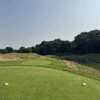
The Orchards Golf Course in Milford sits 16-17 minutes northeast via I-95, measuring 1,625 yards from white tees with a 36.1/113 rating (forward: 1,433 yards, same rating). This John R. Casey Sr. design from 1997 occupies 20-25 acres of flat former farmland. The Orchards differs fundamentally as a par 32 executive course mixing five short par 4s (207-266 yards) with four par 3s (68-167 yards), creating entirely different strategic dynamics particularly on drivable par 4s where longer hitters face risk-reward decisions. The signature ninth hole at 266 yards features a field goal of tall trees at 200 yards requiring accuracy, while the seventh hole, a 167-yard uphill par 3 surrounded by rough, is considered the best hole. Large, elevated greens with significant slopes create excellent chipping and pitching practice opportunities, though the cramped layout receives some criticism for awkward routing. The course is known as a best-kept secret in south central Connecticut with excellent conditioning including nicely maintained fairways, teeboxes, and lush rough, professionally managed by Northeast Golf Company since 2021. Modern amenities include ForeUp online booking, well-stocked pro shop with Callaway equipment, and large practice green plus hitting net. Approximately 35,000 rounds are played annually at very affordable rates of sixteen to nineteen dollars for non-residents. Players preferring The Orchards over Carl Dickman include beginners and high handicappers seeking easier scoring through short par 4s that build confidence, families with mixed skill levels benefiting from varied hole lengths accommodating different abilities, golfers wanting driver practice on drivable holes impossible on pure par 3 courses, those focused on short game around elevated tricky greens, value seekers getting 385 additional yards and higher par for comparable fees, players prioritizing course conditioning and modern professional management, and convenience seekers valuing efficient online booking systems and well-stocked pro shops.
Final Word
Carl Dickman operates as a no-frills municipal facility with minimal amenities beyond the golf course itself. A large, beautifully maintained practice putting green is available to all players, with arrivals encouraged 15-20 minutes early for warmup, though there is no driving range at Carl Dickman as the sister facility H. Smith Richardson Golf Course operates a separate range on Hoydens Lane. No dedicated chipping or short game practice area exists, though the course itself serves this function for many players. The facility features minimal infrastructure with a check-in window handling transactions and pro shop purchases carrying basics including golf balls, tees, gloves, and rental clubs in limited selection appropriate for a par 3 course. Payment is cash only or Venmo with no credit cards accepted. There are no food or beverage facilities beyond bottled water, as the separate H. Smith Richardson facility has Boca Grille and Raw Bar restaurant that Carl Dickman does not share. Rental clubs and pull carts are available, though the course operates as walking-only with no motorized golf carts available for general use and electric carts reserved exclusively for handicapped players with proper documentation. Convenient parking is plentiful and complimentary. The facility offers no swimming pool, tennis courts, or other recreational amenities beyond golf, though junior golf camps operate with blocked tee times Monday-Thursday 12:30-3:00 PM through August and online tee time booking provides modern convenience despite otherwise basic amenities.
Carl Dickman Par 3 Golf Course succeeds brilliantly at its intended purpose of providing accessible, affordable public golf to the Fairfield community while maintaining the strategic interest that respected architect Geoffrey Cornish built into the original 1968 design. The course honors Carl Dickman’s legacy as a public golf advocate by serving beginners, families, juniors, and seniors without alienating skilled players who appreciate efficient short-game practice. The flat coastal terrain, minimal hazards, and manageable distances create a welcoming environment, while distance variation from 90 to 187 yards and consistent wind play from Long Island Sound preserve strategic complexity. The walking-only policy encourages fitness and maintains quick pace, with typical rounds completing in 90 minutes. At sixteen to twenty dollars for non-residents and less for Fairfield residents, Carl Dickman delivers excellent value for quality golf on well-maintained grounds. While amenities remain minimal with no driving range, no chipping area, and no dining facilities, this no-frills approach focuses resources where they matter most through consistent course conditioning and affordable access. The course excels within its niche as Connecticut’s premier beginner-friendly, family-accessible par 3 that serious players respect for legitimate strategic merit despite modest length, proving that thoughtful architecture and proper maintenance matter far more than elaborate facilities when delivering meaningful golf experiences to the community.

David is an avid golfer who loves walking Connecticut’s courses and playing alongside his family. He’s passionate about golf course architecture and one day hopes to play at Pebble Beach.