

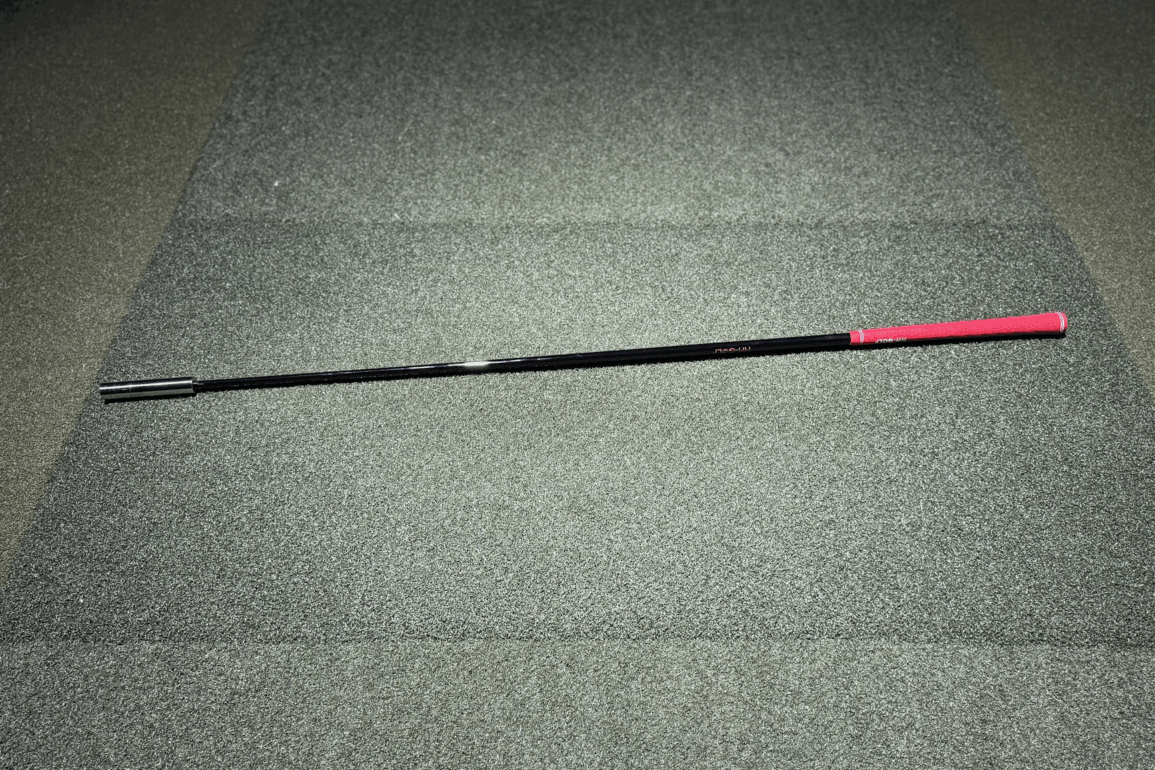
I purchased the HH-GOLF Swing Speed Trainer as part of a dedicated off-season program to improve clubhead speed without sacrificing control. Coming from a background of structured simulator practice, I wanted a single, adjustable-weight trainer that could replicate the benefits of more expensive systems like SuperSpeed or Rypstick, but at a fraction of the cost. The trainer’s three weight settings, compact form, and standard golf grip seemed perfect for both indoor simulator work and pre-round warm-ups. The graphite shaft and stainless-steel weights promised durability, while the swing weights suggested realistic feel.
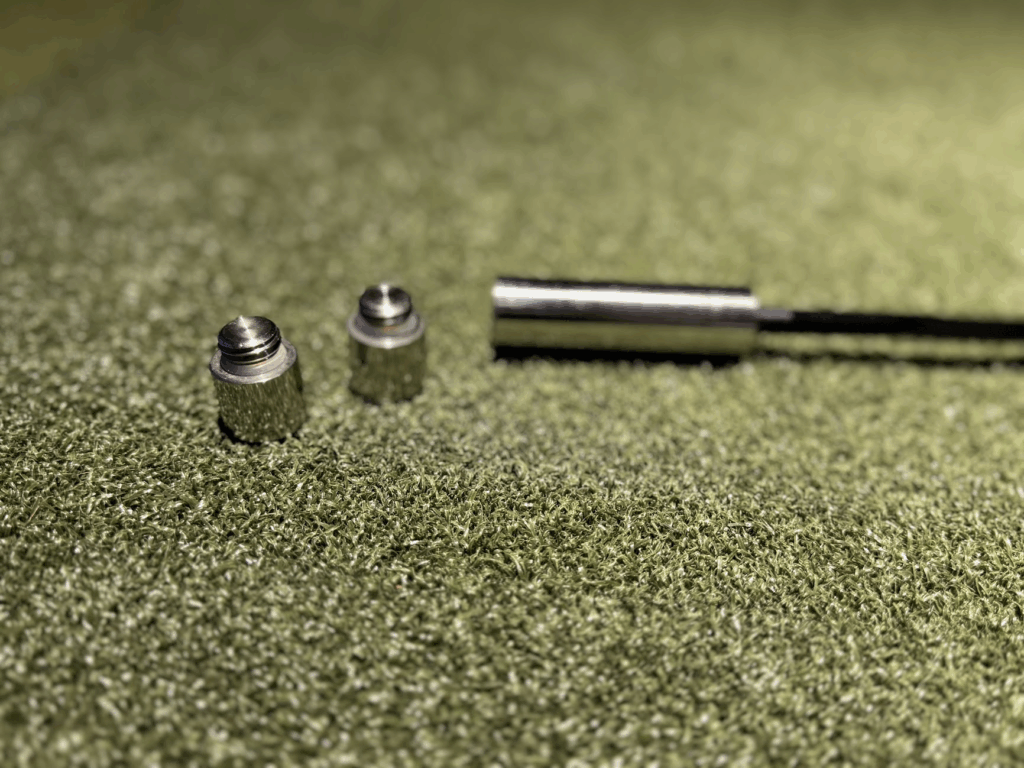
Before incorporating it into my speed protocols, I tested the build quality and ergonomics. The rubber grip is functional, though slightly firmer than my gamer clubs. Weight changes are straightforward, but the threaded inserts require careful tightening to prevent mid-session loosening—a known issue from online reviews. Overall, my first impression was that this tool could become a legitimate driver of swing speed gains if paired with a disciplined, measurable routine.
Usage
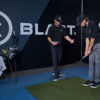
I integrated the HH-GOLF trainer into my weekly practice in the simulator bay, using it alongside my driver and 7-iron for comparative speed data. My typical session began with the lightest weight for overspeed training, then moved to the medium weight for transition rhythm, and finally the heaviest weight to build strength in the downswing. Using the TrackMan Speed Training system, which can be accessed by going to Training > Shot Analysis, I could immediately see speed variance between the weighted stick and my gamer driver. This pairing allowed me to track incremental progress with precision.
A typical HH-GOLF session can be structured as follows:
| Drill | Detailed Description & Purpose |
|---|---|
| Non-Dominant Hand Swings | To perform this drill, grip the HH-GOLF trainer with your non-dominant hand only, placing the other hand lightly on the shaft for stability if necessary. Take a normal address position, then make full, fluid swings focusing on maintaining balance and generating as much speed as possible through impact. The key is to keep your body rotating through the shot rather than letting the arm dominate the motion. You will likely feel less control at first, which is expected; the objective is to challenge your coordination and sequencing. Over 10–15 swings, your body begins to adapt by engaging stabilizing muscles and improving your range of motion on the weaker side. This drill is extremely useful because it addresses asymmetry in your swing, strengthens underused muscles, and creates a more balanced kinematic sequence, all of which translate to improved consistency and injury prevention in your dominant-side swing. |
| Freezer at Top of Swing | Begin by addressing the ball area and taking the club back into your full backswing position. Once you reach the top, pause and hold this position for two full seconds, ensuring your weight is loaded into your trail side and your wrists maintain their hinge. After the pause, initiate the downswing with a powerful rotation of the hips while maintaining your spine angle. Focus on feeling the sequence: hips, torso, arms, then club. Repeat this for 8–10 swings. The freezer drill is valuable because it trains patience and control at the transition, reduces casting, and helps you retain stored energy for a more explosive downswing. This builds awareness of correct sequencing and reinforces lag, a key factor in maximizing clubhead speed without sacrificing accuracy. |
| Lead Heel Lift Swings | Set up normally, but as you start your backswing, allow your lead heel to lift off the ground slightly. At the top of your swing, drive your lead heel back into the ground as you begin the downswing, feeling the pressure shift forward. This action should trigger a more aggressive ground-force reaction, leading to higher speed through impact. Perform 6–8 repetitions, focusing on rhythm and timing the heel plant with the start of your hip rotation. This drill is important because it encourages a more athletic weight shift, promotes the use of ground forces to generate power, and helps players feel a dynamic lower body in the swing. It is especially beneficial for golfers who tend to “hang back” or fail to transfer weight effectively into the lead side. |
This trainer pairs exceptionally well with the Rypstick App, which provides detailed drill instructions and specifies whether to perform reps on your dominant or non-dominant side. The app also advises on which weights to use for each phase and builds in micro-breaks to keep fatigue from affecting swing quality. By following the app’s structure with the HH-GOLF stick, I was able to blend scientific progressions with cost-effective equipment.
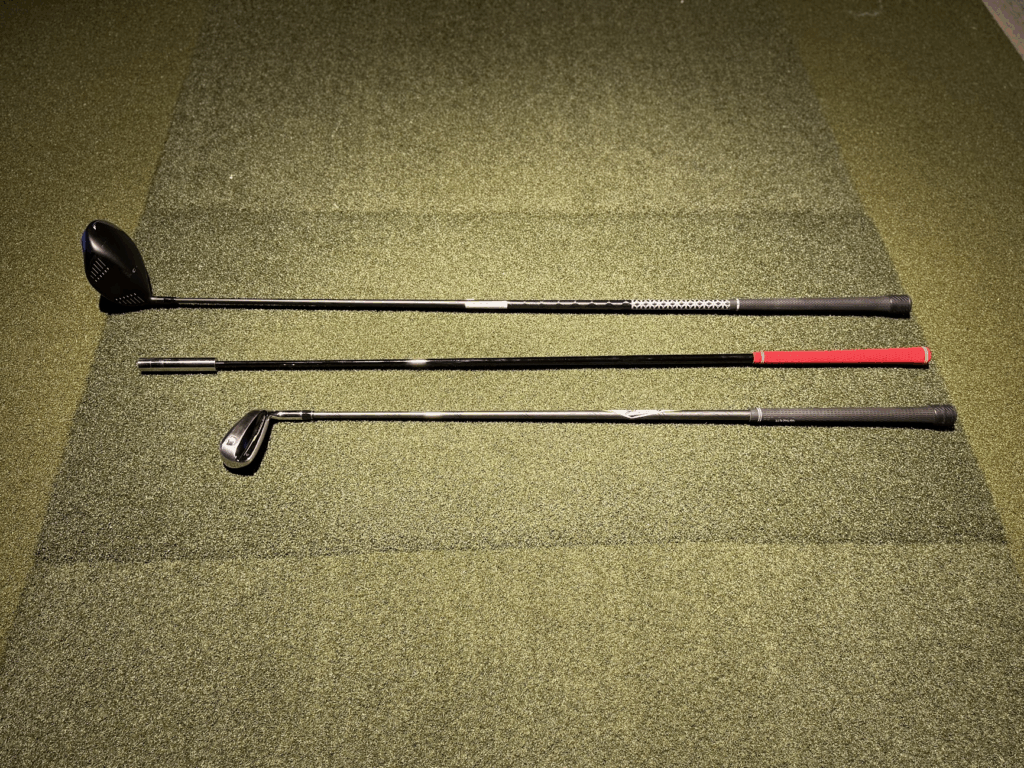
For indoor work, the trainer’s 45-inch length fit comfortably into the hitting area without risk of ceiling strikes. I used the heavier setting for pre-round warmups before sim play, which helped me get past the “first three holes” sluggishness I usually have in cold starts. Switching between the HH-GOLF and my actual driver highlighted tempo improvements—less rushed in the transition and more balanced at finish.
Efficacy
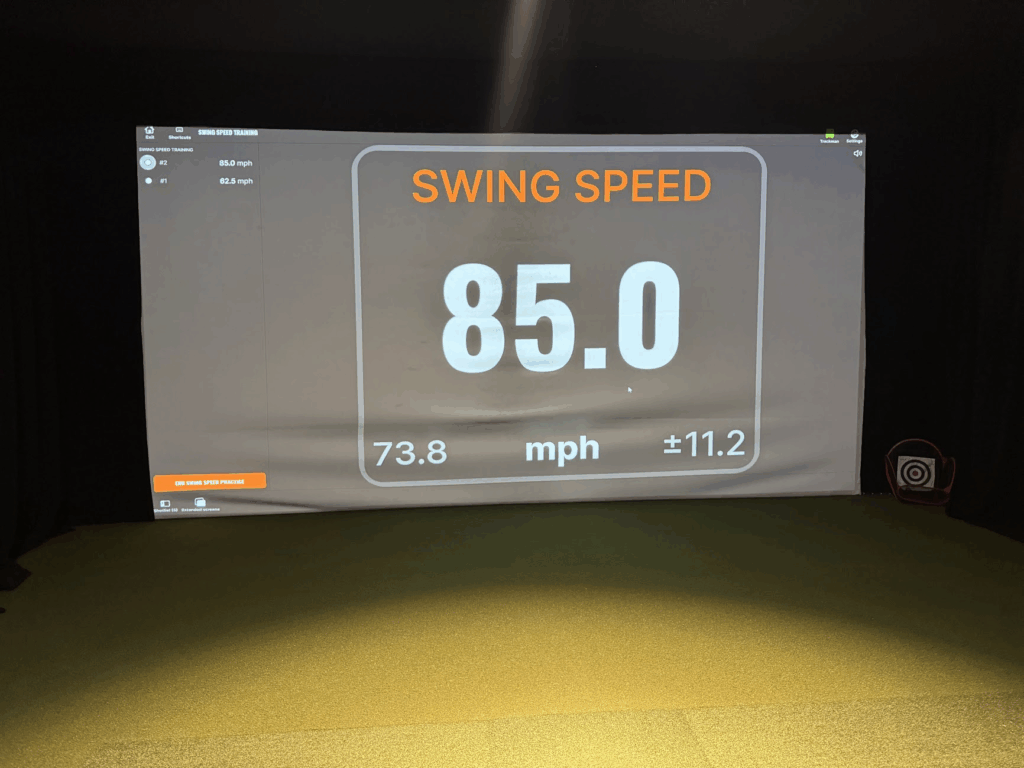
Within my first two sessions, I recorded a measurable increase in driver swing speed—from 81.0 mph to 85.0 mph, confirmed on TrackMan. This gain translated into better carry potential, especially on my mid-to-long par 4 tee shots in simulated play. By the third week, I could hit my 3-wood with more authority, carrying hazards I’d previously been short of in my home course simulation (notably the cross-bunker on Hole 7).
The overspeed principle worked as intended—lighter swings trained my body to move faster than normal, and heavier swings helped me maintain stability and sequence at higher velocities. The HH-GOLF system doesn’t come with a proprietary training protocol, so I followed a modified SuperSpeed Level 1 progression, using the heavier stick to replicate late-round fatigue conditions. This combination helped me sustain my swing speed even toward the back nine in on-course play.
On the course, the benefits showed most clearly on holes that demand both distance and accuracy under fatigue. For example, on a simulated version of Hole 14 at my home course—a long par 5 into wind—I was able to carry the crest of the fairway hill, setting up a realistic chance to reach in two. This wasn’t possible before adding speed training. On short par 4s like Hole 4, where control is key, the improved sequencing meant I could step down to a 3-wood without losing much distance, keeping me in play more often.
Final Word
The HH-GOLF Swing Speed Trainer is an excellent entry point into serious swing speed training for players who want measurable, transferable results without the premium price tag of name-brand competitors. While Rypstick and SuperSpeed retail for around $199–$299, the HH-GOLF comes in at roughly $30–$35, making it less than one-sixth the price. For budget-conscious golfers or those unsure if speed training will fit their long-term routine, it’s a compelling way to get started.
If your goal is to increase swing speed by 3–7 mph over several weeks, and you’re willing to commit to a consistent routine, this trainer can absolutely deliver. Just be sure to treat it like a real club—tighten the weights, swing in a safe space, and use it in conjunction with your normal clubs to ensure the gains transfer to actual shots. For the cost, it’s one of the most effective training aids I’ve added to my bag.

David is an avid golfer who loves walking Connecticut’s courses and playing alongside his family. He’s passionate about golf course architecture and one day hopes to play at Pebble Beach.







Just bought one. Have never used speed sticks before so this should be an interesting experiment. Great article!
Hope you like it! It’s a great tool when paired with a Trackman
This is the real deal. Just buy 3 of these for the same price of rypstick and keep one at the studio or trunk or home