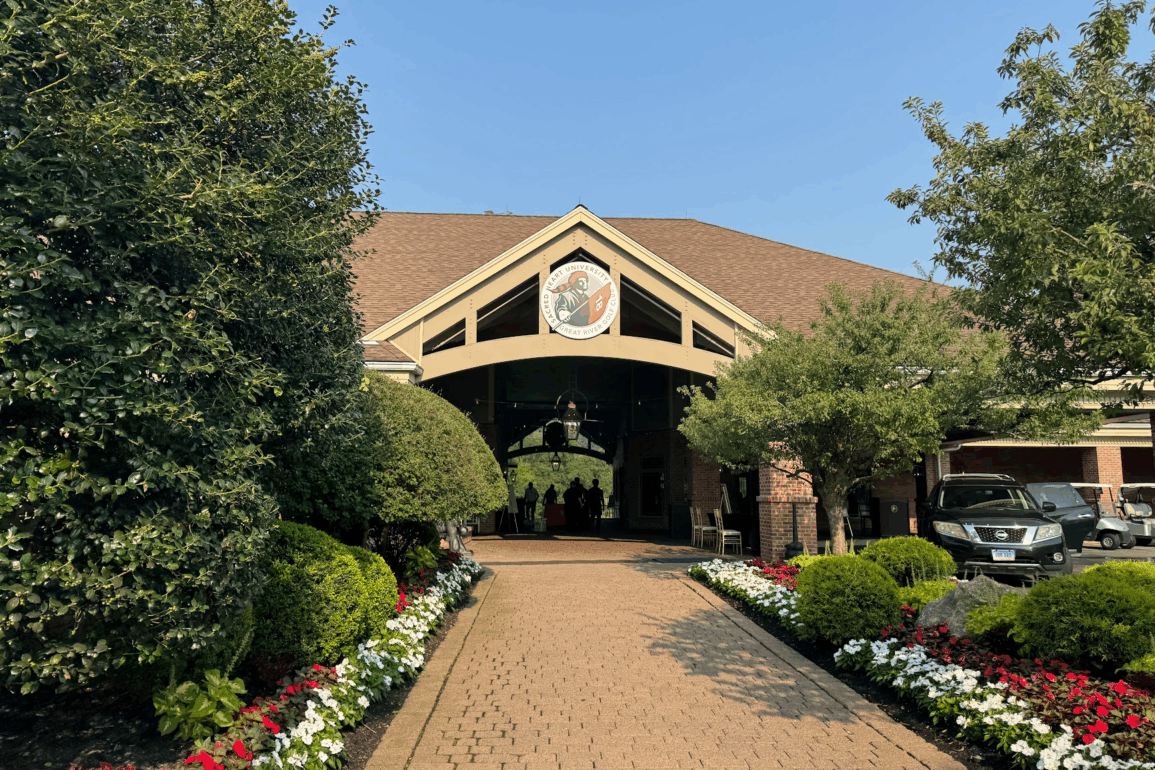
Great River Golf Club is a semi-private par-72 course measuring approximately 7,060 yards from the tips. The course was originally designed in 1999 by Tom Fazio and is located in Milford, Connecticut.
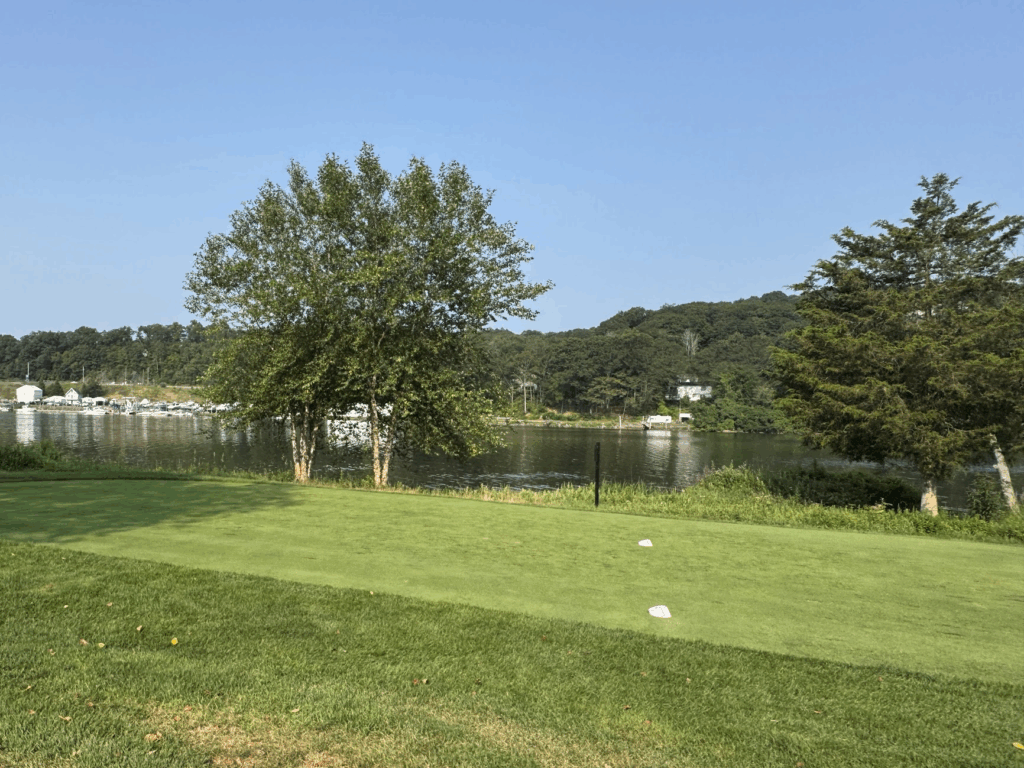
Set on roughly 190 acres along a 1.5-mile stretch of the Housatonic River, the routing is constrained by the property’s narrow geometry, resulting in seventeen of eighteen holes running predominantly north-south. This creates parallel corridors with recurring water interplay, particularly on the front nine where six holes play along the river. The terrain is mostly gentle river plain, with engineered elevation around select push-up greens—notably the third and twelfth—that add defensive contour and visual interest. The design vibe blends penal water edges with calculated angles into tiered greens, creating an accuracy-first test that rewards shotmakers who understand trajectory control and spin management into back tiers. Players who enjoy solving approach problems, working the ball into correct quadrants, and choosing between conservative and aggressive fairway lines will find the strategic bones compelling.
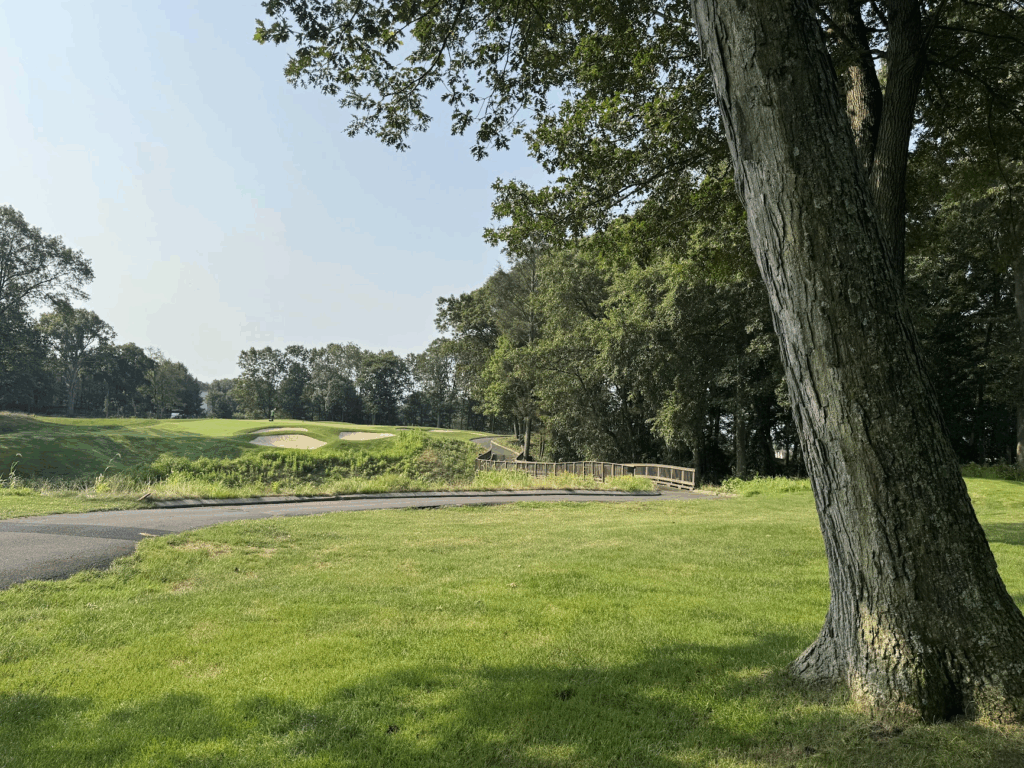
Great River opened in 2001 as an ambitious high-end daily-fee facility with a reported construction investment exceeding $40 million, but original ownership struggled with debt service despite the property’s quality. Sacred Heart University acquired the course in late 2015, transforming it into the home course for their Division I men’s and women’s golf programs while maintaining semi-private public access. Under university stewardship, conditioning has improved significantly, with Superintendent Curtis bringing experience from Darien Country Club to maintain championship-caliber bentgrass surfaces. The facility now hosts the LPGA Epson Tour Hartford Healthcare Women’s Championship and multiple USGA qualifying events, lending tournament credibility to the layout. One significant operational change reversed the original nine designations—what was initially the back nine now serves as the front, eliminating an awkward opening par-3 and creating more conventional pacing. Strategic Monday closures for maintenance and outings protect agronomic quality while the course remains open six days weekly for public play.
Walkability
Great River’s walkability stands out as a signature strength for a 7,060-yard championship layout. The compact 190-acre footprint ensures green-to-tee transitions remain short and logical, with both nines returning to the clubhouse for convenient pacing and hydration. The predominantly flat river-plain terrain minimizes elevation gain across most holes, with only the climbs to the elevated third and twelfth greens introducing cardiovascular effort without straining stamina. Mature tree lines provide generous shade along many corridors, making summer walking comfortable. The routing flow encourages steady rhythm, never forcing awkward detours or long cart-path marches that interrupt concentration. Even during busy play, the layout prevents major congestion points, though the eighth-to-ninth transition along the water’s edge can create brief bottlenecks when groups pause to admire the fountain at nine.
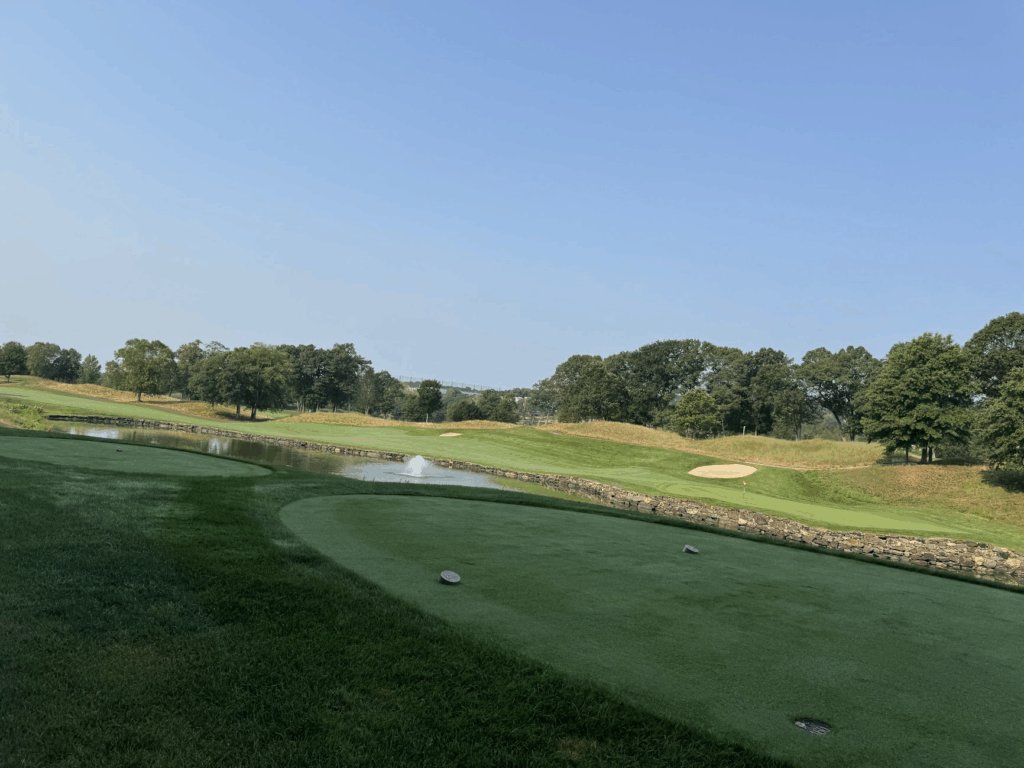
The opening stretch from holes one through four establishes walker-friendly character immediately. The first is a mid-length 352-yard par-4 with water influence right; the second sits just steps away, framed by a thirty-foot waterfall next to the green that creates both visual drama and functional bridge-crossing to the putting surface. The third hole, a demanding 498-yard par-5, returns slightly inland to an elevated green, making you feel subtle topography changes that engage the legs without taxing stamina. The fourth shifts play laterally without requiring a long walk, demonstrating efficient routing that respects energy budgets. This loop benefits from shade along fairway edges and minimal cart-path interaction, preserving natural flow. By the fourth green, you’re warmed mentally and physically without feeling hurried or fatigued—a rhythm that continues through the round, making walking the optimal way to experience the course’s strategic subtleties.
Strategic Test
Great River presents a thinking player’s course through consistent questions of line and angle, making club selection and ball placement paramount. Hazards are positioned with intent, often dictating not just direction but trajectory. On many holes, the ideal landing zone changes with pin location, forcing adaptability rather than allowing robotic execution. The stretch from three to eight is particularly strong, blending reachable par-5s with demanding par-3s and par-4s where shot shape matters significantly. The river’s proximity influences wind on certain holes, adding subtle complexity to club selection. Bunkering appears well-placed rather than ornamental, making avoidance a strategic priority. Angled greens often reward approaches from one side of the fairway while punishing the opposite angle with reduced visibility or tricky slopes. The design rewards discipline but still allows boldness when execution matches confidence, creating robust strategic dimension that challenges low handicaps while offering clear options for higher-handicap players.
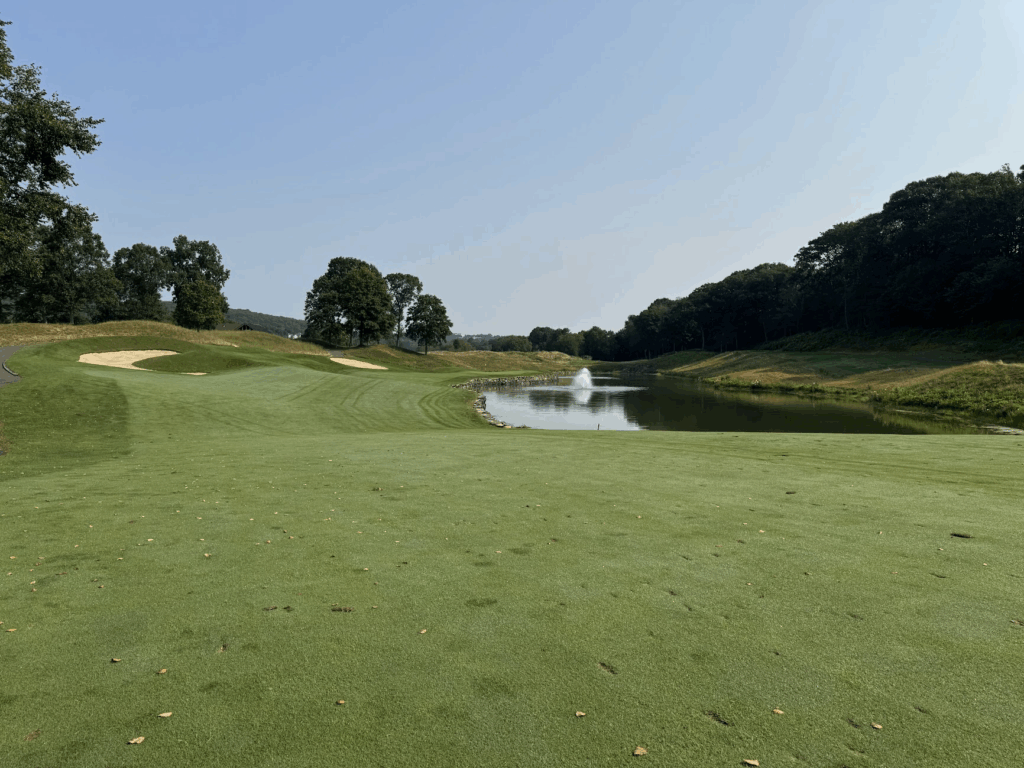
The sixth hole, a 518-yard par-5, serves as the strategic centerpiece. From the back tee, a 190-yard carry over water feeds into a fairway drifting left along the river. Aggressive players can attack the tight turning line with driver, bringing the hazard into play but setting up a mid-iron or hybrid second shot at the ideal approach angle—this route rewards precise execution with eagle chances but punishes the slightest pull with watery penalty. Conservative players can choose 3-wood to the fairway’s center-right, keeping the hazard out of play entirely. From there, they face a second decision: push past the large fairway bunker to leave a comfortable wedge, or lay up further back for a fuller view into the green. The green itself is guarded by water left and bunkers right, making pin location dictate strategy—a front pin from the aggressive line is a green light, while a back-right pin requires a high, spinning shot or clever bump-and-run. Wind from the river adds unpredictability, forcing constant adjustments in trajectory and club selection. This hole embodies the risk-reward balance that defines Fazio’s work here, remaining compelling for all skill levels.
Playability
While built to tournament specifications with a slope rating of 146 from the Black tees (74.6 rating), Great River maintains accessibility through thoughtful tee placement and open green fronts. The course offers five tee options: Black (7,060 yards, 74.6/146), Blue (6,707 yards, 72.8/142), White (6,313 yards, 70.2/135), and Red (4,997 yards, 70.5/127). These differentials mean a 15-handicapper from the Whites faces similar scoring expectations as a 5-handicapper from the Blacks—the course scales appropriately across abilities. Fairways are generous enough to receive well-struck drives without being so wide as to remove accuracy requirements. Forward tees are positioned to remove or shorten forced carries on several holes, allowing newer golfers to play without intimidation. Greens are large, well-conditioned, and receptive to various shot types, from high approaches to bump-and-run recoveries. The conditioning—firm fairways, smooth greens, consistent bunker sand—contributes significantly to playability, while visual intimidation from water or bunkers is often tempered by actual safe bailout zones.

The second hole, a 214-yard par-3 from the back but approximately 150 yards from forward tees, exemplifies inclusive design philosophy. From the tips, it’s a long-iron or hybrid over water with the waterfall adding psychological pressure. From the forward tees, it becomes an inviting mid-iron that feels achievable without being a pushover. The green is generous in its middle and front sections, receiving shots with enough forgiveness to keep mid- and high-handicappers engaged. Misses short remain playable in fairway-height grass, and right-side chipping areas are maintained at fairway height for recovery variety. The hole introduces players early to the course’s conditioning quality—smooth bentgrass surfaces and firm-but-receptive greens. Visually, the waterfall creates a memorable backdrop that’s welcoming for beginners from forward tees yet nerve-wracking for accomplished players attempting back-pin locations. This balance ensures players of all abilities start their round with confidence rather than frustration, setting the tone for a challenging but fair examination.
Atmosphere
The atmosphere at Great River blends polished refinement with genuine riverfront beauty. The course feels secluded despite its compact routing, with many holes offering isolation framed by mature trees and water. Sound plays a significant role—the rush of the river near certain greens, the soft splash of the waterfall at the second, and the rustle of leaves along shaded corridors enhance immersion. Conditioning adds atmospheric weight, with vibrant bentgrass fairways contrasting against deep greens of the tree line and soft tan fescue. Stone walkways, walls, and bridges on holes two, four, seven, ten, and twelve through eighteen accentuate charm while serving functional purposes. Tournament history, including hosting the LPGA Epson Tour Hartford Healthcare Women’s Championship, adds prestige without creating pretension. Social energy comes from active senior and women’s leagues, yet the course remains tranquil during casual weekday rounds. It’s a place where the environment enhances focus and enjoyment rather than distracting from the game.
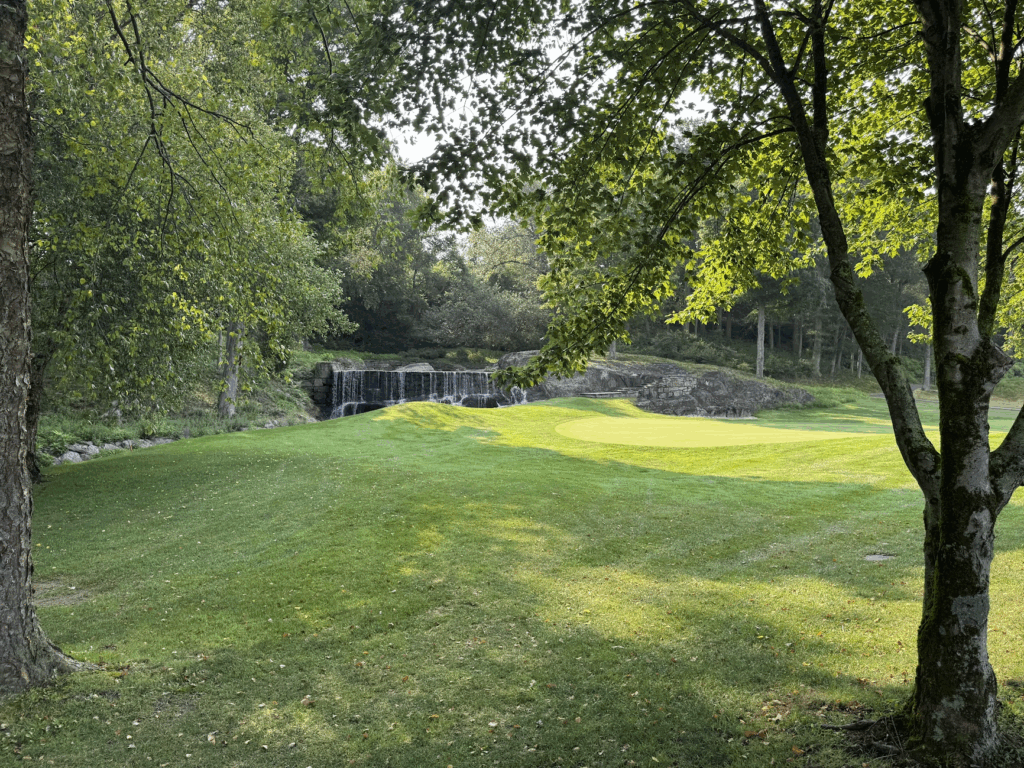
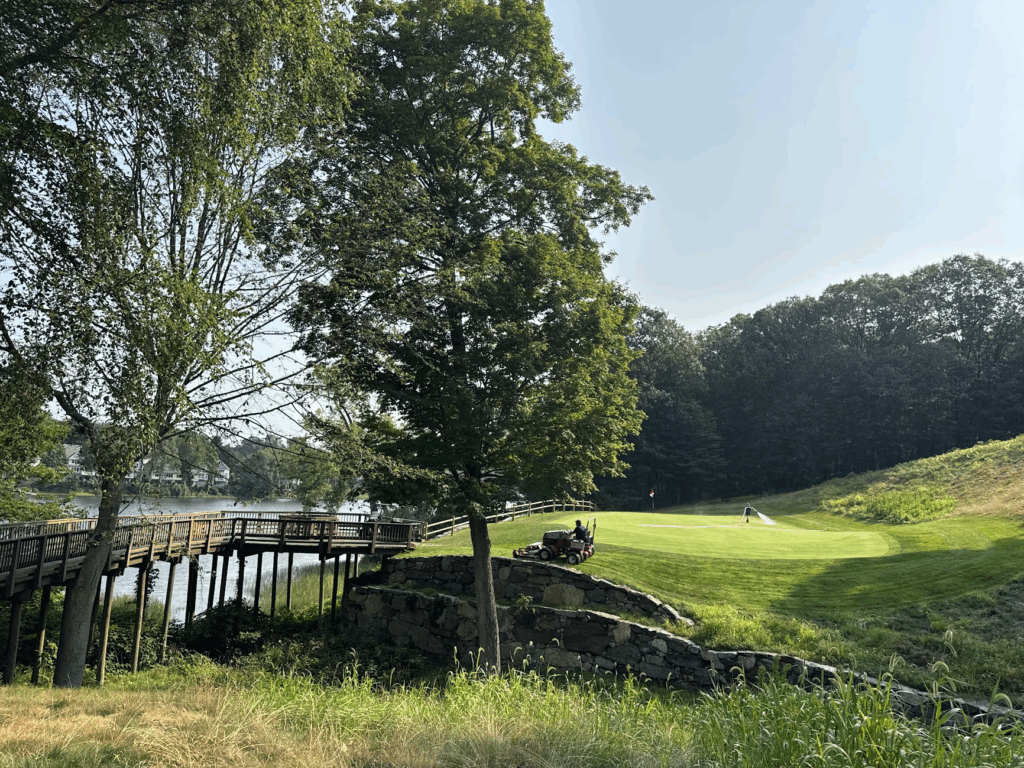
The fifteenth hole stands as the emotional high point of the round. This 155-yard par-3 is framed by the river, featuring a walkway and bridge that turn the journey to the green into an experience of its own. From the tee, the visual composition—water in the foreground, mature trees framing the sides, and the green perched just beyond—creates anticipation. The bridge itself offers a moment of pause, allowing you to absorb the setting before stepping onto the putting surface. During tournaments, this hole often serves as a hole-in-one contest location, adding extra excitement. The sounds of the river and sense of isolation from other holes amplify the atmosphere. It’s the kind of hole that sticks in memory not just for design quality but for the complete sensory package it delivers—even players who struggle here tend to leave with smiles, having experienced one of Connecticut’s most photogenic and well-crafted moments in golf architecture.

Nearby Course Alternatives
Lake of Isles North Course in North Stonington, approximately 50 minutes east of Great River, offers Connecticut’s most dramatic public golf experience. Designed by Rees Jones and opened in 2005, this championship layout stretches to 7,279 yards from the tips with a slope rating of 147 and course rating of 76.4. Set on roughly 90 acres adjacent to Foxwoods Resort Casino, the course occupies less acreage than Great River but uses vertical rather than horizontal space to create separation and drama. Where Great River relies on water interplay and strategic angles on relatively flat terrain, Lake of Isles North attacks through relentless elevation changes, island greens, and rocky outcroppings. The signature second hole—a downhill par-3 to an island green surrounded entirely by water—establishes theatrical character immediately. The back nine winds aggressively through Connecticut woodland with numerous holes requiring precise distance control on elevated approaches. Lake of Isles consistently ranks as Connecticut’s best public course, earning its reputation through tournament conditioning, memorable architecture, and challenge that separates accomplished players from weekend warriors. Players who enjoy dramatic elevation changes, visually stunning holes, and a test demanding every club in the bag will prefer Lake of Isles North over Great River’s more measured examination.
Gillette Ridge Golf Club in Bloomfield, approximately 45 minutes north of Great River, presents Arnold Palmer’s design philosophy in the only public Palmer course in the Northeast. Opening in 2004, the course measures 7,191 yards from the Black tees with a slope rating of 140 and course rating of 74.5—comparable to Great River in length and difficulty but achieving its challenge through different architectural means. Set on the Cigna headquarters campus and managed by Arnold Palmer Golf Management, the course occupies more expansive acreage and uses that space to create wider corridors and more generous landing areas. Where Fazio emphasized precision and angles at Great River, Palmer’s design prioritizes strategic variety through terrain manipulation: tree-lined fairways, spectacular forced carries over wetlands and streams, and natural obstacles derived from mature forests of maple, oak, and elm. Wetlands come into play on nearly half the holes, requiring thoughtful club selection without the constant water presence that defines Great River’s front nine. The second hole, a true risk-reward par-5, showcases Palmer’s philosophy of offering multiple routes to success. Gillette Ridge excels for players who appreciate more forgiving fairways off the tee but still want demanding approach play into well-defended greens. High-handicappers who prefer tree-lined definition over water hazards will find Gillette Ridge the more enjoyable test.
Final Word
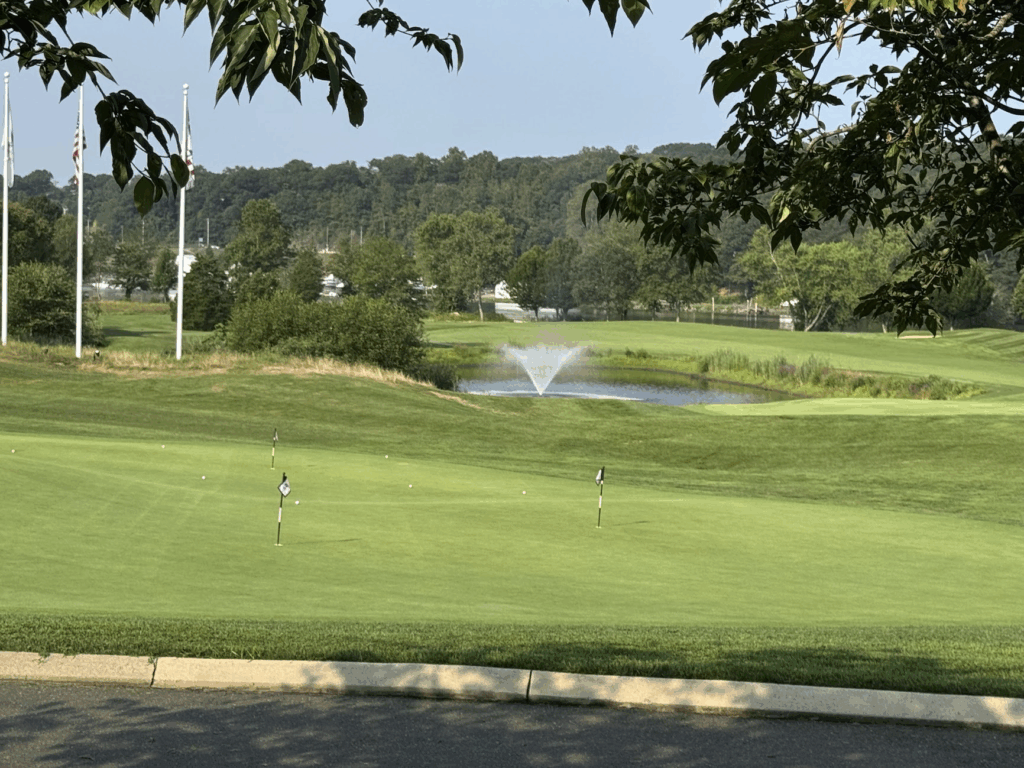
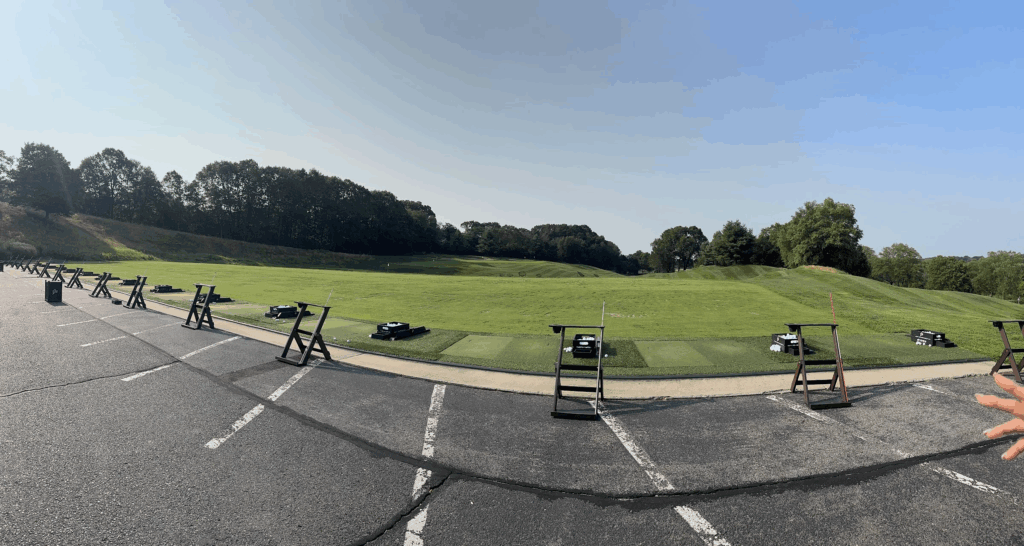
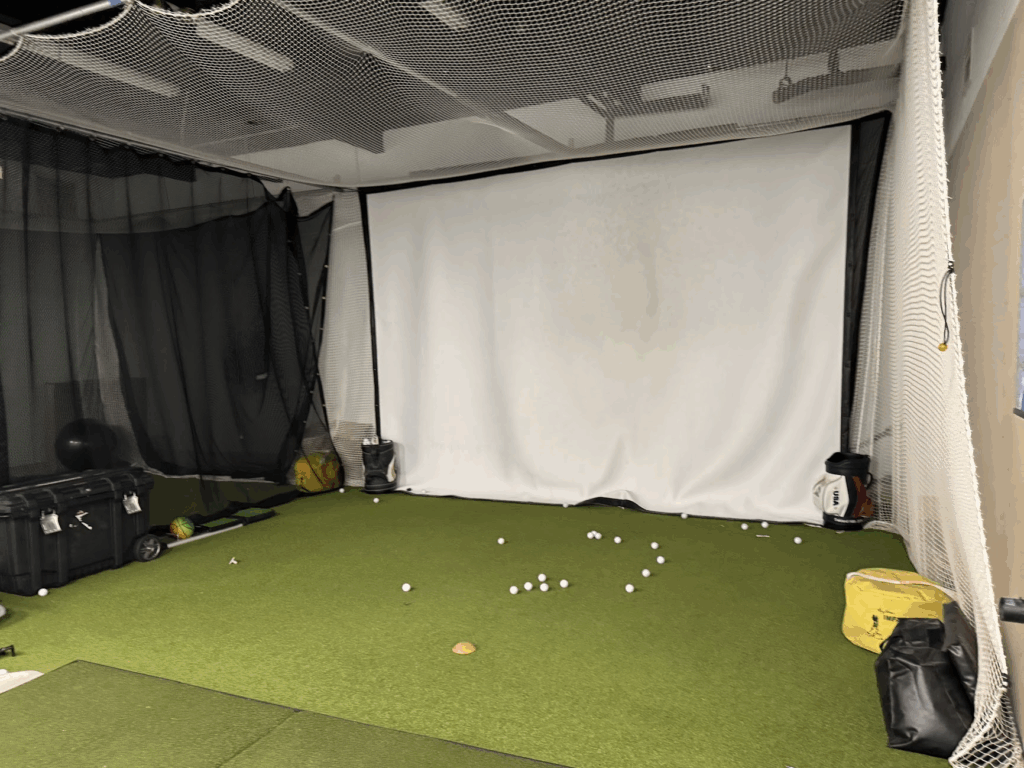
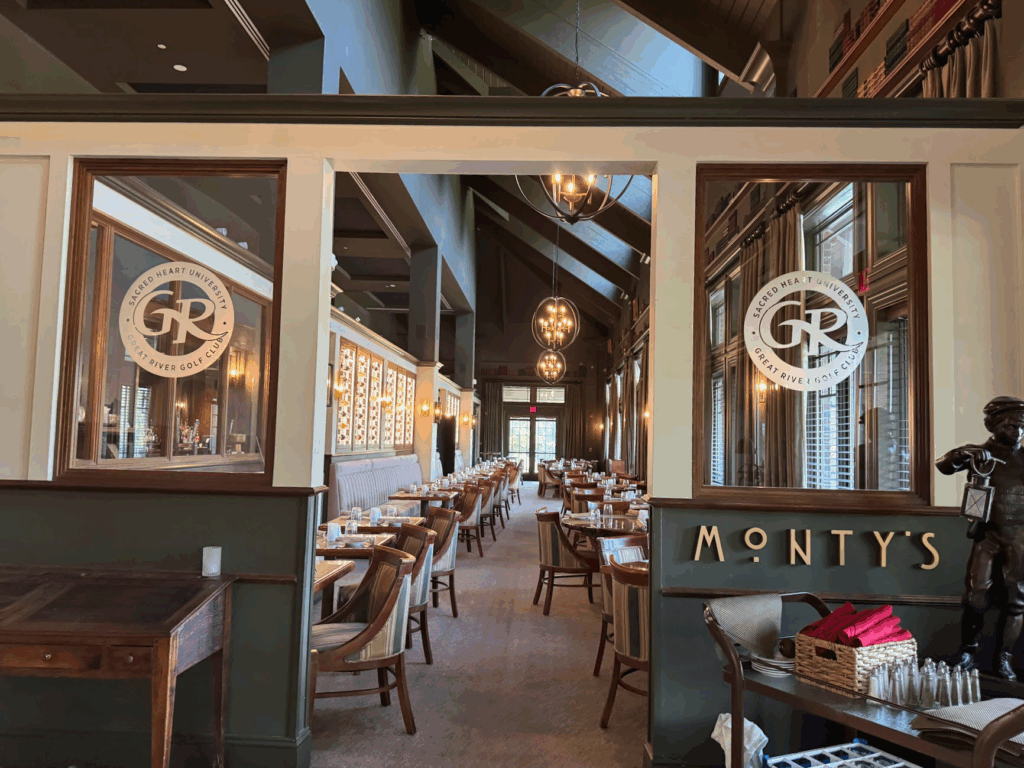
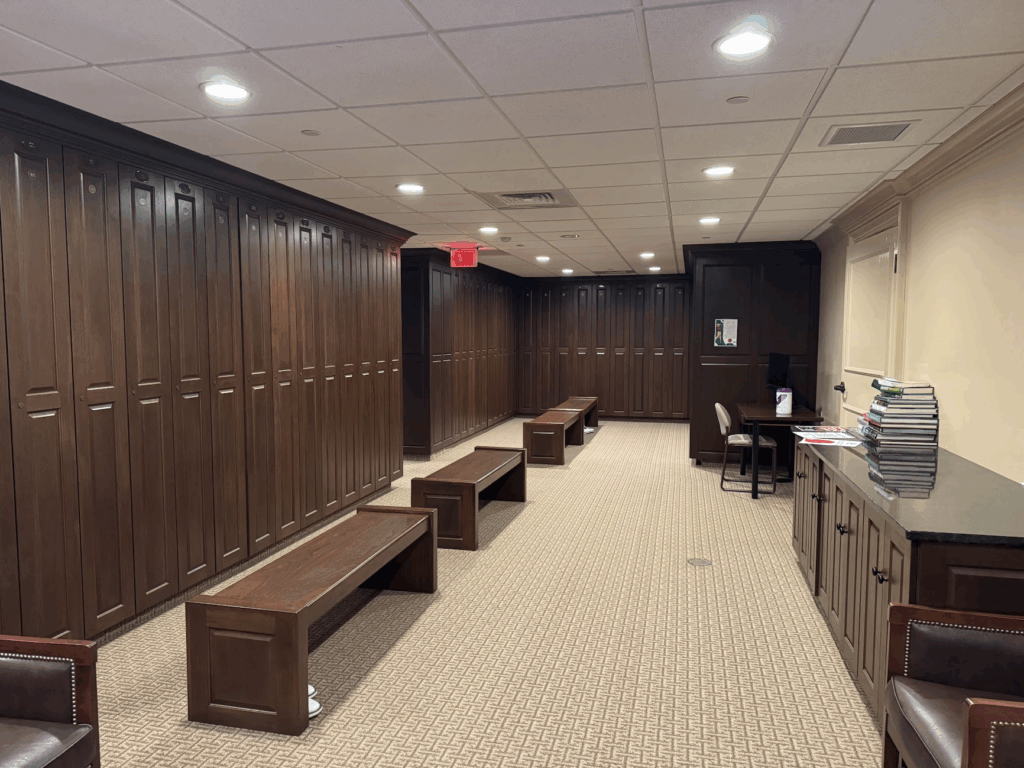
I’ve played Great River multiple times since Sacred Heart University’s acquisition, and each visit reinforces why this property deserves its reputation as one of Connecticut’s premier semi-private facilities. The practice infrastructure immediately impresses: two indoor teaching bays with simulator technology under longtime instructor Tom Rosati’s guidance, a beautifully maintained chipping area, and a true-rolling putting green that encourages thorough pre-round warmup. The driving range offers both grass and mat hitting areas with distance markers for focused practice. Inside, spacious locker rooms with recently renovated showers and a shoe-shine station reflect attention to detail, while the full-service restaurant and private ten-person dining room elevate the experience beyond typical public golf. Chef Eddie’s grab-and-go counter has earned particular reputation for breakfast sandwiches worth arriving early to secure. Large ballrooms accommodate corporate meetings and tournament banquets, while 15-day advance tee-time booking provides planning flexibility without dawn wake-up calls for weekend slots.
Where Great River distinguishes itself from Lake of Isles North and Gillette Ridge is the seamless integration of championship golf with genuine hospitality infrastructure. Lake of Isles offers superior dramatic terrain and resort-casino convenience but lacks Great River’s refined clubhouse depth. Gillette Ridge delivers Palmer pedigree and potentially better playability but operates more as a daily-fee facility without Great River’s tournament hosting credentials or professional amenities. Great River occupies ideal middle ground—accessible enough to book and play without membership hassles, yet polished enough to feel like a private club experience from arrival to departure. The course itself provides ample challenge from the tips with its strategic sixth, memorable fifteenth, and demanding par-3 collection, while remaining playable from forward tees. The riverfront setting, mature landscaping, and championship conditioning create an atmosphere where every element reinforces quality without ostentation. For thinking players who appreciate strategic golf wrapped in refined amenities, Great River proves its value every round.

David is an avid golfer who loves walking Connecticut’s courses and playing alongside his family. He’s passionate about golf course architecture and one day hopes to play at Pebble Beach.