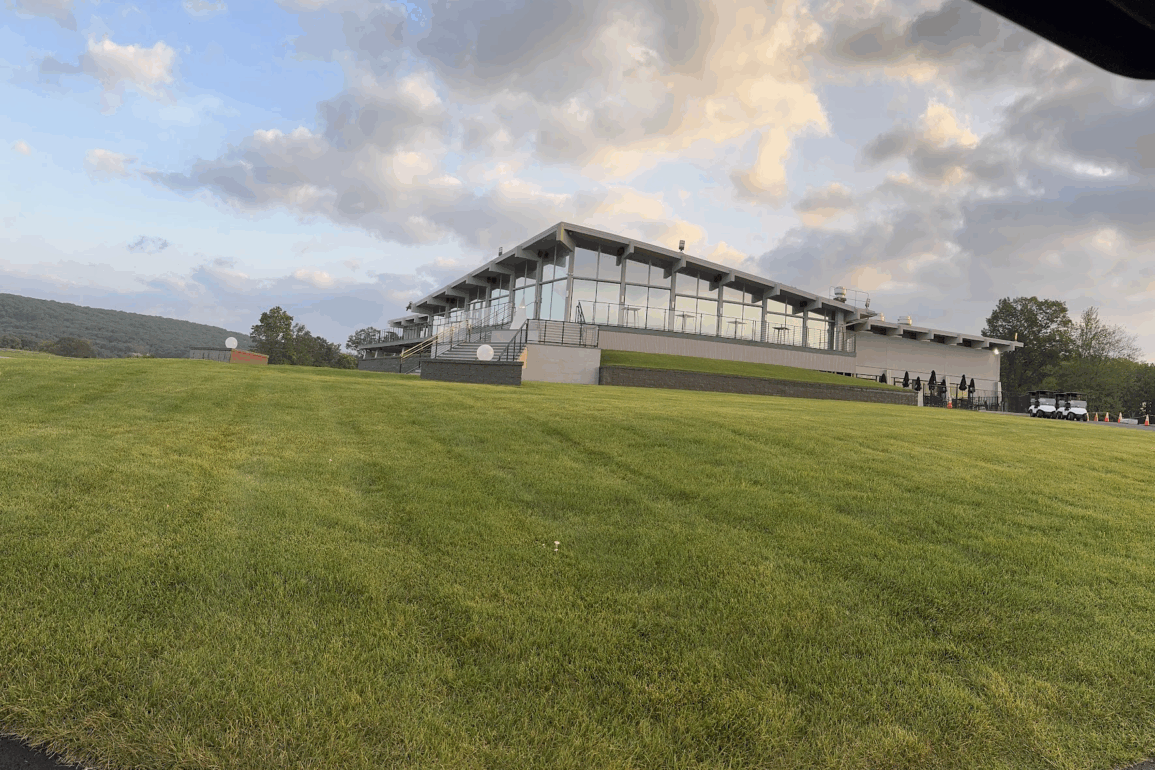
The VUE Golf Club is a public par‑72 course measuring approximately 6,924 yards from the tips. The course was originally designed by Geoffrey S. Cornish in 1969 and is located in Hamden, Connecticut.
The VUE sits on roughly 140 acres of gently rolling parkland—enough to accommodate strategic routing without sprawling extravagantly. The layout meanders through open corridors and wood-edged holes, with moderate elevation shifts adding visual interest and subtle strategic nuance. With recent clubhouse and range upgrades completed, the course now feels like a hybrid of classic Cornish design and modern amenity-driven experiences. It suits players who enjoy a thoughtful challenge—fairway positioning, green defenses, and a few elevated tee shots—and especially appeals to those who appreciate a well‑appointed clubhouse and high-end cart tech. The routing winds through parkland terrain with moderate elevation change, punctuated by water hazards and some strong green complexes. The course seems suited to intermediate and advanced players who appreciate a challenge off the tee and can work the ball both directions.
Walkability
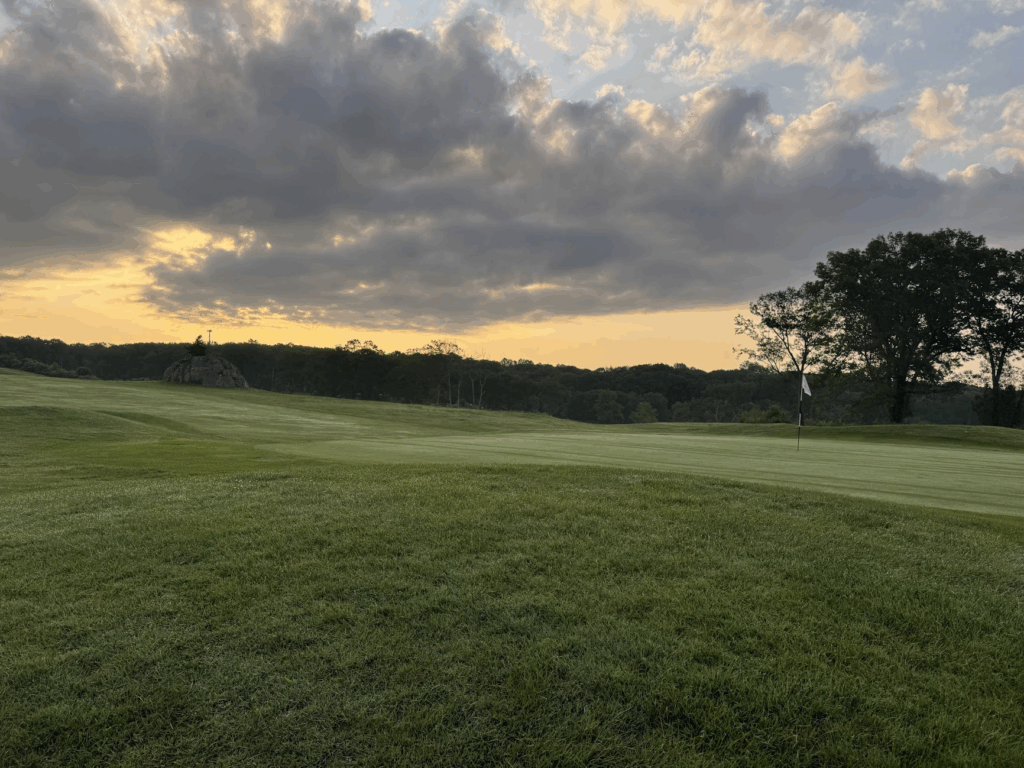
Walkability at The VUE is functional but flawed. The front nine plays through fairly gentle terrain with a compact routing and limited elevation change, though there’s some awkward overlap between holes. Most green-to-tee connections are reasonable, and players walking the course will appreciate the relative flatness on holes 1 through 6. However, visual distractions and routing congestion detract from the experience.
- Pro: Holes 1 through 6 provide an enjoyable rhythm for walkers. The transitions are short, terrain is friendly, and the sequence of pars—particularly the long par 5 at 4 into the short 331-yard par 4 at 6—creates a nice pacing contrast that keeps you moving.
- Con + Fix: Hole 9 shares a fairway with another hole, which interrupts flow and feels chaotic. This routing decision introduces safety issues and delays. A permanent fix could include tree planting or staggered mounding to create more visual and spatial separation, reinforcing a proper corridor and preserving pace-of-play integrity.
Strategic Test
Strategically, The VUE has its moments—particularly when elevation, hazard placement, and angles converge to reward thoughtful play. Not every hole meets that standard, but when it does, the course reveals surprising depth.
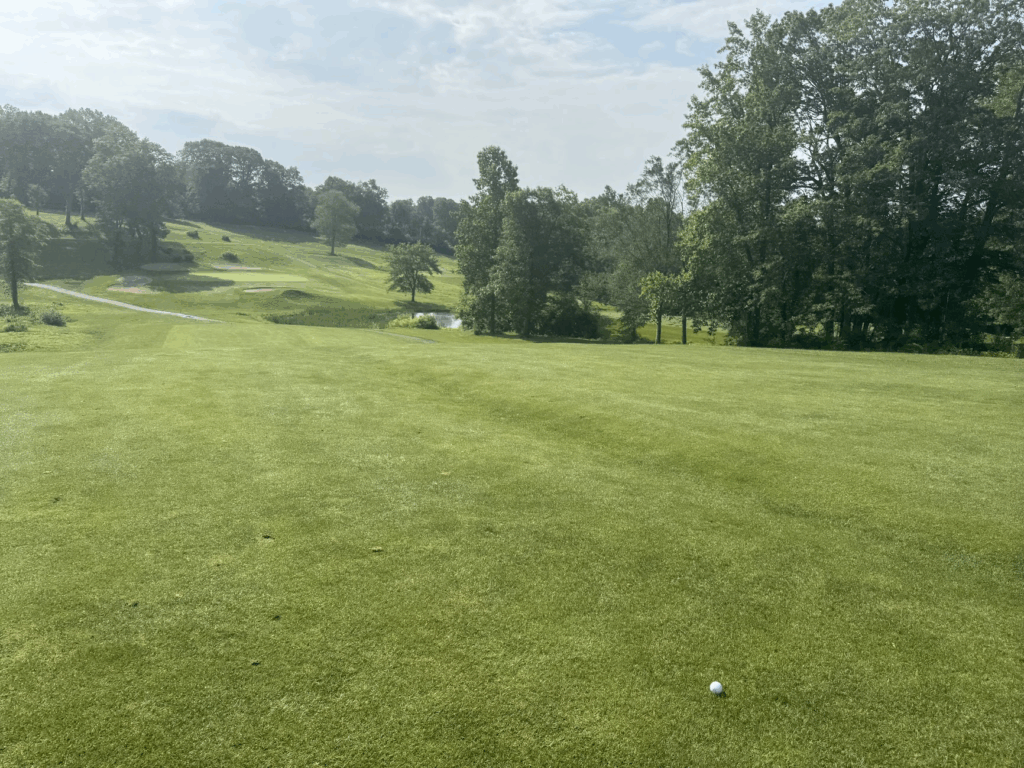
- Pro: Hole 6 is a standout. It plays just 331 yards from the tips but features an elevated tee with a dense row of trees guarding the sightline to the fairway. There are bunkers right off the fairway landing zone, and the green is protected by bunkers left and long. The pond short-left introduces visual tension. Aggressive players may attempt a bold line with a driver over the tree corner, risking water and sand. Conservative players might opt for a long iron or hybrid up the left-center to take trouble out of play, but they then face a tricky wedge to a green that runs away. It’s an excellent example of risk-reward balance on a short par 4.
- Con + Fix: Holes 15 and 16 are particularly weak from a strategic standpoint. Both holes play straightforwardly with little incentive to choose one shot shape or angle over another. The bunkering on 16 feels like an afterthought, not integrated into any decision-making process, and the overall topography lacks contour or interest. To make matters worse, the area right of 16 is visually unappealing, with unmanaged waste and exposed dirt that diminishes the focus required for shot planning. A redesign here could incorporate a staggered bunker pattern, movement in the fairway to encourage positioning, and a green that rewards approaches from one side of the fairway more than the other—restoring both strategic and aesthetic value.
Playability
VUE sits on the tougher side for higher-handicap players. The course’s lack of visual clarity in places and its use of blind tee shots can create confusion, especially for newer players. However, there are enough short and scorable holes to keep the experience from feeling overly punishing.
- Pro: Hole 13, at just 286 yards from the tips, is accessible and fun. The wide landing area and short length give high-handicappers a rare opportunity to go driver-wedge, or even play it as a two-shot iron layup with no pressure. It promotes confidence and offers a legitimate birdie chance without artificial difficulty.
- Con + Fix: Hole 6 again presents issues—but this time from a playability lens. The blind tee shot makes it nearly impossible to know whether the fairway is clear, requiring players to run ahead to scout or wait longer than necessary. Adding a centerline aiming pole, widening the tree gap slightly, and elevating the rear of the fairway landing zone would create better visuals and speed up play.
Atmosphere
The setting at The VUE feels like a course in the middle of transition. While certain features shine—particularly the advanced cart tech and clubhouse presentation—other aspects like maintenance, visual polish, and design cohesion lag behind.

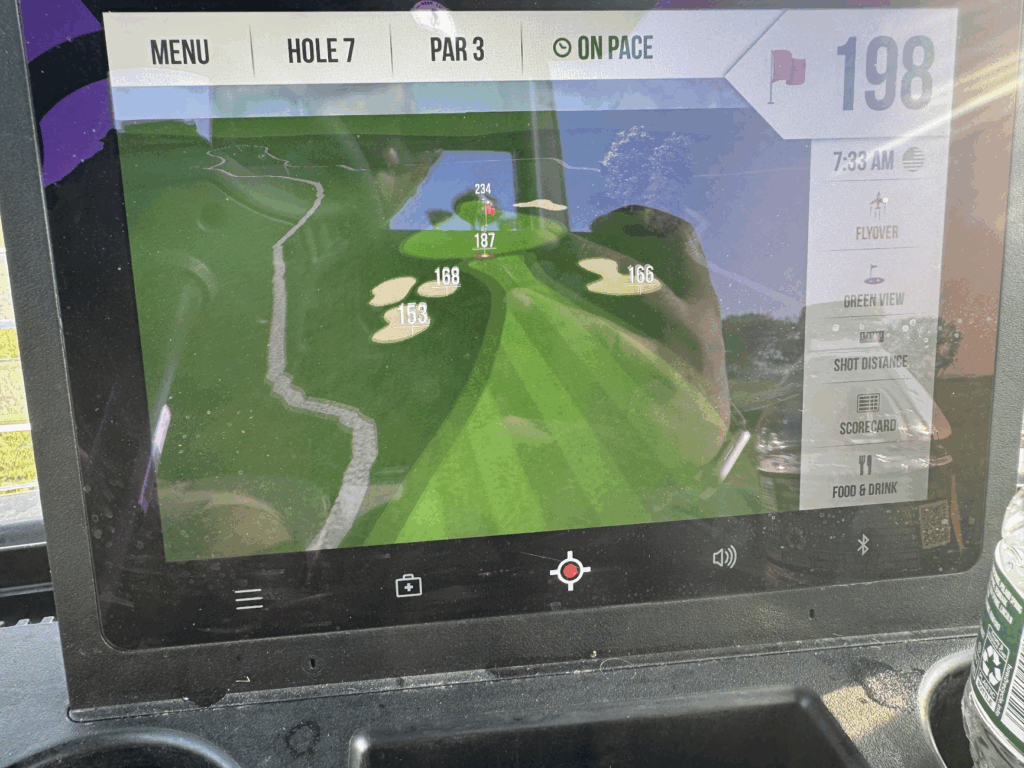
- Pro: The clubhouse experience is exceptional. The burger and fries are arguably among the best in Connecticut public golf, and the club cars feature next-gen GPS that tracks not just distance to the pin, but to hazards and bunker edges. These details create a premium feel off the tee. Hole 11 is a beauty. A demanding par 5 that narrows midway, it opens up dramatically at about 200 yards out. The pond guarding the right of the green catches your eye, and the green nestles invitingly against the backdrop of hole 13’s water carry. The visual reveal creates anticipation and satisfaction.
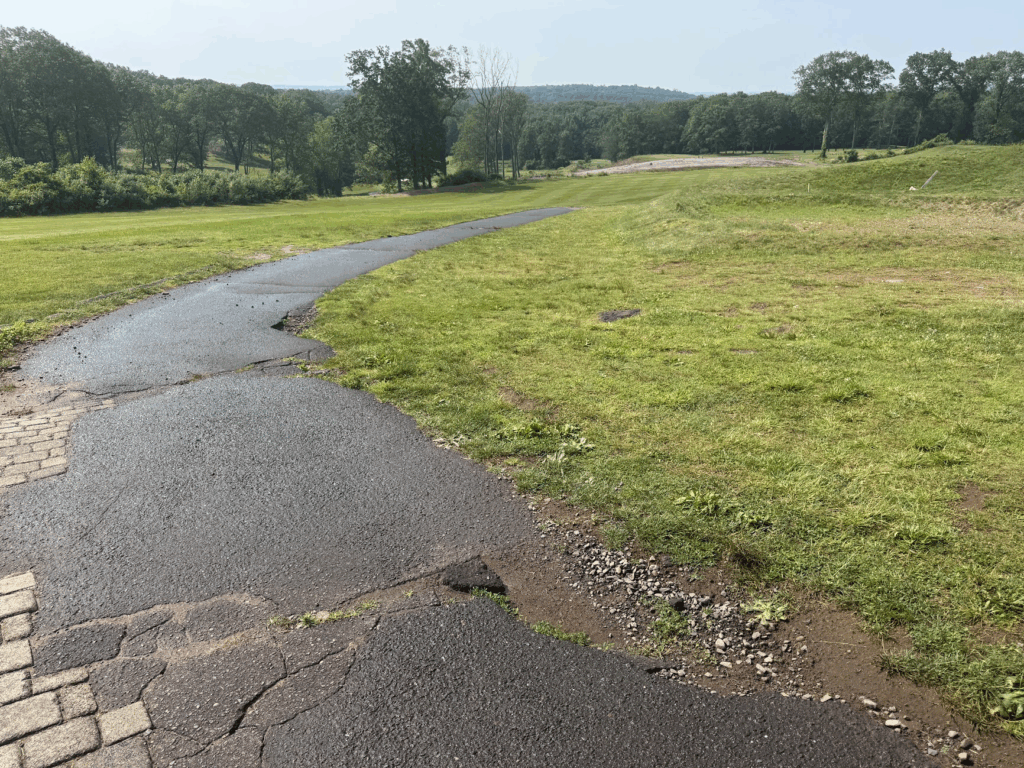
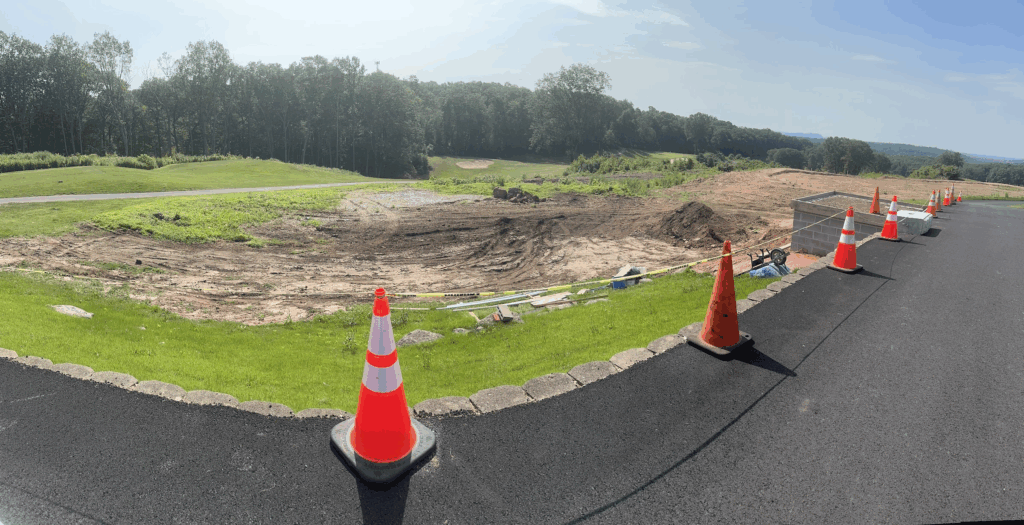
- Con + Fix: Across the course, however, disrepair undermines immersion. Waste bunkers are unmaintained. Hole 3’s tee box is torn up. Wheelbarrows, rakes, and tools are visible on several holes. Worst of all, widespread tree removal has left dozens of stumps exposed. Like Morikawa’s recent critique of Oakmont’s deforestation, the removal here is demoralizing without proper restoration. Replacing stumps with sod or replanting selected canopy trees would go a long way toward repairing both aesthetic and strategic integrity. Regrading the terrain, reshaping the green complexes, and reintroducing bunkers that frame actual decision-making would elevate this segment.
Final Word
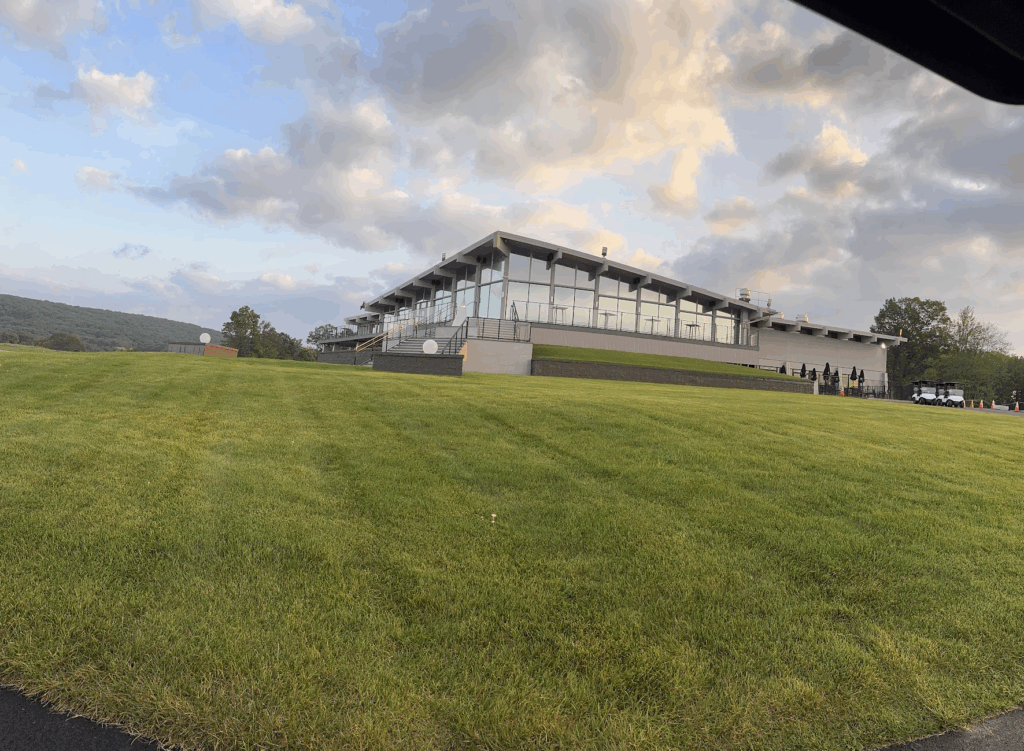
I came to The VUE with tempered expectations and left with a mixed bag of impressions. The bones of the course show promise: thoughtful routing on a decent footprint, with a few holes (like 6 and 11) that reflect legitimate architectural interest. The carts and clubhouse are elite-tier for a public facility, and small touches like hazard-aware GPS elevate the overall experience. One underrated strength is scheduling—The VUE offers some of the earliest tee times in Connecticut, opening at 5:30 AM on weekends and 6:00 AM on weekdays. For dawn patrol golfers or those with family obligations, that’s a huge perk.
But it’s also a course caught in limbo. The tree removal is excessive and poorly handled, with no effort to restore aesthetics. Hole 10, which mirrors the dogleg par-4 9th at Tradition Oak Lane, replaces its counterpart’s creek with an unattractive drainage ditch—apt metaphor for the course’s current condition. The VUE feels like a budget-conscious cousin to Tradition: similar terrain, weaker polish, occasional flashes of potential.
I’ve always had a soft spot for courses designed by Geoffrey Cornish—his work across New England showcases a great sense of routing and subtle challenge. Which is why it’s such a shame to see The VUE in this state. Until the renovations are completed and the grounds are better maintained, it’s hard to recommend The VUE as a destination round. For locals, there are reasons to play it once—just don’t expect the kind of finish that leaves you eager to return.

David is an avid golfer who loves walking Connecticut’s courses and playing alongside his family. He’s passionate about golf course architecture and one day hopes to play at Pebble Beach.