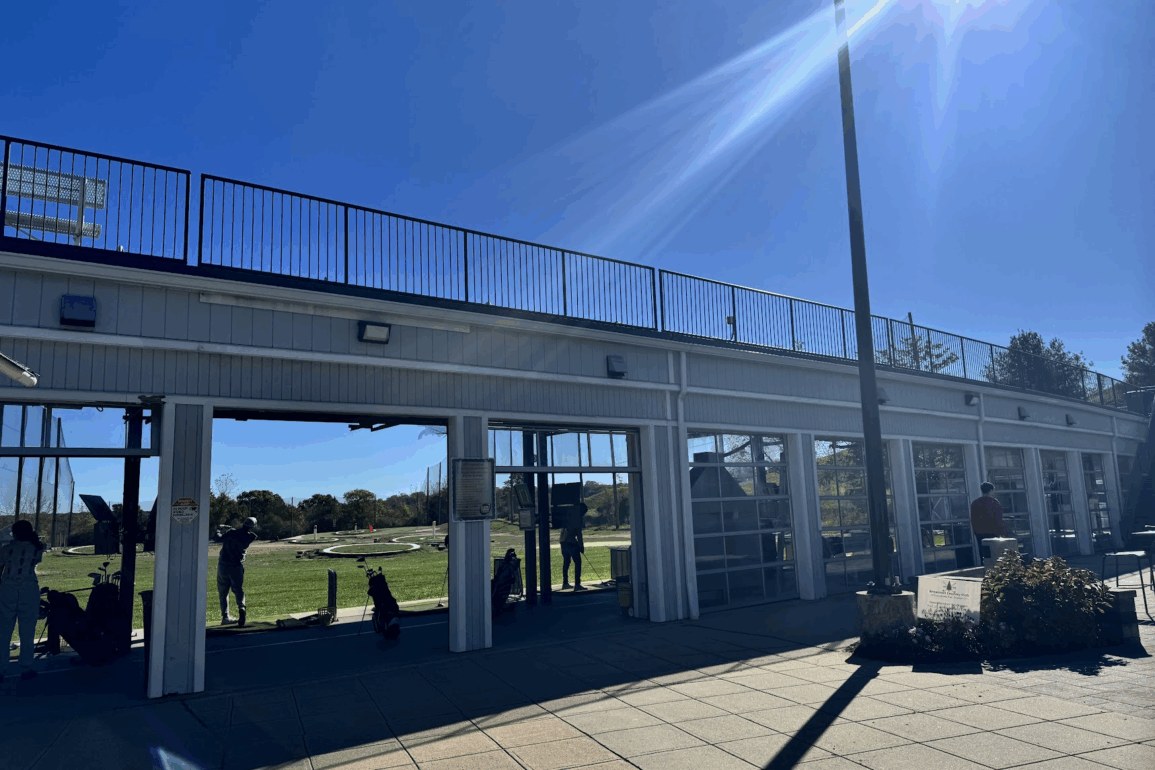
When I first pulled into the SportsCenter of Connecticut in Shelton, I honestly didn’t expect to find one of the most complete practice-and-play hybrids I’ve visited in the state. From the outside, the range looks like a modern entertainment complex — with families drifting toward mini-golf, teens walking out with ice-cream cones, and the distant rhythm of golf balls striking mats — but once you climb into one of the covered hitting bays, it transforms into a data-driven golfer’s playground.
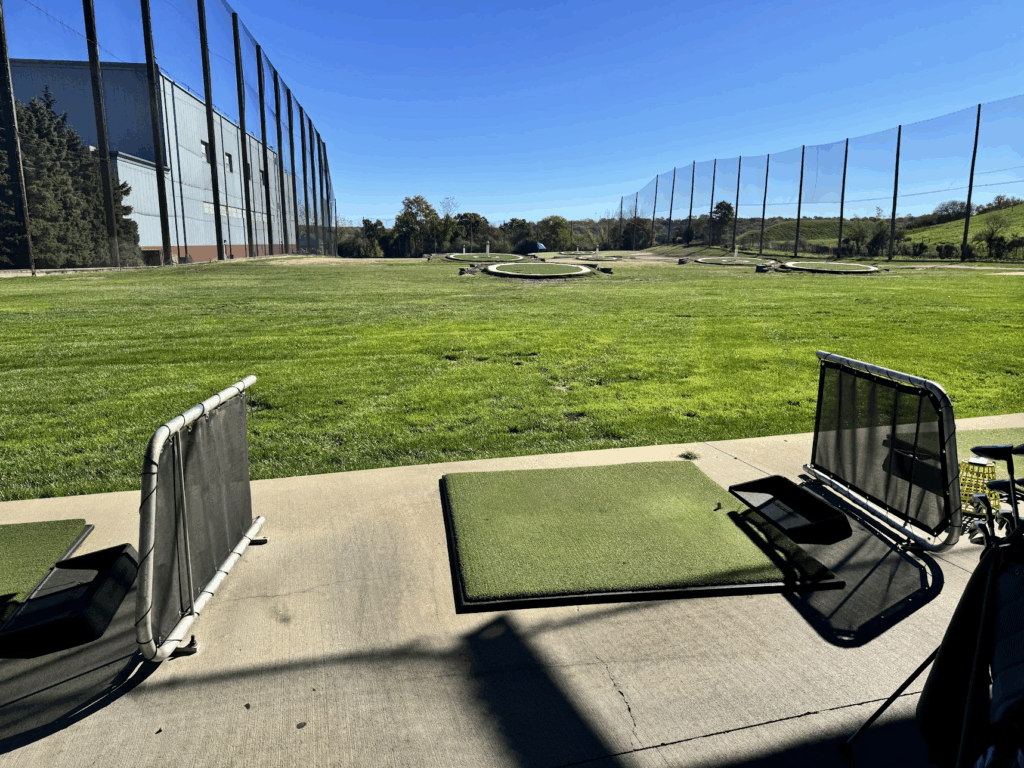
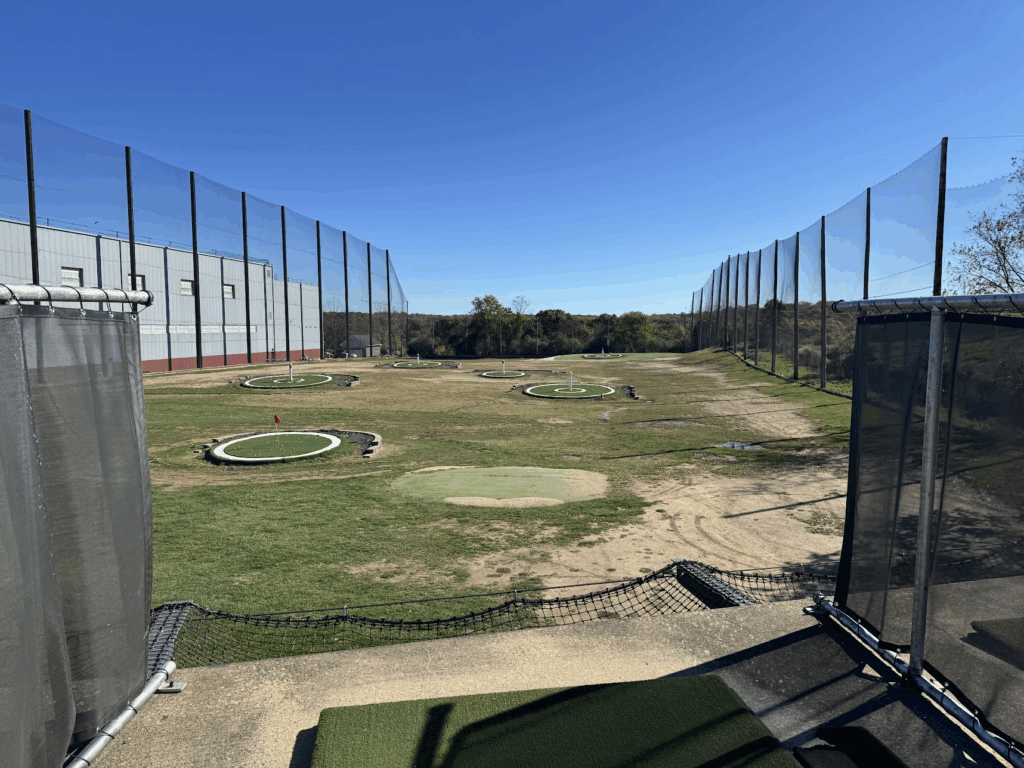
The SCA range features a 300-yard driving field, easily one of the longest in Fairfield County, and every yard of it feels purpose-built for both feedback and fun. The field is anchored by a set of well-demarcated poles marking 30, 50, 75, 100, 150, and 200 yards, plus distant flags and target boards that make calibration dead-simple. You can dial in wedge distance gapping or compare carry differences between woods and driver without guessing. Each pole is painted bright white and illuminated after dark, which gives the range a stadium-like clarity at night. The overall layout makes it easy to benchmark irons and longer clubs — for someone who thinks quantitatively, it’s a small detail that matters a lot.
The Toptracer Range system here is the same tracking technology used on televised PGA broadcasts. Every bay is equipped with a ceiling-mounted camera array that reads launch angle, spin, speed, and ball flight within the first 20 yards, then models the rest of the trajectory. The data appears instantly on the console screen beside you — a full digital window into each shot. It’s not as forensic as a TrackMan, but for a public range, it’s astonishingly sophisticated. I played a virtual 18-hole round through Toptracer’s “Virtual Golf” mode, and while it skips actual putting by substituting a 45-yard chipping challenge, it still felt engaging and strategic. That chipping-for-putting system took some adjustment — you have to pace your chips to match virtual distances — but once you get used to it, it keeps momentum flowing and gives the short game more relevance than a button-click simulation ever could.
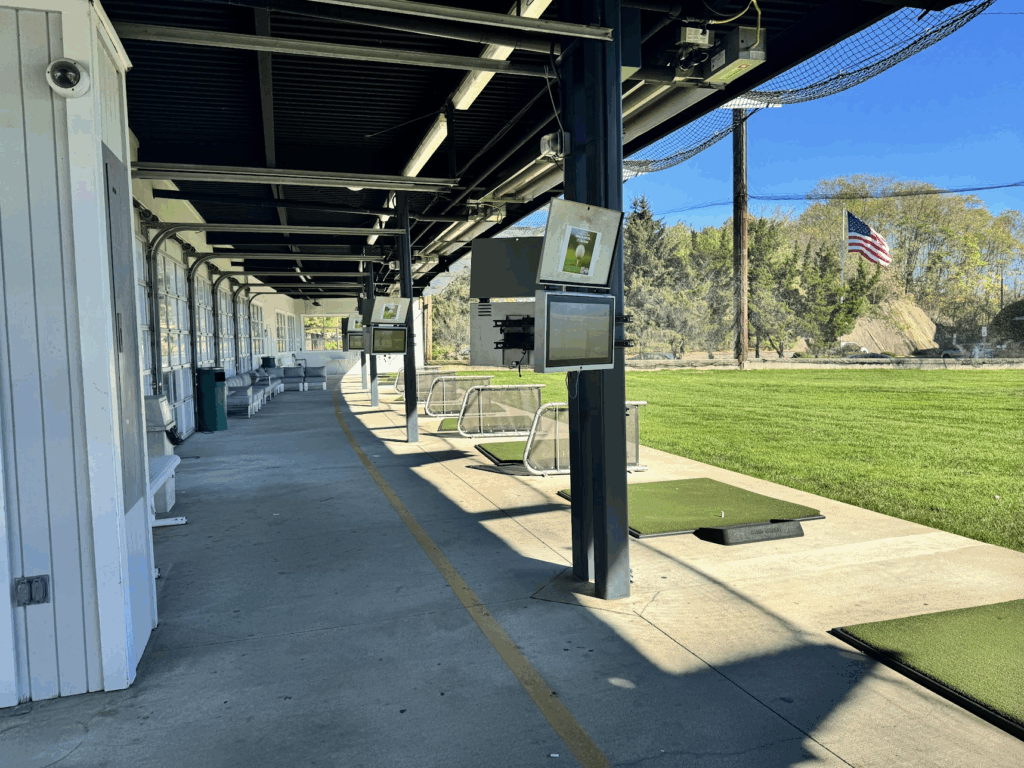
The Bays
There are two full levels of hitting bays, each covered, heated, and equipped with Toptracer monitors (25 on lower level, 25 on upper level). The upper deck gives a commanding view of the entire 300-yard expanse, and the sight of tracer lines arcing across the field at night is genuinely addictive. From up there, you can watch other players’ trajectories carve against the backdrop of the lighted targets — it’s part range, part light show. The lower deck offers a quieter, more grounded practice vibe — ideal if you want to focus on launch control or wedge dispersion without distraction.
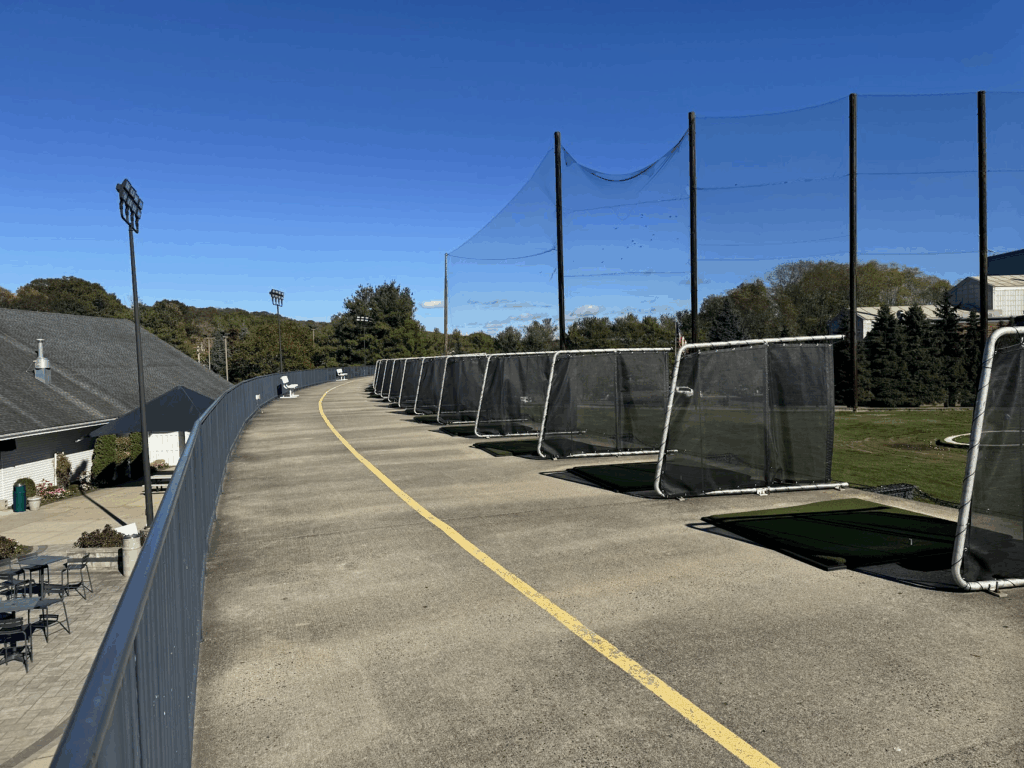
Each bay includes fresh mats with adjustable rubber tees, comfortable seating, and a dedicated monitor stand. The mats are firm but forgiving — you can feel crisp contact through irons without the jarring sting of concrete beneath. There’s enough space to set your bag, stretch, and swing freely, and the heaters make winter sessions surprisingly pleasant. I visited on a breezy evening, and the ambient warmth made it feel like an indoor studio with an outdoor view.
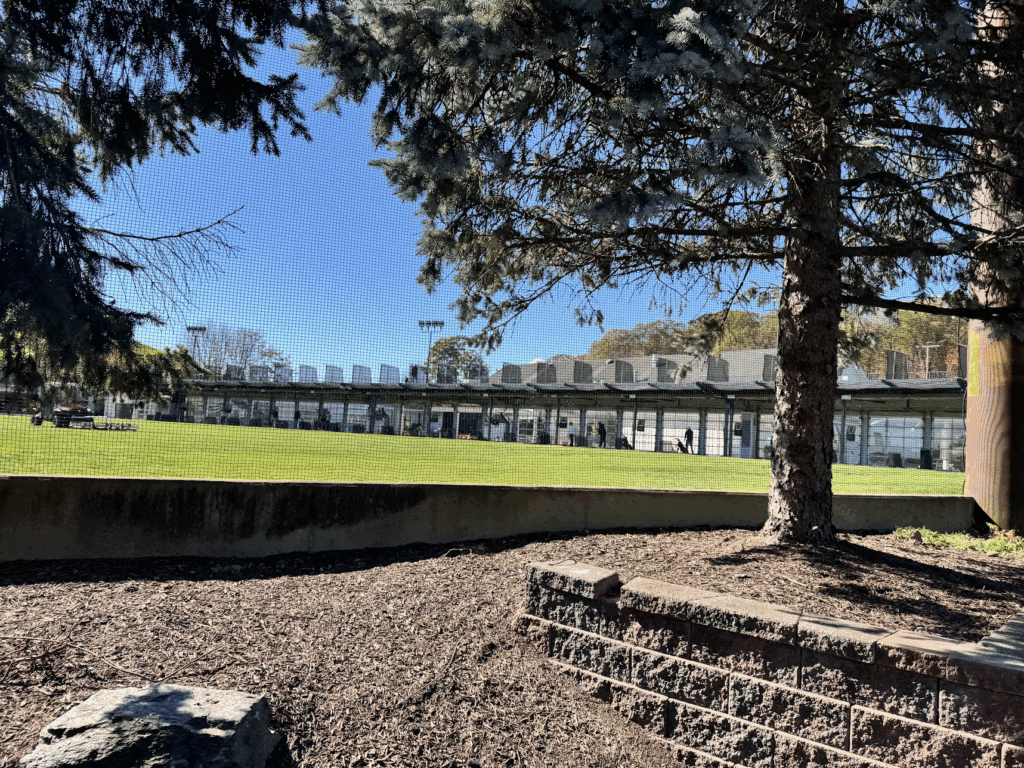
What sets this place apart is its dual personality — half performance lab, half social hangout. On any given night, you’ll see serious players comparing carry distances in Launch Monitor mode next to families laughing through Angry Birds Golf. There’s music drifting from the main building, the occasional cheer when someone breaks 250 yards, and the low hum of friendly competition. It’s less sterile than a simulator lounge, more authentic than a bar-range hybrid. You can breathe in fresh air, actually see your ball fly, and enjoy the satisfying crack of real impact — something no screen can reproduce.
At night, the entire range glows under tower-mounted floodlights, and the target greens shimmer with reflected light. It’s a surprisingly cinematic scene — the neon from the arcade reflecting off the netting, tracer lines cutting through the air, and the steady rhythm of practice swings punctuating conversation. I’ve hit balls at countless indoor simulators, but this feels closer to golf’s true pulse. There’s a realism and unpredictability that keeps every swing honest.
Mini-Golf & Family Area
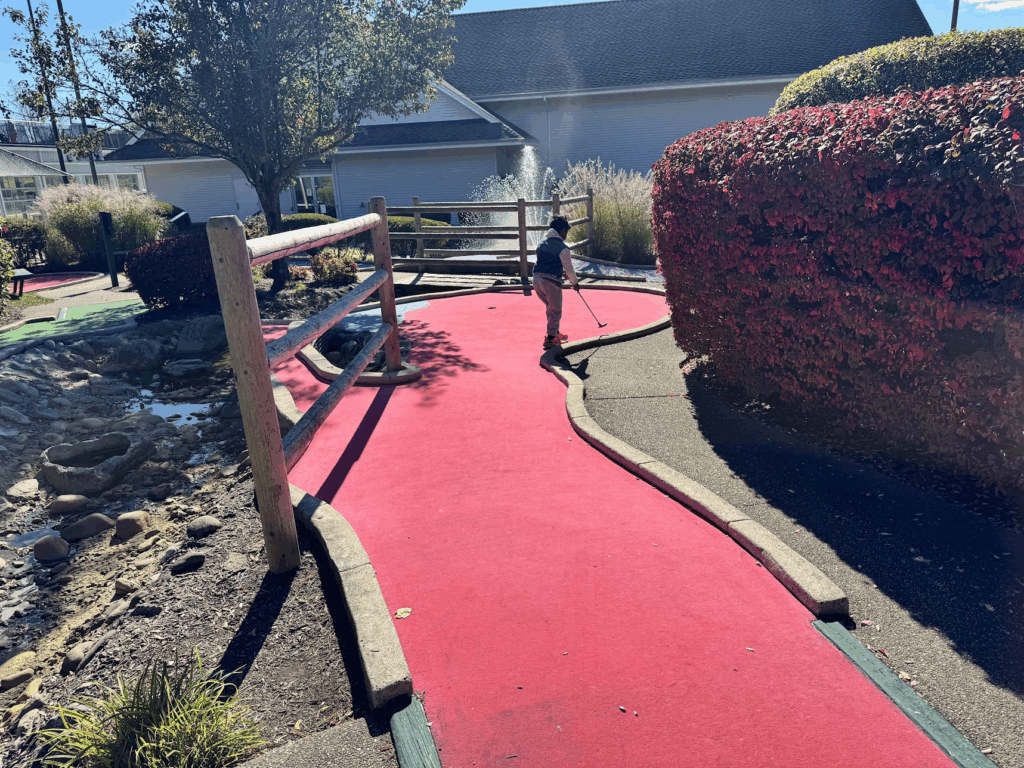
Right beside the driving range lies an 18-hole, nature-themed mini-golf course, and it’s not the typical flat-carpet setup you find at tourist spots. It winds through landscaped boulders, small bridges, waterfalls, and a flowing stream that wraps around several holes. At night, the water glows under soft lighting, and music carries faintly from the range. It’s beautifully maintained and surprisingly peaceful — you can hear the water trickle as you line up a putt.

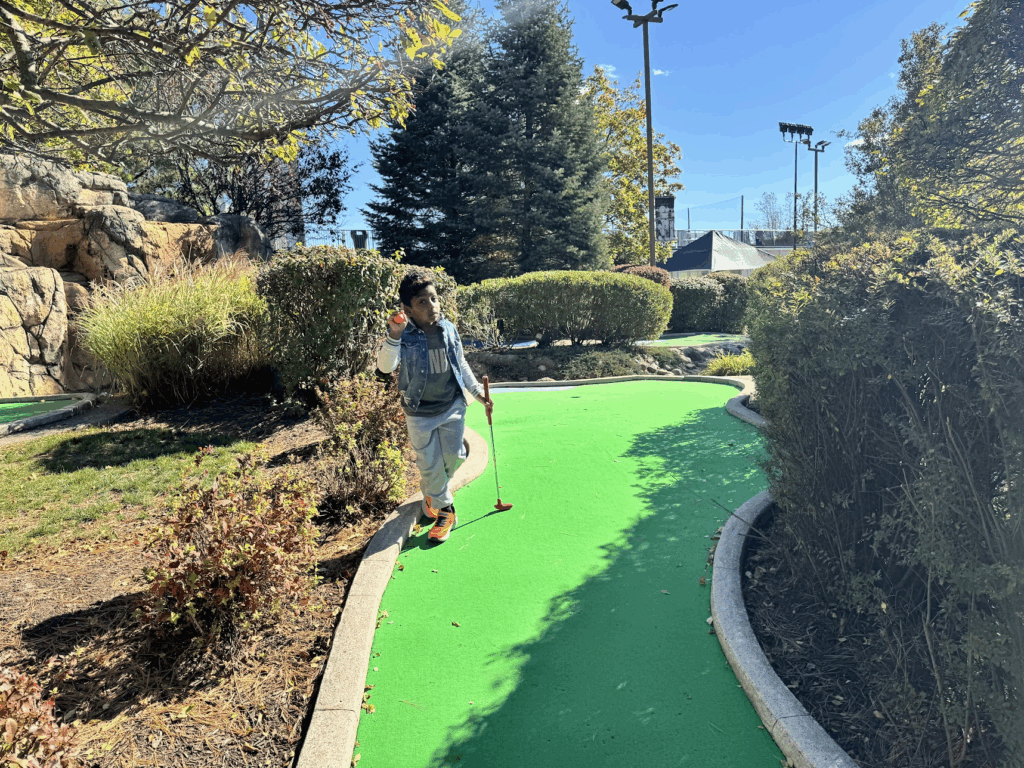
I found it to be an ideal cooldown after a practice session — you can transition from analyzing launch data to laughing through a casual round with the kids. The holes are creative but fair, and even in light rain they hand out hooded ponchos so play doesn’t stop. It’s clear the designers cared about both aesthetic and playability. For families or mixed groups, it’s one of the best mini-golf environments in Connecticut.
Final Thoughts
Overall, the SCA Connecticut Driving Range in Shelton has earned a permanent spot on my personal practice rotation. It blends technology, atmosphere, and accessibility better than almost any public facility I’ve seen. The Toptracer system brings every swing to life, the two-level heated bays keep practice comfortable year-round, and the 300-yard range with precisely marked poles makes it a perfect calibration ground for both wedges and woods. Yes, the pricing is a little steep (24$ for a large bucket of balls), and yes, the chipping-in-place-of-putting setup takes a little getting used to — but those are minor trade-offs in what’s otherwise an outstanding golf experience.
More than anything, it’s more fun than a simulator — real air, real turf, and real ball flight. Combine that with an excellent mini-golf course next door and a lively evening atmosphere, and you have one of Connecticut’s most complete public golf experiences. I left impressed, satisfied, and already planning my next night session under the lights.

David is an avid golfer who loves walking Connecticut’s courses and playing alongside his family. He’s passionate about golf course architecture and one day hopes to play at Pebble Beach.