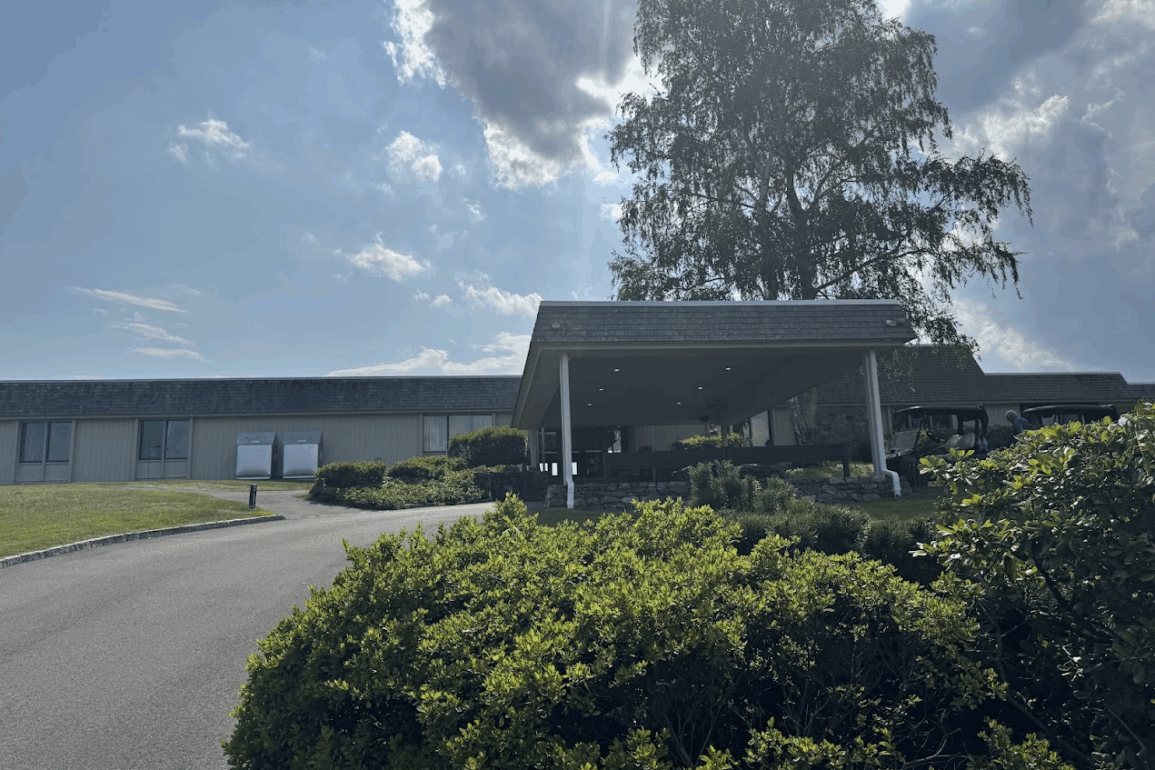
Connecticut Golf Club is a private par-71 course measuring approximately 6,900 yards from the tips. The course was originally designed in 1966 by Geoffrey Cornish and underwent a major renovation in 2023 by Ben Crenshaw, and is located in Easton, Connecticut.
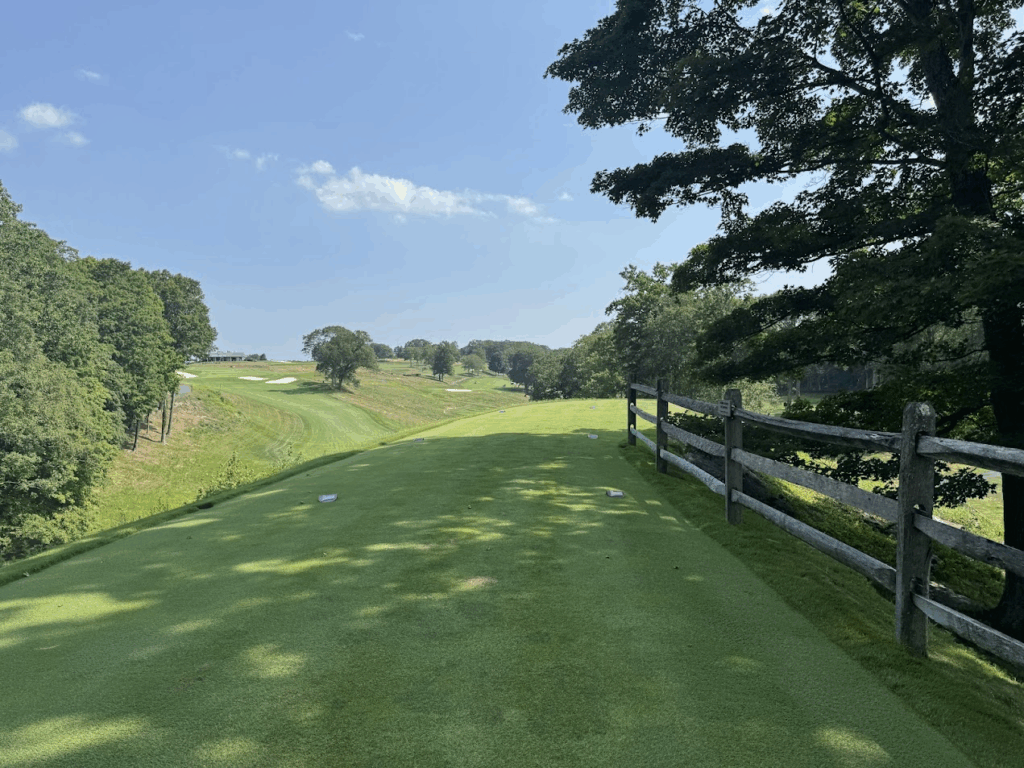
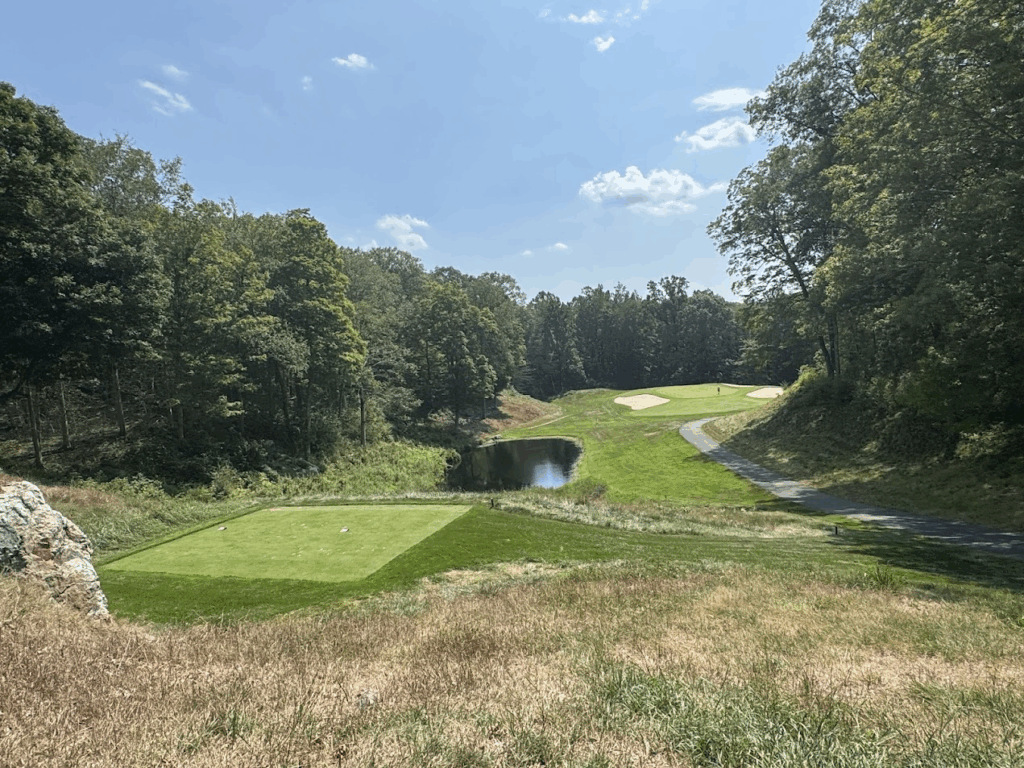
Set across roughly 140 acres of dramatically rolling southwestern Connecticut terrain, Connecticut Golf Club showcases the strategic restraint and natural routing philosophy that defines Crenshaw’s recent renovation work. The property’s extreme topography required extensive dynamiting during construction to carve fairway corridors through hillsides—a construction methodology now prohibited under contemporary environmental regulations, lending the course an irreplicable character. Multiple doglegs thread through the landscape, while all four par threes demand carries over water hazards that define the course’s tactical identity. The routing capitalizes on severe elevation shifts, with uphill and downhill holes creating constant club selection puzzles. This is a layout for the golfer who values positional discipline over power, who appreciates reading terrain and managing trajectory rather than simply overpowering a design. With only 250 members and limited regular play, the property maintains an unhurried, golf-focused atmosphere.
Founded by Lawrence A. Wien, a lawyer and real estate investor, Connecticut Golf Club opened in 1966 with the mission of providing a golf retreat within a stunning New England landscape, far removed from daily life’s bustle. Geoffrey Cornish’s original design established the routing through the property’s rugged, undeveloped terrain, working within the constraints of dramatic topography that required hillside blasting to establish playable corridors. In 2002, Brian Silva—Cornish’s longtime partner—returned to update and improve the course design while respecting the original routing plan, strengthening par three complexes including rebuilt greens at the 5th and 10th, dramatically improving the landing area on the 3rd hole, and transforming the 15th into a driveable short par four. The 2023 Crenshaw renovation brought modern strategic concepts while honoring the bones of Cornish’s original work, refining green contours, bunker placement, and corridor width to create multiple angles of attack. The course operates Tuesday through Sunday with 7am starts, with Monday rounds beginning at 3pm, and maintains a season running from the last Friday in March through the first Saturday in December.
Walkability
Connecticut Golf Club presents one of the more demanding walks in Connecticut private golf, earning its reputation as “a hard walk” through sustained elevation changes and strenuous green-to-tee transitions. Spread across approximately 140 acres, the property’s routing takes full advantage—some would say ruthless advantage—of the topography’s vertical relief. The dynamited hillside corridors create dramatic climbs and descents that test fitness throughout the round. Hole 14 exemplifies the challenge, marching steadily upward through a fairway that gains elevation from tee to green, demanding a sustained uphill push that arrives at a difficult moment in the back nine when legs are already fatigued.
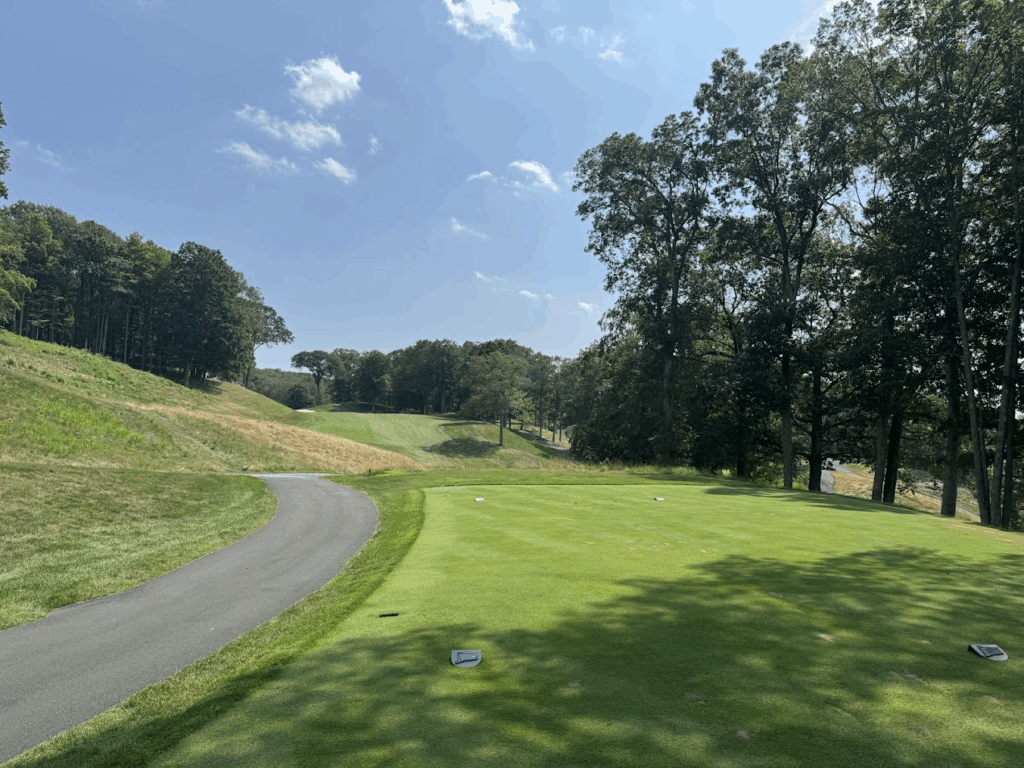
The downhill plunge on hole 16 provides welcome relief, tumbling downward in a satisfying release that temporarily eases the physical burden before the closing stretch. These elevation-driven transitions dominate the walking experience more than horizontal distances between greens and tees, which remain reasonably compact given the property’s acreage. The front nine offers slightly more forgiving terrain than the back, though all eighteen holes feature some degree of vertical movement that accumulates over the round. Walkers in strong physical condition will find the effort rewarding, as the elevation creates compelling strategic and visual moments impossible to appreciate fully from a cart.
The club’s modest 250-member roster and light regular play ensure walkers maintain comfortable pace without pressure from backed-up groups. Tee sheets rarely become congested, allowing those on foot to enjoy the property’s tranquility without rushing. The course rewards the walking experience with scenic highlights including the water vista at hole 7—a memorable opening of the landscape—and the appealing character of hole 6, frequently cited as one of the layout’s finest. A small red house positioned strategically on the course provides charming visual punctuation, while the fountain-maintained water features add movement and sound without the stagnant quality that plagues some regional courses. For golfers in robust condition who value the traditional walking game, Connecticut Golf Club offers a worthwhile but demanding examination that makes the physical effort feel earned rather than gratuitous.
Strategic Test
Connecticut Golf Club delivers strategic depth through elevation manipulation, multiple doglegs, and green complexes that demand precise distance control. The 2023 Crenshaw renovation emphasized width off the tee while creating distinct advantage zones for players willing to challenge angles or work the ball toward preferred sides. Fairways provide generous landing areas that accommodate various trajectories, but premium positions exist for those who shape tee shots strategically. The green complexes feature Crenshaw’s characteristic subtlety, with internal contours and runoff areas that reward proper trajectory and spin management, particularly on approaches where dramatic elevation change complicates club selection.
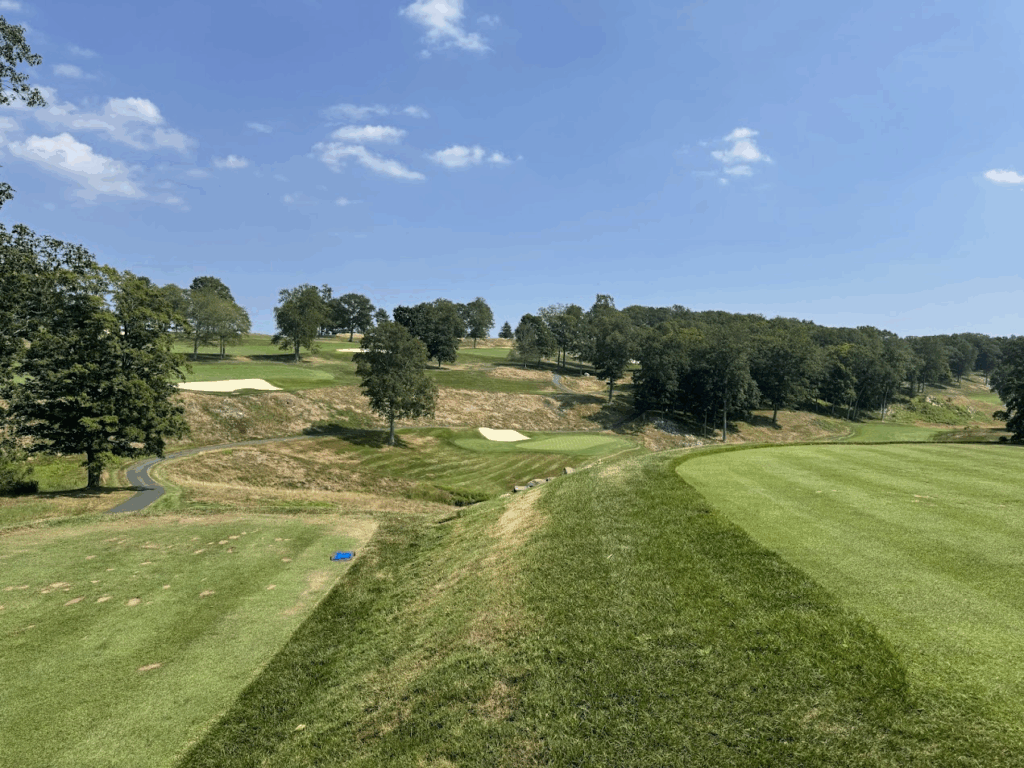
The course’s multiple doglegs present constant decision points, rewarding players who can shape tee shots to shorten approaches or find better angles. Uphill holes like 14 demand committed swings with extra club, while downhill tests require finesse and distance management to avoid running through greens into collection areas. The water hazards on all four par threes create forced carry pressure that eliminates bail-out options, demanding confident execution. The dynamited terrain creates natural corridor framing effects where fairways play through compressed spaces flanked by elevated edges that influence wind patterns and visual perception.
Consider hole 17, a mid-length par four that exemplifies the layout’s tactical complexity and quirky character. The hole presents an immediate dilemma from the tee, with the aggressive line requiring a controlled draw to shorten the approach but threatening the golf pro house that sits uncomfortably close to the ideal driving corridor—an architectural oddity that creates genuine strategic tension. A bold player might attempt a driver or 3-wood with draw spin, starting the ball down the left-center and working it back toward the right side of the fairway, accepting the risk that a pushed or blocked shot could find the pro house while potentially setting up a short iron approach from 130-140 yards with an ideal angle into the green. The conservative route plays safely away from the structure with a fade or straight ball using a 5-iron or hybrid off the tee, finding the right-center fairway with minimal risk but leaving a longer approach—likely a 5-iron or 4-iron from 175-190 yards—and forcing the player to attack the green from a less advantageous angle where contours are less receptive to the incoming trajectory. The hole rewards conviction and execution in either direction but severely punishes indecision or poor contact, creating the type of meaningful strategic pressure that defines thoughtful architecture. Throughout the round, players face similar choices that reward course knowledge, trajectory control, and disciplined positioning over raw power.
Playability
Connecticut Golf Club maintains accessibility for higher-handicap players while preserving substantial challenge for accomplished golfers, a balance Crenshaw achieves through generous landing areas, multiple teeing grounds, and green complexes that accept well-struck approaches from various angles. The course’s slope rating of 144 from the championship tees with a course rating of 74.4 indicates a demanding layout that tests all aspects of the game. For low-handicap players (0-5 index), the course demands precision iron play, trajectory control on approaches with significant elevation change, and thoughtful positioning to score well. The forced water carries on all four par threes eliminate easy pars, while the uphill and downhill holes create constant club selection puzzles.
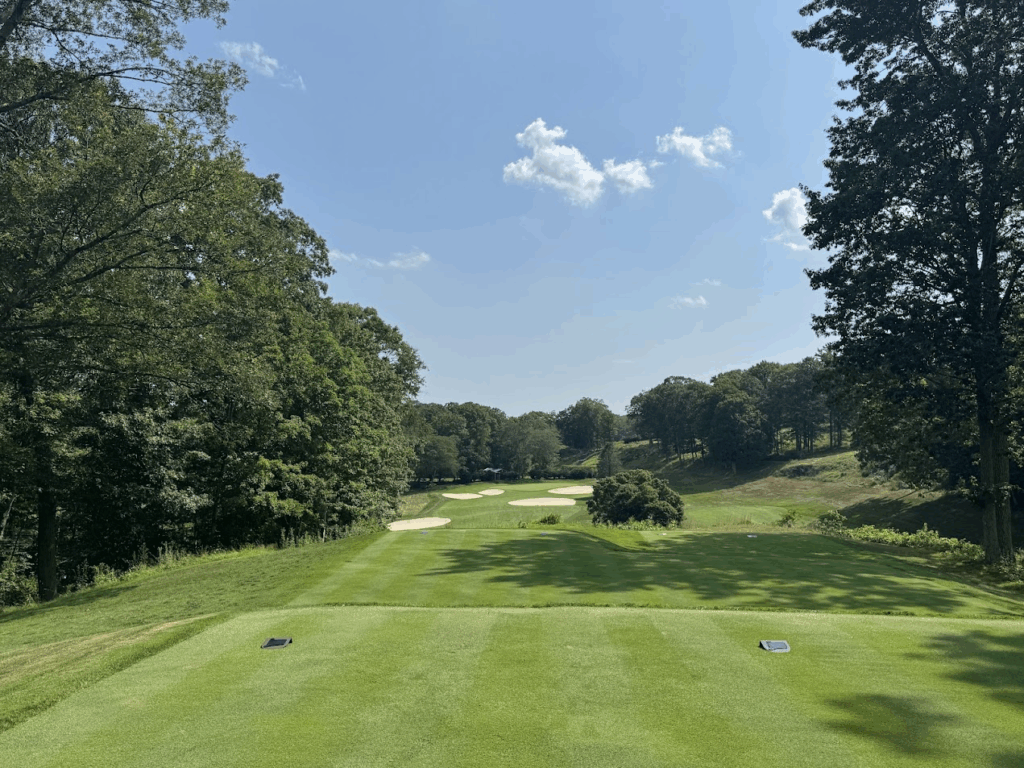
Mid-handicappers (6-15 index) will find the course manageable from appropriate tees, though the elevation changes demand solid distance control and the ability to adjust club selection for uphill and downhill shots. The wide fairways provide room for less-than-perfect drives, but recovery from missed fairways requires negotiating elevation and often blocked sightlines. High-handicap golfers (16+ index) benefit from the fairway width that accommodates various ball flights, though the forced water carries on par threes and the sustained elevation on holes like 14 create genuine difficulty even from forward tees.
Hole 6, frequently praised as one of the course’s finest, likely succeeds in part because it provides an engaging test without demanding heroic execution. For a 20-handicapper, this hole probably plays as a manageable mid-length par four where a solid drive finds a receptive fairway, followed by a mid-iron or hybrid approach to a green complex that accepts various trajectories without severely punishing misses. The hole rewards steady play with clear strategic intent while avoiding the penal characteristics that frustrate higher-handicap players. The green likely features readable contours that allow confident putting without the severe breaks or excessive pace that lead to three-putts.
The course’s playability extends to its exceptional conditioning and maintenance standards. Water hazards are kept clean through fountain aeration systems that prevent the stagnant, algae-filled conditions common at less meticulously maintained facilities in the region. Fairways maintain excellent turf quality despite Connecticut’s challenging climate, and greens run true at moderate speeds that allow higher-handicappers to putt confidently. The limited play volume—a direct function of the modest 250-member roster—ensures the course avoids the wear patterns and inconsistent conditions that plague busy facilities, maintaining pristine standards throughout the season.
Atmosphere
Connecticut Golf Club exudes quiet elegance and natural tranquility, favoring understated beauty over manufactured spectacle. The course winds through mature hardwood forests and rugged terrain that create a sense of enclosure and privacy, with fairway corridors framed by dense tree lines and dramatic elevation that establish distinct playing spaces. The atmosphere feels purposefully golf-focused and contemplative, a quality reinforced by the club’s limited membership and restrained play volume. With only 250 members and many playing infrequently, the property maintains an uncrowded, unhurried character that allows for thoughtful golf without external pressure.

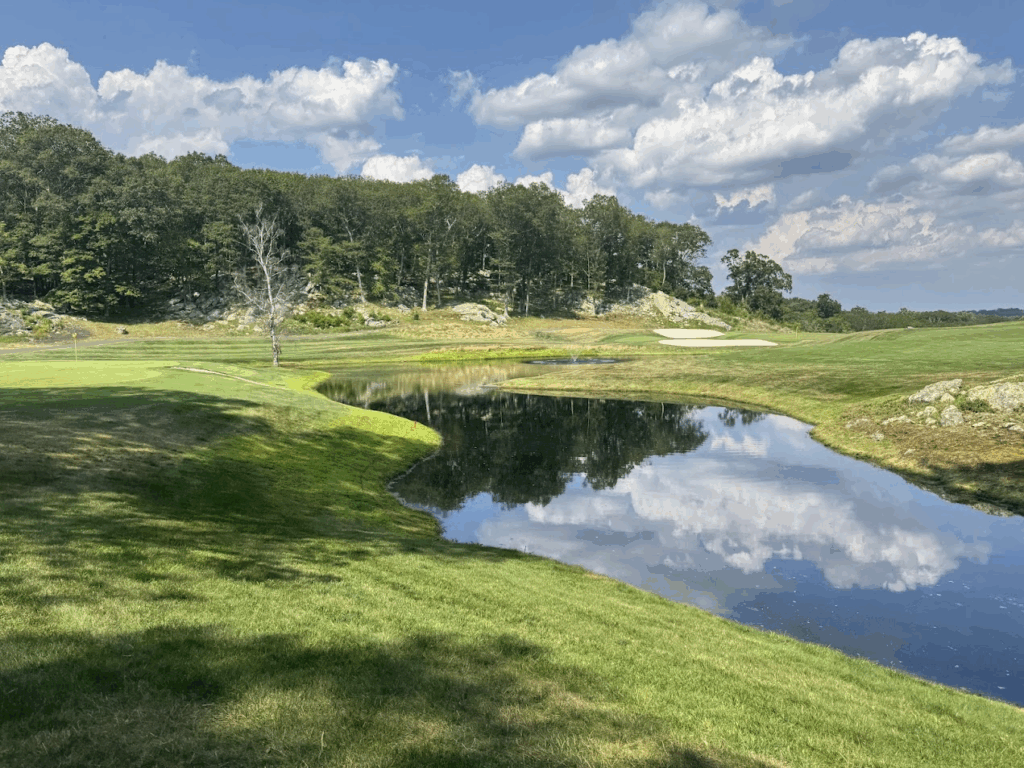
The aesthetic cohesion stems from Crenshaw’s minimalist design philosophy combined with Cornish’s original respect for natural landforms. The dynamited hillsides create organic-looking elevation changes that feel indigenous to the property rather than artificially imposed, while green complexes sit naturally within their surroundings without excessive framing or forced visual statements. A small red house positioned strategically on the course provides charming New England architectural character, adding human scale without overwhelming the natural landscape. The fountain-maintained water features add subtle movement and sound to certain holes while preventing the visual and olfactory unpleasantness of stagnant water that mars less carefully managed properties.
Hole 7 delivers one of the course’s signature atmospheric moments, where the fairway opens to reveal an expansive water view that contextualizes the property within Connecticut’s broader landscape. This vista provides a welcome release from the enclosed woodland corridors that dominate much of the routing, creating a memorable visual breath midway through the front nine. The elevation drop on hole 16 offers another emotionally resonant experience, where the dramatic downhill plunge creates a sense of acceleration and liberation after the sustained uphill grind of hole 14. These elevation-driven moments—possible only because of the aggressive hillside dynamiting undertaken during original construction—give the course topographical drama that separates it from flatter Connecticut layouts. The overall atmosphere rewards golfers who value serenity, natural beauty, and golf-focused simplicity over flashy resort-style amenities or manufactured drama.
Nearby Course Alternatives
Aspetuck Valley Country Club in Weston, approximately 5 minutes north of Connecticut Golf Club, offers a Hal Purdy design that emphasizes rolling wooded terrain along the Aspetuck River. Opening in 1967, the course measures approximately 6,600 yards from the championship tees with a par of 71, occupying roughly 150 acres of naturally undulating property. The slope rating sits around 129-132 with a course rating near 72.4-73.7, indicating a moderately challenging layout that rewards accuracy without overwhelming players. Purdy’s design features the hilly character common to western Fairfield County, though with less severe elevation changes than Connecticut Golf Club’s dynamited corridors. The course maintains a family-oriented, informal atmosphere with comprehensive amenities including 11 tennis courts, pool facilities, and restaurant services. Aspetuck Valley’s golf pedigree is less architecturally significant than Crenshaw’s recent work, but the conditioning remains excellent and the membership culture emphasizes social engagement alongside golf. The course appeals most to players who prioritize a balanced country club lifestyle with strong non-golf amenities, families seeking a welcoming atmosphere, and golfers who prefer moderately hilly terrain over Connecticut Golf Club’s more strenuous walking challenge. Those who prefer Aspetuck over Connecticut Golf Club likely value the more relaxed social environment, the comprehensive family amenities, and terrain that provides interesting elevation without the extreme vertical relief that defines its neighbor.
Rolling Hills Country Club in Wilton, approximately 15 minutes northwest of Connecticut Golf Club, represents one of Fairfield County’s most accomplished private facilities with a tournament pedigree that includes hosting the Connecticut Amateur, Connecticut Open, Palmer Cup, Connecticut Senior Amateur, and Connecticut Women’s Open. Measuring approximately 6,737 yards from the championship tees with a par of 71, the course was originally designed by Alfred Tull in 1960, renovated by Roger Rulewich in 2002, and refined again by Tripp Davis in 2023. The slope rating approaches 139 with a course rating near 73.1, indicating a stern examination that demands precise ball-striking. The layout occupies historic property once part of Ambler Farm, featuring tree-lined fairways on rolling terrain with less extreme elevation than Connecticut Golf Club but greater internal green contouring. The course’s tournament history reflects consistent championship conditioning and a membership culture oriented toward competitive golf. Rolling Hills offers a more traditional parkland aesthetic with mature tree framing and strategic bunkering, contrasting with Connecticut Golf Club’s more rugged, dynamited hillside character. The club provides comprehensive amenities and an active tournament schedule that appeals to serious golfers. Rolling Hills appeals most to accomplished players who value tournament-caliber conditioning, golfers who appreciate traditional tree-lined parkland architecture, and members who prioritize competitive golf culture with regular events. Those who prefer Rolling Hills over Connecticut Golf Club likely favor the less strenuous walk, the established tournament tradition, and the challenge of tree-lined corridors over dramatic elevation changes.
Final Word
Beyond the golf course, Connecticut Golf Club provides essential practice facilities including a driving range and putting area that support member skill development in a focused environment. The clubhouse offers traditional amenities centered on member comfort and dining, maintaining the club’s golf-focused identity without extensive non-golf recreational offerings. The 2023 Crenshaw renovation concentrated resources on the course itself, establishing the golf experience as the primary membership draw rather than diversifying into comprehensive country club amenities. One significant drawback worth noting is the club’s gender-restricted tee times—an outdated policy that feels particularly absurd for members who have wives and daughters who enjoy playing golf and wish to experience the course together as families.
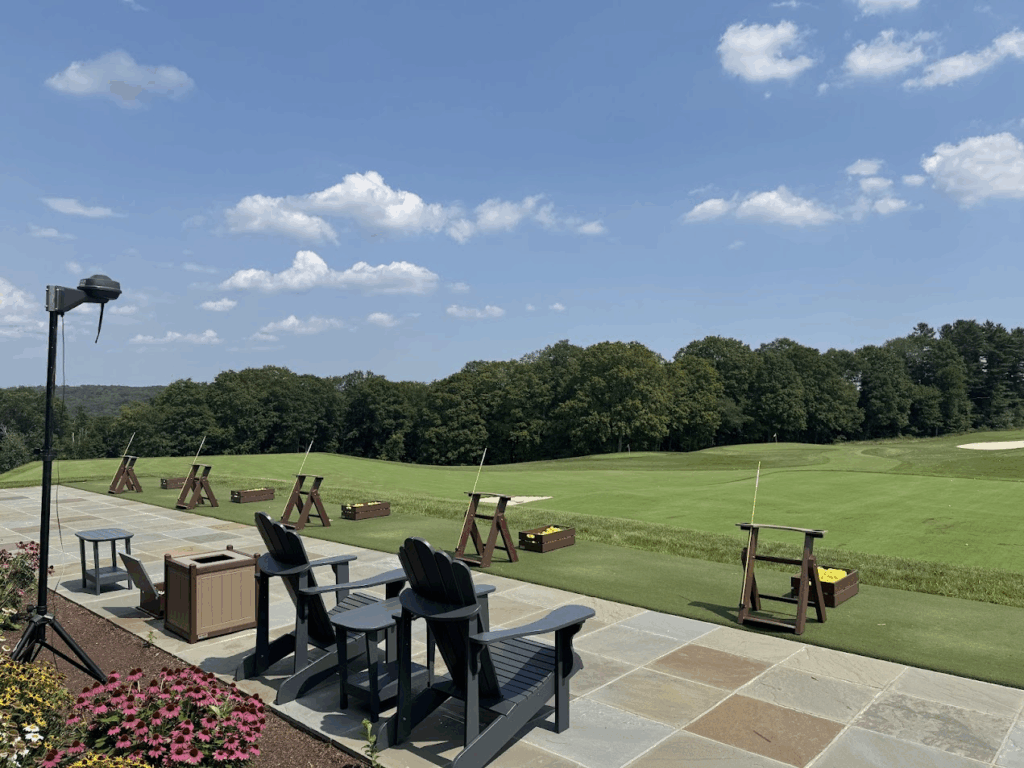
When considering nearby private club alternatives, both Aspetuck Valley Country Club and Rolling Hills Country Club present compelling but distinct experiences. Aspetuck offers a family-oriented environment with extensive non-golf amenities and moderately hilly terrain in a casual atmosphere, while Rolling Hills attracts competitive players through its tournament pedigree, championship conditioning, and traditional tree-lined parkland character. Connecticut Golf Club establishes its own identity through dramatic elevation achieved via historic dynamiting, Crenshaw’s strategic restraint, and a deliberately golf-focused culture with minimal distractions.
What makes Connecticut Golf Club special is its combination of irreplicable topography, thoughtful strategic architecture, and intimate scale in an era when such qualities have become increasingly rare. The course proves its value through the exceptional quality and variety of the golf experience rather than through extensive amenities or manufactured difficulty. The limited 250-member roster ensures pristine conditions and uncrowded play, the 2023 Crenshaw renovation provides timeless strategic interest that rewards thinking over power, and the dynamited terrain creates elevation drama impossible to replicate under current environmental regulations. This is a club for golfers who prioritize the purity of the game over social distractions, who value positional strategy over distance, and who appreciate having discovered a Connecticut gem that refuses to compromise its golf-first character for broader country club trends.

David is an avid golfer who loves walking Connecticut’s courses and playing alongside his family. He’s passionate about golf course architecture and one day hopes to play at Pebble Beach.